There’s nothing quite like the vibrant, cascading blooms of a Christmas Cactus to brighten up the darkest days of winter. But when your once-perky plant suddenly looks wilted, wrinkled, or flat-out exhausted, it can easily trigger a wave of plant-parent panic. If your beloved holiday cactus is looking a little sad and deflated right now, take a deep breath. You are absolutely not a bad plant parent! Plant issues happen to everyone, and the good news is that these resilient plants are remarkably forgiving.
Let’s get to the root of the issue and bring your festive friend back to life.
The Problem: Spotting the Symptoms
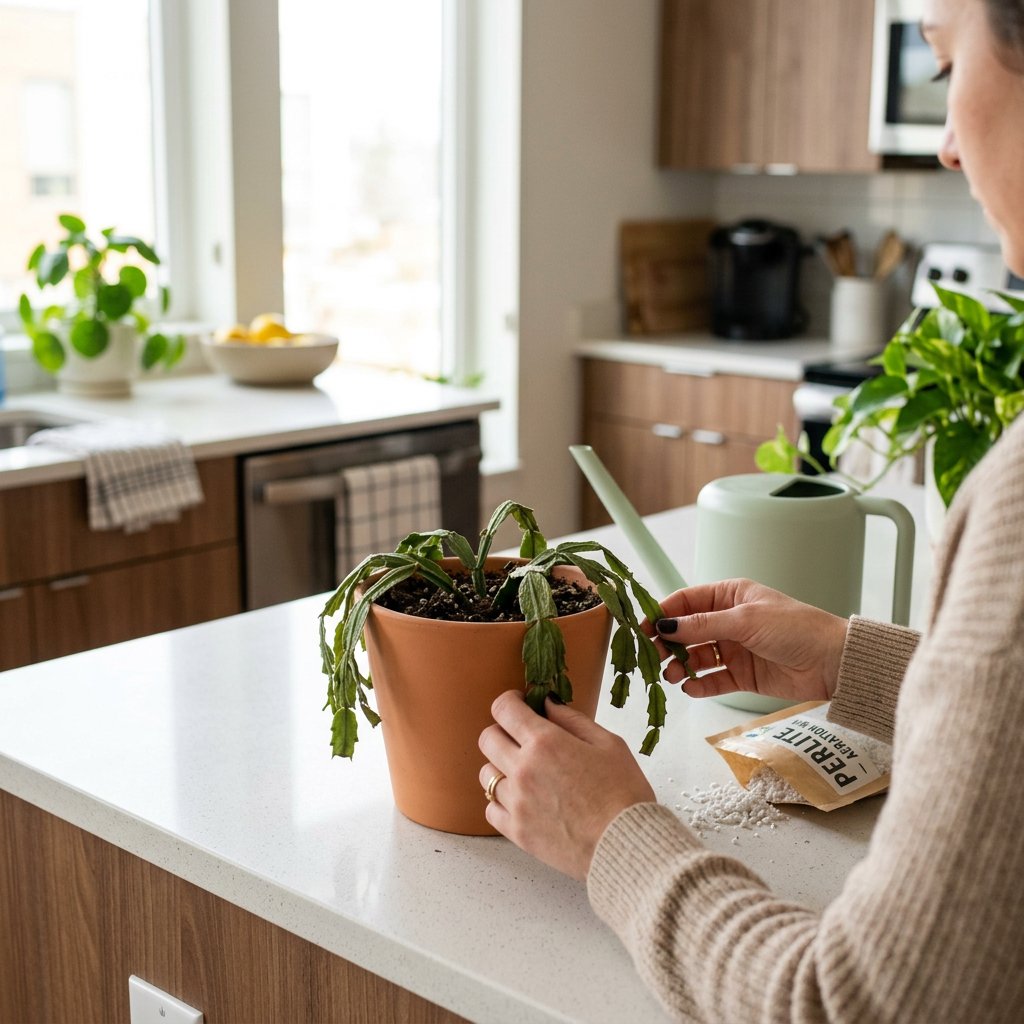
A healthy Christmas Cactus (Schlumbergera bridgesii) has plump, firm, and glossy green segments. When the plant is distressed, you will likely notice the following symptoms:
- Limp, drooping stems that lack their usual structure.
- Wrinkled or shriveled segments, known botanically as cladodes (the flattened stem sections that act like leaves).
- Pale or yellowish discoloration, which is a sign of chlorosis (a loss of green pigment, usually due to stress or lack of nutrients).
- Segments dropping off at the slightest touch.
The Causes: Why is My Christmas Cactus Limp?
To fix the plant, we first need to figure out what went wrong. A limp Christmas Cactus is usually crying out for help due to one of these common environmental stressors:
- Overwatering and Root Rot: This is the number one culprit. Despite having "cactus" in their name, these plants are actually epiphytes—meaning they naturally grow on tree branches in humid Brazilian rainforests, not in dry, sandy deserts. While they love moisture, sitting in soggy, poorly draining soil drowns their roots, leading to root rot (a fungal infection that destroys the root system).
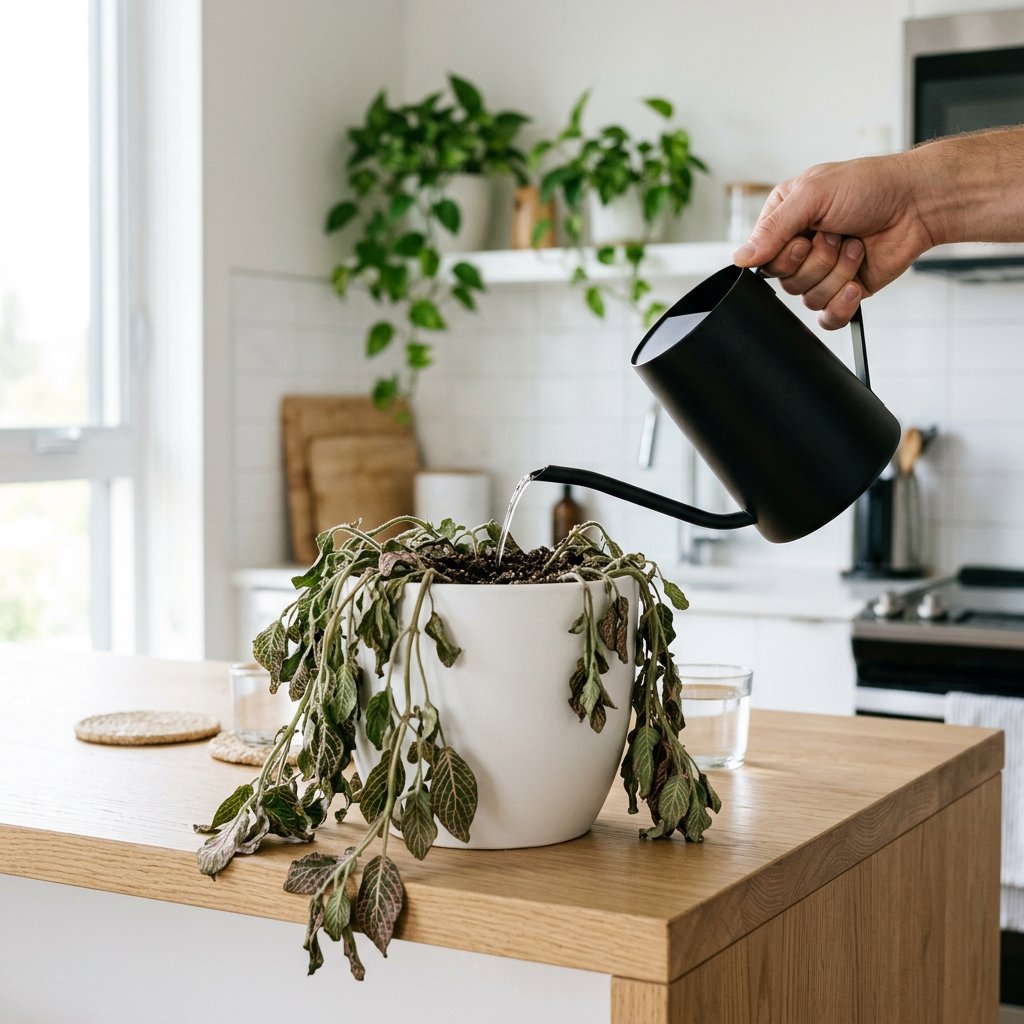
- Underwatering: Confusingly, an underwatered Christmas cactus looks almost exactly like an overwatered one. If the soil is bone-dry and the segments are paper-thin and wrinkled, your plant is simply severely dehydrated.
- Temperature Shock: These tropical plants despise cold drafts from windows, blasts of hot air from heating vents, and sudden temperature drops.
- Too Much Direct Sun: In their natural habitat, they live under a canopy of shade. Harsh, direct sunlight can scorch their delicate segments and cause them to wilt.
The Solutions: How to Revive Your Limp Plant
Ready to play plant doctor? Follow these actionable steps to nurse your Christmas Cactus back to health.
Step 1: Diagnose the Soil and Roots
Before doing anything, stick your finger about two inches into the soil.
- If the soil is wet, dense, or smells slightly swampy, you are dealing with overwatering.
- If the soil is completely dry, compacted, and pulling away from the sides of the pot, your plant is underwatered.
- Tip: If you are unsure what is wrong with your plant, you can use the AI-powered plant disease scanner in the Plantiary app to get an accurate diagnosis in seconds!
Step 2: Treat Overwatering (Repotting)
If the soil is waterlogged, you need to act fast to save the roots.
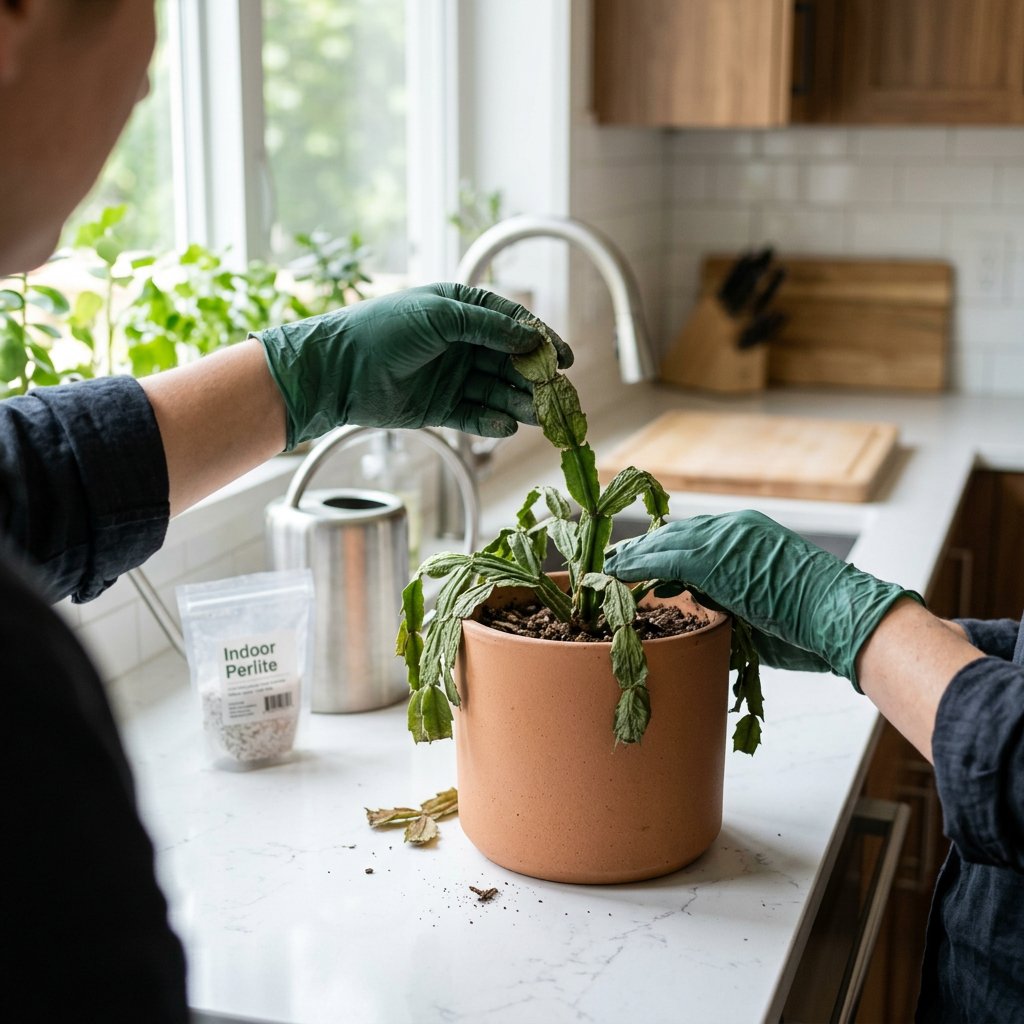
- Gently remove the plant from its pot and inspect the roots. Healthy roots are white or tan and firm. Rotted roots are dark brown, mushy, and easily fall apart.
- Using sterilized scissors, trim away any mushy, dead roots.
- Repot the cactus in a fresh, well-draining potting mix. A blend of regular potting soil mixed with plenty of perlite and orchid bark is perfect for mimicking their natural airy environment.
- Ensure the new pot has drainage holes at the bottom. Wait a few days before lightly watering.
Step 3: Treat Underwatering (Rehydration)
If your plant is simply thirsty, a regular top-watering might not be enough, as extremely dry soil can become hydrophobic (repelling water).
- Fill a bowl or basin with room-temperature water.
- Place the plant's pot directly into the water, allowing it to soak moisture up through the bottom drainage holes.
- Leave it for 30 to 45 minutes until the top of the soil feels moist.
- Remove the pot, let the excess water drain away completely, and place it back in its usual spot. You should see the leaves plump up within a day or two!
Step 4: Optimize the Environment
To keep your Christmas Cactus thriving long-term, make sure its living conditions are just right.
- Adjust Lighting: Move the plant to a spot with bright, indirect sunlight. An east-facing window is usually perfect.
- Regulate Temperature: Keep the plant in a stable temperature between 60°F and 70°F (15°C - 21°C). Keep it away from drafty doors or heating radiators.
- Boost Humidity: Since they are tropical, they appreciate a little extra moisture in the air. Consider placing a pebble tray filled with water beneath the pot.
Seeing your houseplant struggle can be discouraging, but plants are incredibly eager to live. By making a few simple adjustments to your watering routine and environment, your Christmas Cactus will bounce back, plumper and happier than ever. Don't forget to track your watering schedules and monitor your plant's recovery journey using the Plantiary app. Happy planting!