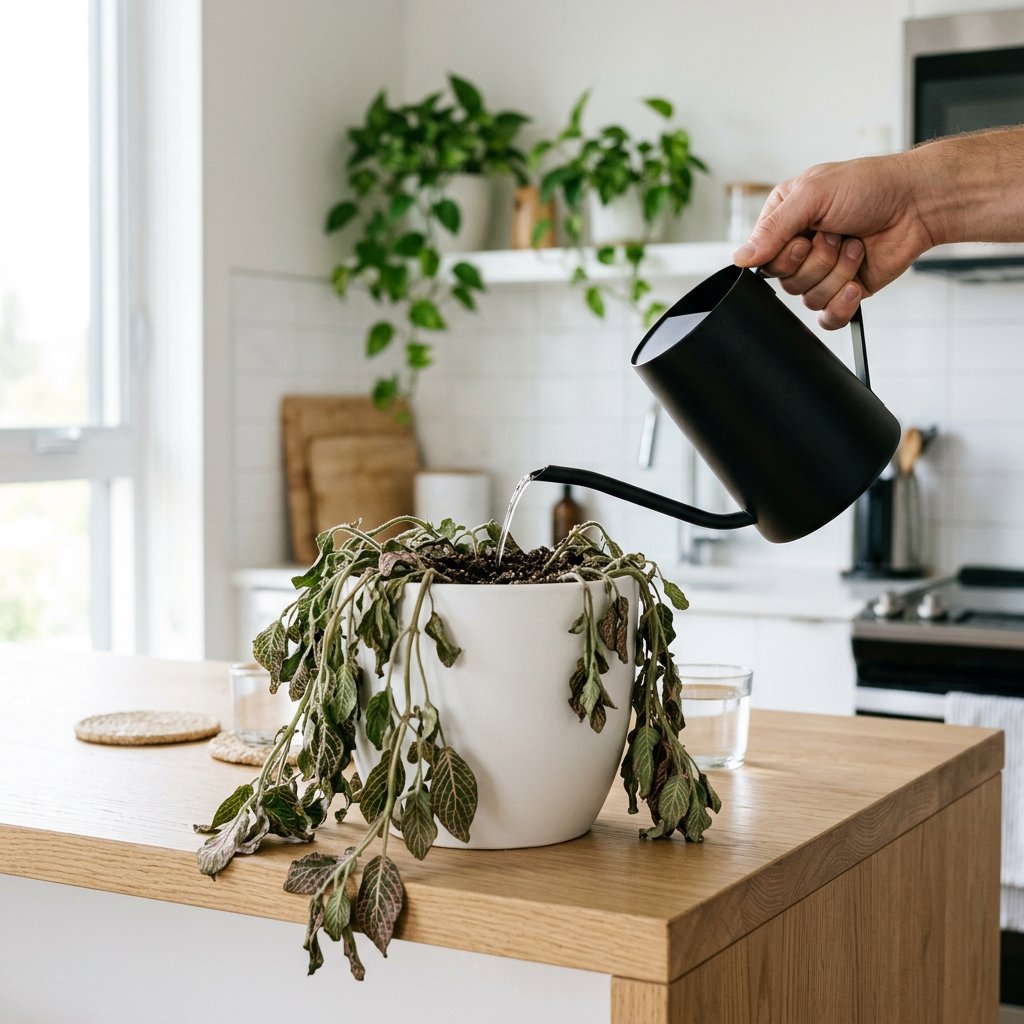
Have you ever walked into your room only to find your vibrant Fittonia completely collapsed over the edges of its pot, looking utterly lifeless? If your heart just skipped a beat, take a deep breath! You are definitely not a bad plant parent. Fittonias, affectionately known as Nerve Plants due to their striking, vein-like leaf patterns, are the notorious "drama queens" of the houseplant world.
They are highly expressive and will visually protest the exact moment their conditions aren’t perfectly met. The good news? They are incredibly resilient, and a sudden fainting spell is rarely a death sentence. Let’s dive into why your Fittonia is throwing a tantrum and how to bounce it back to life fast.
The Problem: Recognizing a Fainting Fittonia
When a Fittonia faints, the symptoms are dramatic and unmistakable:
- Limp, lifeless foliage: The leaves will feel paper-thin and soft to the touch.
- Collapsed stems: The stems will lose all their rigidity, folding over the sides of the planter.
- Overall drooping: The entire plant looks as though it has suddenly expired overnight.
While it looks terrifying, this extreme drooping is simply your plant's way of communicating. It is an evolutionary survival mechanism, but to fix it, we first need to understand what triggered it.
The Causes: Why Is Your Nerve Plant Drooping?
Fittonias rely heavily on turgor pressure—the water pressure inside the plant's cells that keeps the stems and leaves firm and standing upright. When that pressure drops, the plant deflates like a leaky balloon. Here are the primary culprits behind this sudden loss of pressure:
- Underwatering (The Most Common Cause): Fittonias have shallow root systems and despise drying out completely. If the soil becomes bone dry, the plant rapidly loses its turgor pressure and collapses.
- Overwatering and Root Rot: Ironically, too much water causes the exact same symptom. If the soil is constantly soggy, the roots suffocate and rot. Without healthy roots, the plant cannot absorb water, causing it to wilt even though it is sitting in a puddle.
- Low Humidity: Native to the tropical rainforests of South America, Fittonias thrive in high moisture. If your indoor air is too dry, the plant loses water through its leaves faster than its roots can absorb it.
- Temperature Shock: Sudden exposure to cold drafts from a window or an air conditioning vent can cause the plant's cells to go into shock, leading to a sudden wilt.
If you are unsure whether your plant's symptoms are due to a watering issue, a pest, or a disease, you can use the AI-powered plant disease scanner in the Plantiary app to get a fast, accurate diagnosis in seconds!
The Solutions: Step-by-Step Fittonia Revival
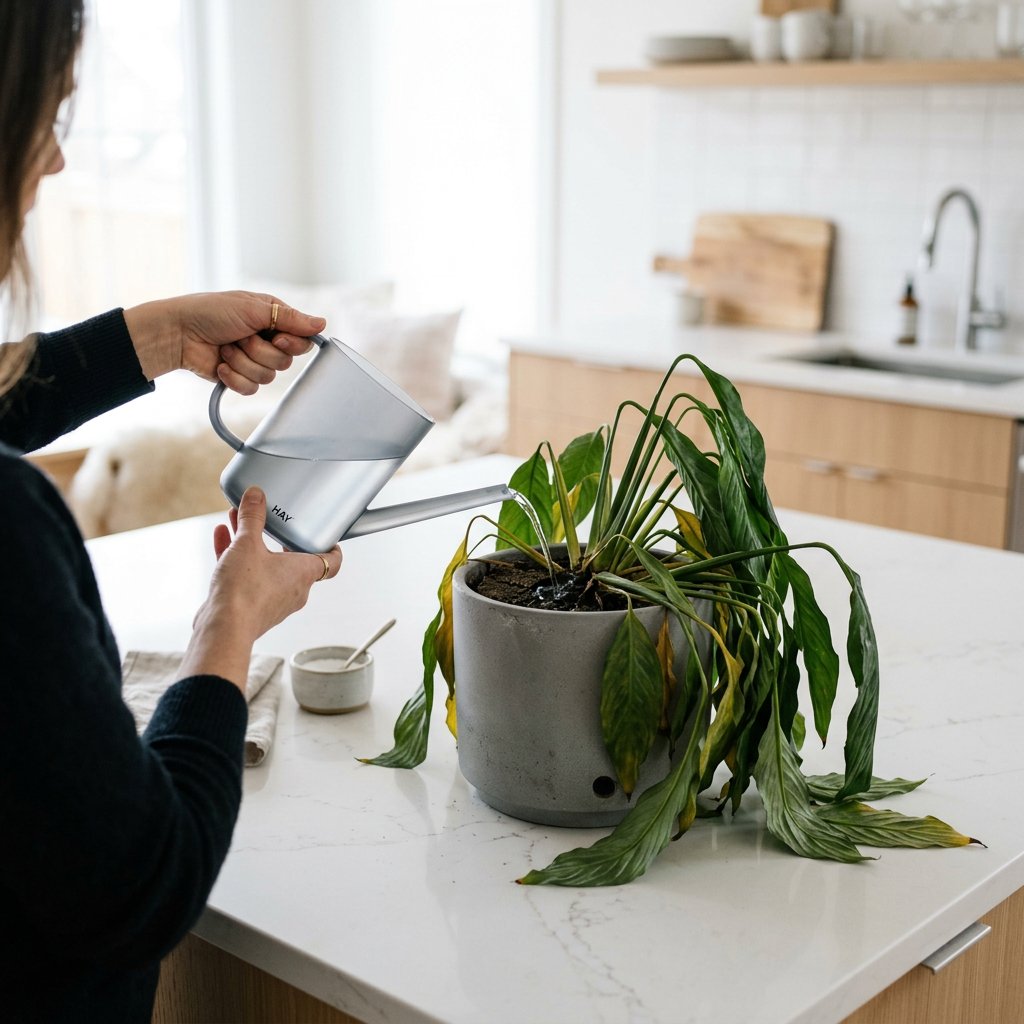
Before you reach for the watering can, you must determine why the plant fainted. Treating an overwatered plant with more water will seal its fate. Follow these steps to diagnose and treat the issue safely.
Step 1: The Touch Test
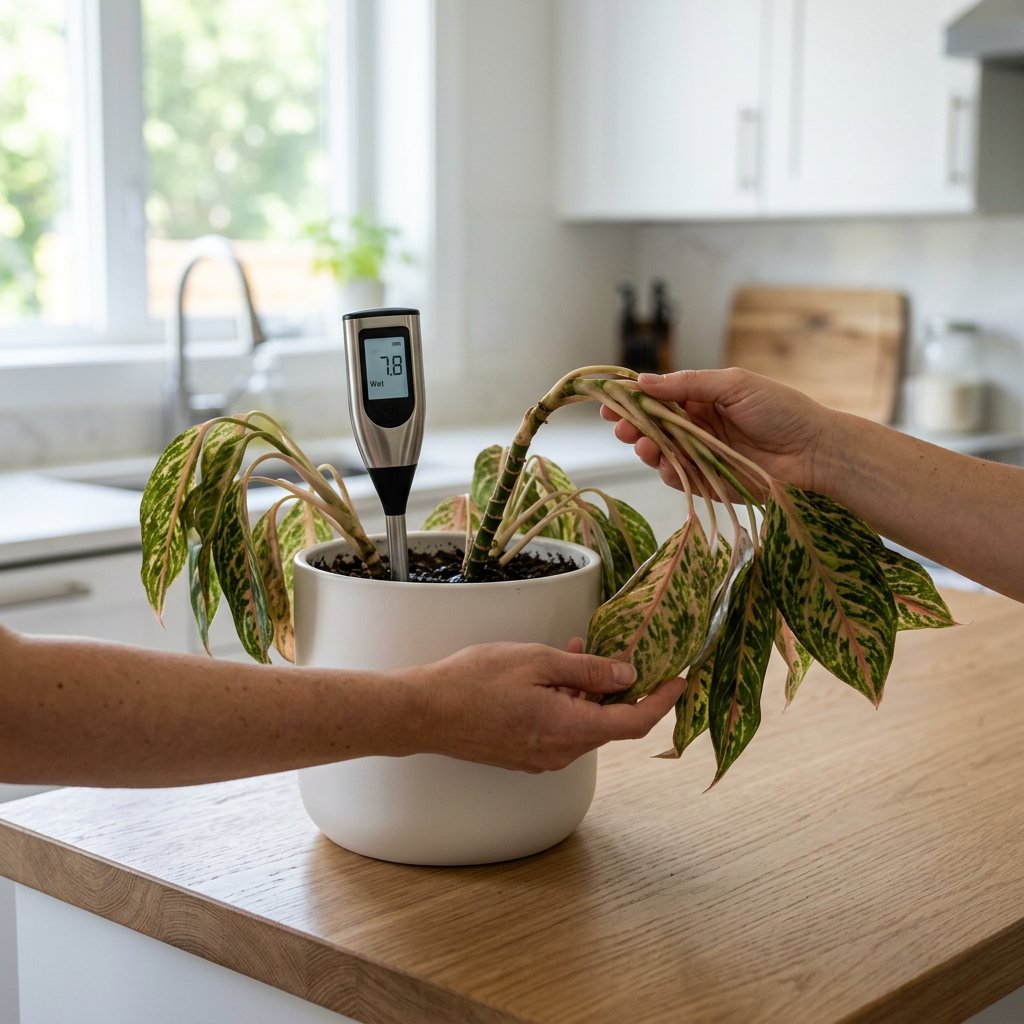
Poke your finger about an inch into the potting soil.
- If the soil feels incredibly dry, hard, or dusty, your plant is underwatered. Proceed to Step 2.
- If the soil feels heavy, muddy, and wet, your plant is overwatered. Skip to Step 3.
Step 2: The Emergency Soak (For Underwatered Fittonias)
If the soil is bone dry, a standard top-watering might not work, as dry soil often repels water. Instead, we need to bottom-water:
- Fill a bowl or basin with room-temperature water.
- Place your Fittonia's nursery pot (which must have drainage holes) directly into the water.
- Allow the plant to sit and soak up water from the bottom for 30 to 45 minutes.
- Remove the pot and let the excess water drain completely. Within 2 to 4 hours, your Fittonia will miraculously stand back up!
Step 3: The Root Rescue (For Overwatered Fittonias)
If the soil is soggy, your plant is suffocating.
- Gently remove the Fittonia from its pot and inspect the roots. Healthy roots are firm and light-colored; rotting roots are mushy, dark, and smell foul.
- Use sterilized scissors to trim away any rotting roots.
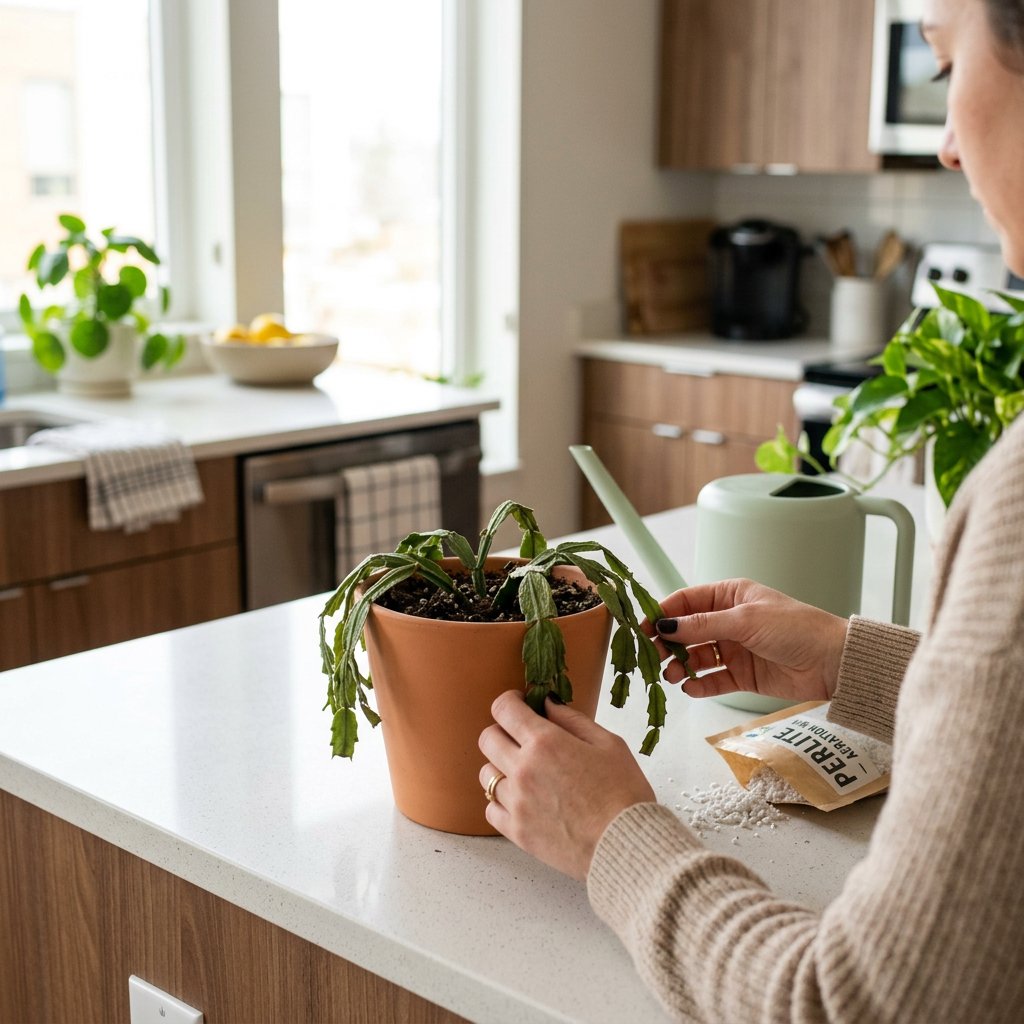
- Repot the plant in fresh, well-draining indoor potting soil mixed with perlite to improve airflow.
- Wait a few days before lightly watering again.
Step 4: Create a Humidity Bubble
Regardless of the cause, a fainting Fittonia will appreciate a burst of humidity while it recovers.
- Mist the air around the plant slightly (avoid soaking the leaves, which can invite fungal issues).
- Alternatively, place the plant on a pebble tray filled with water, ensuring the bottom of the pot sits on the pebbles, not in the water itself.
- For a rapid recovery, place a clear glass cloche or a large, clear plastic bag loosely over the plant for 24 hours to trap ambient moisture.
Keeping Your Fittonia Happy Long-Term
To prevent future fainting spells, consistency is key. Keep your Fittonia in bright, indirect light—direct sun will scorch their delicate leaves. Try to keep the soil evenly moist, watering just as the top half-inch of soil begins to feel dry to the touch.
Struggling to remember when to water? You can easily set up customized, automated care and watering reminders in the Plantiary app. Let the app remember your watering schedule so you can simply enjoy the vibrant, drama-free beauty of your thriving houseplant collection!