You are admiring your favorite houseplant, and the moment you gently nudge the pot, a sudden cloud of tiny black flies erupts into the air. If this sounds familiar, take a deep breath. You haven't failed as a plant parent! Encountering these pesky little invaders is a completely normal rite of passage that happens to almost everyone who brings nature indoors. Those annoying little bugs are called fungus gnats, and while they can be a nuisance, they are highly treatable. Let’s walk through exactly what is happening in your soil and how to help your green friends thrive again.
The Problem: What Are Fungus Gnats?
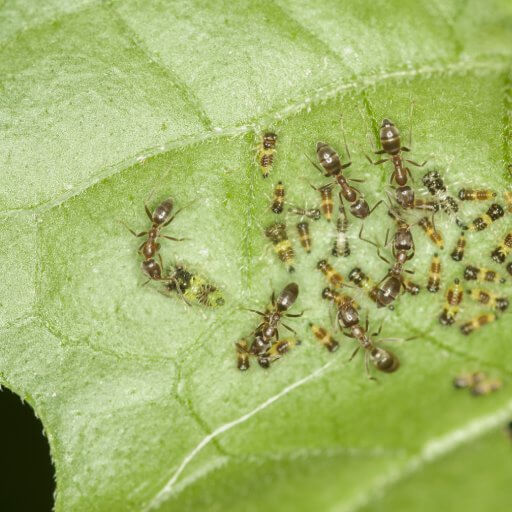
Fungus gnats are tiny, dark flies that look very similar to fruit flies or mosquitoes. They tend to hover right around the soil line of your indoor plants. To treat them effectively, it helps to understand their two main life stages:
- The Adults: The flying bugs you see are adult fungus gnats. They are weak fliers and completely harmless to humans (they don't bite) and mostly harmless to your plants. Their only job is to lay eggs.
- The Larvae: This is where the real trouble begins. The eggs hatch into microscopic larvae that live in the soil. They feed on soil fungi, decaying plant matter, and—unfortunately—the tender root hairs of your plants.
If the larval population gets out of hand, your plant’s root system can suffer. You might eventually notice chlorosis—a botanical term for when leaves turn pale or yellow because damaged roots can no longer absorb necessary nutrients—as well as drooping or stunted growth.
If you are ever unsure what is wrong with your plant or why its leaves are yellowing, you can use the AI-powered plant disease scanner in the Plantiary app to get a diagnosis in seconds!
The Causes: Why Are They Here?
Fungus gnats are opportunists. They do not magically appear out of nowhere; they are simply drawn to specific environments. Here is what attracts them:
- Overwatering: This is the number one cause of fungus gnats. Gnats require a constantly moist environment to lay their eggs and for their larvae to survive.
- Poor Drainage: Pots without drainage holes or heavy, compacted soil trap excess water, creating a swampy, perfect nursery for gnats.
- Decaying Organic Matter: Peat-heavy soils that stay wet will naturally grow microscopic fungi. This fungi acts as an all-you-can-eat buffet for hungry gnat larvae.
- Contaminated Soil: Sometimes, bags of commercial potting soil already contain dormant gnat eggs that hatch once you bring the soil inside and add water.
Please don't feel guilty if you've overwatered your plants! Loving our plants a little too much with the watering can is the most common mistake in the plant community.
The Solutions: Step-by-Step Fungus Gnat Treatment
Because fungus gnats live above and below the soil, you have to treat both the adults and the larvae simultaneously to break their life cycle. Here is the safest, most scientifically sound way to eradicate them.
Step 1: Let the Soil Dry Out
Immediately pause your watering schedule. Allow the top 2 to 3 inches of the soil to dry out completely. Without moisture, the eggs cannot hatch, and the larvae cannot survive. This simple environmental change is often enough to stop a mild infestation in its tracks.
Step 2: Catch the Adults with Sticky Traps
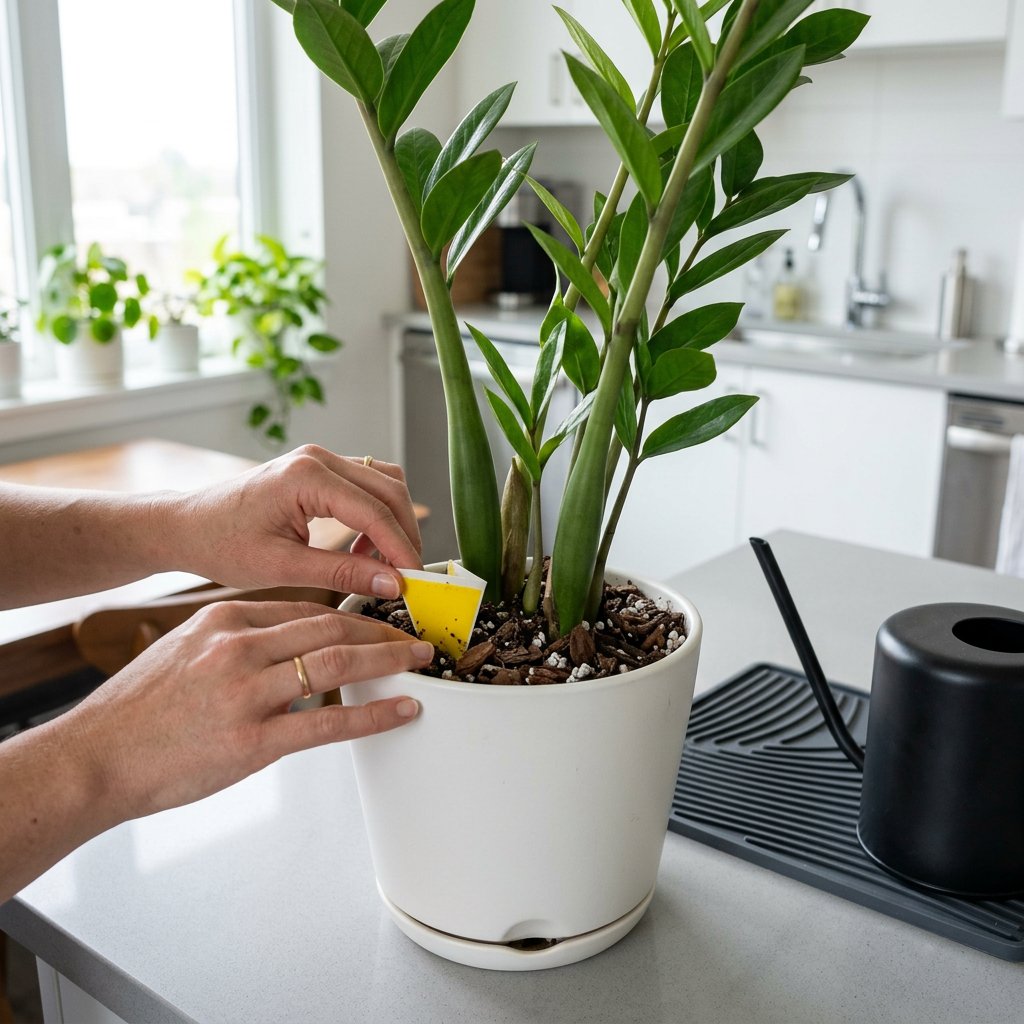
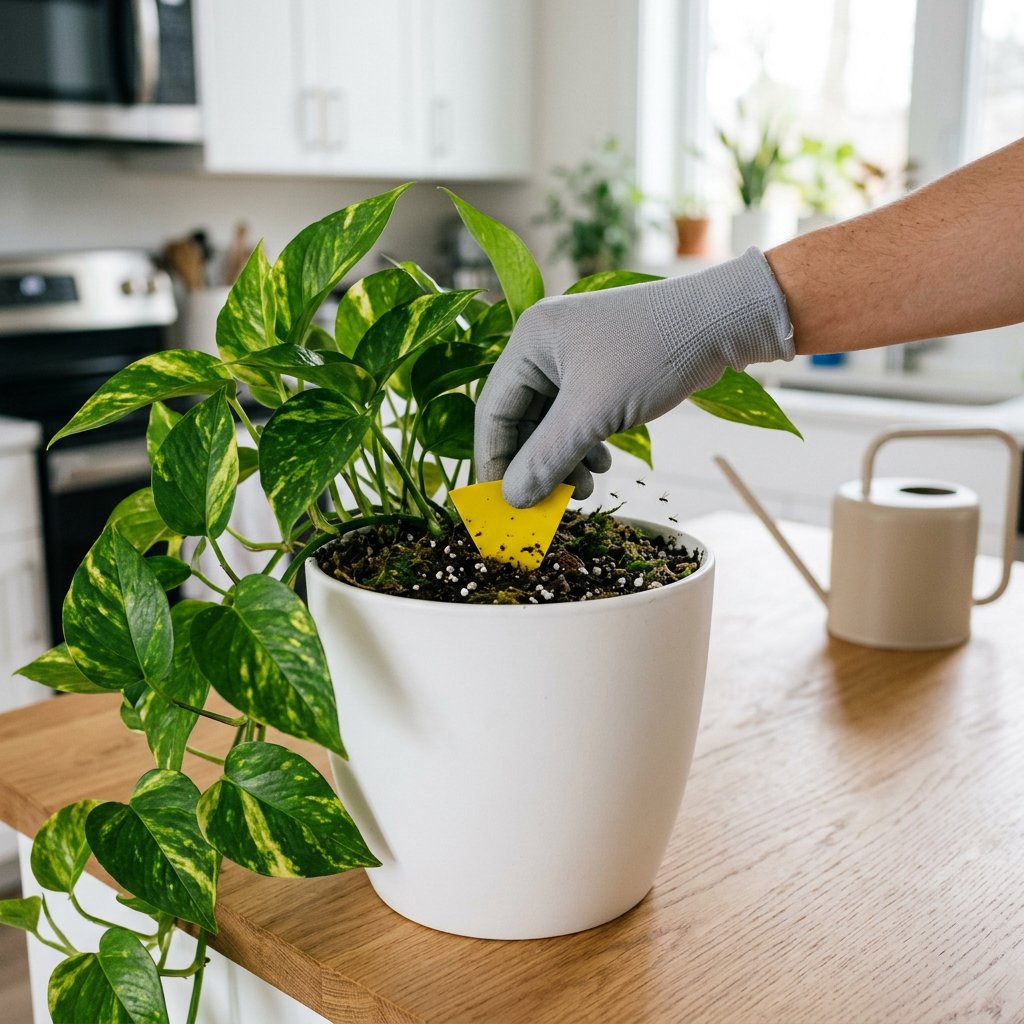
To stop the adult gnats from laying more eggs, place yellow sticky traps inside your plant pots. Fungus gnats are naturally highly attracted to the color yellow. When they fly toward the traps, they get stuck. Replace the traps once they are full.
Step 3: Treat the Soil with BTI
For the larvae hiding in the soil, avoid harsh chemicals and instead use BTI (Bacillus thuringiensis subspecies israelensis). BTI is a naturally occurring soil bacterium that is highly toxic to gnat larvae but completely harmless to plants, humans, and pets.
- You can buy BTI in the form of "Mosquito Bits" or "Mosquito Dunks."
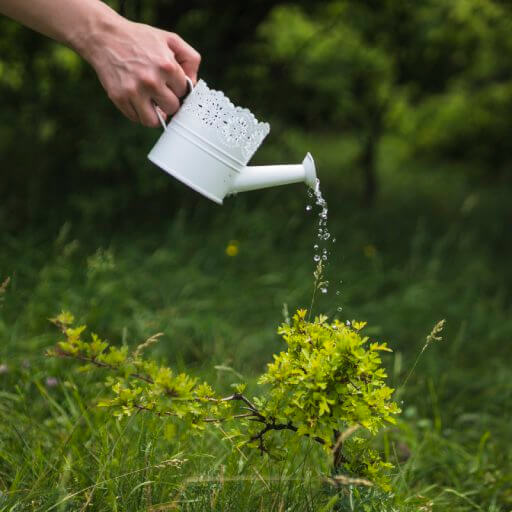
- Soak the bits in your watering can overnight to create a BTI "tea."
- Remove the bits, and water your plants with this infused water. The larvae will ingest the BTI and die off within a few days.
Step 4: Switch to Bottom Watering
To prevent the top layer of soil from staying permanently wet, try bottom watering. Fill a bowl or saucer with water and place your nursery pot (which must have drainage holes) directly into it. The soil will soak up exactly what it needs through capillary action. After 20-30 minutes, remove the pot and let the excess drain. This keeps the top layer of soil dry, making it deeply unappealing to egg-laying gnats.
Step 5: Repot if Necessary (Severe Cases)
If your soil is old, heavily degraded, or smells foul, it might be time for a fresh start. Gently remove your plant, gently rinse away the old soil from the roots, and repot it in a fresh, well-draining soil mix containing plenty of perlite or pumice to ensure excellent airflow.
Dealing with pests can feel overwhelming, but patience is key. By breaking the life cycle with these proven methods, you will have a gnat-free home in just a few weeks. Keep up the great work, and remember to check the Plantiary app for customized watering schedules to help you avoid soggy soil in the future!