Have you noticed tiny black bugs hovering around your beloved ZZ Plant every time you water it? You are certainly not alone! These annoying little visitors are likely fungus gnats, and dealing with them is practically a rite of passage for plant parents. ZZ Plants (Zamioculcas zamiifolia) are famous for being incredibly resilient and nearly indestructible, but even the hardiest of houseplants can occasionally fall victim to a pest invasion.
Please don't worry, and definitely don't feel guilty—you haven't failed as a plant parent! Pests are a natural part of keeping nature inside our homes. If you are tired of swatting away tiny flies while enjoying your morning coffee, let's dive into exactly how you can reclaim your indoor jungle. And remember, if you are ever unsure what is wrong with your plant, you can use the AI-powered plant disease scanner in the Plantiary app to get an accurate diagnosis in seconds.
The Problem: Identifying Fungus Gnats and Their Symptoms
Before we banish these bugs, it is helpful to know exactly what we are dealing with. Fungus gnats are small, dark, mosquito-like insects (about 1/8 inch long) that fly rather sluggishly around your houseplants.
Adults vs. Larvae: The flying adults are mostly a nuisance to you and do not actually bite or damage your plant's leaves. The real issue lies beneath the surface. Fungus gnat larvae—tiny, translucent worms with black heads—live in the soil and feed on fungi and decaying organic matter.
If you have a fungus gnat infestation, you might notice these symptoms:
- Flying Insects: A cloud of tiny black flies emerging from the soil when you tap the pot or water the plant.
- Soil Crawlers: Tiny silver or translucent larvae wriggling in the top layer of the damp soil.
- Leaf Yellowing: In severe cases, larvae may run out of fungi to eat and start feeding on your ZZ plant's delicate root hairs. This root damage can lead to chlorosis (a botanical term for the loss of green pigment, causing leaves to turn yellow) or a wilted appearance.
The Causes: Why Are They in My ZZ Plant's Soil?
Fungus gnats only need two things to thrive: moisture and decaying organic matter. If they have set up camp in your ZZ Plant, it usually comes down to watering habits.
- Overwatering: ZZ plants have thick, potato-like underground stems called rhizomes that are designed to store water for long periods. Because of this, they prefer their soil to dry out almost completely between waterings. If the soil stays consistently wet, it creates a hospitable breeding ground for fungi—the primary food source for gnat larvae.
- Poor Soil Drainage: A pot without drainage holes, or a potting mix that is too dense and peaty, acts like a sponge. It traps moisture beneath the surface, creating a soggy environment that gnats absolutely love.
The Solutions: Step-by-Step Fungus Gnat Treatment
Treating fungus gnats requires a two-pronged approach to break their life cycle: you have to tackle both the flying adults and the soil-dwelling larvae. Here is the safest, most scientifically sound way to do it:
Step 1: Stop Watering and Let the Soil Dry The absolute best first line of defense is to starve the larvae of moisture. ZZ plants thrive on neglect, so let the top two to three inches of soil dry out completely. This process, known as desiccation, naturally dehydrates and kills off the eggs and larvae. To avoid overwatering in the future, set a customized watering schedule in the Plantiary app so you know exactly when your ZZ plant actually needs a drink!
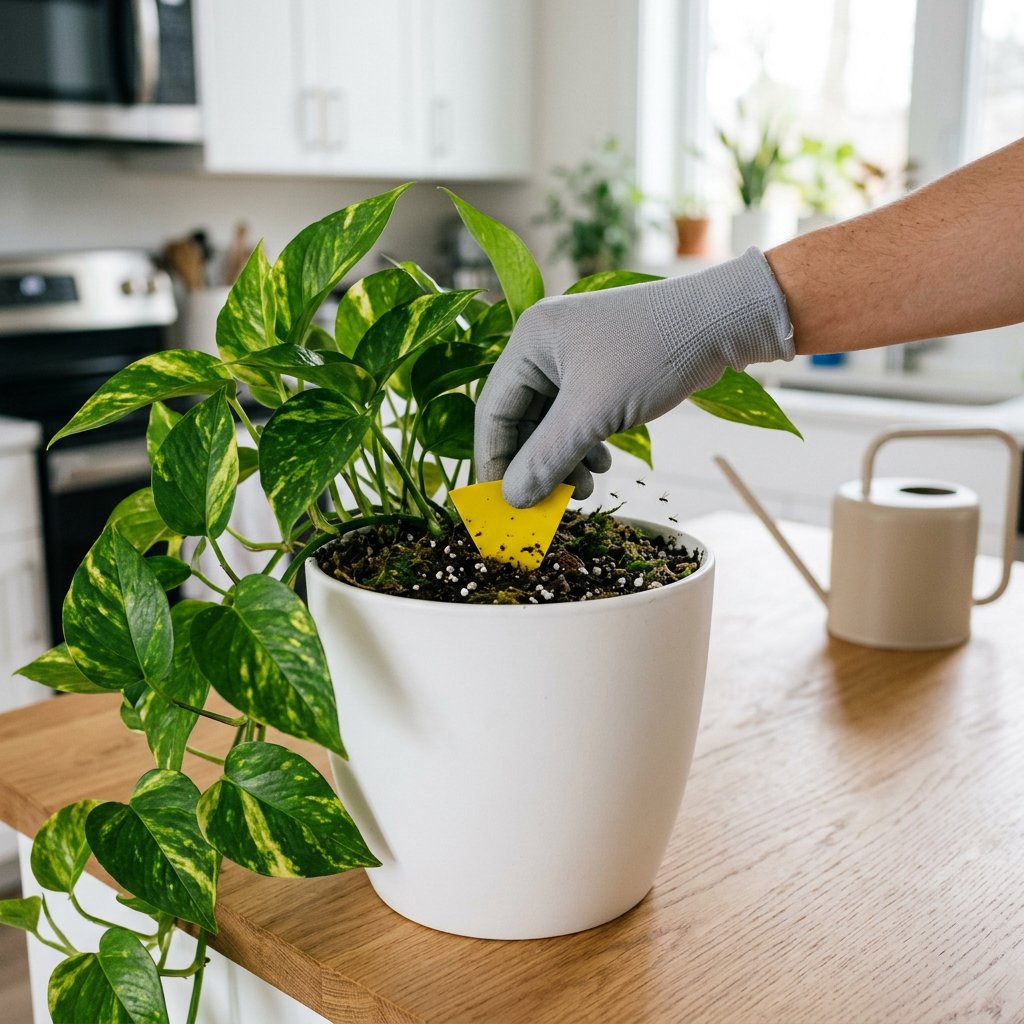
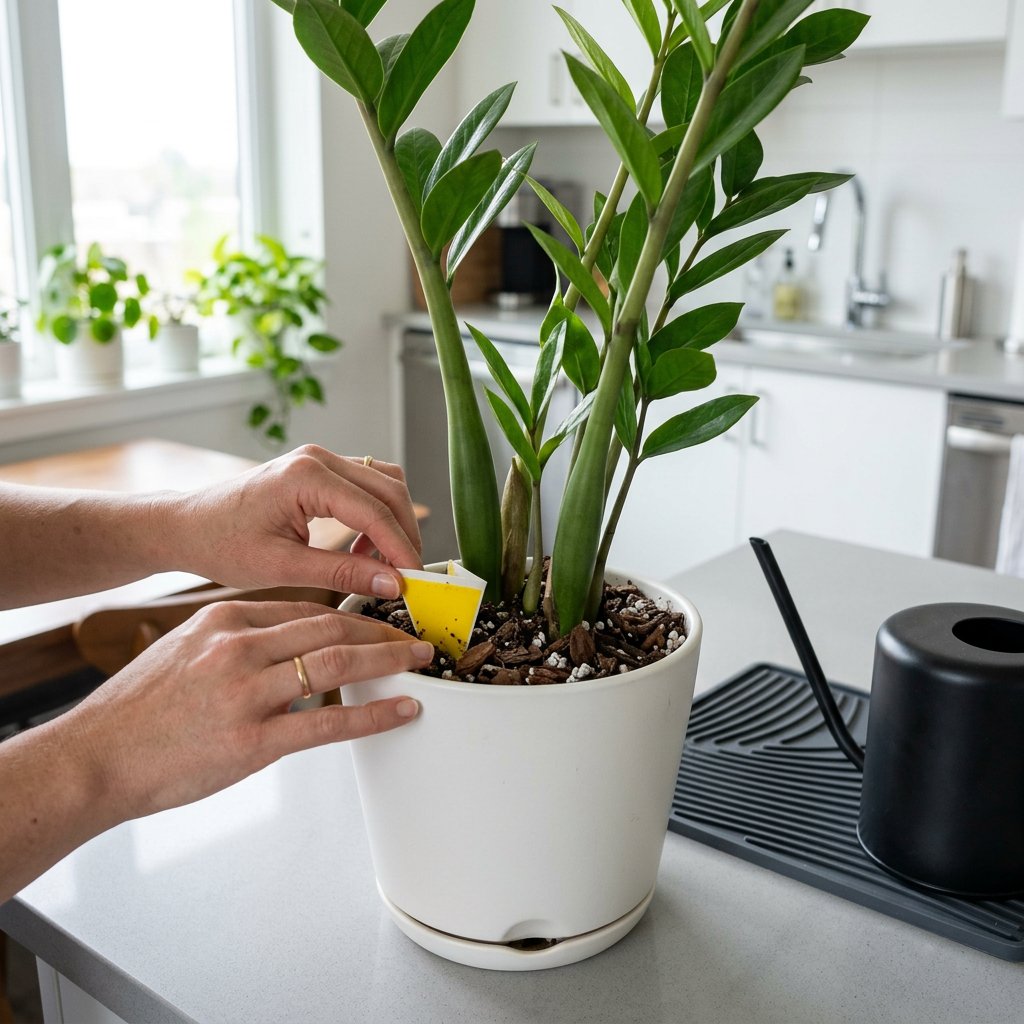
Step 2: Catch the Adults with Yellow Sticky Traps Adult gnats are highly attracted to the color yellow. Place a few yellow sticky traps directly into the soil of your ZZ plant. This will quickly reduce the adult population, physically preventing them from laying hundreds of new eggs in your potting mix.
Step 3: Treat the Soil for Larvae To eradicate the remaining larvae, use Bacillus thuringiensis israelensis (BTI), commonly found in products like Mosquito Bits. BTI is a naturally occurring soil bacterium that is highly toxic to gnat larvae but 100% safe for your plants, pets, and family. Simply soak the BTI bits in water to create a "tea," and use that water the next time your ZZ plant genuinely needs a drink.
Alternative Method: A soil drench using a mix of one part 3% hydrogen peroxide to four parts water will fizz up and kill larvae on contact, while simultaneously releasing beneficial oxygen to the plant's roots.
Step 4: Repot if Necessary If your soil is severely degraded, smells swampy, or stays wet for weeks on end, it is time to repot. Gently remove your ZZ plant, shake off the old, infested dirt, and repot it in a chunky, well-draining succulent or cacti mix. Always ensure your pot has open drainage holes!
Dealing with fungus gnats can be a bit frustrating, but it is completely manageable. By adjusting your watering habits and breaking the pest's life cycle, your resilient ZZ plant will bounce back in no time. Be patient with yourself and your plants! To keep your indoor garden thriving and pest-free, rely on the Plantiary app to track your care routines and keep your green friends happy.