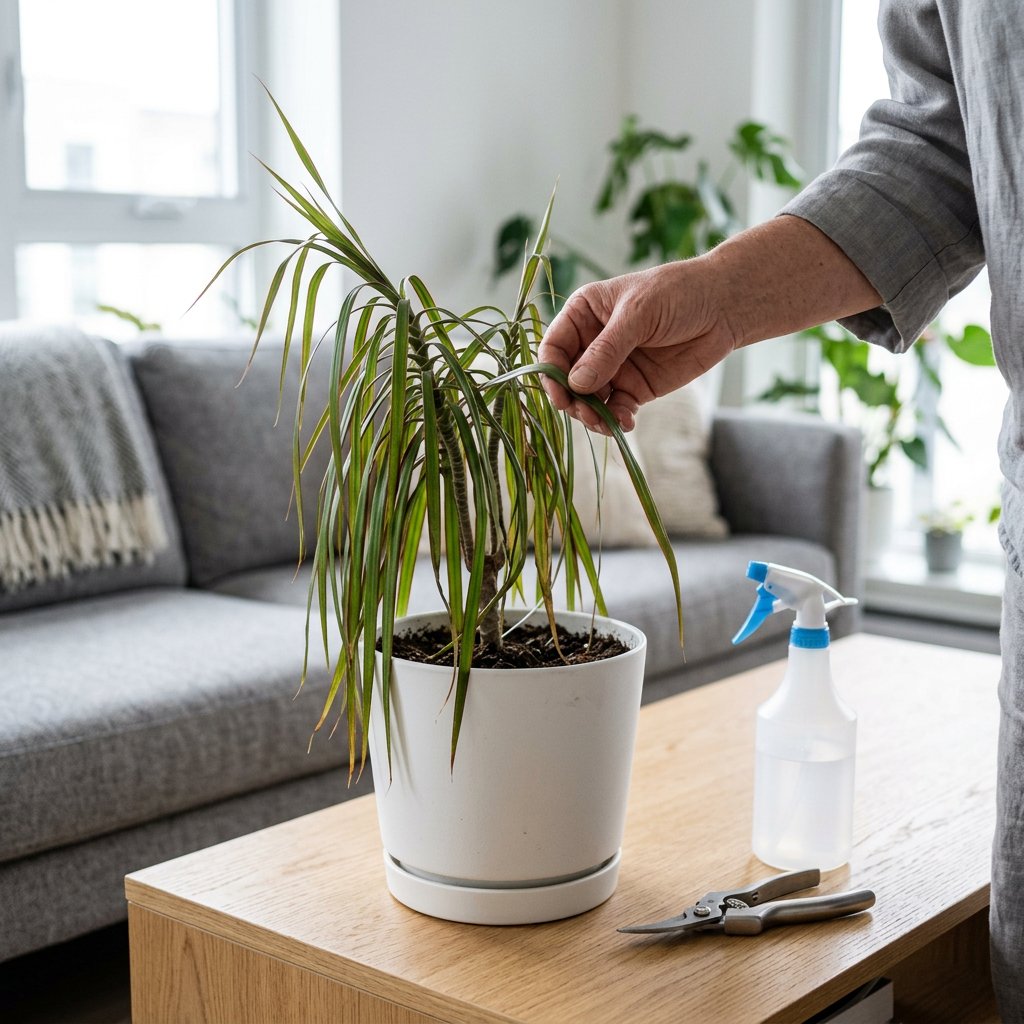
Walking past your favorite Dracaena and noticing its once-perky leaves looking sad and wilted can make any plant parent's heart sink. But take a deep breath! Seeing drooping foliage is incredibly common, and it certainly does not mean you are a bad plant owner. Plants communicate through their leaves, and right now, your Dracaena is simply asking for a little help. Whether you have a Dragon Tree (Dracaena marginata) or a Corn Plant (Dracaena fragrans), diagnosing the issue and reviving your green friend is completely possible.
Let’s break down exactly what is happening to your plant and how to nurse it back to health.
The Problem: Recognizing the Symptoms
When a Dracaena droops, it is actively experiencing a loss of turgor pressure. Turgor pressure is the internal water pressure inside the plant's cells that keeps stems rigid and leaves standing tall. Without enough of this internal pressure, the plant literally deflates and flops over.
Alongside the drooping, you might also notice secondary symptoms like yellowing leaves, crispy brown tips, or even a soft, mushy stem. If you are ever unsure what specific symptoms your plant is showing, you can use the AI-powered plant disease scanner in the Plantiary app to get a quick, accurate diagnosis in seconds.
The Causes: Why Are My Dracaena Leaves Drooping?
To fix the droop, we first have to play plant detective. Here are the most common scientific reasons your Dracaena is losing its posture:
- Overwatering and Root Rot: This is the most common culprit. Dracaenas are highly drought-tolerant and despise having "wet feet." Constantly soggy soil suffocates the root system, leading to root rot—a fungal condition where roots decay, turn black, and can no longer absorb water or nutrients. Ironically, an overwatered plant droops because its rotted roots cannot transport moisture to the leaves.
- Underwatering: On the flip side, leaving the soil bone-dry for weeks on end literally starves the plant of moisture, causing severe wilting as the plant drains its water reserves.
- Temperature Shock: Dracaenas are tropical plants. Sudden exposure to cold drafts from windows, air conditioning vents, or heating units can shock the plant tissue, causing the leaves to immediately sag.
- Low Humidity: Indoor heating can drastically dry out the air in your home. When the air is too dry, the leaves lose moisture faster than the roots can replace it.
The Solutions: Step-by-Step Cures
Once you have identified the likely cause, you can take immediate action. Follow these safe, scientifically proven steps to help your Dracaena recover.
Step 1: Assess the soil moisture. Before pouring any water or repotting, stick your finger about two inches into the soil. Is it soggy and dense, or dusty and dry? This physical check will tell you if you need to scale back or water more. Pro-tip: You can log your watering schedule in the Plantiary app to build a consistent routine and avoid future guessing games!
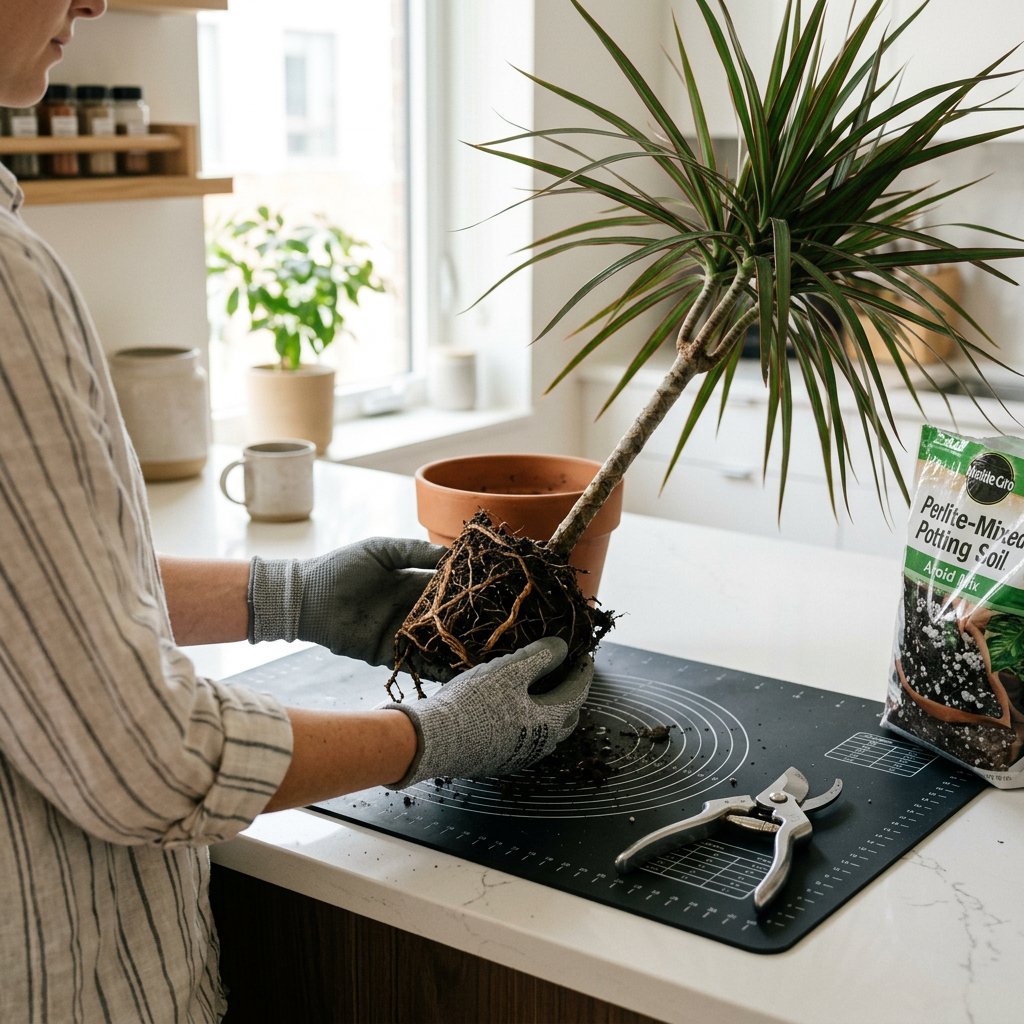
Step 2: Inspect and treat the roots (if overwatered). If the soil is soaking wet and smells slightly sour, you likely have a case of root rot. Carefully slide the plant out of its pot. Using sterilized shears, trim away any mushy, slimy, or black roots. Repot your Dracaena in a fresh, well-draining potting mix (adding perlite helps greatly) and ensure the new pot has visible drainage holes.
Step 3: Give it a thorough soak (if underwatered). If the soil is completely hard and dry, the water might run straight down the sides of the pot without soaking in. Gently aerate the topsoil with a chopstick, then water the plant deeply until moisture runs out of the bottom drainage holes. Be sure to empty the saucer afterward so the plant doesn't sit in standing water.
Step 4: Optimize the environment. Move your plant away from drafty doors, unsealed windows, and direct heating or cooling vents. Dracaenas thrive in bright, indirect sunlight and prefer stable temperatures between 65°F and 80°F (18°C - 27°C).
Step 5: Safely boost the ambient humidity. Avoid heavy misting, as water sitting on leaves can sometimes invite fungal or bacterial leaf spots. Instead, place a humidifier nearby or set your plant’s pot on a pebble tray filled with water. Make sure the water level sits below the bottom of the pot so the roots stay perfectly dry while benefiting from the evaporating moisture.
Patience is Key
Remember, healing takes time! A drooping Dracaena won't perk up overnight. It may take a couple of weeks for your plant to rebuild its turgor pressure and adjust to its new, optimized routine. Be patient, trust the process, and keep up the great work. You've got this!