There is nothing quite like brushing your hand against a fresh pot of mint and catching that crisp, invigorating aroma. Mint is famous for being a vigorous, fast-growing herb, which is why it can be so frustrating to check on your plant and find its vibrant green foliage turning a sad shade of yellow.
First things first: take a deep breath and do not feel guilty! Plant issues happen to every plant parent, no matter how experienced they are. Yellowing leaves—a condition botanists call chlorosis (which simply means the plant is losing chlorophyll, the pigment that makes leaves green)—is just your mint’s way of communicating that something in its environment needs a little adjustment.
Mint is incredibly resilient. By decoding its symptoms, we can quickly get your plant back to its lush, green glory!
The Symptoms: What Does the Yellowing Look Like?
Before we can cure the plant, we have to look closely at the symptoms. Pay attention to how and where the yellowing is happening:
- Overall fading: The entire plant looks pale, limp, and yellowish-green.
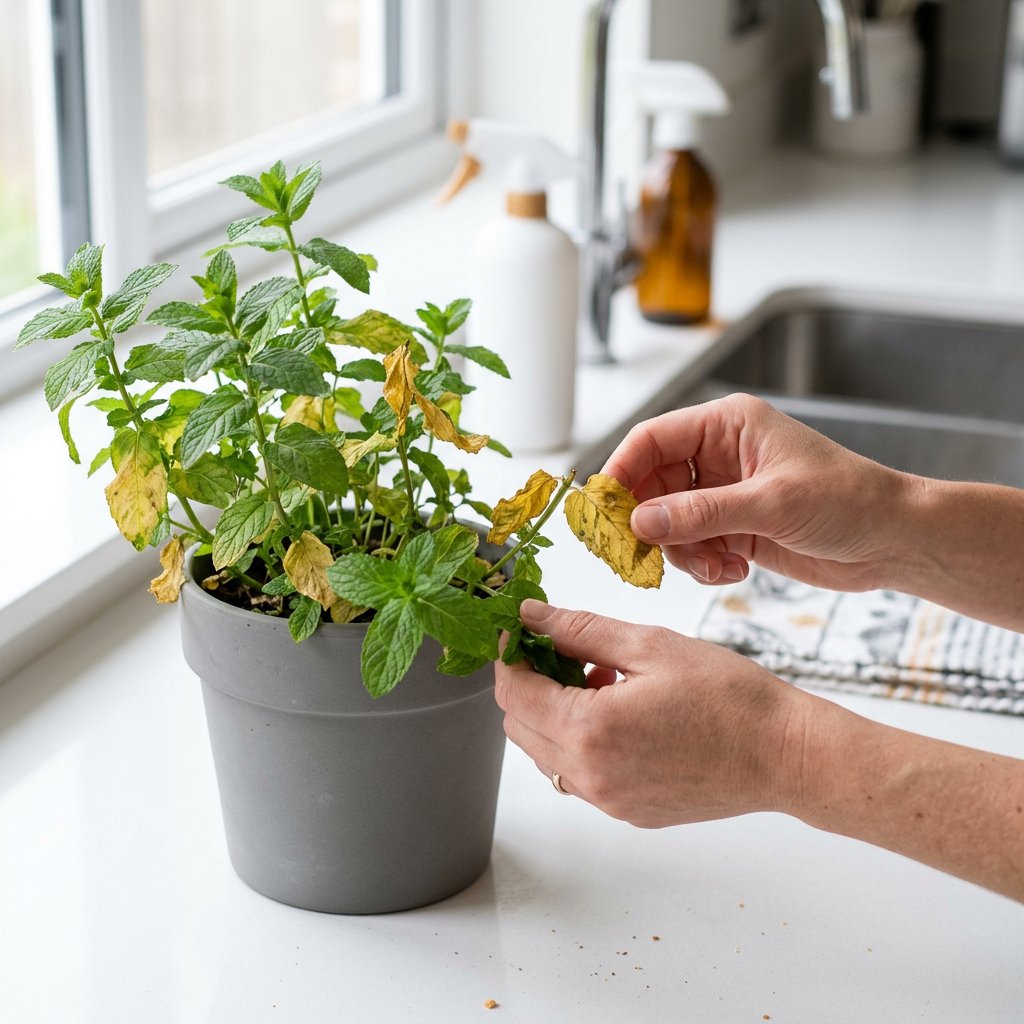
- Bottom leaves first: The older leaves near the soil are turning yellow and dropping off, while new growth looks relatively normal.
- Crispy edges: The leaves are yellow, dry, and brittle to the touch.
- Interveinal chlorosis: The leaf tissue turns yellow, but the veins remain dark green.
The Causes: Why Is Your Mint Turning Yellow?
Once you know what the yellowing looks like, you can narrow down the culprit. Here are the most common reasons your mint leaves are losing their color:
1. Overwatering and Poor Drainage
This is the number one cause of yellowing mint. While mint plants love consistently moist soil, they absolutely despise "wet feet." If the soil is waterlogged, the roots cannot absorb oxygen. This leads to root rot, stopping the plant from taking up water and nutrients, which causes the leaves to turn a pale, mushy yellow.
2. Underwatering
On the flip side, if you forget to water your mint during a hot week, it will panic. To conserve water, the plant will sacrifice its oldest leaves. These leaves will turn yellow, dry out, and become crispy before falling off.
3. Nutrient Deficiencies
Because mint grows so rapidly, it is a heavy feeder. If it has been sitting in the same potting soil for months, it may have depleted all the available nutrients. A lack of nitrogen usually causes the older leaves to turn yellow, while an iron or magnesium deficiency often results in yellowing between the green veins.
4. Not Enough Sunlight
Mint thrives in bright light. If your indoor mint is sitting in a dark, shady corner, it will suffer from etiolation (a botanical term for when a plant stretches out and becomes pale due to a lack of light). The plant will drop leaves because it doesn't have enough solar energy to sustain them.
Tip: If you are unsure exactly what is wrong with your plant, you can use the AI-powered plant disease scanner in the Plantiary app to get an accurate diagnosis in seconds!
The Solutions: Step-by-Step Treatment
Ready to play plant doctor? Follow these actionable steps to revive your yellowing mint plant:
Step 1: Perform the "finger test" for moisture. Push your index finger about one to two inches into the soil. If it feels soaking wet and heavy, you are overwatering. Allow the top inch of the soil to dry out completely before watering again. If the soil feels bone dry and dusty, give your plant a thorough, deep watering until water runs out the bottom.
Step 2: Check your drainage. Does your pot have drainage holes? If not, your mint is at high risk for root rot. Repot your plant into a container with adequate drainage holes, using a high-quality, well-aerating potting mix containing perlite to ensure excess water can easily escape.
Step 3: Prune the yellow leaves. Once a leaf turns completely yellow, it will not turn green again. Use clean, sharp scissors to snip off the yellow leaves. This instantly makes your plant look better and redirects the plant's energy toward pushing out fresh, healthy green growth.
Step 4: Feed your plant. If watering and light aren't the issues, your mint is likely hungry. Apply a balanced, water-soluble liquid fertilizer (like a 10-10-10 formula) diluted to half-strength. Do this once every two to three weeks during the spring and summer growing seasons to replenish its nitrogen and mineral levels.
Step 5: Optimize the lighting. Move your mint to a brighter location. If it is indoors, a south-facing or east-facing window where it can receive at least 4 to 6 hours of bright, indirect sunlight is ideal. If natural light is scarce in your home, consider using a full-spectrum LED grow light.
Remember, patience is key. Implement these changes gradually, log your watering and fertilizing routines in your Plantiary app to stay on track, and watch as your mint bounces back happier and healthier than ever!