Aglaonemas, commonly known as Chinese Evergreens, are beloved for their striking, colorful foliage and beautifully easy-going nature. But even the most resilient houseplants can occasionally run into trouble. If your vibrant plant is suddenly looking a little sad and droopy, you might be facing every plant parent's least favorite visitor: root rot.
First, take a deep breath! Dealing with a sick plant or discovering root rot doesn't make you a bad plant parent. In fact, it is an incredibly common learning experience that happens to the most seasoned indoor gardeners. Let's walk through how to identify, treat, and prevent root rot together so you can get your Aglaonema back to thriving.
The Problem: Recognizing the Symptoms of Root Rot
How do you know if your Aglaonema is struggling below the surface of the soil? Because the roots are hidden, we have to look for above-ground clues. Keep an eye out for these tell-tale signs:
- Yellowing Leaves (Chlorosis): If you notice the lower leaves turning a pale, sickly yellow, this is often the first red flag. This is a condition called chlorosis, which simply means the plant is losing its green chlorophyll pigment because it cannot absorb nutrients properly.
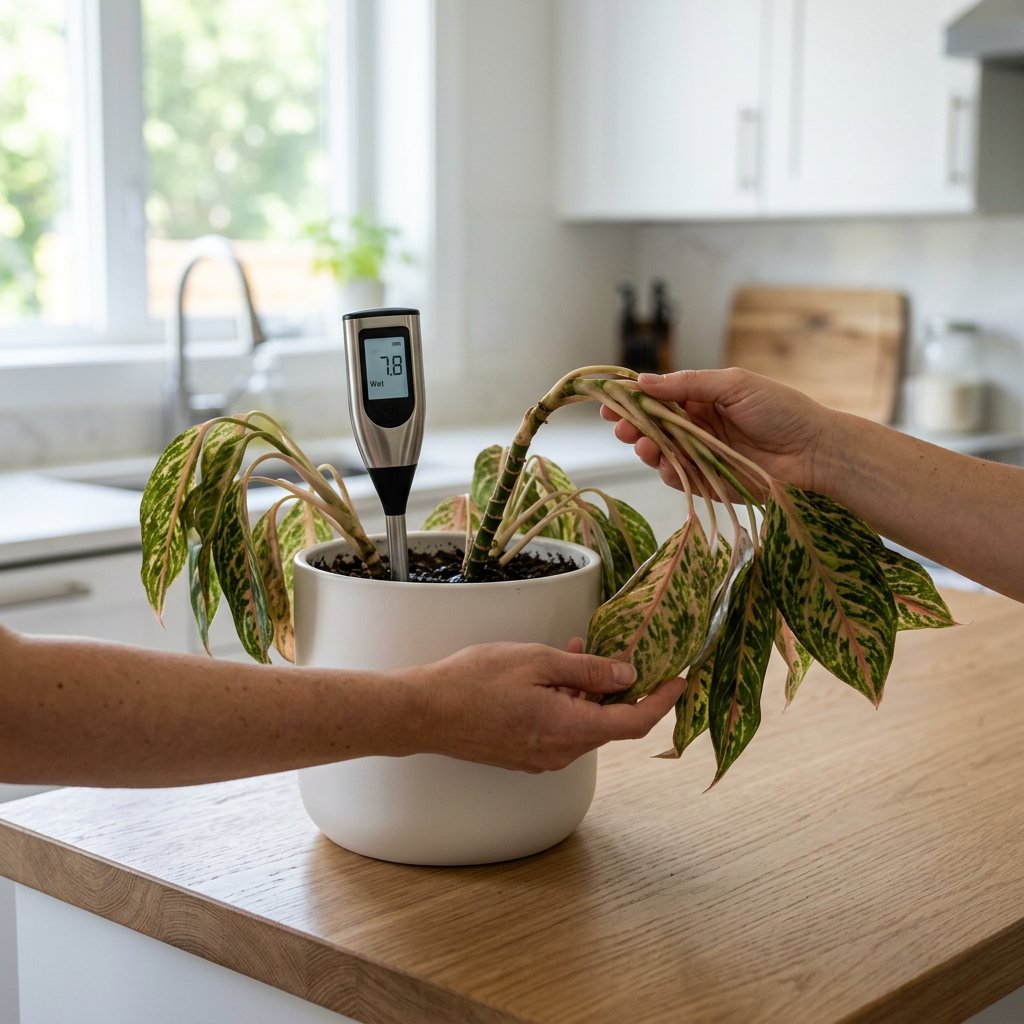
- Wilting Despite Wet Soil: Your plant looks thirsty and droopy, but when you touch the soil, it feels damp, heavy, or soggy.
- Mushy Stems: The base of the stems near the soil line feels soft, squishy, or looks blackened.
- Foul Odor: Healthy soil smells fresh and earthy. Soil suffering from root rot often has a sour, swampy, or rotting egg smell.
Pro Tip: If you are seeing weird spots or yellowing and feel unsure what is wrong with your plant, you can use the AI-powered plant disease scanner in the Plantiary app to get a quick, accurate diagnosis in seconds!
The Causes: Why Does Root Rot Happen?
Root rot isn't just about giving your plant "too much water." It is actually caused by a lack of air in the root zone.
- Oxygen Starvation (Hypoxia): Plant roots need to breathe to survive. When soil is constantly waterlogged, the excess water pushes out all the air pockets, causing the roots to suffocate—a state known as hypoxia.
- Fungal Pathogens: Suffocating roots become weak and start to die off. This creates the perfect breeding ground for opportunistic soil fungi (like Pythium or Phytophthora). These naturally occurring fungi thrive in soggy conditions, attacking the dying tissue and turning it into brown mush.
- Poor Drainage: Using a pot without drainage holes, or a soil mix that is too dense and heavy, traps water around the root system and prevents proper drying.
The Solutions: Step-by-Step Treatment
If you've confirmed your Chinese Evergreen has root rot, it's time to perform a little plant surgery. Don't worry, just take it step by step!
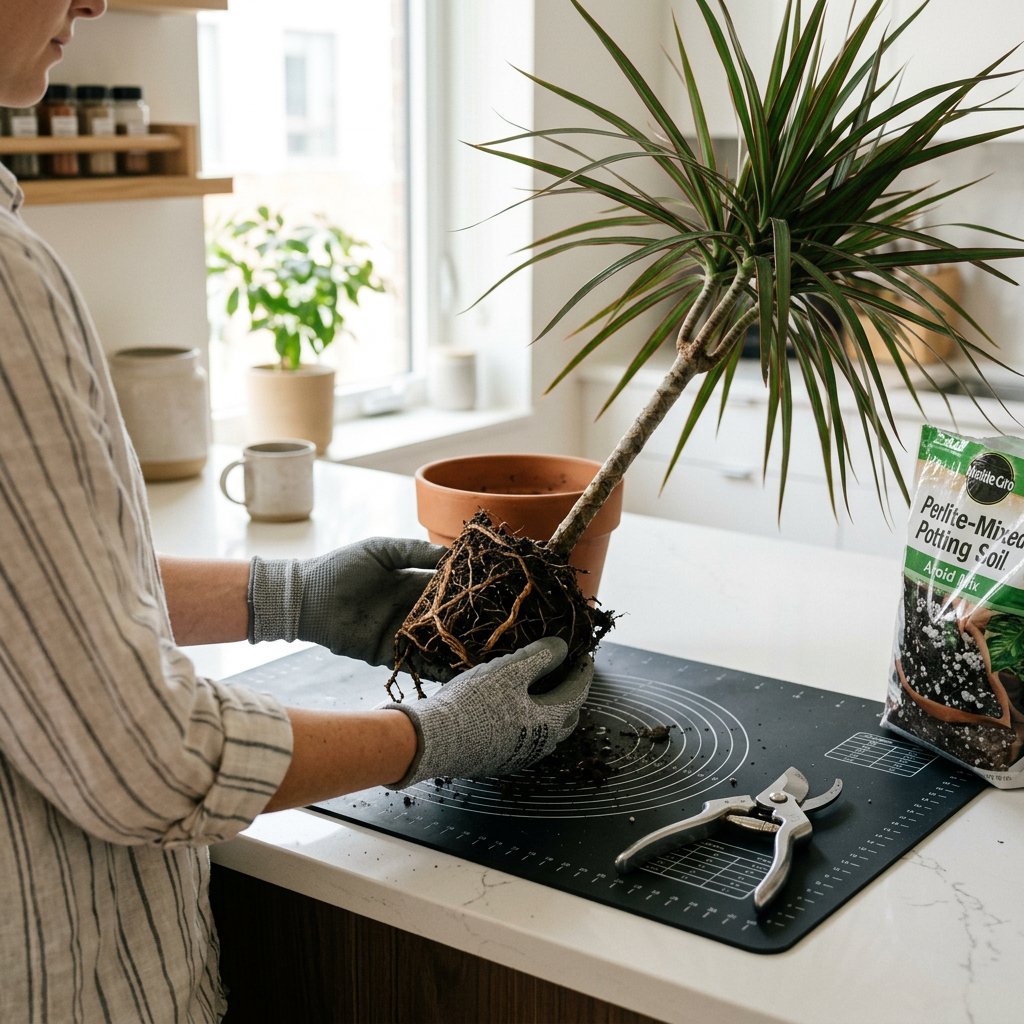
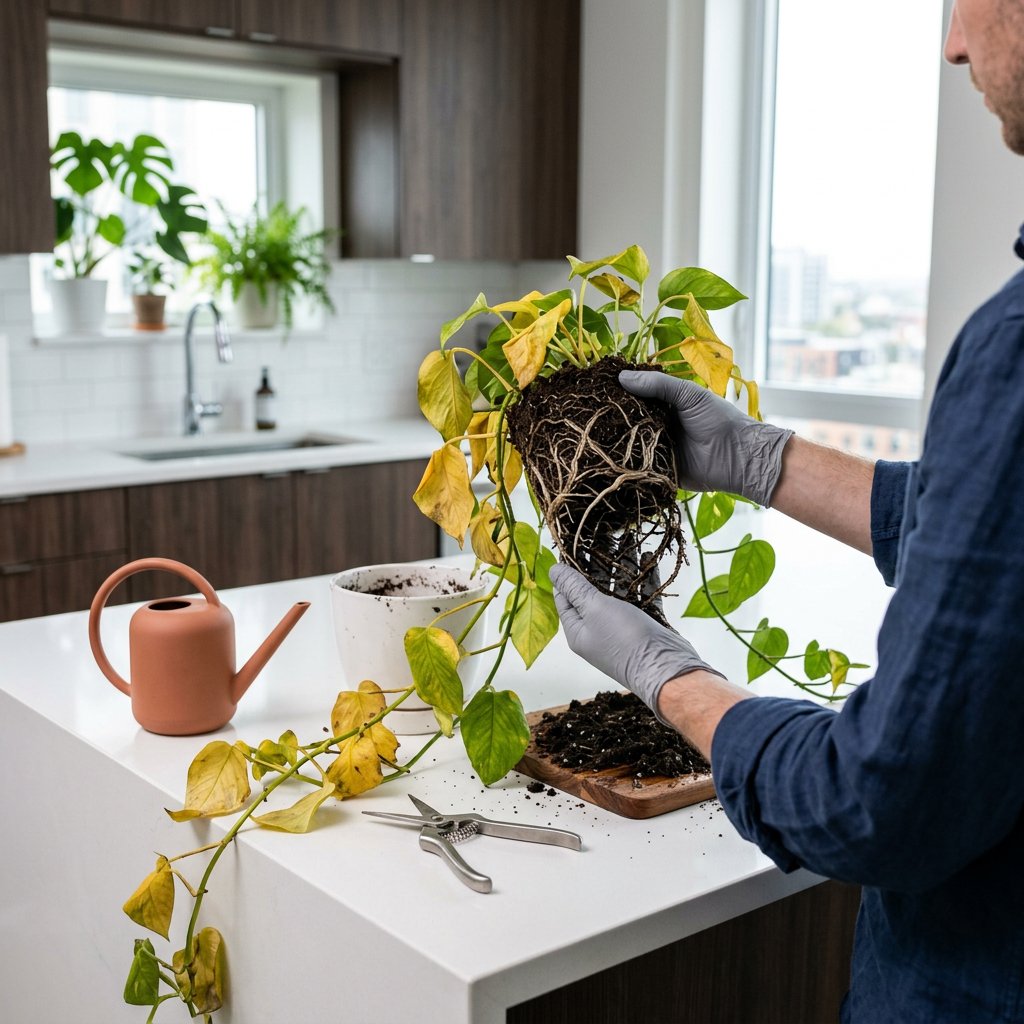
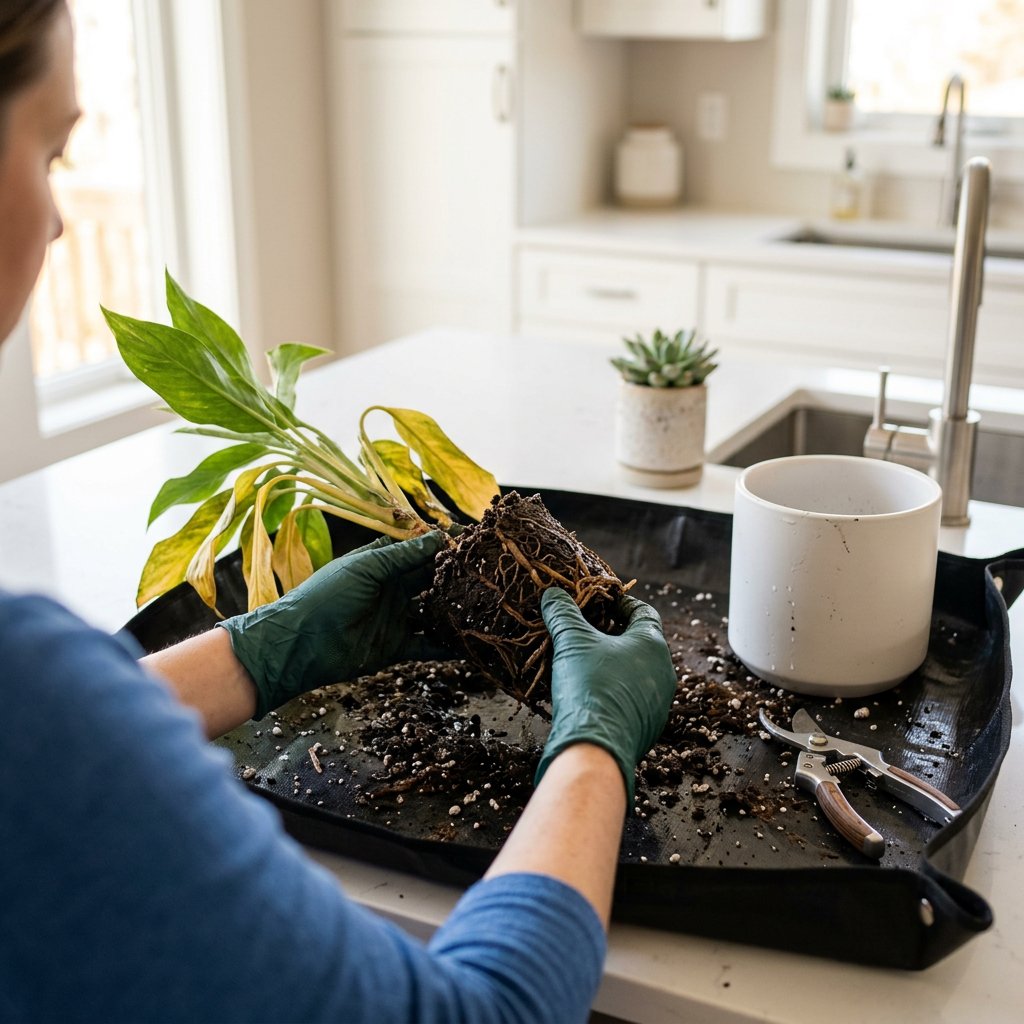
Step 1: Unpot and inspect. Gently slide your Aglaonema out of its container. Massage the root ball to loosen the old, soggy soil. Rinse the roots gently under room-temperature water so you can clearly see what you are working with.
Step 2: Prune the rot. Healthy Aglaonema roots are firm and typically white or light tan. Rotted roots are dark brown or black, mushy, slimy, and easily fall apart when touched. Using a pair of sterilized pruning shears or scissors, carefully cut away all the mushy, rotting roots. Be ruthless—leaving any rot behind can allow the fungus to continue spreading.
Step 3: Disinfect the remaining roots. To kill off any lingering fungal spores, spray the healthy remaining roots with a diluted 3% hydrogen peroxide solution (mix one part hydrogen peroxide with two parts water). Alternatively, you can use a houseplant-safe, copper-based fungicide.
Step 4: Repot in fresh, airy soil. Throw away the old, infected soil and thoroughly wash your pot with soap and hot water (if you are reusing it). Make sure the pot has drainage holes! Replant your Aglaonema in a fresh, well-draining, chunky potting mix. A great recipe includes standard indoor potting soil heavily amended with perlite and orchid bark to ensure maximum airflow to the roots.
Step 5: Adjust your watering routine. Do not water immediately if the new soil is slightly moist. Going forward, only water your Aglaonema when the top two to three inches of soil are completely dry to the touch.
Moving Forward with Confidence
Recovering from root rot takes time. Your Aglaonema might lose a few more leaves while it redirects its energy beneath the soil to grow new, healthy roots. Be patient with it!
To prevent future overwatering mishaps, consider setting up a custom watering schedule within the Plantiary app. It will remind you exactly when it's time to check your plant's soil moisture, taking the guesswork out of your routine. Remember, every expert botanist has lost a few plants along the way. Use this as a stepping stone to better understand your leafy companions and watch them flourish!