If you have ever walked into your room only to find your prized, big-leafed Alocasia looking completely slumped and defeated, take a deep breath! Please remember that you are not a bad plant parent. Alocasias—often called Elephant Ears—are incredibly stunning, but they are also famous for being a bit dramatic. Drooping is simply your plant’s way of communicating that something in its environment needs a little tweak.
While the immediate panic-thought is usually, "Did I overwater it?", the truth can be a bit more nuanced. Let's get to the root of the problem and help your plant stand tall again.
The Problem: Reading Your Alocasia's Symptoms
Before you jump into rescue mode, it is important to observe your plant closely. First, note that it is completely normal for an Alocasia to drop its oldest, outermost leaf as it pushes out a new one. This natural life cycle is a process where the plant absorbs nutrients from the old leaf before it dies off.
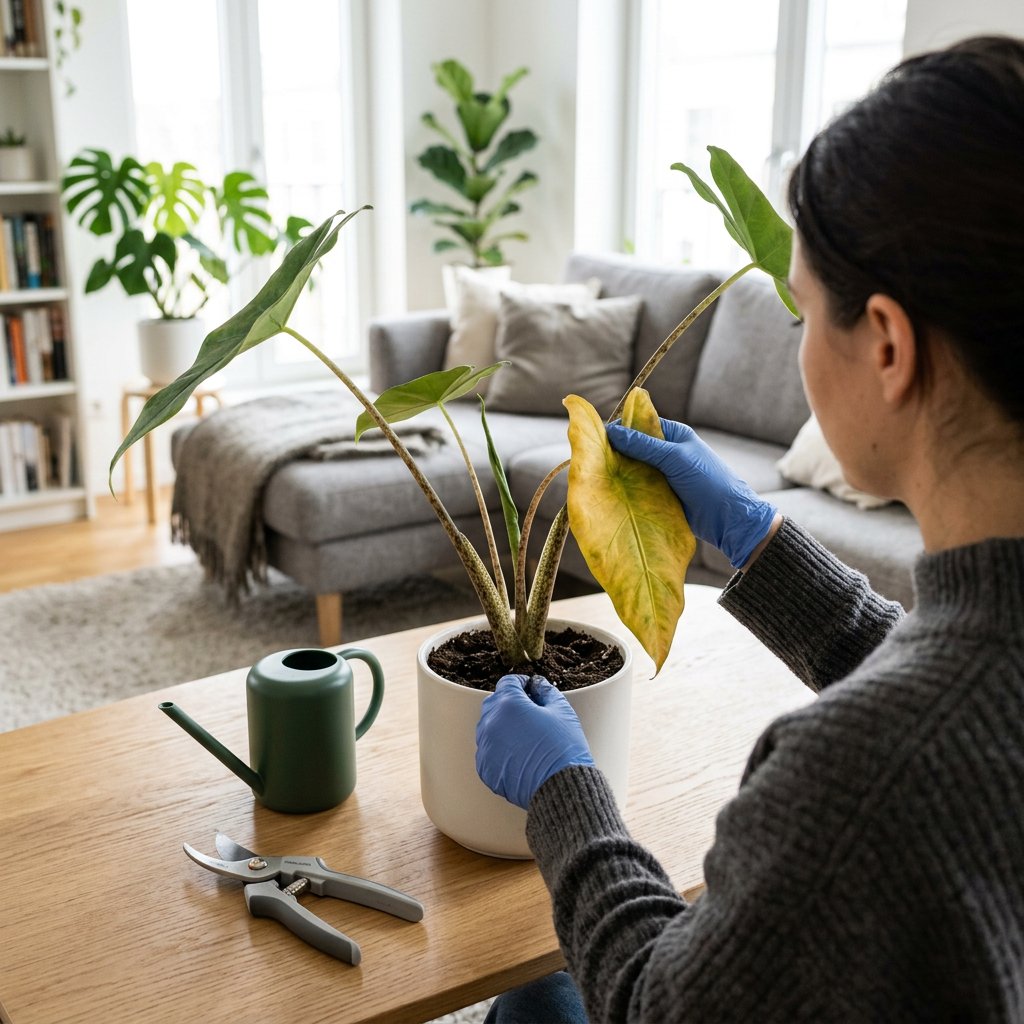
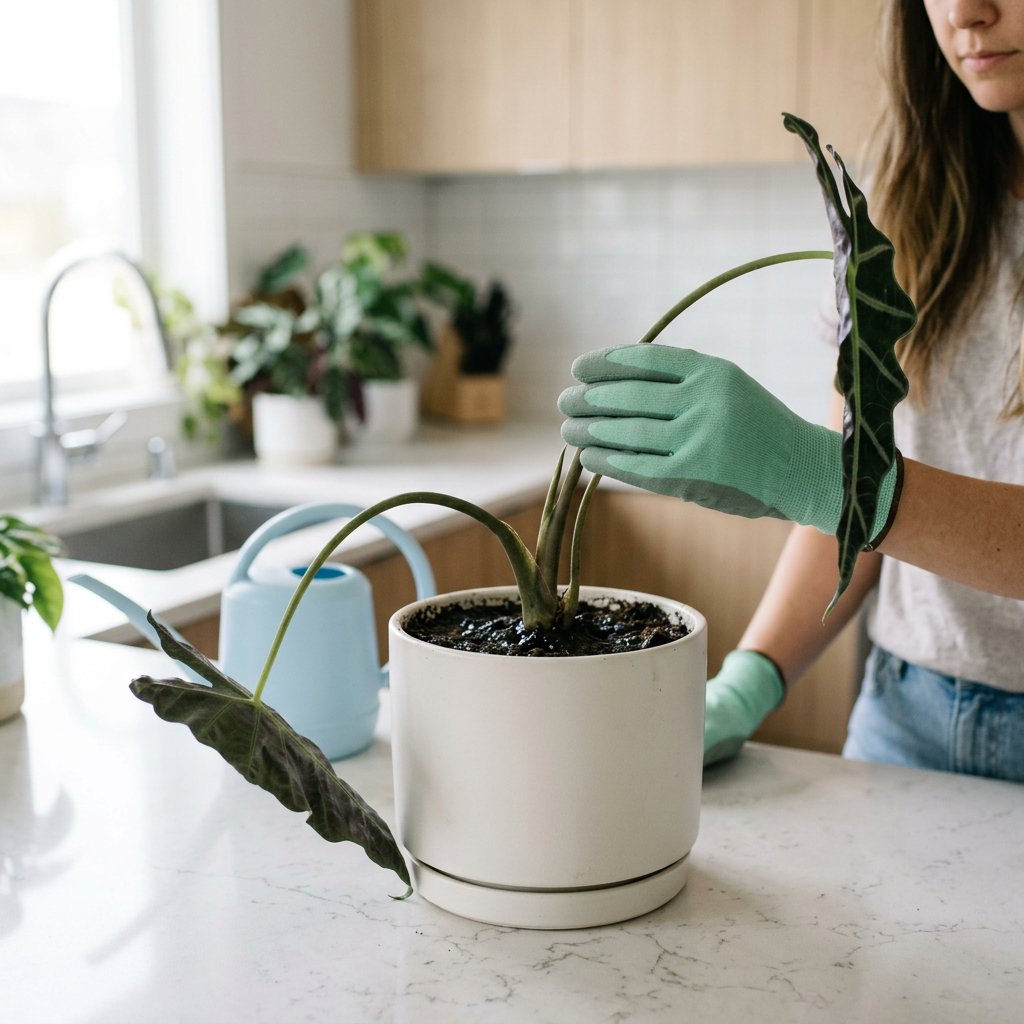
However, if you notice multiple leaves drooping at once, or if the newer growth is sagging, you have a genuine issue on your hands. The stems might feel mushy at the base, and the leaves may start developing yellow or brown halos.
Tip: If you are ever unsure what is wrong with your plant, you can use the AI-powered plant disease scanner in the Plantiary app to get an accurate diagnosis in seconds.
The Causes: Is It Really Overwatered?
Yes, overwatering is the most common culprit for a drooping Alocasia, but it is not the only one. Here is a breakdown of what might be causing your plant's distress:
- Overwatering and Root Rot: Alocasias love moisture, but they hate "wet feet." When sitting in soggy soil, the roots suffocate and die. This can lead to edema (a condition where the roots take up more water than the leaves can release, causing plant cells to burst and leaves to droop). Ultimately, this wet environment breeds root rot, preventing the plant from drinking any water at all.
- Underwatering: Ironically, the symptoms of underwatering look very similar to overwatering. When the soil goes bone-dry, the plant loses its turgor pressure—the internal water pressure that keeps stems rigid and leaves perky—causing it to collapse.
- Temperature Shock: These are tropical plants that despise cold drafts. If your Alocasia is placed near an air conditioning vent or a drafty window, the sudden drop in temperature can shock it into drooping.
- Winter Dormancy: When days get shorter and colder, Alocasias naturally go dormant. They may drop all their leaves and retreat into their bulb (corm) to conserve energy until spring.
The Solutions: Step-by-Step Treatment
If your plant is drooping and you suspect your watering habits are the issue, follow these actionable steps to nurse it back to health.
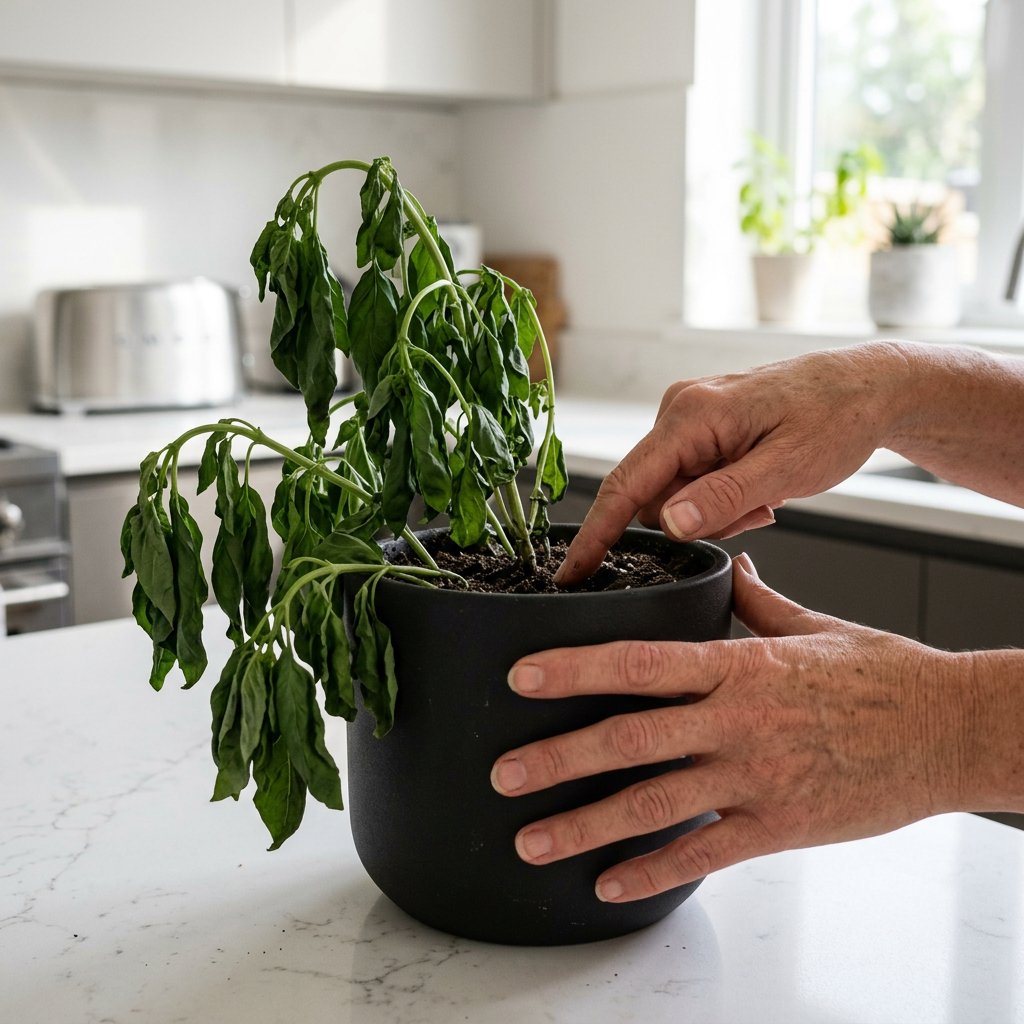
Step 1: Check the soil moisture Never guess when it comes to watering! Dig your finger about two to three inches into the soil. If it feels soaking wet and heavy, you have overwatered. If it feels like dusty sand, your plant is extremely thirsty.
Step 2: Inspect the root system If the soil is completely waterlogged, gently pull the Alocasia out of its pot. Healthy roots should be firm and pale. If you see dark, slimy, or foul-smelling roots, your plant has root rot.
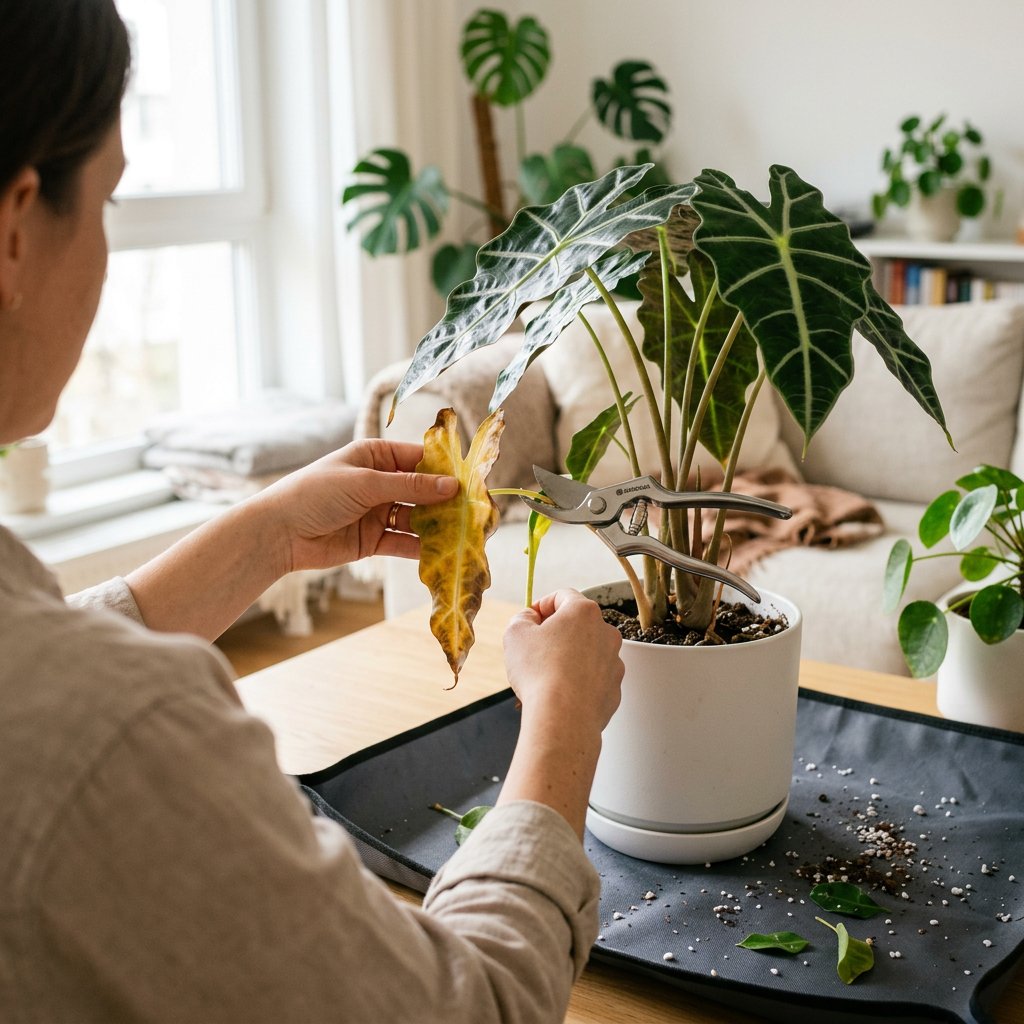
Step 3: Prune the damage and repot If root rot is present, use sterilized shears to snip away the mushy, rotting roots. Repot the plant into a fresh, dry potting medium. Alocasias need high oxygen at the root level, so use a chunky, well-draining "aroid mix" made of potting soil mixed with plenty of orchid bark and perlite. Ensure the new pot has drainage holes at the bottom!
Step 4: Optimize light and warmth Move your recently repotted plant to a warm spot with bright, indirect sunlight. Avoid direct, harsh sun rays, which will scorch the weakened leaves, and keep the plant far away from drafty doors or heating vents.
Step 5: Establish a smart watering routine Going forward, thoroughly water your Alocasia only when the top 2-3 inches of the soil feel completely dry. Allow all excess water to drain out of the bottom of the pot, and never leave it sitting in a saucer of stagnant water.
Plant parenting is a learning curve, and a drooping Alocasia is a rite of passage! To prevent future watering mishaps and keep your indoor jungle thriving, set up a customized care schedule in the Plantiary app. It will send you gentle reminders exactly when it’s time to check your plant's soil, ensuring your Elephant Ear stays perfectly hydrated and brilliantly perky.