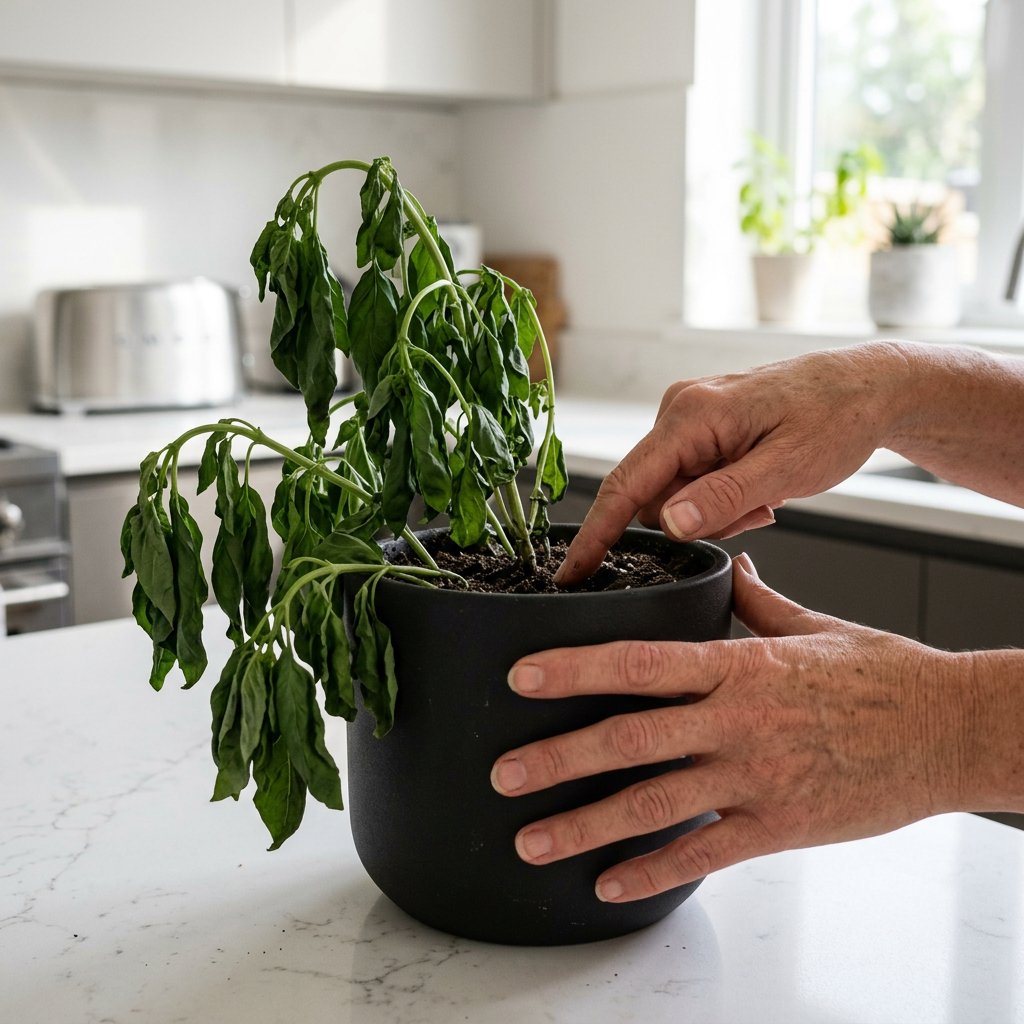
There’s nothing quite like the fresh, peppery aroma of a basil plant sitting on your kitchen windowsill. But if you’ve recently noticed your lush, vibrant herb suddenly looking sad, limp, and lifeless, take a deep breath—don't panic! Drooping basil is incredibly common, and it happens to the most experienced plant parents. Basil is famous for being a bit dramatic, but fortunately, it is also remarkably resilient. Usually, this sudden wilting comes down to one of two things: your plant is either terribly thirsty or drowning in too much water. If you’re ever feeling lost, remember that the Plantiary app is always right in your pocket, ready to help you identify the exact issue with just a quick photo!
The Problem: Why is My Basil Drooping?
When a plant droops, it is experiencing a loss of turgor pressure. Simply put, turgor pressure is the internal water force inside the plant's cells that keeps the stems and leaves firm and upright. When the water balance is off—due to either too little or too much moisture—those cells deflate like tiny balloons, resulting in a sad, floppy plant. But how do you tell which extreme your basil is suffering from?
The Causes: Thirsty vs. Overwatered
Let's play plant detective! The key to saving your basil is looking closely at the soil and the leaves.
Signs Your Basil is Thirsty (Underwatered)
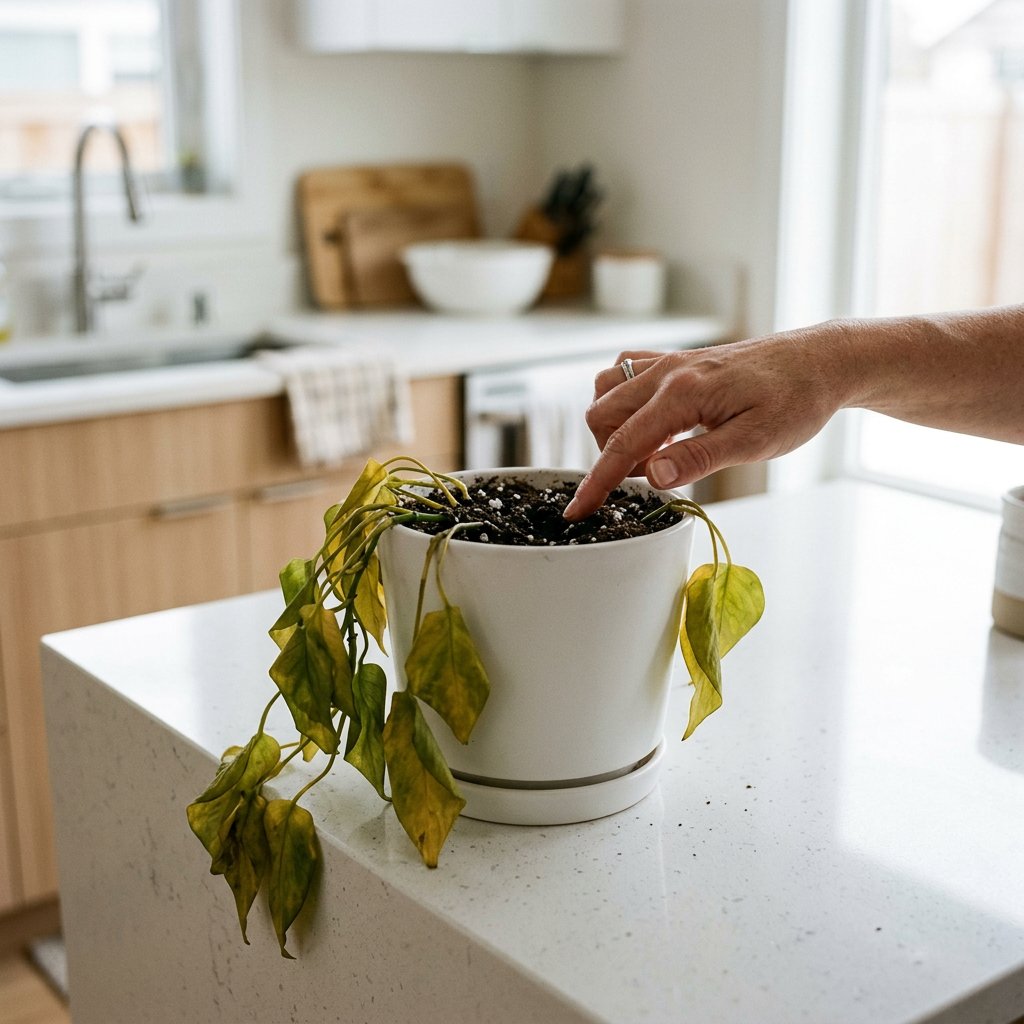
- Bone-dry soil: If you poke your finger an inch or two into the soil and it feels completely dry and dusty, your plant is parched.
- Crispy, curling leaves: Thirsty basil leaves often feel paper-thin and might start curling inward or developing brown, crispy edges.
- Lightweight pot: Pick up the pot. Does it feel surprisingly light? That means there is very little moisture left in the potting mix.
Signs Your Basil is Overwatered
- Soggy soil: If the soil feels muddy, dense, or spongy to the touch, your basil has had way too much to drink.
- Yellowing leaves: Overwatering often leads to chlorosis, a condition where leaves turn pale yellow. This happens because suffocating, waterlogged roots lose their ability to absorb essential nutrients.
- Heavy pot: A pot that feels unusually heavy is holding onto excess, stagnant water.
- Musty smell: A swampy odor coming from the soil is a clear warning sign of root rot, a fungal condition caused by roots sitting in stagnant water without oxygen.
The Solutions: How to Revive Your Drooping Basil
Once you've diagnosed the root of the problem, it’s time to take action. Here is exactly what you need to do to nurse your basil back to health.
Step-by-Step Treatment for Thirsty Basil
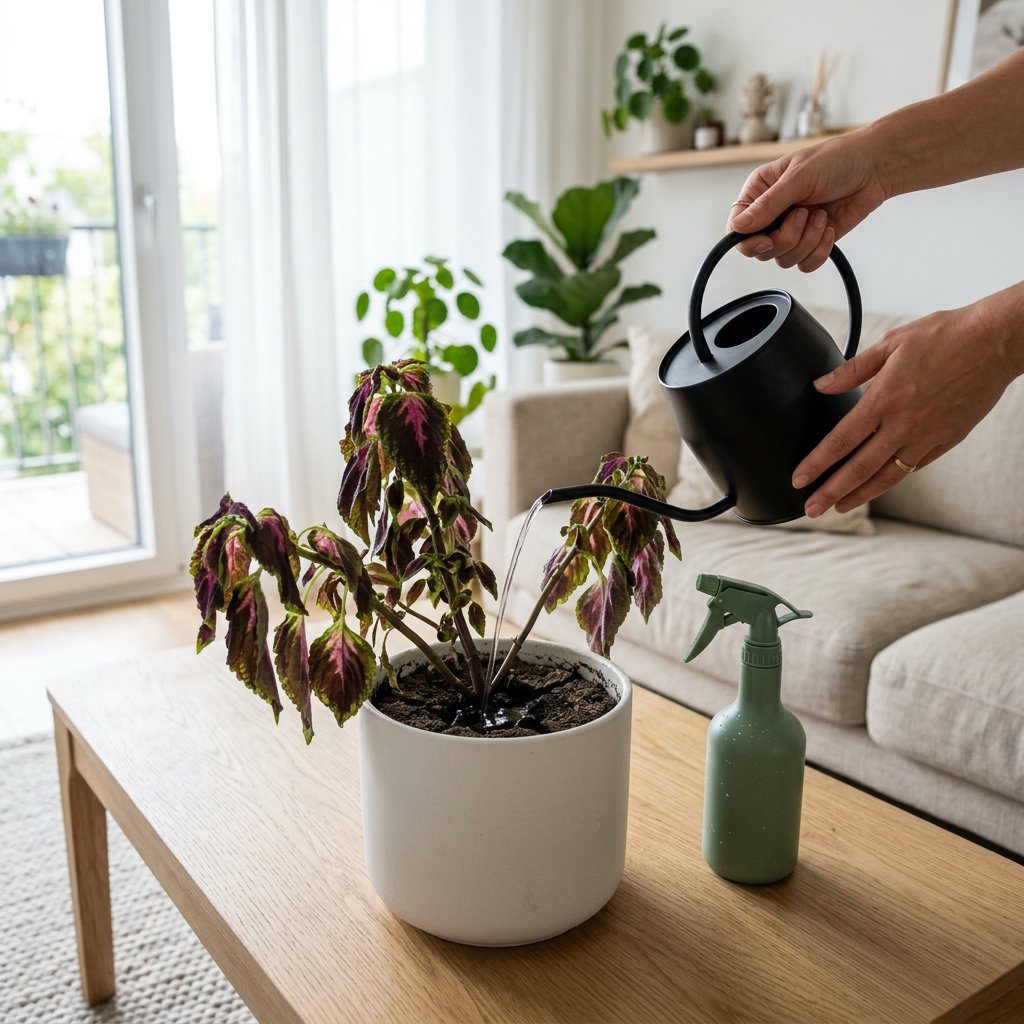
- Step 1: Hydrate from the bottom. Place your basil pot (which must have drainage holes!) in a bowl or sink filled with a few inches of room-temperature water. Let it sit for 20 to 30 minutes. This process, called bottom watering, allows the soil and roots to soak up exactly what they need without compacting the topsoil.
- Step 2: Drain the excess. Remove the pot from the water and let it drain completely in the sink. Never leave your basil sitting in a puddle on its saucer.
- Step 3: Remove crispy leaves. Gently snip away any leaves that are completely dried out or severely damaged. They won't recover, and removing them allows the plant to direct its energy toward pushing out healthy new growth.
Step-by-Step Treatment for Overwatered Basil
- Step 1: Stop watering immediately. Give your plant a much-needed break and let the soil dry out. Move it to a spot with bright, indirect sunlight to help speed up the evaporation process.
- Step 2: Inspect the roots. If the soil is completely waterlogged and the plant looks severely yellow, gently pull the basil out of its pot. Healthy roots are firm and pale, while rotting roots are mushy, slimy, and dark brown.
- Step 3: Trim and repot. If you spot root rot, use sterilized scissors to carefully snip away the mushy bits. Repot your basil into a clean container using fresh, well-draining potting soil mixed with a little perlite or coarse sand to drastically improve airflow.
Keep Your Basil Thriving
Seeing your beloved basil droop can be stressful, but remember, it's just your plant's way of communicating its needs. By adjusting your watering habits and paying attention to the soil, you'll have it bouncing back and producing fresh leaves in no time!
If you are ever unsure what is wrong with your plant or want a second opinion, you can use the AI-powered plant disease scanner in the Plantiary app to get a professional diagnosis and an actionable care plan in seconds. Happy planting!