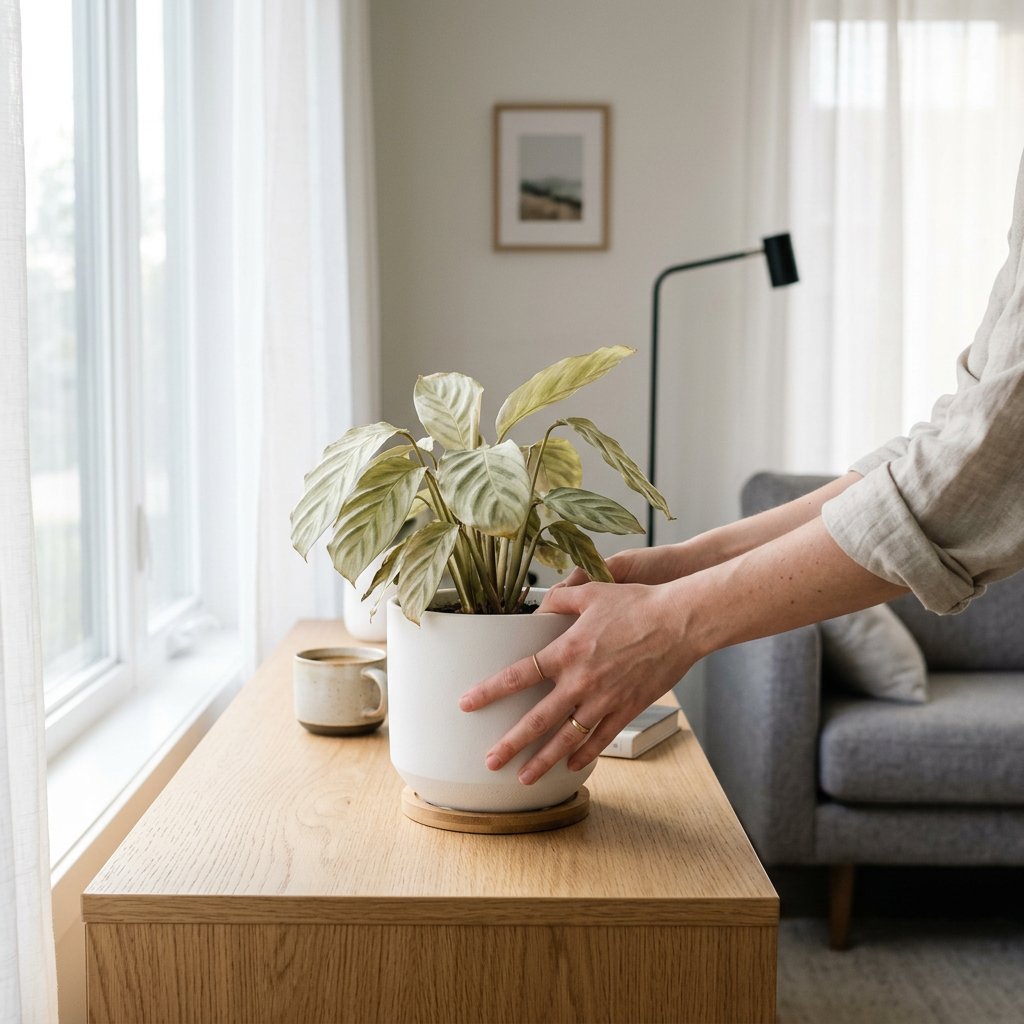
If you have recently walked into your room only to find your gorgeous Calathea looking completely flat, limp, and lifeless, take a deep breath. You are not alone! Calatheas are notorious for being a bit dramatic, and seeing their beautiful, patterned leaves suddenly drooping can be incredibly stressful for any plant parent. Please don't feel guilty; even the most experienced indoor gardeners occasionally struggle with these expressive tropical beauties.
The good news is that a drooping Calathea is simply trying to communicate with you. By playing a little bit of plant detective, we can easily translate what it is asking for and get it back to its vibrant self. Let's break down exactly what is happening and how to fix it.
The Problem: Is It Actually Drooping?
Before we jump into troubleshooting, we need to make sure your plant is actually experiencing an issue. Calatheas are famous for a botanical phenomenon called nyctinasty. This simply means they have a natural daily rhythm where their leaves fold upright at night (resembling praying hands) and lower themselves during the day to catch the sunlight.
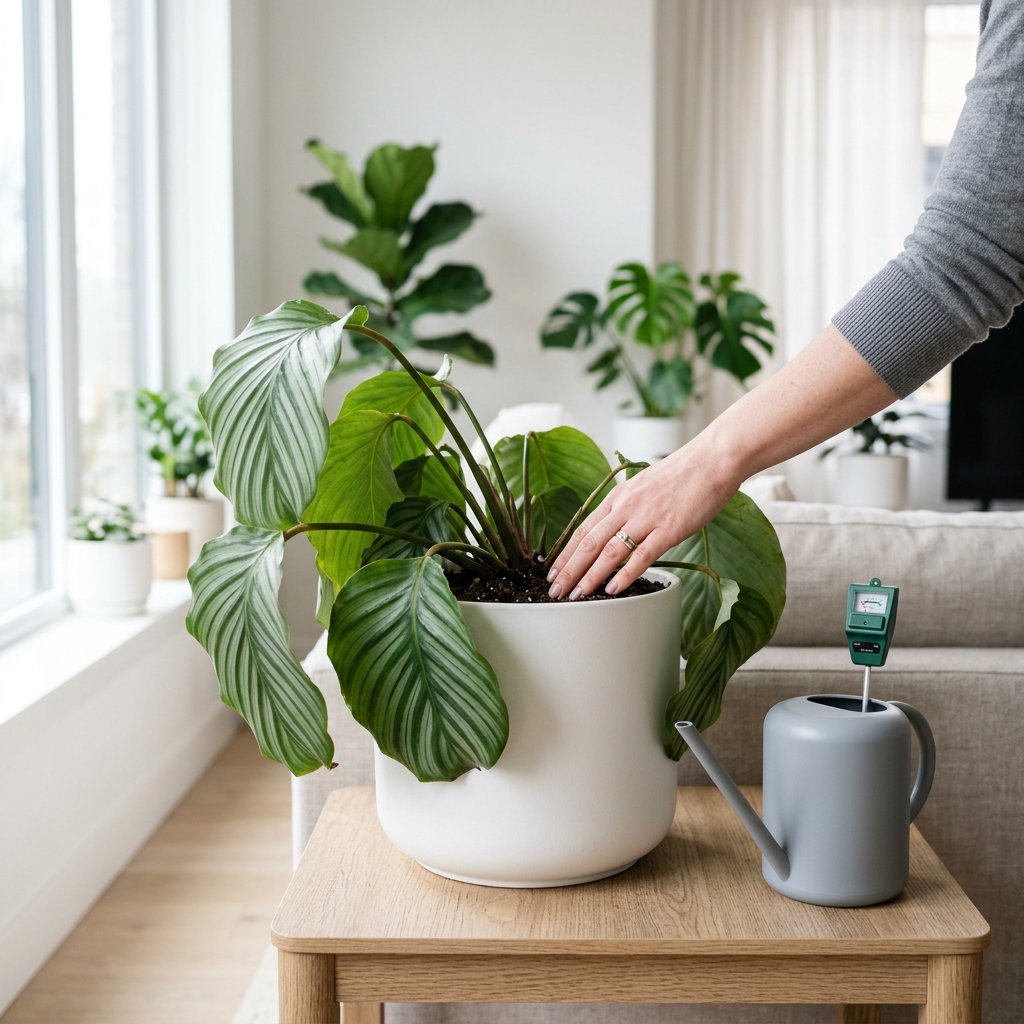
However, if your plant's stems look physically weak, the leaves are pointing straight down toward the floor, or they look limp and sad rather than engaged and perky, you are dealing with genuine drooping.
Here are the main symptoms of a distressed Calathea:
- Stems that bend easily or collapse over the edge of the pot.
- Leaves that are curling inward like a straw.
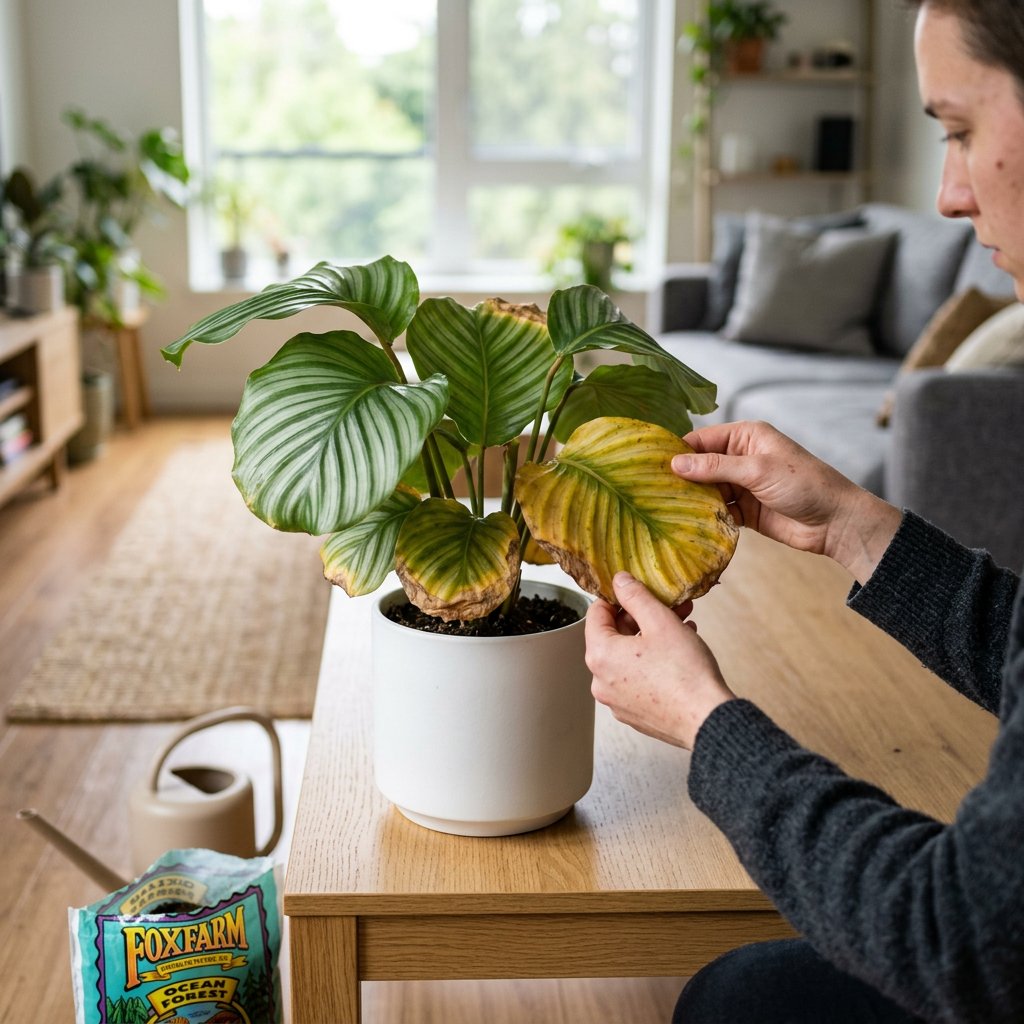
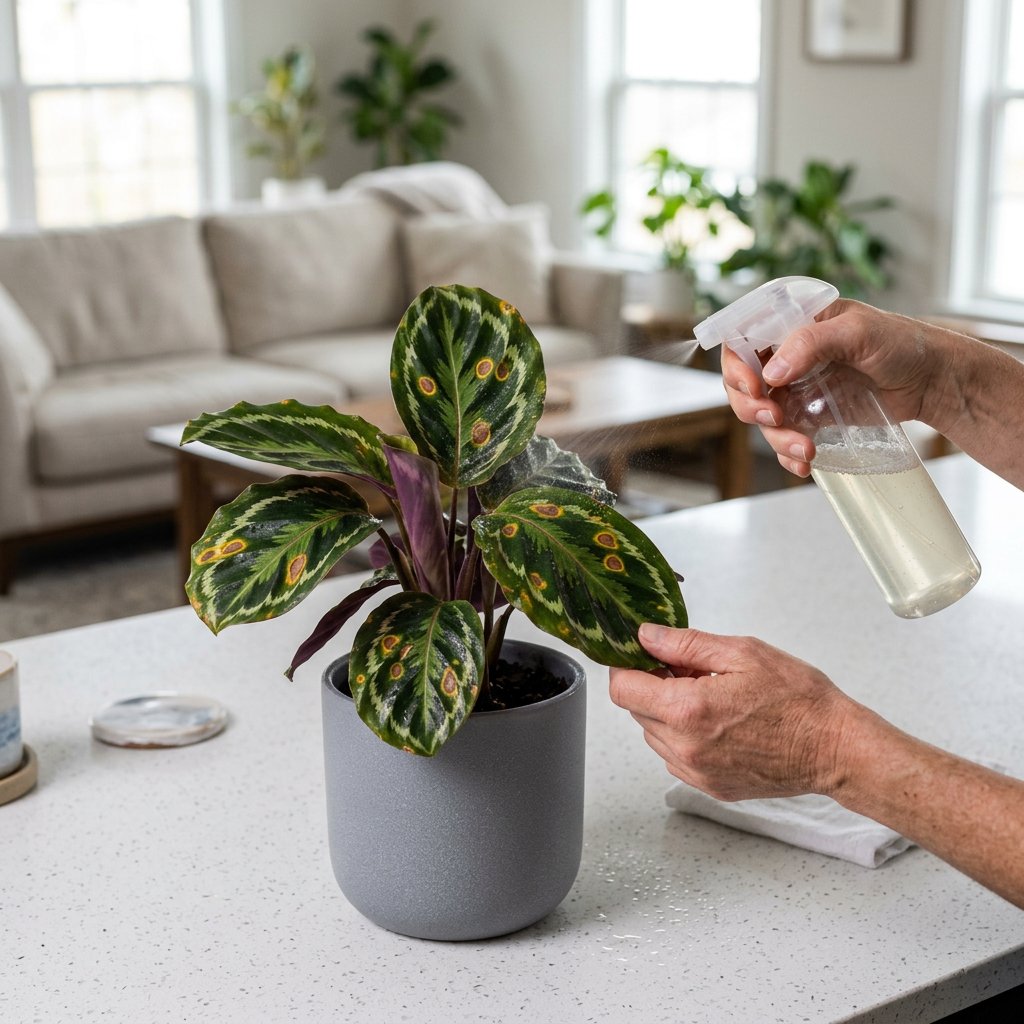
- Crispy, brown edges or suddenly yellowing leaves.
The Causes: Water or Light?
When a Calathea droops out of stress, the culprit almost always boils down to moisture or lighting.
1. Underwatering (The Most Common Culprit)
Calatheas originate from the tropical rainforest floor, meaning they love consistent moisture. If the soil completely dries out, the plant loses its turgor pressure—the internal water pressure that keeps plant cells rigid and stems standing upright. Without this water pressure, the plant simply collapses.
2. Overwatering and Root Rot
Ironically, giving your plant too much water can also cause drooping. If the soil stays soggy and waterlogged, the roots suffocate and begin to die off, leading to root rot. When roots are damaged, they can no longer absorb water, meaning the leaves dehydrate and droop even though the soil is soaking wet.
3. Light Stress
Calatheas thrive in bright, indirect light. If you place them in the path of harsh, direct sunbeams, the plant will rapidly lose moisture through its leaves. To protect themselves from sunburn and water loss, Calathea leaves will curl inward and aggressively droop away from the light source.
The Solutions: How to Revive Your Drooping Calathea
Now that we know what might be causing the drama, here is exactly how to nurse your plant back to health. Follow these steps to correctly identify and resolve the issue.
Step 1: Perform the soil touch test. Stick your finger about two inches into the topsoil. If it feels bone dry and dusty, your plant is severely underwatered. If the soil feels dense, muddy, or smells a bit sour, you are likely dealing with overwatering.
Step 2: Give an underwatered plant a good soak. If the soil is dry, take your Calathea to the sink and water it thoroughly until water runs freely out of the drainage holes at the bottom of the pot. Ensure the soil is actually absorbing the water and it isn't just running down the sides. Your plant should perk back up within 24 hours!
Step 3: Inspect for root rot if the soil is wet. If the soil is wet but the plant is drooping, hold off on watering immediately. Check the drainage holes to ensure water isn't pooling. If you are unsure what is wrong with your plant, you can use the AI-powered plant disease scanner in the Plantiary app to get a diagnosis in seconds. If root rot is suspected, you may need to gently remove the plant from its pot, trim away any mushy, brown roots, and repot it in fresh, well-draining soil.
Step 4: Adjust your lighting. If the moisture levels seem perfect but the plant is still curling and drooping, evaluate the light. Move your Calathea a few feet away from any windows receiving harsh afternoon sun. A spot with bright, dappled light—similar to what it would receive under the canopy of a rainforest—is ideal.
Step 5: Establish a consistent routine. Calatheas thrive on routine. Try to keep their soil evenly moist—like a wrung-out sponge—rather than letting it swing between soaking wet and completely dry. Using the Plantiary app to set customized watering reminders can take the guesswork out of your routine and keep your fussy foliage perfectly hydrated.
Remember, plant care is a journey of learning and observing. Don't be too hard on yourself if your Calathea throws a little tantrum. With a few simple adjustments to its water and light, your beautiful plant will be reaching for the sky again in no time!