Calatheas are often considered the undisputed divas of the houseplant world, famous for their stunning, intricately patterned foliage and their seemingly dramatic reactions to the slightest change in their environment. If you have recently noticed scorched, crispy, or faded patches on your beautiful plant’s leaves, take a deep breath. First of all, do not feel guilty! Plant parenting is a journey of trial and error, and sunburn is an incredibly common hurdle, even for seasoned indoor gardeners. The good news is that your Calathea can absolutely bounce back with a little bit of strategic care.
The Problem: Spotting Sunburn on Calathea Leaves
Before we fix the issue, we need to make sure we are actually dealing with sunburn. Calatheas are notorious for getting crispy edges from low humidity or tap water sensitivity, so it is important to distinguish solar damage from other environmental stress.
If your Calathea is suffering from sunburn, you will likely notice the following symptoms:
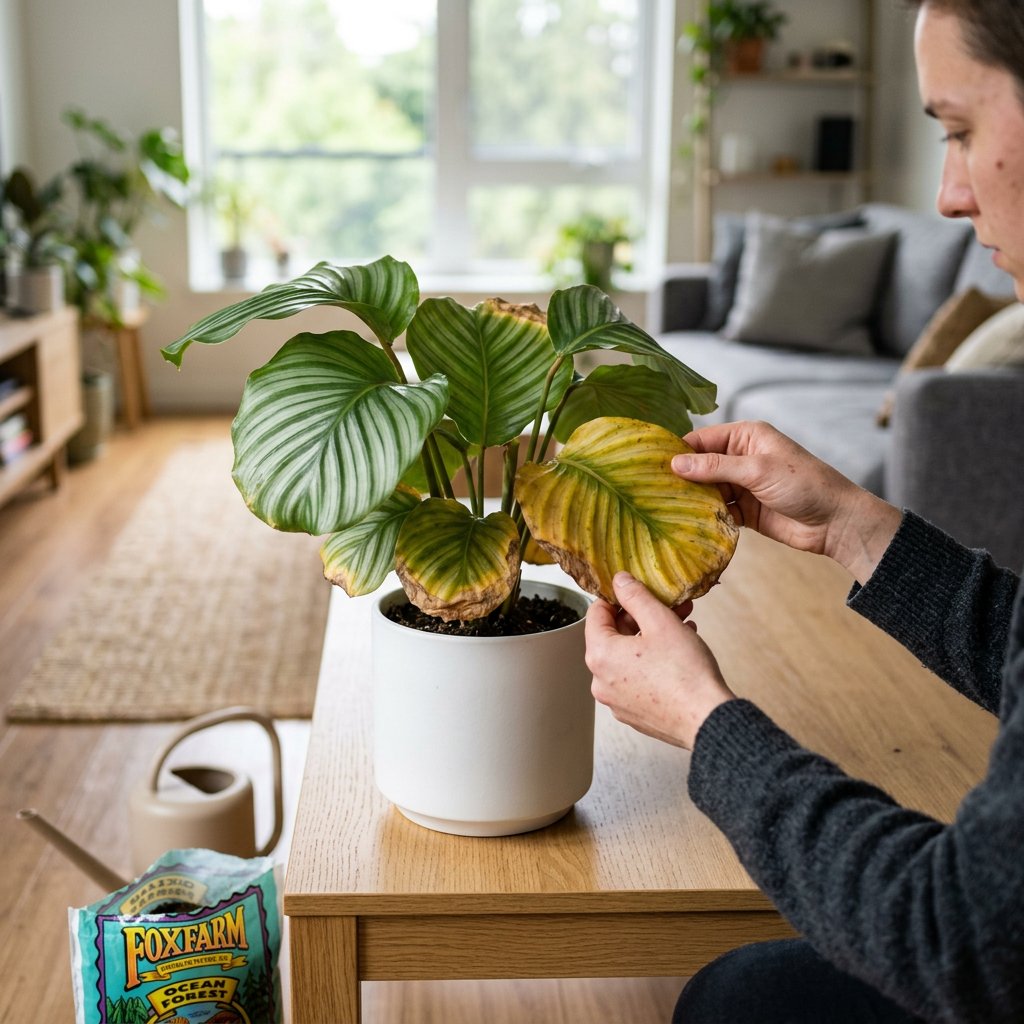
- Bleached or faded patches: The vibrant stripes and colors on the leaves may start to look washed out. This is a form of chlorosis, which simply means the plant is losing its chlorophyll (the green pigment), leading to pale, yellow, or whitened leaves.
- Crispy, brown spots in the center of the leaf: Unlike humidity issues that primarily attack the tips and edges, sunburn often creates dry, brown patches right where the sun rays hit the leaf directly. This is called necrosis, or localized plant tissue death.
- Curling leaves: While Calatheas naturally fold their leaves up at night, curling tightly inward during the day is a stress response to protect themselves from excessive light and moisture loss.
If you are unsure what is wrong with your plant, you can use the AI-powered plant disease scanner in the Plantiary app to get a diagnosis in seconds and put your mind at ease.
The Causes: Why Your Calathea is Sunburned
To understand why your Calathea got sunburned, we have to look at how they live in the wild. Calatheas are native to the tropical rainforests of South America. However, they do not grow at the top of the canopy; they are understory plants. This means they live their entire lives shaded by massive trees, receiving only dappled, filtered sunlight.
When we bring them indoors, their leaves are highly sensitive to harsh ultraviolet (UV) rays. The most common causes of indoor sunburn include:
- Placing the plant directly in a south-facing or west-facing window without sheer curtains.
- Moving the plant outdoors for the summer without slowly acclimating it to the brighter light.
- Sudden changes in weather, where a normally shady window suddenly gets blasted with intense, seasonal afternoon sun.
The Solutions: Step-by-Step Treatment
It is important to know that a severely sunburned leaf cannot heal or turn green again. The damaged tissue is permanent. However, by following these scientifically sound steps, you can save the rest of the plant, prevent further damage, and encourage beautiful new growth.
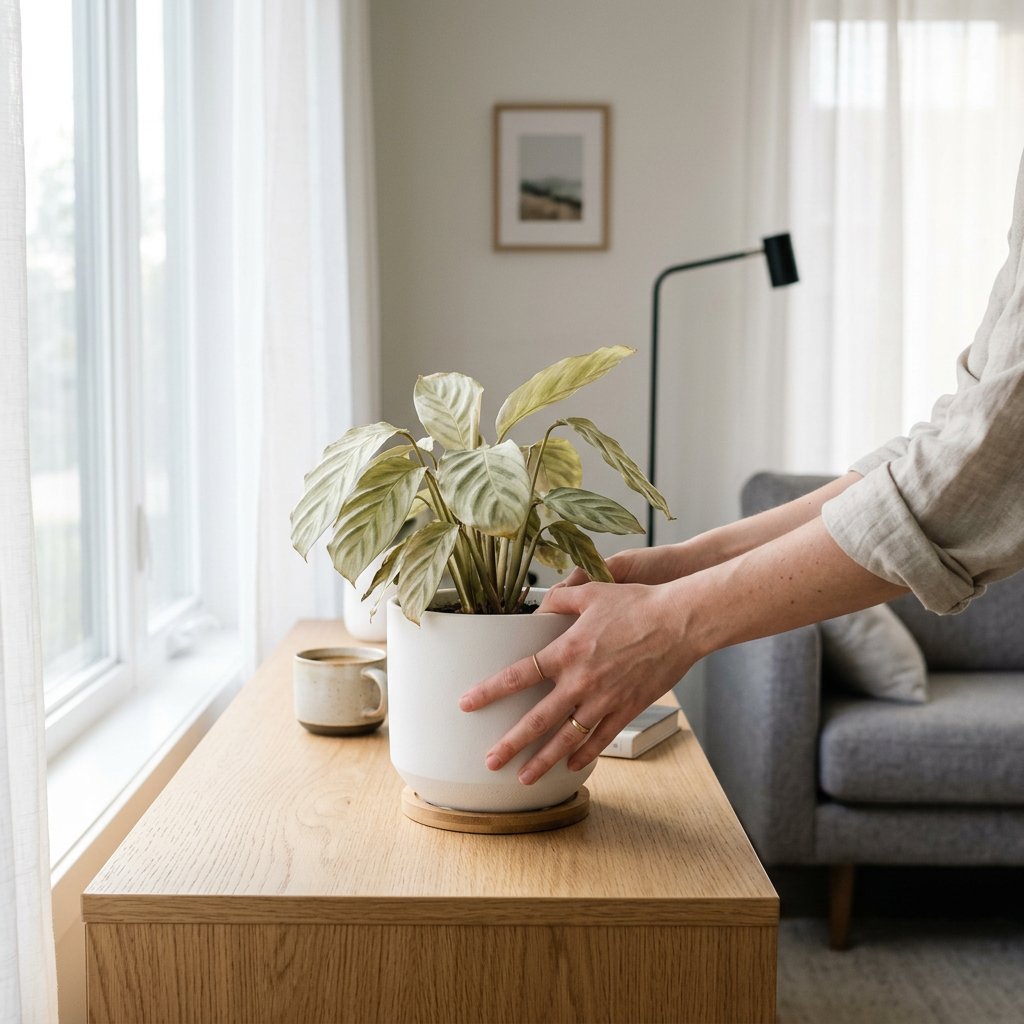
Step 1: Relocate Your Plant Immediately Move your Calathea away from the direct light source. The ideal spot is a location that receives bright, indirect light. An east-facing window that gets gentle morning sun, or a few feet back from a bright south-facing window, is perfect. If you cannot move the plant, install sheer curtains to diffuse the harsh sunlight.
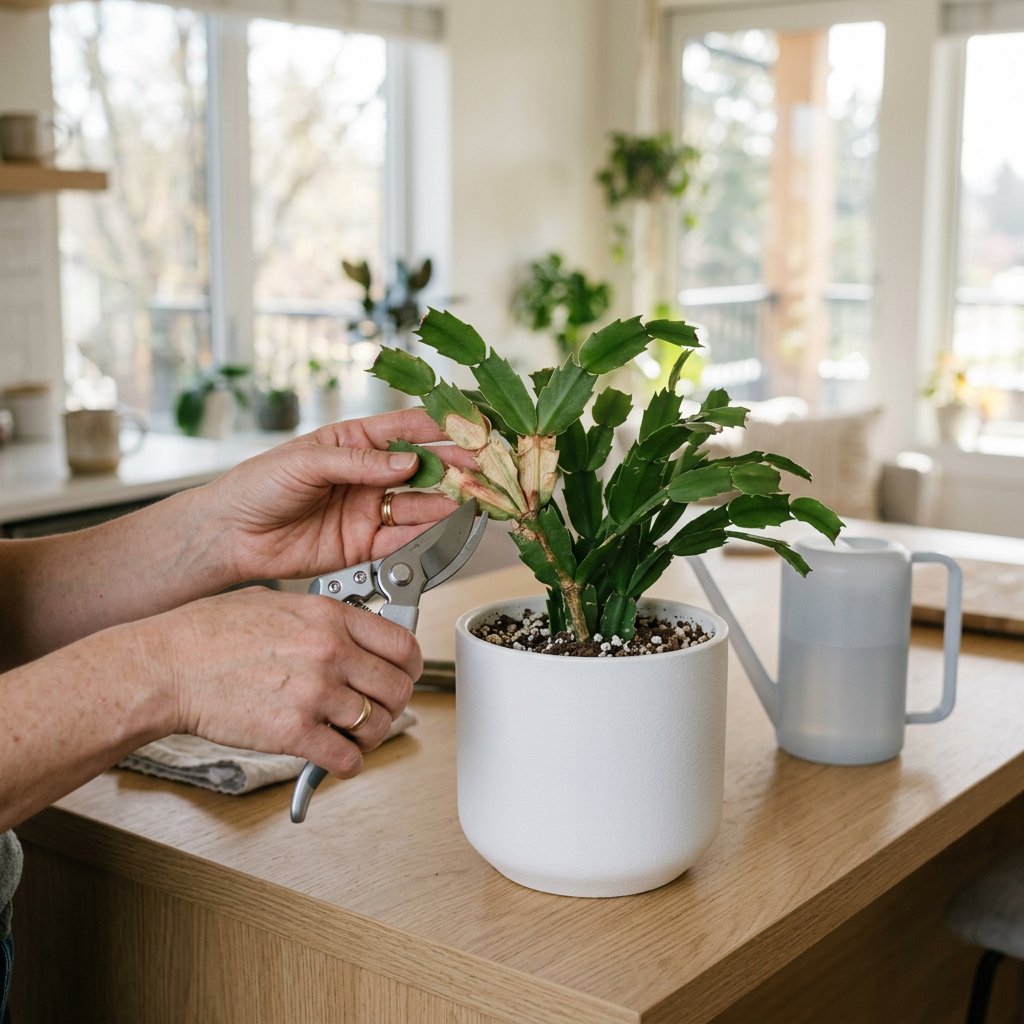
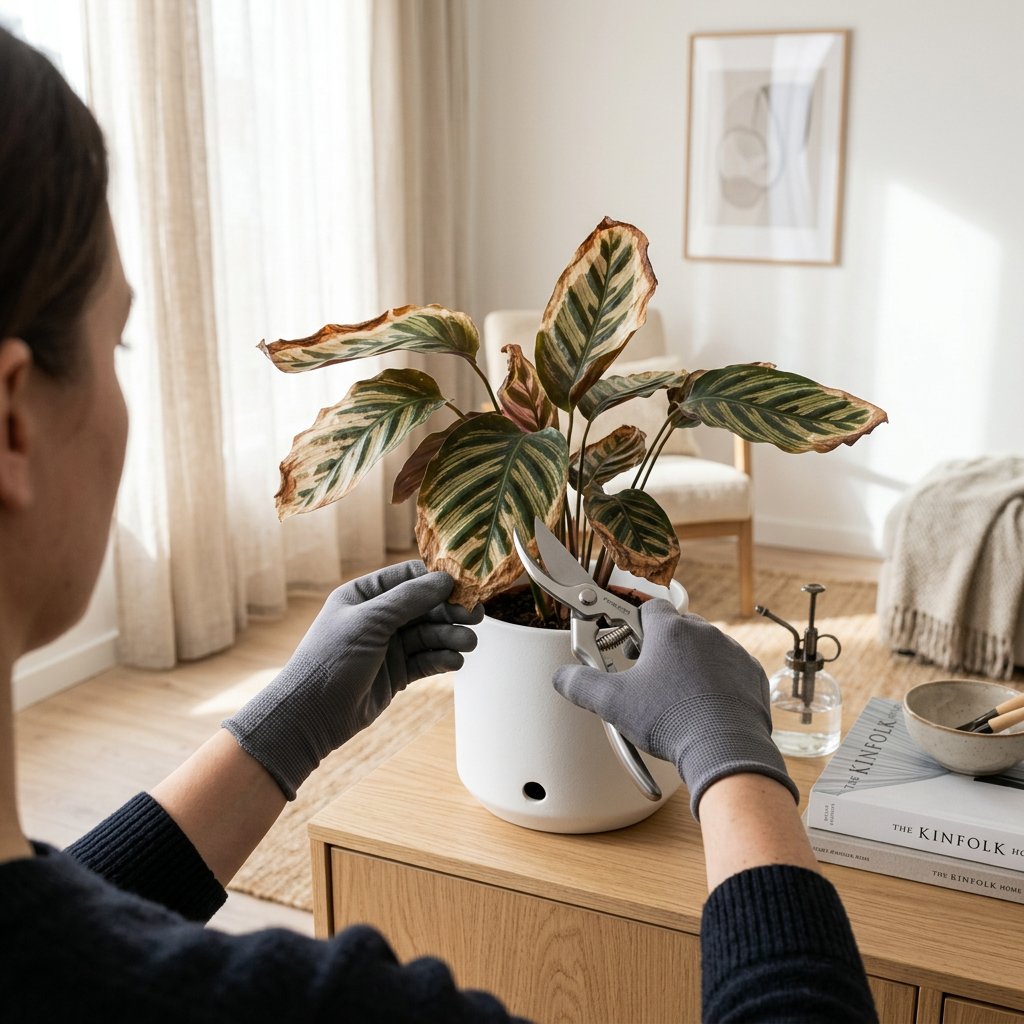
Step 2: Safely Prune the Damage Using a pair of sterilized pruning shears or scissors (wipe the blades with rubbing alcohol to prevent spreading bacteria), carefully trim away the dead, crispy brown spots. If a leaf is more than 50% scorched, it is best to cut the entire leaf off at the base of the stem. This redirects the plant's energy away from the dying leaf and into pushing out fresh, healthy foliage.
Step 3: Check Your Soil Moisture Intense sunlight evaporates water rapidly. Check the top inch of the soil; if it is completely dry, give your plant a thorough, deep watering using filtered or distilled water (Calatheas are highly sensitive to the chlorine and fluoride in tap water).
Step 4: Boost the Humidity Your Calathea just went through a stressful, dehydrating event. Help it recover by raising the ambient humidity around it to at least 50-60%. You can do this by placing a humidifier nearby, grouping it with other houseplants, or setting the pot on a pebble tray filled with water.
Step 5: Monitor and Maintain Keep a close eye on your plant over the next few weeks. Do not apply fertilizer while the plant is recovering from sunburn stress, as this can easily burn the vulnerable roots. Wait until you see new, healthy growth emerging before resuming your feeding schedule.
To prevent future lighting mishaps, you can use the light meter feature in the Plantiary app to measure the exact sunlight levels in your room and ensure your tropical beauties are always in their perfect sweet spot. With a little patience and a quick location change, your Calathea will be unfurling gorgeous, flawless new leaves in no time!