If you have recently noticed your beautiful, painted-patterned Calathea developing yellow leaves, take a deep breath. Calatheas are notorious in the houseplant world for being a bit dramatic, and seeing their vibrant foliage lose its color can feel disheartening. But please don’t be hard on yourself! Plant issues happen to absolutely every plant parent, from beginners to seasoned botanists. Yellow leaves are simply your plant’s way of communicating that something in its environment needs a little adjusting. With a bit of detective work and some gentle care, you can help your leafy friend bounce right back.
The Problem: Spotting the Symptoms
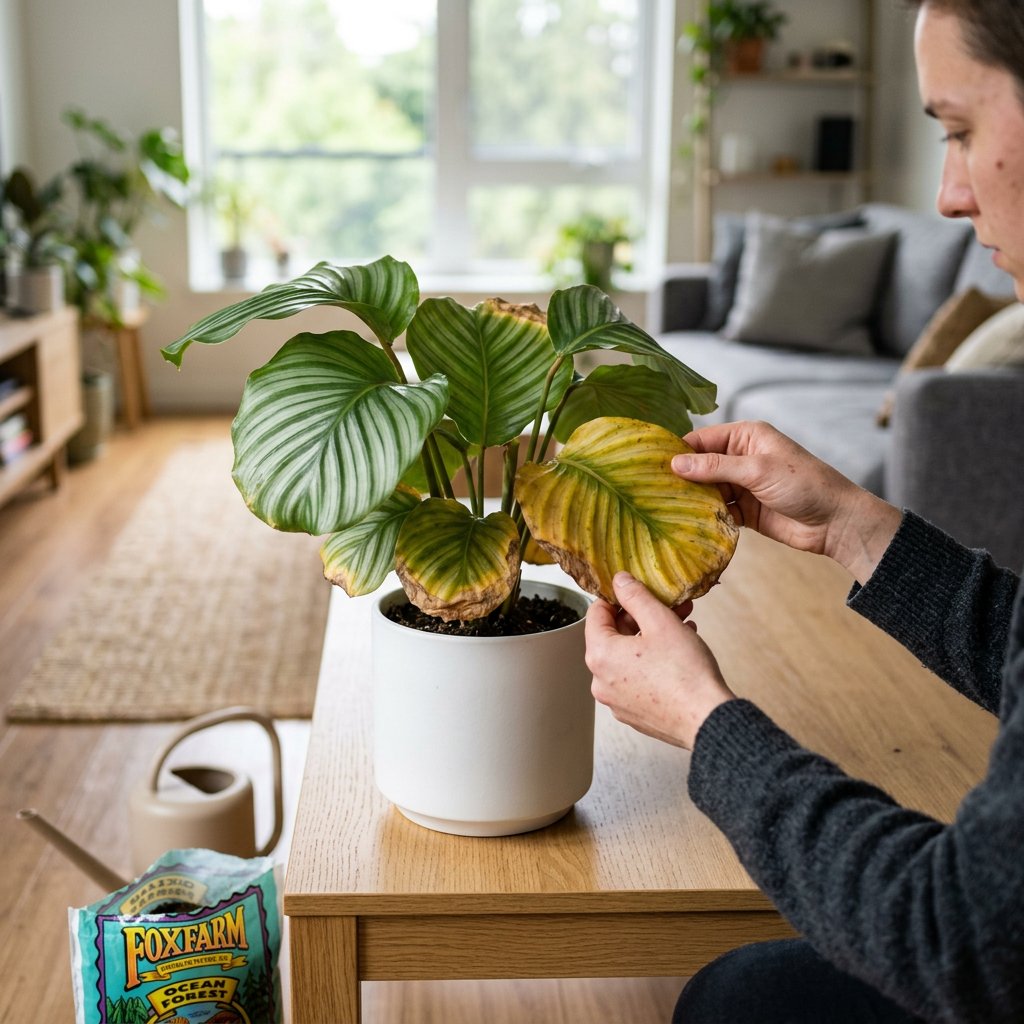
When your Calathea’s leaves turn yellow, botanists refer to this as chlorosis—a condition where the plant fails to produce enough chlorophyll, the pigment responsible for that healthy green color. However, not all yellowing looks the same. Paying close attention to exactly how the leaves are changing color can give you major clues about what is going wrong:
- Overall yellowing: The entire leaf turns a pale, sickly yellow and feels slightly mushy.
- Yellowing edges or tips: The margins of the leaf turn yellow, often followed by crispy brown edges.
- Faded, speckled yellowing: Tiny yellow spots appear across the leaf surface, eventually blending together.
- Bottom leaves only: The oldest leaves near the base of the plant turn yellow and dry up, while the top of the plant looks perfectly healthy.
The Causes: Why Are Your Calathea Leaves Turning Yellow?
To fix the problem, we first need to understand the root cause. Here are the most common reasons your Calathea might be protesting:
- Watering Woes: Both overwatering and underwatering can trigger chlorosis. Overwatering suffocates the roots, preventing them from absorbing oxygen and nutrients. Underwatering leaves the plant too parched to maintain its lush foliage.
- Tap Water Toxicity: Calatheas are incredibly sensitive to the chemicals found in standard tap water, such as fluoride, chlorine, and heavy minerals. Over time, these chemicals build up in the soil and burn the plant, causing yellowing and brown edges.
- Low Humidity: These tropical beauties originate from the humid rainforests of South America. If your indoor air is too dry, your plant will lose moisture faster than it can absorb it.
- Sneaky Pests: Pests like spider mites love dry environments and thin-leaved plants like Calatheas. They pierce the leaf tissue to suck out the sap, leaving behind tiny yellow specks.
- Natural Aging: If only the very bottom, oldest leaves are turning yellow and the rest of the plant is thriving, this is a completely natural life cycle. The plant is shedding old leaves to direct energy to new growth.
The Solutions: Step-by-Step Treatment to Save Your Calathea
If your plant is suffering from more than just natural aging, it is time to take action. Follow these scientifically sound steps to nurse your Calathea back to health.
Step 1: Check your soil moisture and adjust watering Before giving your plant a drink, physically check the soil. Push your finger about an inch or two into the potting mix. If it feels soaking wet and smells a bit sour, you are overwatering. Let the soil dry out partially before watering again, and ensure your pot has adequate drainage holes. If the soil is bone dry and pulling away from the sides of the pot, give it a thorough, deep watering until water runs out the bottom.
Step 2: Upgrade your water quality Ditch the tap water right away. Switch to using distilled water, rainwater, or filtered water for your Calathea. This simple switch is often the most effective way to stop mineral burn and prevent further yellowing on new leaves.
Step 3: Boost the humidity Calatheas thrive when humidity levels are between 50% and 70%. You can increase moisture in the air by placing a humidifier near your plant, grouping it with other houseplants to create a microclimate, or setting the pot on a pebble tray filled with water (making sure the bottom of the pot isn't touching the water directly).
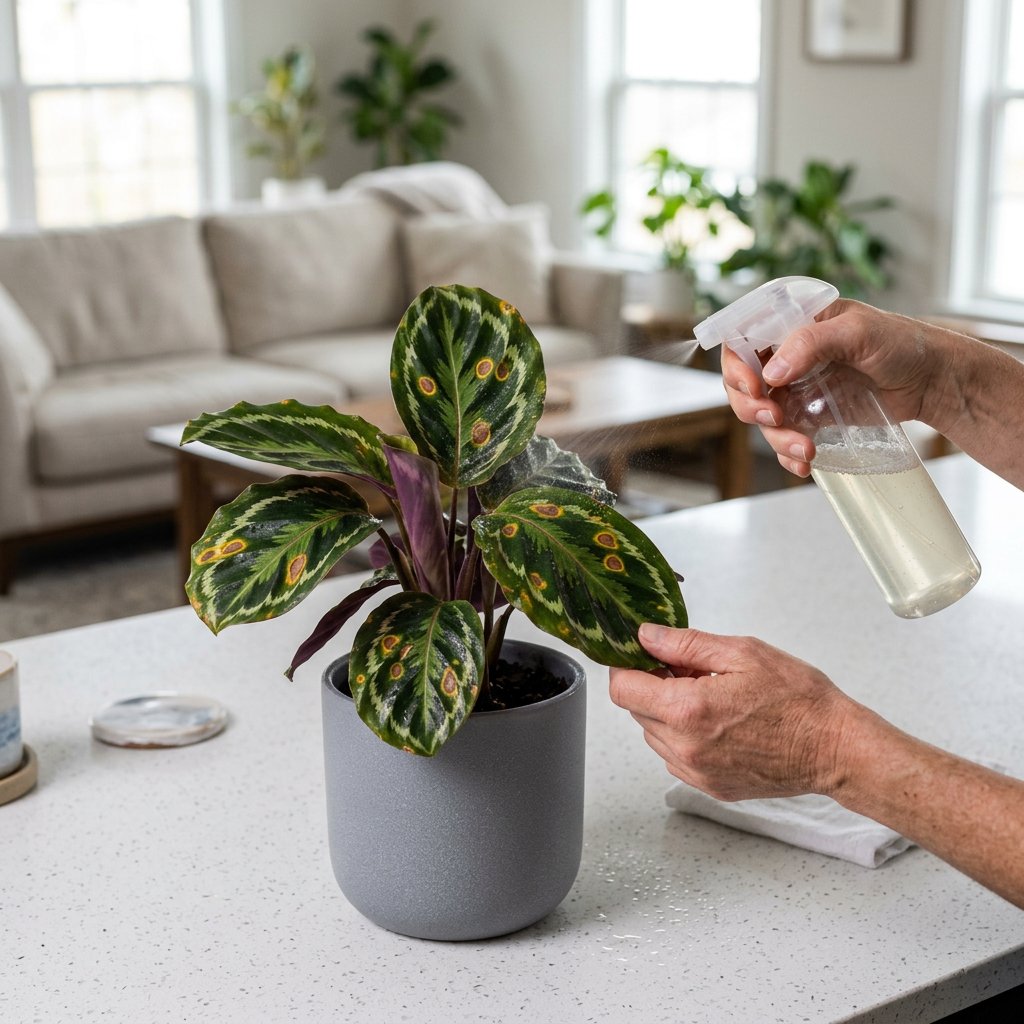
Step 4: Inspect and treat for pests Take a close look at the undersides of the yellowing leaves. Do you see tiny, dust-like webbing or minuscule crawling specks? If so, you have spider mites. Wipe the leaves down gently with a damp cloth and treat the plant with a neem oil spray or an insecticidal soap designed for houseplants. Keep the plant away from direct sunlight while the treatment dries to prevent leaf burn.
Step 5: Get an expert diagnosis If you have checked the soil, improved your water, and looked for pests but still can't figure out the issue, don't worry! If you are unsure what is wrong with your plant, you can use the AI-powered plant disease scanner in the Plantiary app to get an accurate diagnosis in seconds. It will guide you right to the solution without the guesswork.
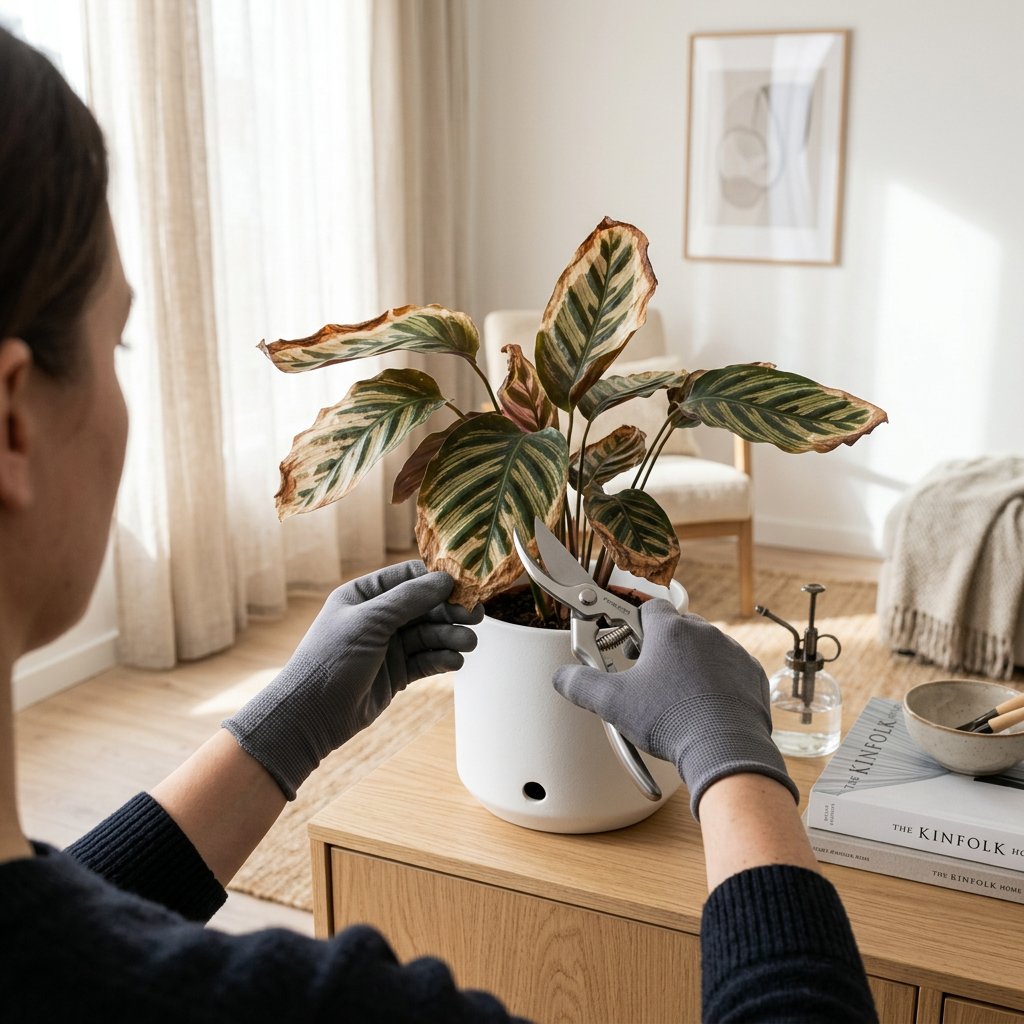
Step 6: Prune the yellow leaves Once a leaf has turned completely yellow, it will not turn green again. Use a pair of clean, sterilized pruning shears to snip off the yellow leaves near the base of the stem. This instantly makes your plant look better and redirects its energy toward pushing out fresh, healthy growth.
Remember, plant care is a learning curve. Your Calathea is lucky to have a dedicated owner who is willing to learn and adjust. Keep observing, stay patient, and you will see beautiful, healthy new leaves unfurling before you know it!