Have you noticed the stunning, vibrant patterns on your Calathea starting to look a little washed out? It can be heartbreaking when those striking pink pinstripes or deep green borders begin to fade away. But take a deep breath and don't worry—you are not a bad plant parent! Calatheas are notorious for being a bit dramatic, and fading colors are an incredibly common issue that happens to almost every indoor gardener at some point.
Most of the time, this loss of vibrance is simply a lighting mismatch. If you are ever unsure about what your leafy friend is trying to tell you, you can use the AI-powered plant disease scanner in the Plantiary app to get a diagnosis in seconds. Today, let's explore exactly why your Calathea is losing its colors and how you can tweak its lighting to bring those gorgeous patterns back to life.
The Problem: Spotting the Symptoms
Before we fix the issue, it helps to know exactly what to look for. When a Calathea isn't getting the right light, it will clearly show its displeasure through its foliage. You might notice:
- Loss of contrast: The sharp lines between the light green, dark green, pink, or white areas begin to blur together.
- Washed-out foliage: The leaves look dull, pale, or almost gray instead of their usual rich hues.
- Disappearing patterns: The intricate undersides or topside stripes slowly revert to a plain, solid green.
- Crispy edges: Often accompanying fading colors, the tips of the leaves may begin to brown and dry out.
Botanically, this paling effect is sometimes related to chlorosis—a condition where the leaves lose chlorophyll (the green pigment responsible for photosynthesis), causing them to look yellow, pale, or bleached out.
The Causes: The Calathea Light Dilemma
In their natural habitat, Calatheas grow on the floors of tropical rainforests. They are sheltered by the thick canopies of taller trees, meaning they receive dappled, filtered sunlight. When we bring them into our homes, recreating that exact lighting can be tricky. Fading colors usually boil down to two opposite light extremes:
1. Too Much Direct Sunlight
When a Calathea is exposed to harsh, direct sun rays, the intense light quite literally bleaches the pigments right out of the leaves. This is known as photobleaching. The plant is trying to protect its tissues from sunburn, resulting in pale, faded, and crispy foliage.
2. Too Little Light
On the flip side, if you place your Calathea in a very dark, shadowy corner, it will struggle to photosynthesize. To survive, the plant will abandon its beautiful, energy-consuming variegation (the patterned colors) and produce more solid green chlorophyll just to catch whatever little light is available.
The Solutions: Step-by-Step Light Fixes
The good news is that by adjusting your plant's placement, you can encourage all new leaves to emerge with their signature, show-stopping colors. Follow these actionable steps to find your plant's perfect lighting sweet spot:
Step 1: Assess your current lighting setup Take a look at where your Calathea is sitting at different times of the day. Is the sun directly hitting the leaves, casting a sharp, hard shadow? That means the light is too intense. Is it sitting in a windowless bathroom or a dark hallway where you can't easily read a book? The light is too low.
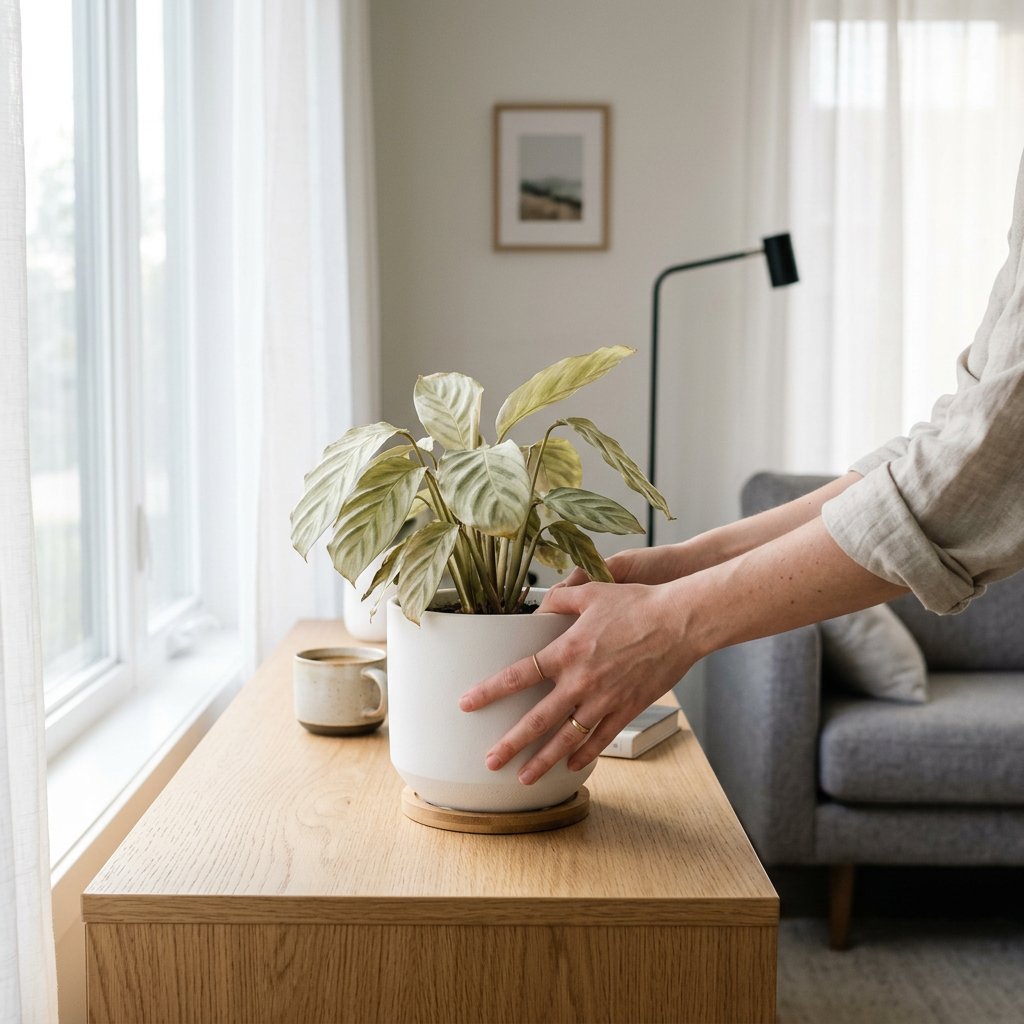
Step 2: Relocate to bright, indirect light Move your Calathea to a spot where it receives plenty of ambient light, but no direct sun rays touch the leaves. An East-facing window that gets gentle morning sun, or a few feet pulled back from a West or South-facing window, is usually ideal.
Step 3: Filter the harsh rays If you don't have another place to put your plant and your current window is too bright, simply recreate the rainforest canopy! Hang a sheer white curtain over the window. This diffuses the harsh sunlight into a soft, dappled glow that Calatheas absolutely love.
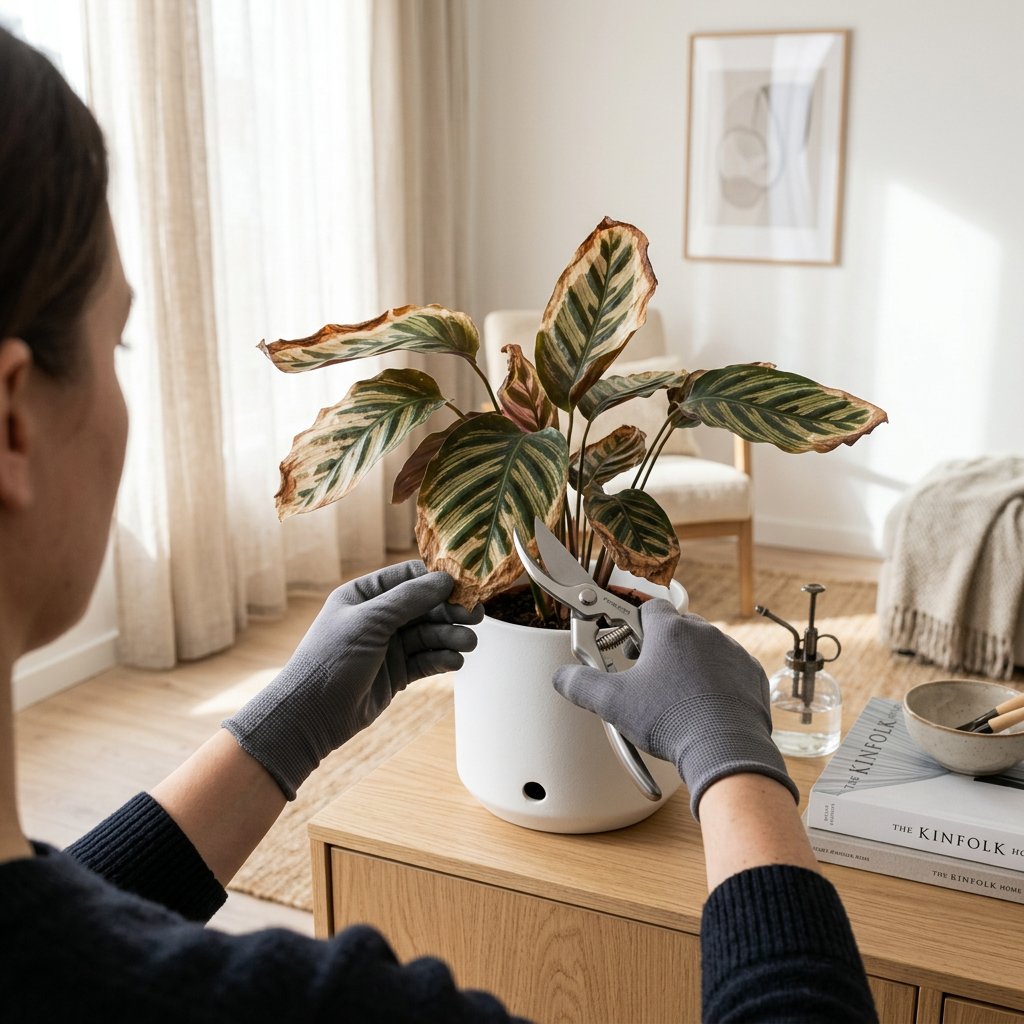
Step 4: Prune severely bleached leaves Once a leaf has been heavily bleached or sunburned, it unfortunately will not regain its original color. Using clean, sterilized scissors, carefully snip off the most damaged leaves near the base of the stem. This redirects the plant's energy into pushing out healthy, vibrant new growth.
Step 5: Be patient and monitor new growth Changes won't happen overnight. Give your Calathea a few weeks to adjust to its new, perfectly lit home. Watch the new leaves as they unfurl—they should reveal the striking, high-contrast colors you fell in love with.
Remember, plant care is a journey of trial and error. Be kind to yourself as you learn your Calathea's preferences! To make tracking your plant’s recovery easier, log your lighting changes and set care reminders in the Plantiary app. With a little adjustment and a lot of love, your Calathea will be back to its vibrant self in no time.