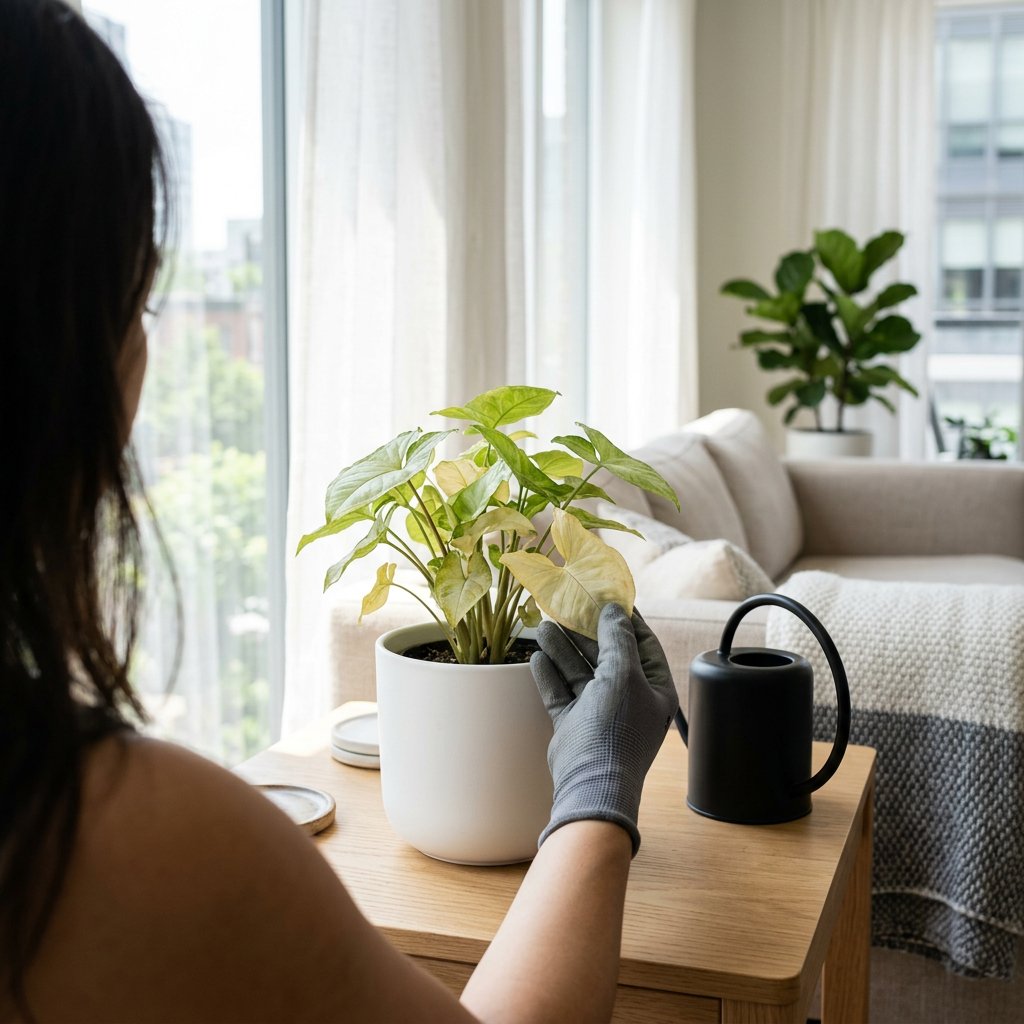
Watching your once-vibrant Syngonium (commonly known as the Arrowhead Vine) slowly lose its beautiful color can be a disheartening experience. You might wake up to find its striking green, pink, or variegated leaves looking washed out, faded, or completely pale. If this is happening in your indoor jungle, take a deep breath and let go of any plant-parent guilt! Houseplants are living things, and they sometimes struggle as they adapt to our homes. Pale leaves are incredibly common, and the culprit is almost always related to light stress.
If you are ever unsure what is wrong with your plant, remember that you can use the AI-powered plant disease scanner in the Plantiary app to get a diagnosis in seconds. For now, let’s explore exactly why your Syngonium is losing its color and how you can nurse it back to health.
The Problem: Recognizing Syngonium Light Stress
Before we can fix the issue, we need to make sure light stress is actually the problem. When a Syngonium is unhappy with its lighting conditions, it will give you a few visual clues. Look out for these common symptoms:
- Washed-out foliage: The leaves lose their rich pigmentation, looking almost translucent, whitish, or silvery-yellow.
- Crispy edges: The tips or margins of the pale leaves might feel dry, brittle, and brown.
- Loss of variegation: If you have a patterned variety, the distinct contrasting colors may fade into a solid, dull green or pale yellow.
- General weakness: The plant may look droopy, even if the soil has the correct amount of moisture.
Botanists refer to this fading process as chlorosis. Chlorosis simply means the plant is failing to produce enough chlorophyll—the vital pigment that gives leaves their green color and helps them absorb energy from light.
The Causes: Why Are Your Arrowhead Vine's Leaves Turning Pale?
Syngoniums naturally grow on the shaded forest floors of tropical rain forests, sheltered by the dense canopies of taller trees. Because of this, their relationship with light is a delicate balancing act. Your plant is likely turning pale for one of two reasons:
1. Too Much Light (Sun Bleaching)
This is the most common cause of pale, white, or scorched leaves. If your Arrowhead Vine is sitting right on a windowsill receiving harsh, direct afternoon sunlight, the intense rays are literally bleaching the leaves. The extreme light breaks down the chlorophyll faster than the plant can produce it, resulting in faded, pale foliage and crispy, sunburned spots.
2. Too Little Light (Light Starvation)
On the opposite end of the spectrum, placing your Syngonium in a dark, windowless corner can also cause pale leaves. Without enough light to sustain photosynthesis, the plant cannot maintain its vibrant colors or variegation. You will often see this accompanied by etiolation—a botanical term for when a plant stretches out and grows long, leggy stems as it desperately reaches for the nearest light source.
The Solutions: Step-by-Step Fix for Light-Stressed Syngoniums
The fantastic news is that Syngoniums are incredibly resilient and bounce back quickly once their environment is corrected. Follow these actionable steps to treat light stress and restore your plant’s brilliant colors.
Step 1: Relocate to the "Sweet Spot" Move your Syngonium away from harsh, direct sunlight. The ideal spot is an area with bright, indirect light. Think of a spot a few feet away from an east-facing or west-facing window. The plant should be able to see the sky, but the sun's rays should never physically touch its leaves.
Step 2: Filter the Light If you cannot move the plant away from a sunny window, you can easily diffuse the light. Hang a sheer white curtain between the windowpane and your plant. This mimics the dappled sunlight of their natural rainforest habitat, protecting the delicate foliage from bleaching.
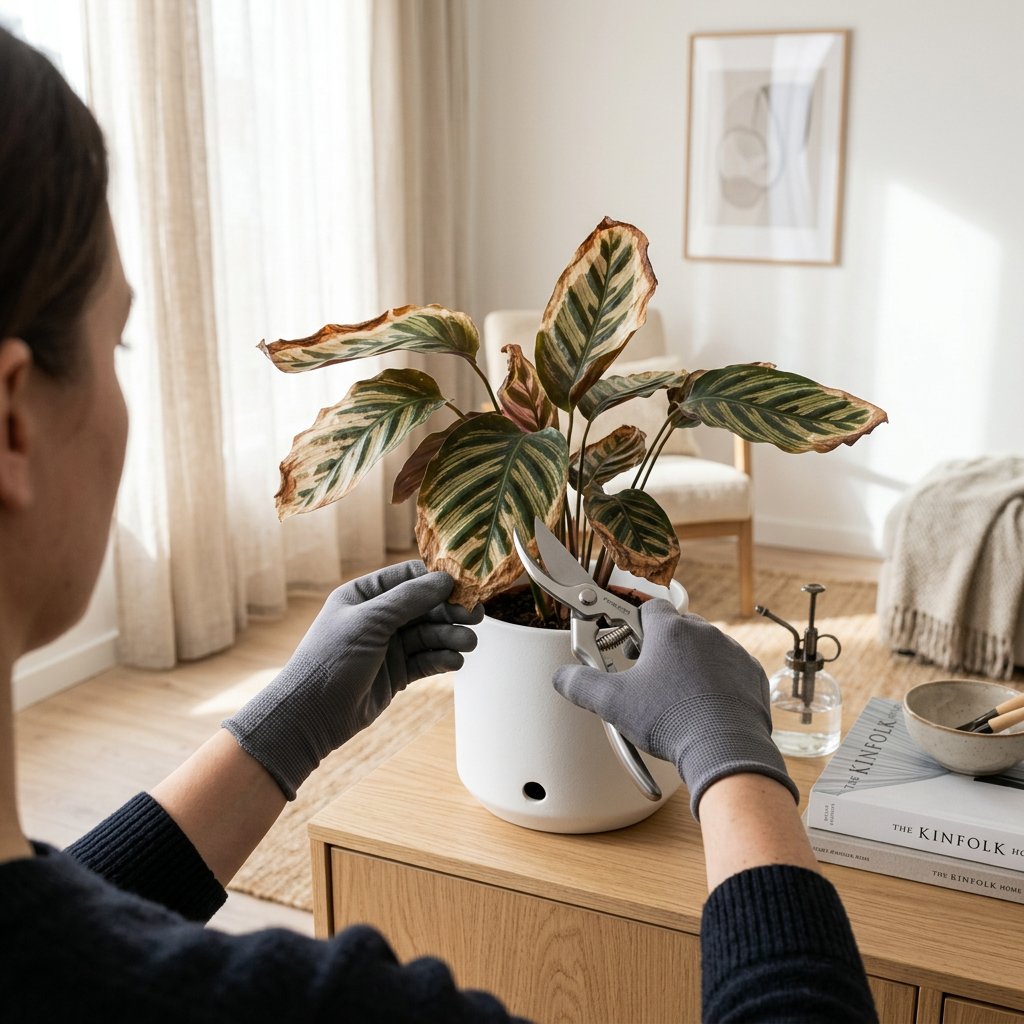
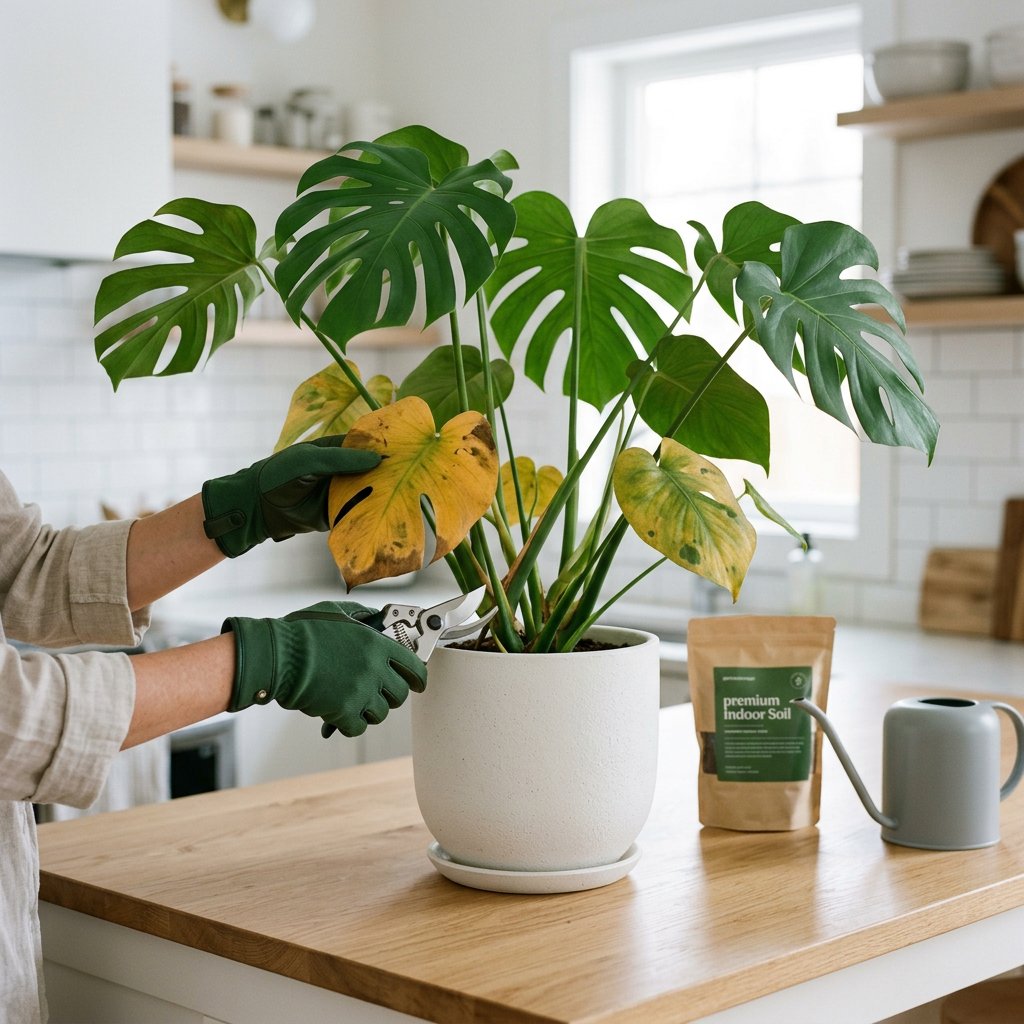
Step 3: Prune the Damaged Leaves Once a leaf has been severely bleached or sunburned, it will not regain its color. Grab a pair of clean, sharp pruning shears and gently snip off the palest, most damaged leaves near the base of the stem. This encourages the plant to stop wasting energy on dying foliage and redirect it toward pushing out healthy, colorful new growth.
Step 4: Track Your Plant's Recovery Keep an eye on the new leaves as they unfurl over the next few weeks. They should emerge with their natural, vibrant colors restored. To easily keep track of your plant’s progress, lighting schedule, and watering needs, you can log its recovery journey in the Plantiary app.
Seeing a beloved plant struggle can be stressful, but by adjusting its light and giving it a little extra care, your Syngonium will be thriving and pushing out gorgeous new leaves in no time. You've got this!