Calatheas are renowned worldwide for their stunning, intricately patterned foliage. But let’s be honest—they also have a well-earned reputation for being quite dramatic! If you’ve recently noticed unsightly spots appearing on your beloved Calathea’s leaves, take a deep breath. You have not failed as a plant parent. Plant issues happen to absolutely everyone, and Calatheas are famously sensitive to their environment. The good news is that leaf spot disease is entirely treatable. Let’s work together to figure out exactly what is going on and nurse your gorgeous houseplant back to vibrant health.
The Problem: Recognizing the Symptoms
Before we jump into fixing the issue, we need to make sure we are dealing with leaf spot disease. On a Calathea, leaf spot typically presents as distinct visual changes on the foliage:
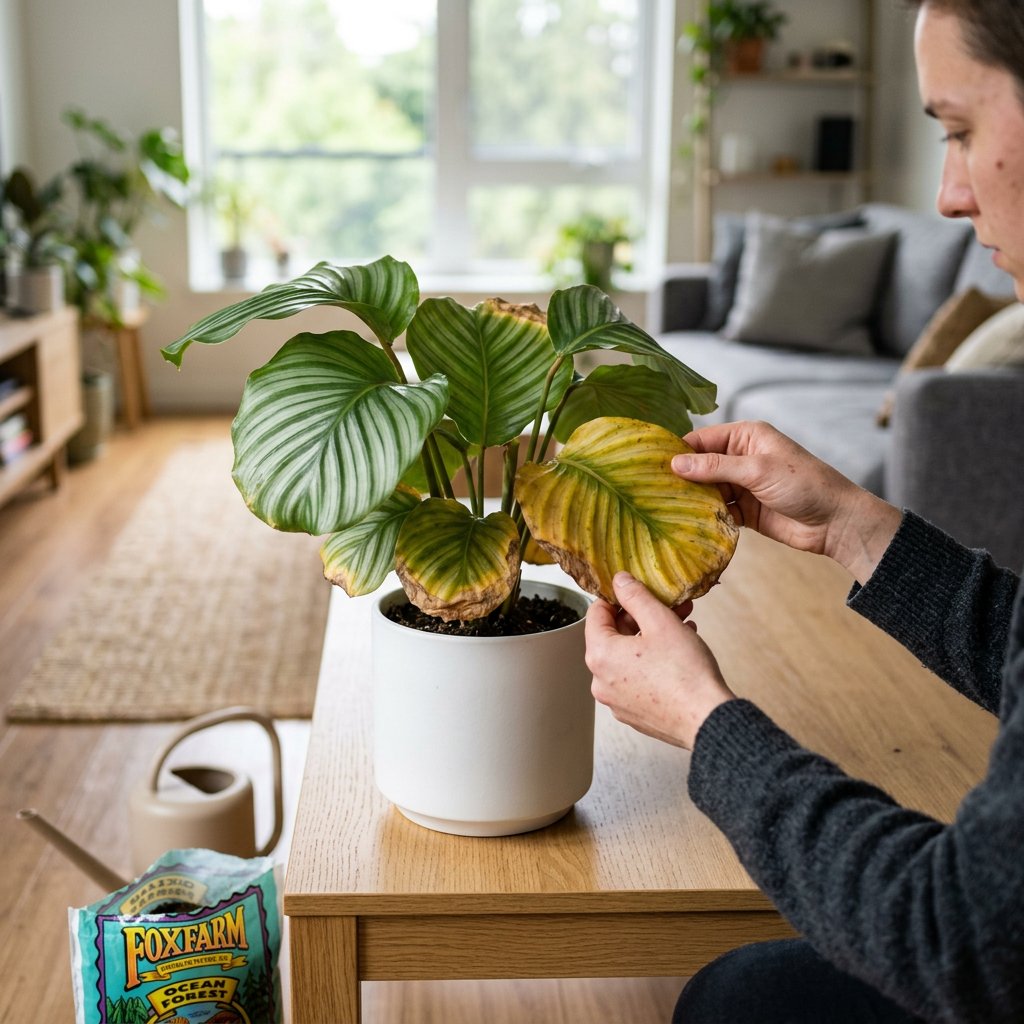
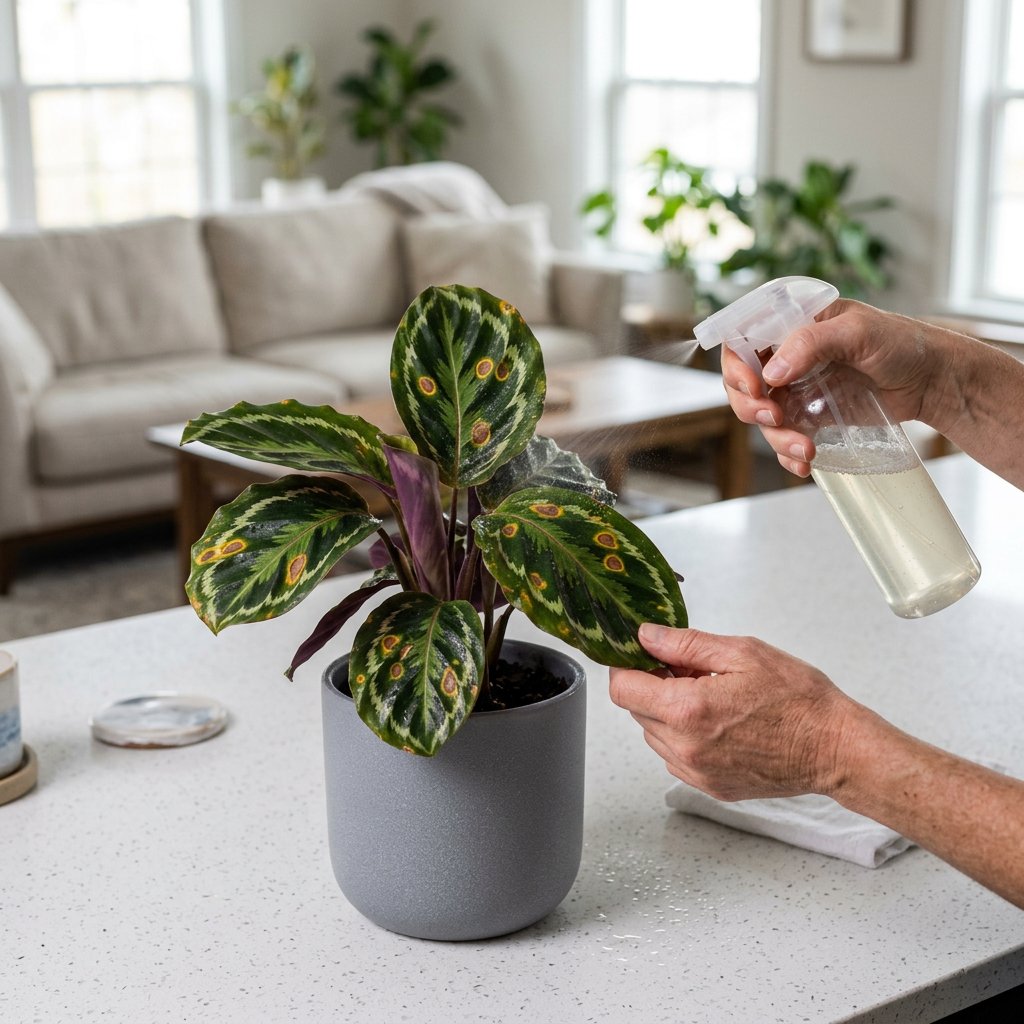
- Dark lesions: You will notice small brown or black spots, which may start tiny but slowly expand over time.
- Yellow halos: The dark spots are often surrounded by a ring of yellow. This is known as chlorosis (the breakdown of chlorophyll, which causes a loss of green pigment and yellowing of the leaf tissue).
- Papery textures: As the spots grow, the center of the lesion may dry out, becoming brittle and papery.
If you are ever unsure what is wrong with your plant, you can use the AI-powered plant disease scanner in the Plantiary app to get an accurate diagnosis in seconds.
The Causes: Why is My Calathea Getting Leaf Spots?
Leaf spot disease in houseplants is generally caused by fungal or bacterial pathogens, such as Alternaria or Pseudomonas. These microscopic invaders thrive in warm, wet conditions. But how do they get to your plant in the first place?
- Wet Foliage: Many plant parents mist their Calatheas to increase humidity. Unfortunately, leaving standing water droplets on the leaves creates the perfect breeding ground for fungal spores.
- Poor Air Circulation: If your plants are packed tightly together and there is no airflow in the room, excess moisture cannot evaporate.
- Overwatering: Consistently soggy soil weakens the plant's immune system, making it far more susceptible to infections.
The Solutions: Step-by-Step Treatment
Treating leaf spot requires a gentle but immediate approach. Please avoid using unverified DIY kitchen remedies, as these can clog the plant's pores and cause further damage. Instead, follow these proven, scientifically backed steps:
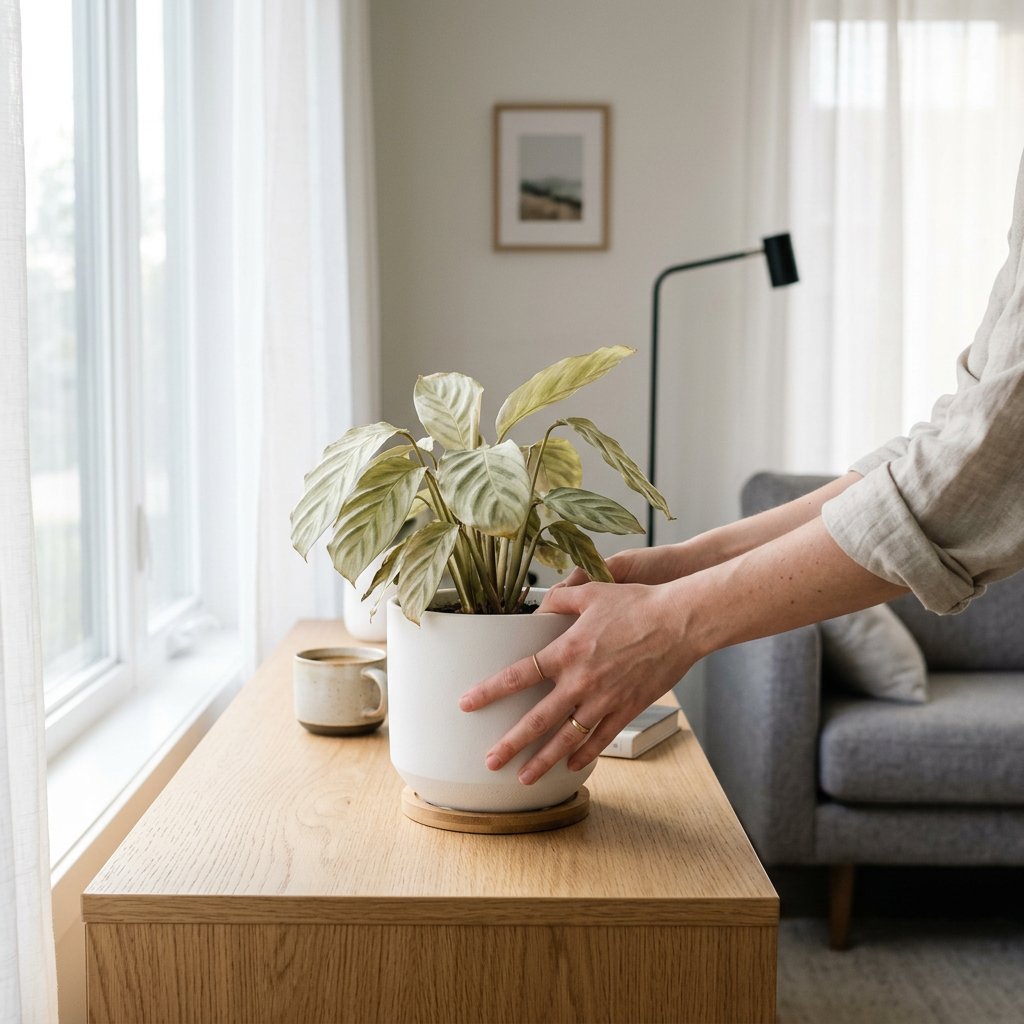
Step 1: Isolate your plant Fungal spores and bacteria can easily travel through the air or splash onto neighboring plants. As soon as you notice leaf spots, move your Calathea to a separate, well-lit room away from your other houseplants.
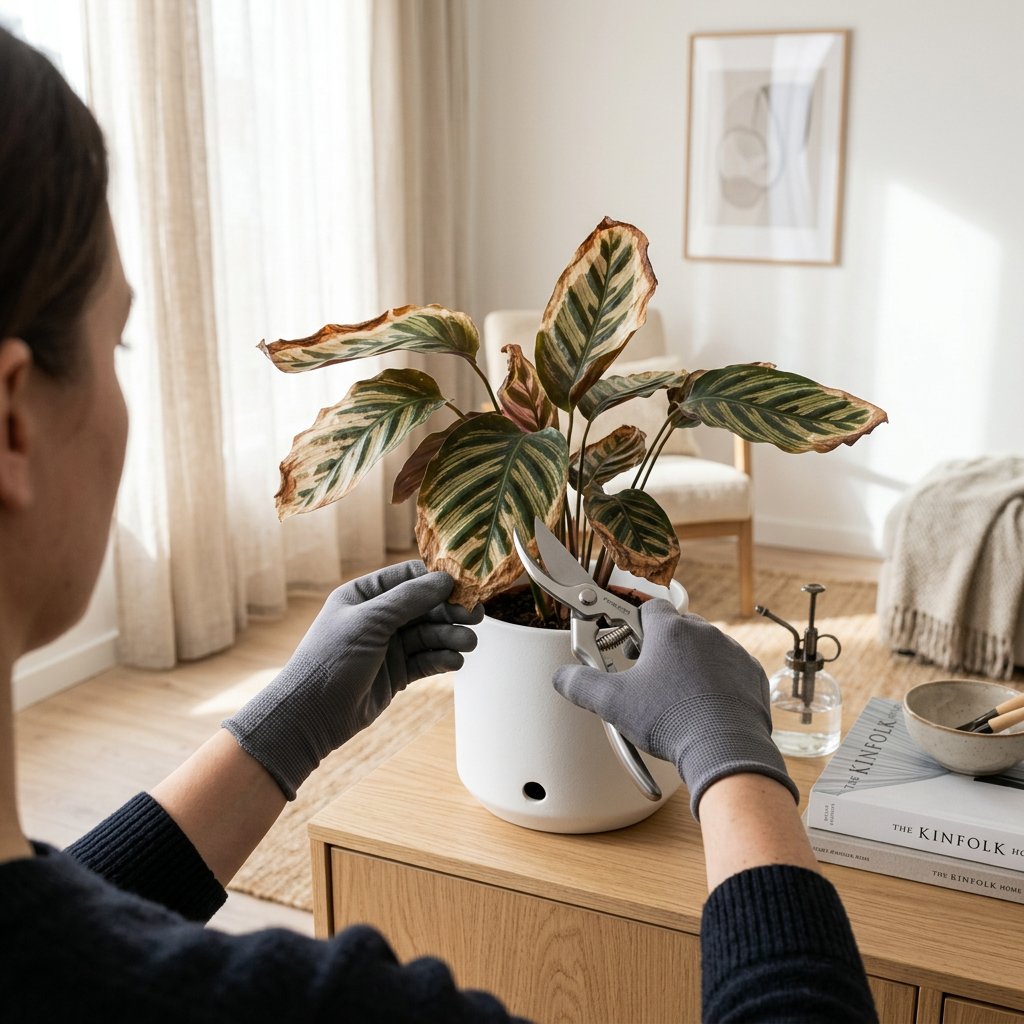
Step 2: Prune the infected leaves Unfortunately, plant tissue that has turned brown or black is experiencing necrosis (dead tissue) and cannot heal or turn green again. Using a pair of sharp, clean scissors or pruning shears, carefully cut off the most heavily infected leaves near the base of the stem. Be sure to wipe your blades with rubbing alcohol between every single cut so you don't accidentally spread the pathogen.
Step 3: Apply a safe fungicide To stop the remaining microscopic spores from spreading, treat your plant with a commercially available, copper-based fungicide or a biological fungicide containing Bacillus subtilis. If you prefer a more natural route, a high-quality, properly diluted neem oil spray can act as a gentle preventative, though it is less effective against severe bacterial infections. Follow the instructions on the product label carefully.
Step 4: Adjust your watering routine Moving forward, you must keep the leaves dry. Switch to "bottom watering" by placing your Calathea's nursery pot in a bowl of water for 20 minutes, allowing the roots to soak up moisture from the bottom without wetting the foliage.
Preventing Future Breakouts
Once your Calathea is on the mend, a few simple tweaks to its environment will keep it safe from future infections:
- Stop misting: Instead of misting the leaves for humidity, use a room humidifier. This provides the ambient moisture Calatheas crave without leaving dangerous water droplets on the leaves.
- Increase airflow: Place a small oscillating fan in the room (not pointing directly at the plant) to keep the air moving and prevent stagnant moisture.
- Track your care: Use the Plantiary app to log your watering schedule. This ensures you are watering only when the top inch of the soil is dry, preventing the soggy conditions that pathogens love.
Seeing your Calathea struggle can be stressful, but by taking these swift, actionable steps, you are doing exactly what a great plant parent should do. Have patience, stick to the routine, and before long, your Calathea will be pushing out beautiful, healthy new leaves!