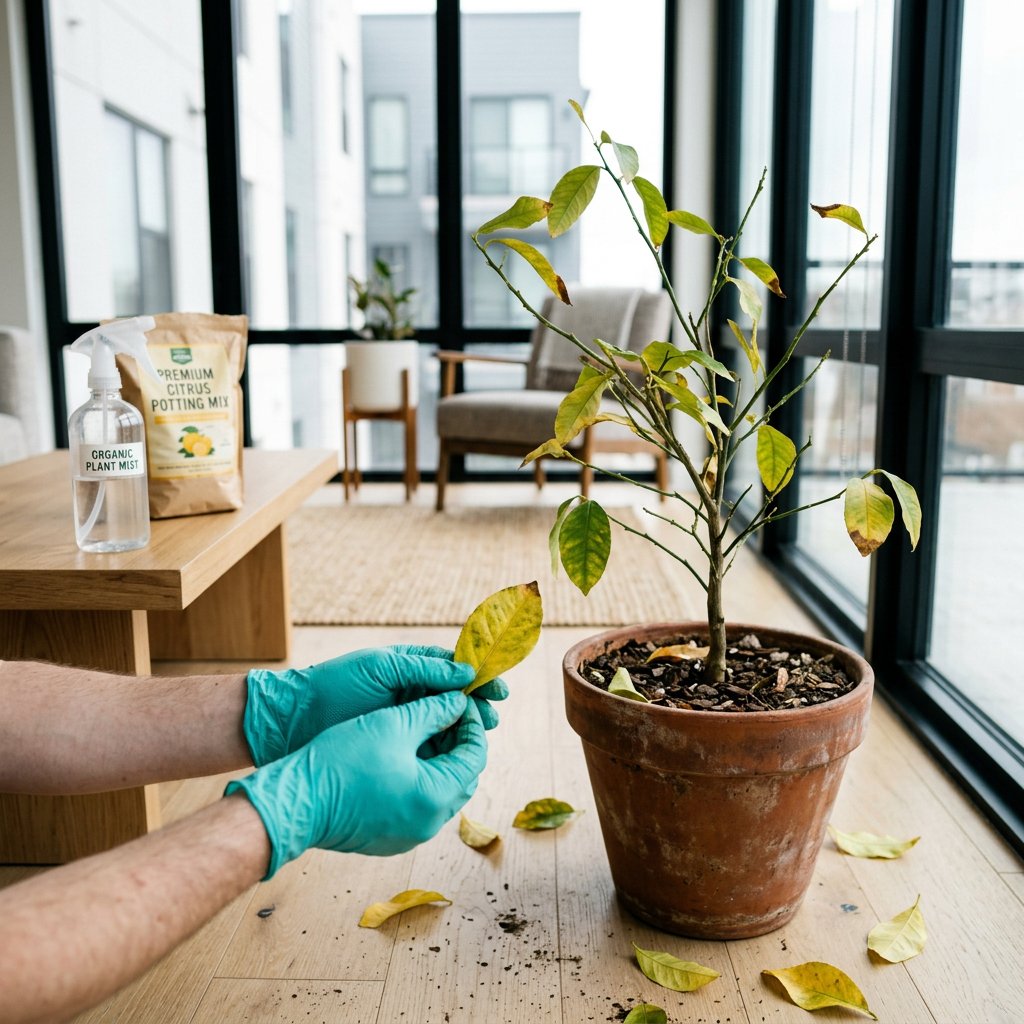
Imagine walking up to your beloved lemon, lime, or orange tree, expecting to see crisp, glossy green leaves, only to find bizarre, silvery, squiggly lines drawn all over the foliage. If your first thought was that a tiny insect artist took a metallic marker to your plant, you aren’t alone! Please don't panic or feel discouraged. This is a very common issue caused by a tiny pest known as the Citrus Leaf Miner. It happens to almost every citrus grower at some point, and it certainly doesn't mean you're a bad plant parent.
Let’s dive into what’s happening to your citrus tree and exactly how you can gently and effectively help it recover.
The Problem: Signs of a Citrus Leaf Miner Invasion
The symptoms of this pest are highly visual and usually appear on the youngest, most tender leaves of your tree. Here is what you should look out for:
- Silvery, winding trails: These meandering lines are the "mines" or tunnels left behind by the insect as it eats its way through the plant tissue.
- Curled or distorted leaves: As the pest damages the internal structure of the leaf, the edges will often curl inward, look blistered, or become severely deformed.
- Stunted new growth: Because these pests target fresh, young foliage, a severe infestation can temporarily slow down the overall growth of your citrus tree.
If you are looking at your tree and wondering, "Is this a leaf miner, or could it be a nutrient deficiency?" you don't have to guess. You can use the AI-powered plant disease scanner in the Plantiary app! Just snap a quick photo of the damaged leaf, and you’ll get an accurate diagnosis in seconds.
The Cause: What Exactly Is a Leaf Miner?
The culprit behind these scribbly lines is the larva of a tiny, silvery-white moth (Phyllocnistis citrella).
During the warmer months, the adult female moth flies around at night and lays her microscopic eggs on the underside of fresh, newly emerged citrus leaves. Within a few days, the eggs hatch into tiny larvae. Instead of eating the outside of the leaf, the larvae burrow inside the upper and lower layers of the leaf. They spend their time munching on the internal plant tissue, creating those visible, air-filled tunnels (mines) as they go.
Because they are protected inside the leaf, traditional contact bug sprays often won't reach them, which is why a targeted, scientifically backed approach is needed.
The Solutions: Step-by-Step Treatment
The good news is that while Citrus Leaf Miners make your plant look a bit ugly, they rarely kill an established tree. However, young trees need a little extra help to ensure they can continue growing strong. Here is a safe, proven way to treat the issue:
Step 1: Prune with Purpose If only a few leaves are affected, use clean, sterilized pruning shears to snip them off and throw them in the trash (do not compost them). However, if the entire flush of new growth is heavily attacked, leave it be. Even damaged leaves can still photosynthesize and provide energy to the tree. Over-pruning can stress your plant more than the pests themselves!
Step 2: Apply Horticultural Oil or Neem Oil Because the larvae are inside the leaf, you need to stop the adult moths from laying eggs in the first place. Neem oil is a natural, plant-based oil that acts as a repellent. Spray a diluted mixture of Neem oil or a commercial horticultural oil on the new growth of your tree early in the morning or late in the evening. This coats the leaves, making it incredibly difficult for the moths to lay their eggs, and can also smother newly laid eggs.
Step 3: Hang Pheromone Traps Pheromone traps are sticky traps that release the scent of a female leaf miner moth. Hang one or two of these in the branches of your citrus tree. They will attract and trap the adult male moths, breaking the breeding cycle and drastically reducing the next generation of pests.
Step 4: Avoid Over-Fertilizing Leaf miners absolutely love tender, fresh growth. Pushing your tree to produce a lot of new leaves late in the summer by over-fertilizing with high-nitrogen plant food is like ringing a dinner bell for these moths. Stick to a balanced feeding schedule.
Keep Your Citrus Thriving
Plant parenting is a continuous learning journey filled with tiny bumps in the road. Dealing with pests like the Citrus Leaf Miner is simply a rite of passage for citrus growers! By taking these gentle, proactive steps, your tree will be pushing out healthy, green, squiggly-free leaves in no time.
Remember, if you ever feel overwhelmed by watering schedules, fertilizing routines, or pest management, the Plantiary app is always here to act as your personal botanical assistant. Keep up the great work, and happy growing!