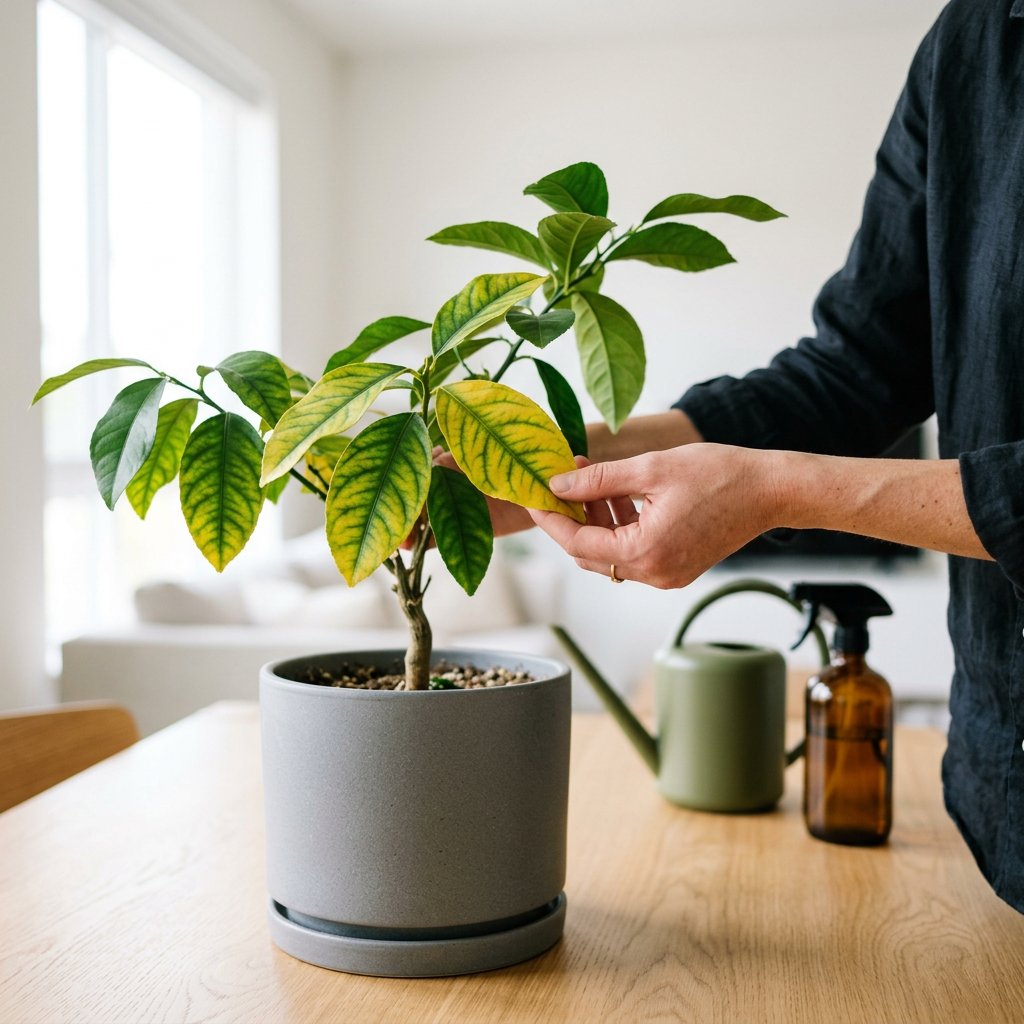
Have you recently noticed the bright, vibrant green leaves of your beloved lemon, lime, or orange tree turning a pale, sickly yellow? First of all, take a deep breath! Seeing your citrus tree struggle can be stressful, but plant hiccups happen to the best of us—even expert botanists. You absolutely haven't failed as a plant parent. Often, this specific type of yellowing is a sign of a very common and highly treatable condition called iron chlorosis.
If you're ever in doubt about what is ailing your leafy friends, remember you can always use the AI-powered plant disease scanner in the Plantiary app to get an accurate diagnosis in seconds! Let’s dive into what is happening to your citrus tree and, more importantly, how to fix it.
The Problem: Spotting Iron Chlorosis
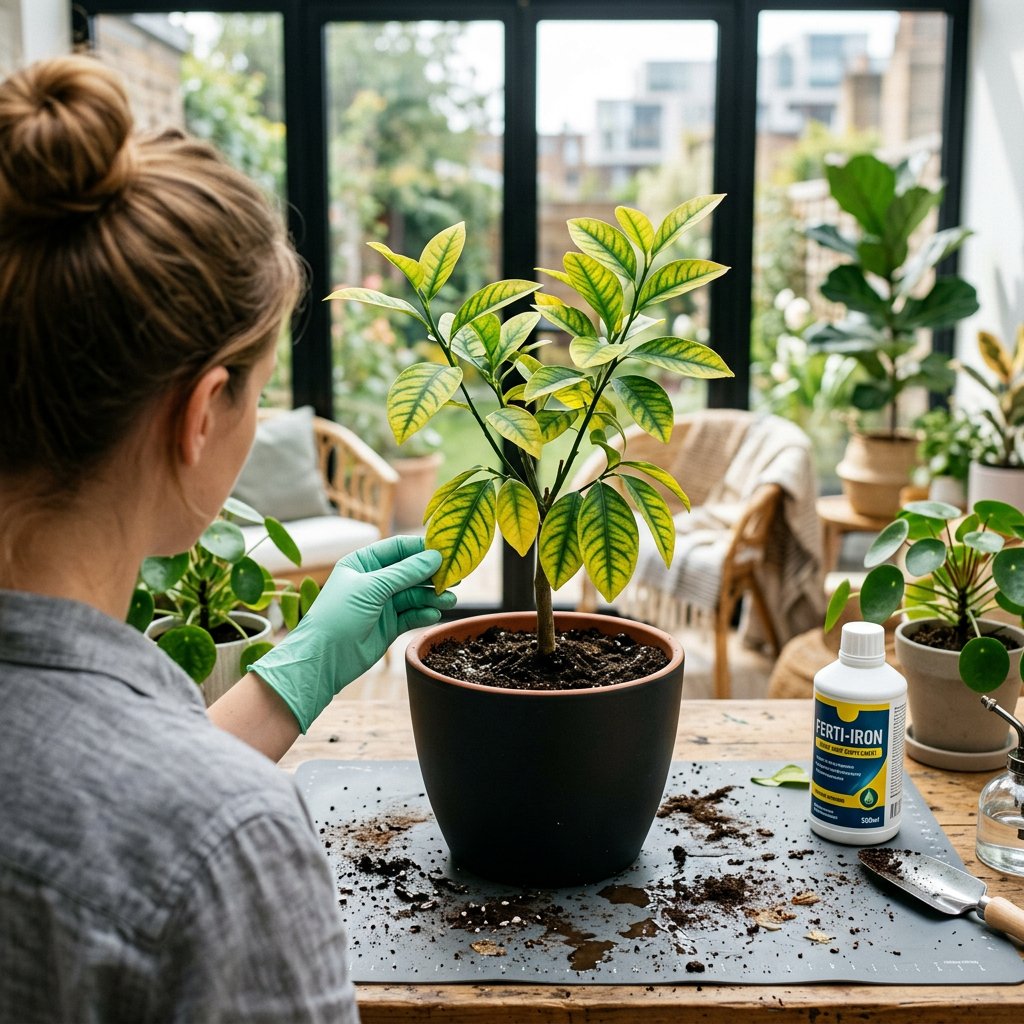
Iron chlorosis—which simply means a lack of green pigment (chlorophyll) due to an iron deficiency—has a very distinct look. Unlike general overwatering where the entire leaf fades to yellow, iron chlorosis creates a striking and specific pattern on your plant's foliage.
Look for these key symptoms:
- Interveinal yellowing: The tissue between the leaf veins turns pale yellow or almost white, while the veins themselves remain a stark, dark green.
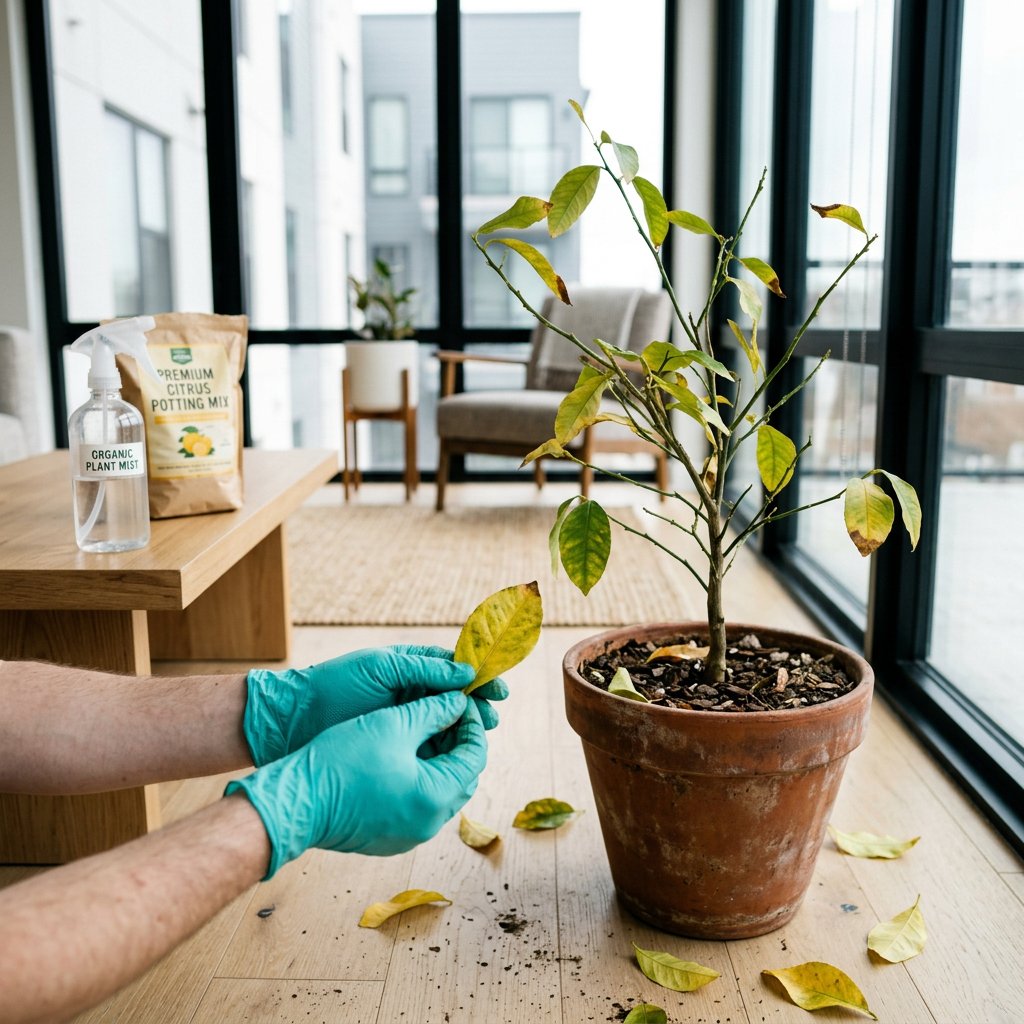
- Starts on new growth: Iron is an "immobile nutrient," meaning the plant cannot move stored iron from old leaves to new ones. Because of this, you will always notice the yellowing on the freshest, newest leaves at the tips of the branches first.
- Stunted growth or leaf drop: In severe, untreated cases, the leaves may become entirely white, develop scorch marks (brown edges), and eventually fall off.
The Causes: Why is Your Citrus Lacking Iron?
You might be thinking, "I just need to feed my plant more iron!" But the truth is a bit more complex. Most potting soils and garden beds actually contain plenty of iron. The problem is that the iron is chemically "locked up" and unavailable to your citrus tree's root system.
Here is what usually triggers this nutrient lockout:
- High Soil pH (Alkaline Soil): Citrus trees thrive in slightly acidic soil (a pH between 5.5 and 6.5). If your soil pH creeps above 7.0, the iron becomes chemically bound to the soil, making it impossible for the roots to absorb it.
- Poor Drainage and Overwatering: Soggy, waterlogged soil suffocates plant roots. If the roots cannot breathe, they cannot take up nutrients properly, leading to a false deficiency.
- Cold Soil Temperatures: In early spring, the soil might still be too cold for active root function, temporarily limiting iron uptake even if the soil chemistry is perfect.
- Root Damage: Compacted soil, root rot, or physical damage to the root system can prevent your plant from drinking up the vital minerals it needs.
The Solutions: How to Restore Those Gorgeous Green Leaves
Now for the rewarding part—nursing your citrus tree back to lush health! By making a few targeted, scientifically backed adjustments, you can unlock those vital nutrients.
Step 1: Adjust your watering habits and check drainage. Before adding any fertilizers, ensure your plant's pot or planting site has excellent drainage. Allow the top two to three inches of the soil to dry out completely before watering again. If your plant is sitting in a saucer of water, empty it immediately to let the roots breathe.
Step 2: Test the soil pH. You can easily find simple soil pH testing kits or probes at your local garden center. Testing the soil will confirm if alkalinity is the root of the problem.
Step 3: Lower the soil pH. If your pH is above 6.5, you need to gently create the slightly acidic environment your citrus craves. You can apply elemental sulfur or use an organic, acid-forming citrus fertilizer. This safely and slowly alters the soil chemistry over time, unlocking the iron that is already present in the dirt.
Step 4: Apply chelated iron. For a safe, fast-acting fix while you wait for the soil pH to adjust, you can apply chelated iron. Chelated iron is a specially stabilized form of the nutrient that plant roots can easily absorb, even in alkaline conditions. You can apply this as a liquid soil drench or directly to the leaves as a foliar spray, strictly following the package instructions.
Patience is Key
Recovering from iron chlorosis takes a little bit of time. The oldest, most severely damaged leaves might not fully green up again, but keep your eyes on the new growth—that is where you will see the vibrant green confidently return!
Don't beat yourself up over a few yellow leaves; tending to plants is all about learning, adjusting, and growing alongside them. If you need a helping hand keeping track of your adjusted watering schedules or want to track your citrus tree's recovery progress, don't forget to log your plant in the Plantiary app. You've got this, and your citrus tree will be thriving again in no time!