If you have ever cared for a Fiddle Leaf Fig (Ficus lyrata), you already know they can be a bit dramatic. One day they are pushing out gorgeous, glossy new growth, and the next, you might spot alarming red, brown, or rust-colored freckles scattered across those brand-new leaves. It is completely normal to feel a sudden wave of panic and wonder what went wrong. But please, don’t be hard on yourself! Plant issues happen to absolutely every plant parent, even the professionals.
If you are unsure what is wrong with your plant, you can always use the AI-powered plant disease scanner in the Plantiary app to get a diagnosis in seconds. However, if those reddish-brown dots are concentrated entirely on new growth, you are likely dealing with a very common, non-fatal condition called edema.
Let’s break down exactly what edema is, why your Fiddle Leaf Fig has it, and the simple steps you can take to resolve it.
The Problem: Identifying Fiddle Leaf Fig Edema
Edema (sometimes spelled oedema) is a physiological disorder, meaning it is not caused by a pest, fungus, or bacterial disease. It is essentially a moisture management issue within the plant's tissue.
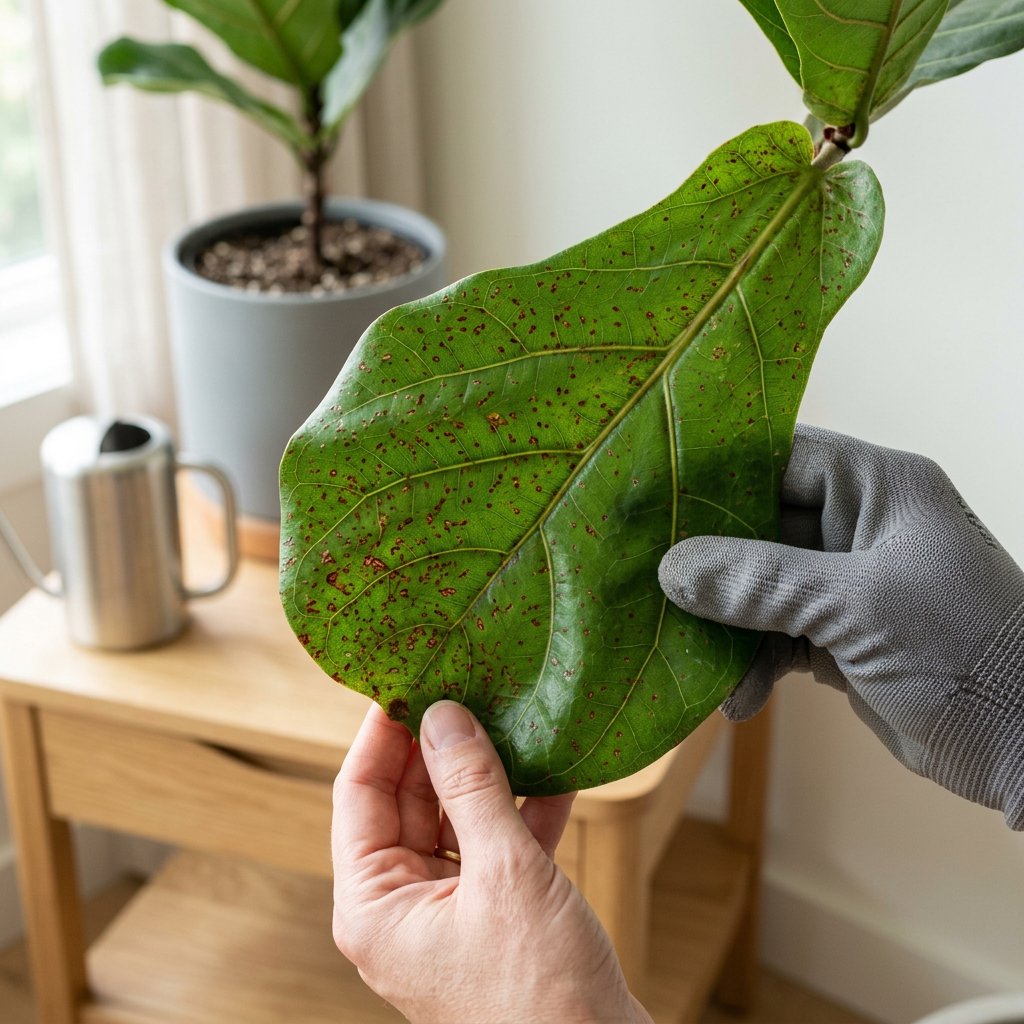
Here is what it typically looks like:
- Tiny red or brown spots: These often look like small freckles or pinpoint scabs.
- Location: The spots are almost exclusively found on baby leaves emerging at the top of the plant. They can appear on the topside, underside, or along the veins.
- Texture: Sometimes, the spots feel slightly raised or bumpy to the touch.
The Causes: Why Do These Spots Appear?
To put it simply, edema happens when your plant's roots absorb water much faster than the leaves can use and release it. Plants “sweat” out excess moisture through a process called transpiration. If the roots are drinking up a flood of water but the leaves aren't transpiring fast enough, the water pressure inside the plant builds up. Eventually, the fragile cells in the newest, softest leaves swell and burst. When those burst cells heal, they create the reddish-brown scabs you see.
The most common triggers for edema include:
- Inconsistent Watering: The classic "drought-to-flood" cycle. If the soil gets bone dry and then you suddenly soak it, the thirsty roots will gorge on water, overwhelming the young leaves.
- Poor Drainage: Heavy, compacted soil or pots without drainage holes keep the roots sitting in excess water.
- Low Light Levels: Plants need sunlight for transpiration. If your plant is in a dark corner, its metabolism slows down, making it harder to process the water it absorbs.
The Solutions: How to Treat and Prevent Edema
The best news about edema is that it is completely harmless to the long-term health of your Fiddle Leaf Fig. Even better, as those young, speckled leaves mature and stretch out, the reddish spots will usually fade away into a normal green! You do not need to cut the affected leaves off.
To prevent edema on future growth, follow these actionable steps:
Step 1: Establish a Consistent Watering Routine
Avoid letting your plant become incredibly dry before flooding it. Check the soil regularly. You should water your Fiddle Leaf Fig thoroughly only when the top 2 to 3 inches of the soil feel completely dry to the touch. You can log your watering schedule in the Plantiary app to help you stay on track and prevent the dreaded drought-to-flood cycle.
Step 2: Check Your Drainage
Ensure your plant is living in a pot with drainage holes at the bottom. When you water the plant, water should flow freely out of the bottom. If your plant is in a decorative pot (a cachepot), always empty any standing water that pools at the bottom within 30 minutes of watering. Roots left sitting in a puddle are highly susceptible to both edema and deadly root rot.
Step 3: Upgrade Their Sunlight
Make sure your Fiddle Leaf Fig is getting plenty of bright, indirect sunlight. A spot right next to an east-facing or south-facing window is usually ideal. Adequate light keeps the plant's transpiration process running smoothly, ensuring that any water taken up by the roots is efficiently processed by the leaves.
Step 4: Leave the Spots Alone
Resist the urge to treat the leaves with harsh chemicals, oils, or heavy wiping. Because edema is an internal pressure issue, topical treatments won't cure it and might actually damage the delicate new tissue. Simply give the leaf time to grow, expand, and heal itself.
Growing a Fiddle Leaf Fig is a learning curve, and a few red spots along the way are just proof that your plant is actively growing and communicating its needs. By making a few small tweaks to your watering and lighting habits, your next batch of leaves will be flawlessly green!