Calatheas are the absolute divas of the houseplant world. With their stunning, painted-looking foliage, they easily steal our hearts—but they can also break them just as quickly. If you’ve recently noticed your beloved Calathea's leaves curling inward or developing crispy, brown edges, take a deep breath. You are not a bad plant parent! These tropical beauties are notoriously vocal when they aren't completely happy with their environment. The good news is that they are also incredibly resilient once you figure out what they need. If you ever feel overwhelmed, remember that the Plantiary app is always right in your pocket to help you decode what your leafy friends are trying to tell you. Let’s dive into why your Calathea is throwing a fit and how to nurse it back to vibrant health.
The Problem: Decoding the Symptoms
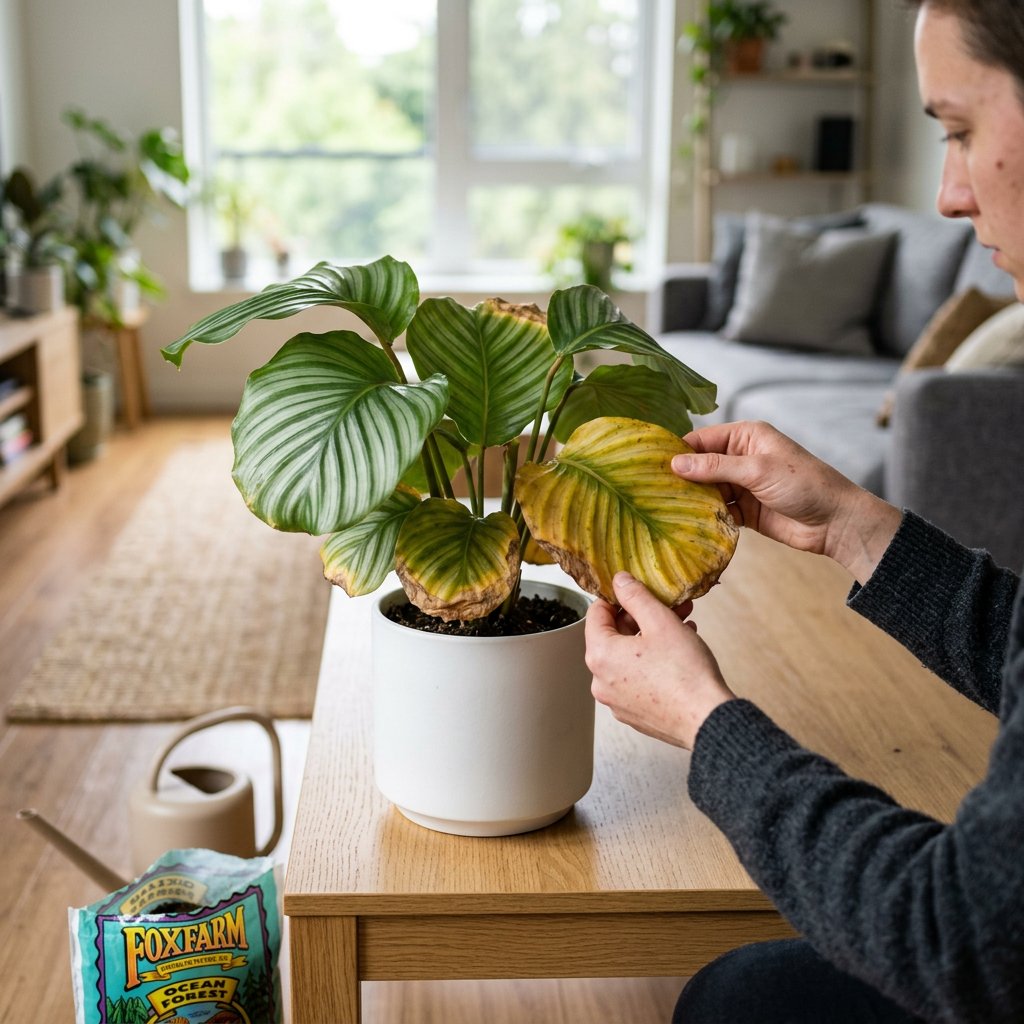
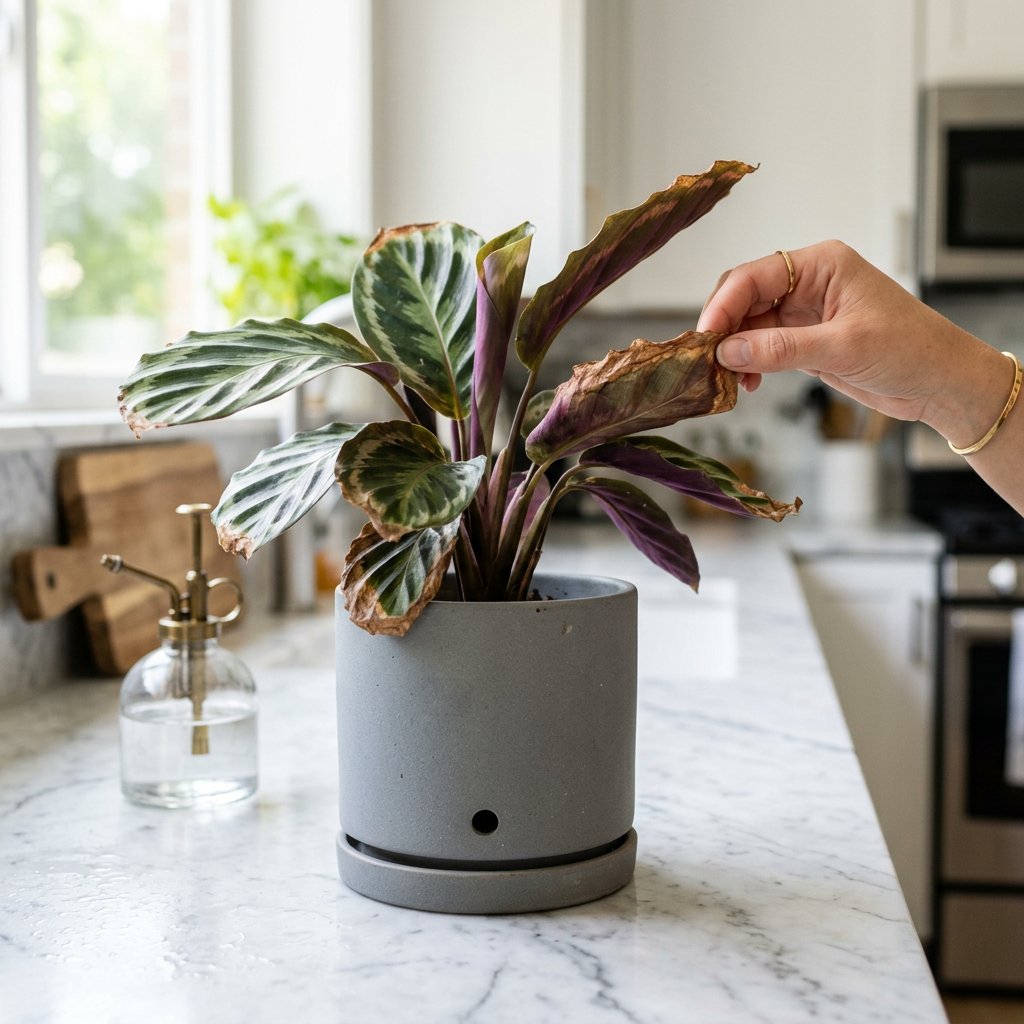
Before we fix the issue, let's look closely at what your plant is doing. Your Calathea is likely experiencing two distinct but closely related stress responses:
- Curling leaves: The leaves roll inward tightly, almost looking like green cigars. In botany, this is a brilliant defense mechanism to reduce water loss through transpiration (the process of water moving through a plant and evaporating from its leaves).
- Brown, crispy edges: The margins (edges) or tips of the leaves turn dry, brown, and brittle to the touch.
When you see these signs, your plant isn't dying; it is simply sending up a flare for help!
The Causes: Why is My Calathea Unhappy?
Calatheas originate from the lush, highly humid understory of tropical rainforests. When our modern homes don't perfectly mimic that environment, they protest. Here are the most common culprits behind the curling and browning:
- Water Quality Sensitivity: Calatheas are highly sensitive to the chemicals found in standard tap water, such as fluoride, chlorine, and heavy metals. This leads to phytotoxicity (a toxic effect on plant growth), where the chemicals accumulate at the leaf tips and edges, burning them brown.
- Low Humidity: These plants crave moisture in the air. If the ambient room humidity drops below 50%, the leaves dry out faster than the roots can absorb water, triggering the leaves to curl and crisp up.
- Inconsistent Watering: Allowing the soil to become completely bone-dry will cause the plant to panic and curl its foliage inward to conserve whatever moisture it has left.
- Temperature Stress & Drafts: Hot or cold drafts from AC units, heaters, or drafty windows can zap the moisture right out of those delicate, paper-thin leaves.
The Solutions: Step-by-Step Treatment
Ready to turn those crispy brown edges back into lush, open foliage? Follow these scientifically backed steps to revive your plant.
Step 1: Switch up your water source. Immediately stop using water straight from the tap. Switch to distilled water, reverse-osmosis filtered water, or collected rainwater. If you absolutely must use tap water, let it sit out in an open container for at least 24 hours to allow chlorine to evaporate (though keep in mind, this won't remove fluoride).
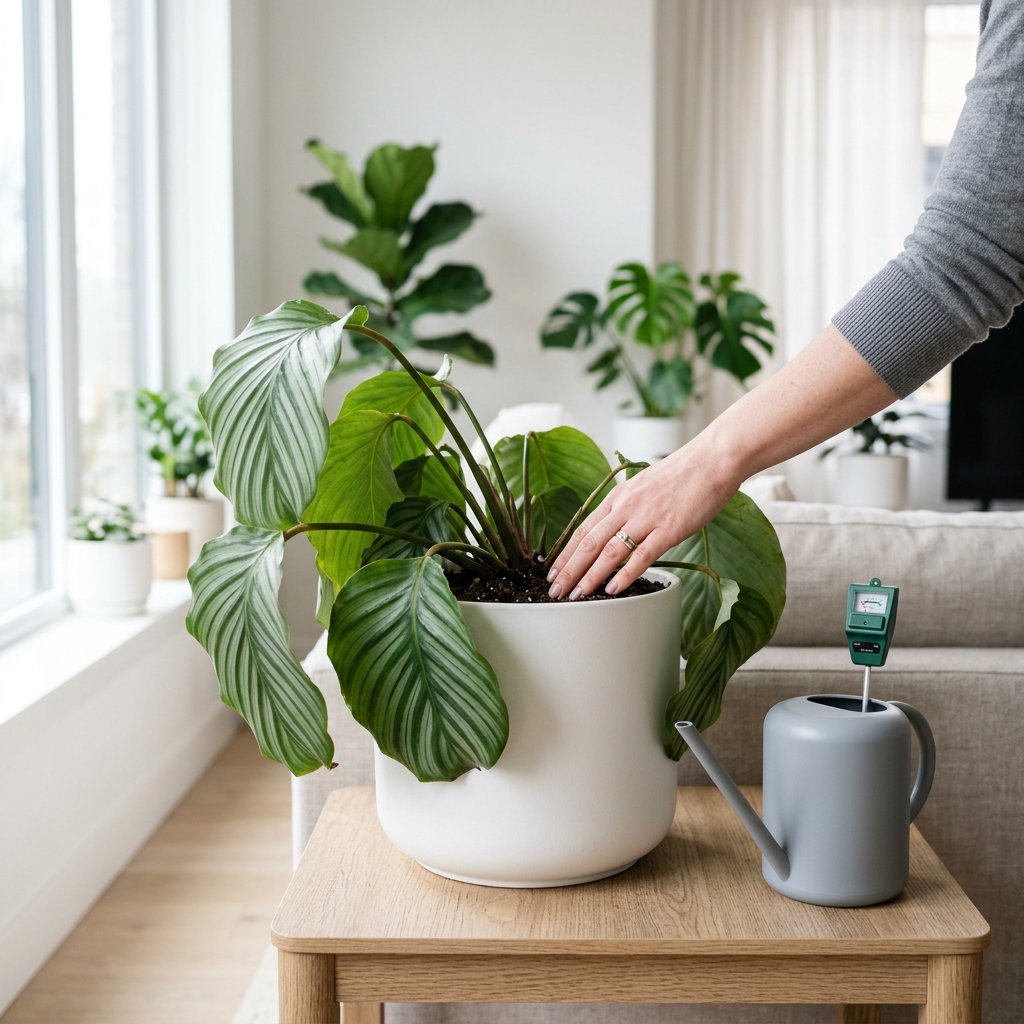
Step 2: Perfect your watering routine. Keep the soil evenly moist, but never soggy. Water your Calathea when the top inch of the soil feels dry to the touch. Ensure your pot has drainage holes so excess water can escape and prevent root rot. If you struggle to track your watering schedule, you can set up a smart care reminder in the Plantiary app to ensure your plant gets exactly what it needs, right when it needs it.
Step 3: Boost the environmental humidity. Misting the leaves is a temporary fix, but it isn't enough to sustain a Calathea. Instead, invest in a small room humidifier and place it near your plant. Alternatively, group your houseplants close together to create a humid microclimate, or set your Calathea on a pebble tray filled with water (making sure the bottom of the pot sits on the pebbles, not directly in the water).
Step 4: Relocate away from drafts. Move your plant to a cozy, stable spot with bright, indirect sunlight. Keep it far away from heating vents, radiators, fans, and drafty doorways.
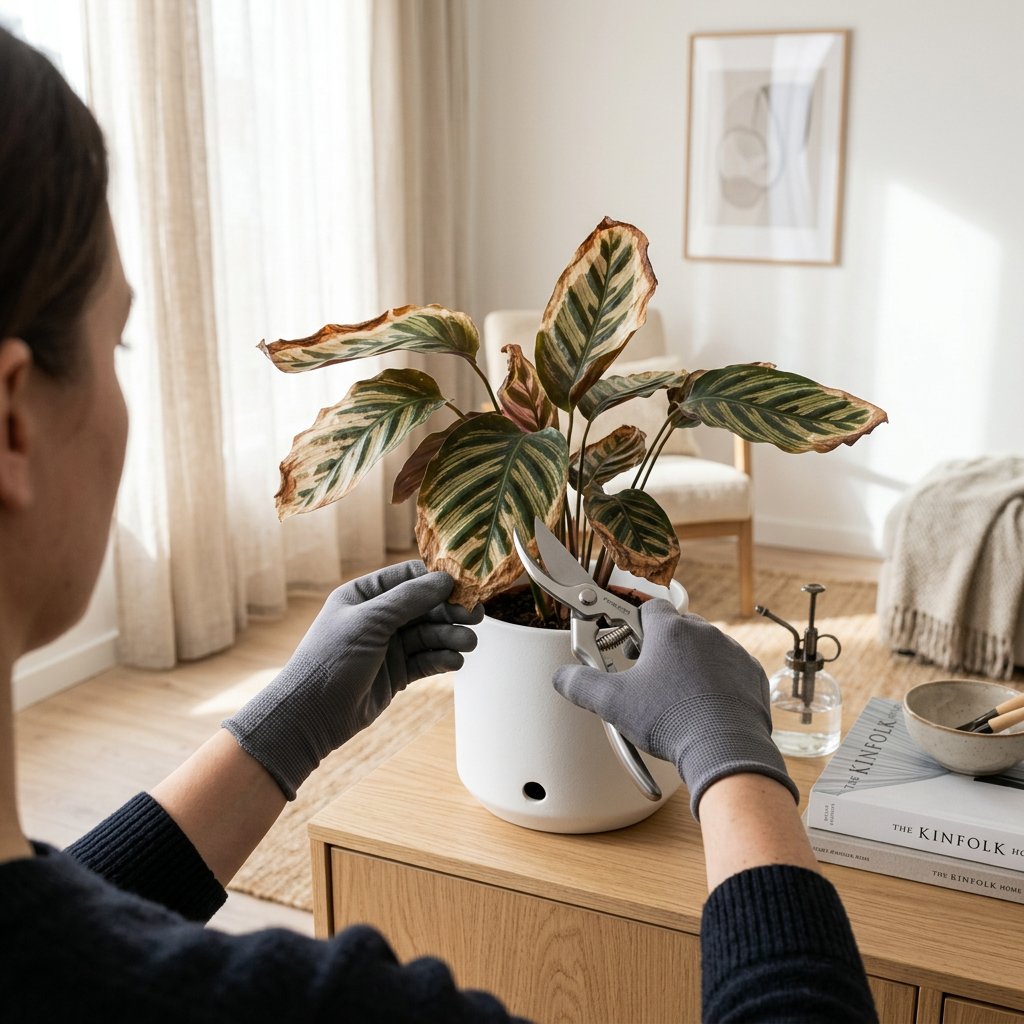
Step 5: Safely prune the damage. Unfortunately, once a leaf edge turns brown and crispy, the cells are dead and won't turn green again. You can take sterilized pruning shears and carefully trim away the brown edges, following the natural curved shape of the leaf. If a leaf is entirely curled, yellow, or mostly brown, simply snip it off near the base of the stem. This redirects the plant's energy away from dying foliage and toward pushing out healthy new growth!
It might take a few weeks for your Calathea to completely bounce back, so be patient with it—and with yourself! Plant care is a wonderful journey of trial and error. If you are ever unsure whether there is a deeper issue at play, like a hidden pest, you can use the AI-powered plant disease scanner in the Plantiary app to get an instant diagnosis. Happy planting, you've got this!