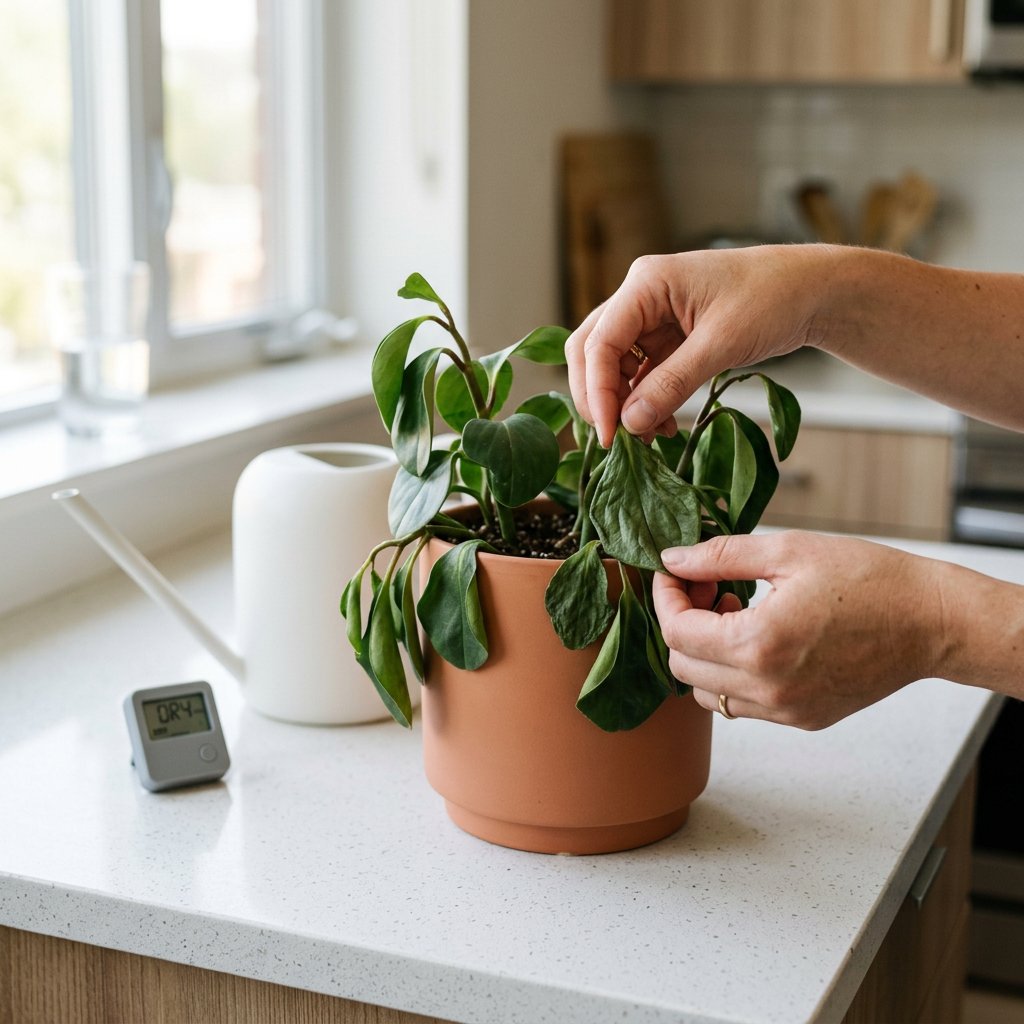
We’ve all been there—you walk past your usually perky Peperomia, only to find its once-plump leaves looking sad, wilted, and drooping toward the floor. Please don’t panic or blame yourself! Plant hiccups happen to even the most experienced indoor gardeners.
Peperomias are famous for their resilient, semi-succulent nature, but occasionally, they need a little extra help to bounce back. Getting to the root of the problem is easier than you think. Plus, if you ever feel overwhelmed, you can always use the AI-powered plant disease scanner in the Plantiary app to get a quick diagnosis and personalized care plan.
Let’s take a deep breath and figure out exactly how to help your Peperomia stand tall again.
The Problem: Recognizing the Symptoms
Drooping leaves are a direct sign that your plant has lost turgor pressure—a botanical term for the internal water pressure that keeps stems and leaves stiff, plump, and upright. When this water pressure drops, the foliage goes completely limp.
In Peperomias, drooping rarely happens in isolation. Look closely at your plant for these secondary clues:
- Yellowing leaves near the base of the plant.
- Soft, mushy stems that easily snap or bend.
- Dry, crispy, or curling edges on the leaves.
- Soil that feels as hard as a rock or, conversely, smells swampy.
The Causes: Why Is Your Peperomia Drooping?
To fix the drooping, we first need to play plant detective. Here are the most common culprits behind a wilting Peperomia:
1. Overwatering and Root Rot (The #1 Culprit)
Peperomias have shallow, delicate root systems. Because their thick leaves store water, they don't need to drink very often. Sitting in soggy, poorly draining soil literally drowns the roots, leading to root rot—a fungal condition that turns healthy roots into brown mush. Without healthy roots, the plant can’t absorb water, ironically causing it to wilt and droop.
2. Severe Underwatering
While they are highly forgiving of a missed watering day, Peperomias are not cacti. If the soil is completely bone-dry for weeks, the plant will deplete its stored water reserves, causing the leaves to deflate, wrinkle, and sag.
3. Temperature Stress and Drafts
Peperomias are tropical plants that thrive in stable environments. Sudden drops in temperature, cold drafts from a window, or hot air blasting from an AC vent can send your plant into shock, resulting in an immediate droop.
4. Transplant Shock
If you recently moved your Peperomia into a new, larger pot, it might just be throwing a temporary tantrum. Roots undergo stress during repotting, temporarily halting their ability to take in water.
The Solutions: Step-by-Step Treatment
Ready to rescue your plant? Follow these actionable steps to revive your drooping Peperomia.
Step 1: Diagnose the soil moisture Before doing anything, stick your index finger about two inches into the soil. Is it soaking wet and heavy? Or is it dusty, hard, and bone-dry? Your answer will determine your next move.
Step 2: Treat for overwatering (If the soil is wet) If the soil is soaked, you need to act quickly to save the roots.
- Gently slide the plant out of its pot and inspect the roots.
- If you see black, mushy roots, snip them off using sterilized scissors.
- Repot the plant into a pot with fresh, well-draining soil (a mix of standard potting soil and plenty of perlite works perfectly). Ensure the new pot has drainage holes at the bottom!
- Set a watering schedule in your Plantiary app to remind you to water only when the top two inches of soil feel completely dry.
Step 3: Rehydrate the plant (If the soil is completely dry) If the soil is hardened and dry, your plant is severely thirsty.
- Try "bottom watering." Place the plant's pot in a bowl filled with a few inches of room-temperature water.
- Let it sit for 30 to 45 minutes so the soil can soak up water from the bottom drainage holes like a sponge.
- Once the top of the soil feels moist, remove the pot and let the excess water drain in the sink. You should see the leaves perk up within 24 hours!
Step 4: Optimize the environment Move your Peperomia to a cozy spot with bright, indirect sunlight. Keep it far away from drafty windows, exterior doors, and heating or cooling vents. A stable room temperature between 65°F and 75°F (18°C - 24°C) will encourage healthy, upright growth.
Remember, plant care is a journey of learning and observing. Don't be too hard on yourself if your Peperomia is struggling right now. By adjusting your watering habits and keeping a close eye on its environment, your plant will be back to its beautiful, bouncy self in no time!