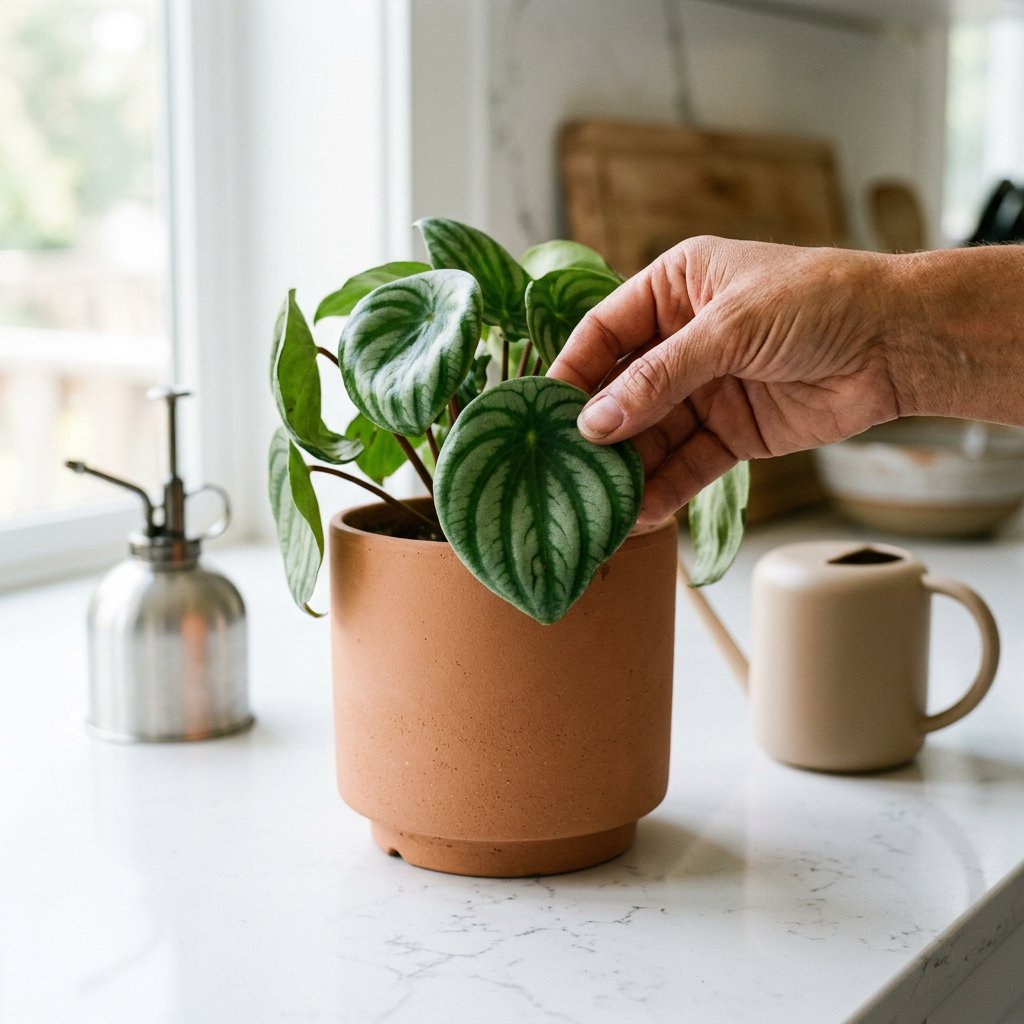
There is nothing quite like the striking, silver-and-green striped foliage of a Watermelon Peperomia (Peperomia argyreia). But it can be incredibly frustrating when those perfectly round, canvas-like leaves suddenly start curling inward, looking more like little green tacos or spoons than flat watermelon rinds.
First of all, take a deep breath! Plant parenthood is a learning journey, and even the most experienced indoor gardeners face leaf curling. Your plant isn’t a lost cause, and you certainly haven't failed it. Your Peperomia is simply trying to communicate that something is slightly off in its environment. Let’s decode what your dramatic little friend is asking for.
The Problem: Spotting the Symptoms
Before we can fix the issue, we need to look closely at how the leaves are curling. Observing the physical clues will help us pinpoint exactly what is going wrong. Ask yourself:
- Are the leaves cupping inward like a dome or a spoon?
- Are the edges curling downward and feeling thin, crispy, or dry?
- Are the stems and leaves feeling mushy, soft, and limp?
- Is this happening to the old growth at the bottom, or the brand-new leaves at the top?
The Causes: Why Are Those Striped Leaves Curling?
Unlike many other houseplants, the Watermelon Peperomia has a very specific quirk that causes leaf distortion. Here are the most common culprits behind the curl:
- Nutrient Deficiencies (The Calcium/Magnesium Factor): This is the number one reason for cupping leaves in Watermelon Peperomias. They are notoriously heavy feeders when it comes to calcium and magnesium. A lack of these minerals prevents the leaf tissue from expanding evenly as it grows, causing a distorted, domed, or curled appearance in new growth.
- Moisture Mishaps: Both underwatering and overwatering can trigger curling. When underwatered, the plant curls its leaves to reduce transpiration (the botanical process of water evaporating from the leaf surface) to conserve moisture. If overwatered, the roots may rot. When roots rot, they can no longer absorb water, leading to the exact same thirsty, curled appearance.
- Temperature and Humidity Stress: Peperomias are native to tropical environments. If they are placed near a drafty window, an air conditioning vent, or a space heater, the dry air pulls moisture out of the leaves faster than the roots can replace it, resulting in crispy, curling edges.
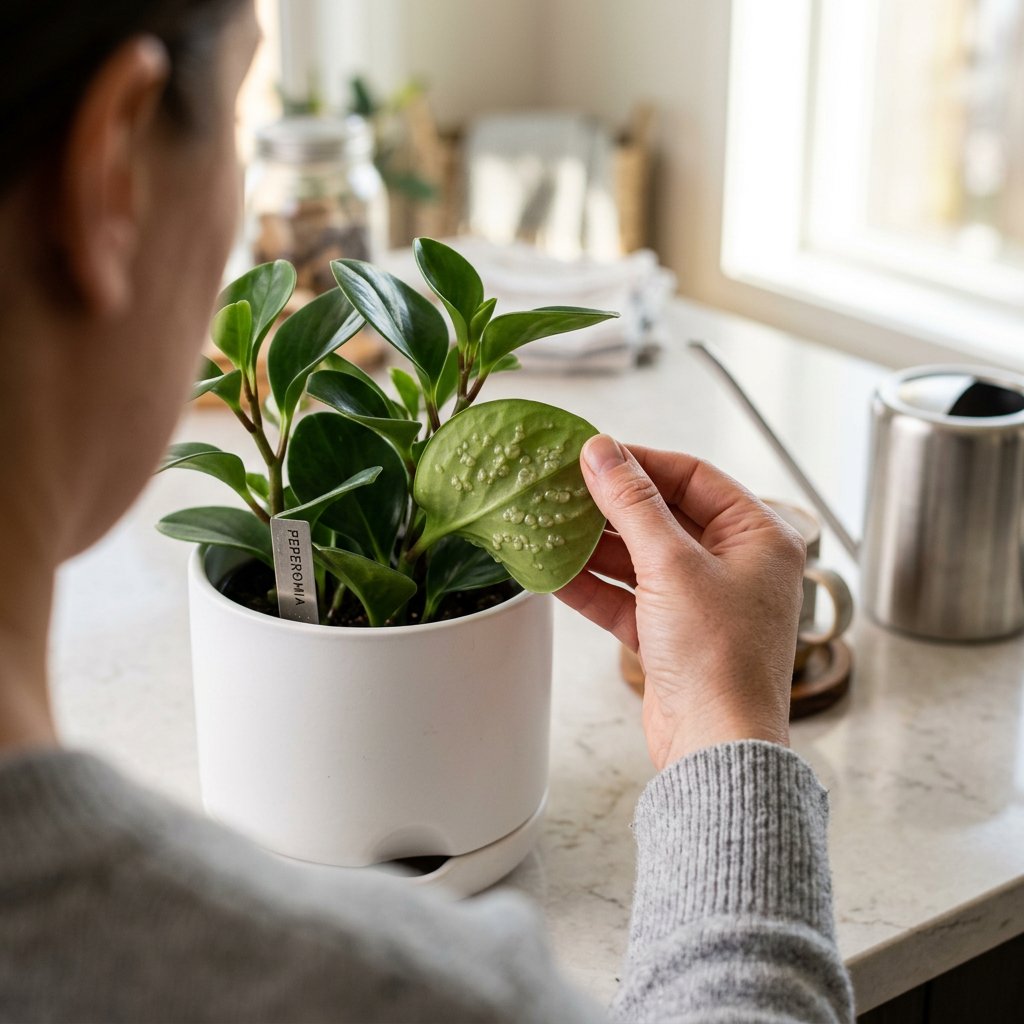
- Uninvited Pests: Sap-sucking pests like spider mites or thrips love to hide on the protected undersides of curled leaves. As they feed on the plant's sap, they cause the leaves to deform, curl, and often display chlorosis (a yellowing of the leaf tissue caused by a loss of green chlorophyll).
The Solutions: Step-by-Step Treatment to Uncurl Your Peperomia
Now that we know the potential culprits, let's get your plant on the road to recovery. Follow these actionable steps to help your Peperomia thrive again:
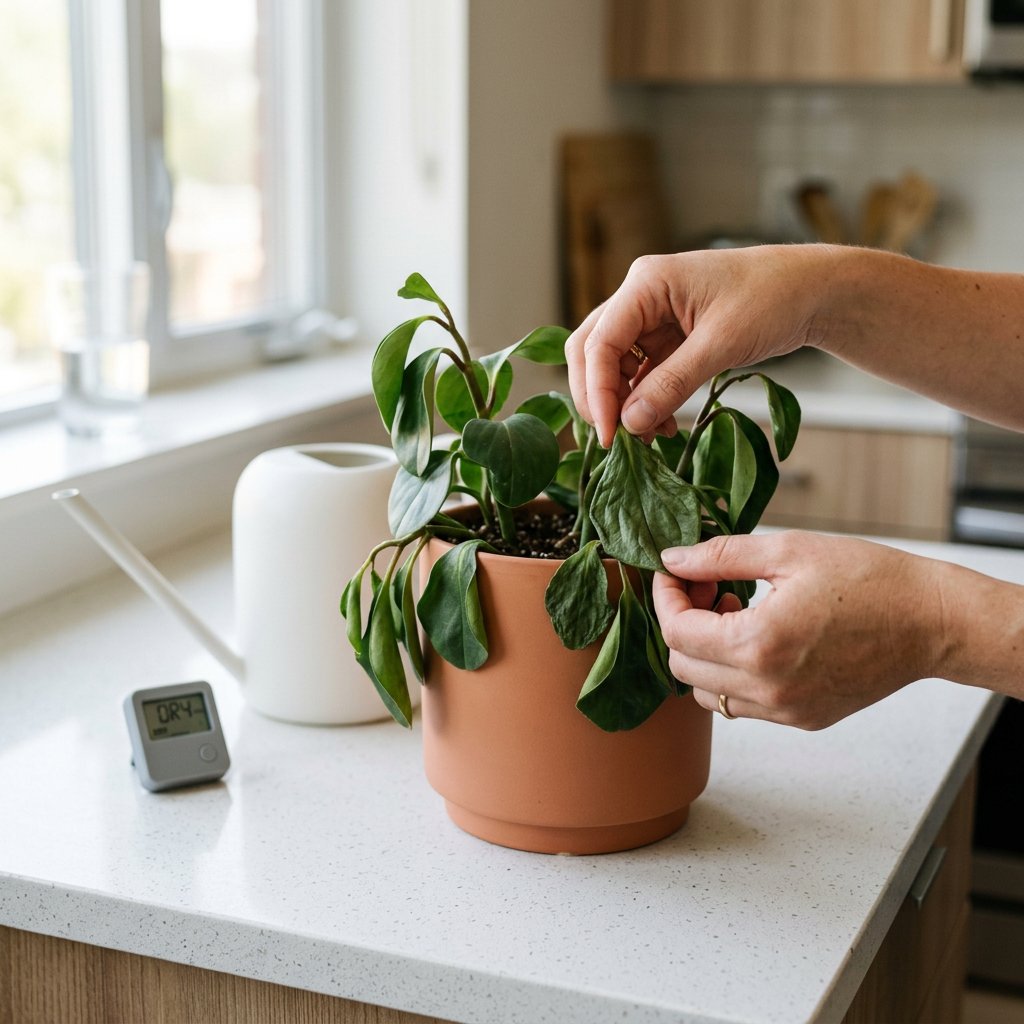
- Step 1: Assess your soil moisture and roots. Stick your finger about two inches into the soil. If it feels bone dry, give your plant a thorough, deep watering until water runs out of the drainage holes. If the soil is soaking wet, heavy, and smells slightly swampy, you might be dealing with root rot. Gently remove the plant from its pot, trim away any black, mushy roots with sterile scissors, and repot it in fresh, well-draining soil mixed with perlite.
- Step 2: Boost the nutrients. If your watering routine is perfect but new leaves are still emerging curled and misshapen, it’s time for a mineral boost. Add a liquid calcium-magnesium (Cal-Mag) supplement to your watering routine according to the package instructions.
- Step 3: Fix the environment. Move your plant away from harsh drafts, radiators, or AC units. To elevate the humidity, group your Peperomia with other plants to create a humid microclimate, or place a small humidifier nearby.
- Step 4: Inspect for pests. Grab a flashlight and check the undersides of the leaves. If you see tiny webs, white speckles, or crawling specks, pests are the problem. Wipe the leaves down with a damp cloth and treat the plant with a gentle, organic insecticidal soap or neem oil spray.
If you are unsure what is wrong with your plant even after checking these steps, you can use the AI-powered plant disease scanner in the Plantiary app to get an accurate diagnosis in seconds. It takes the guesswork out of plant care and helps you catch tricky issues early!
Patience is Key
Remember, healing takes time. After you adjust your care routine, don't expect your Watermelon Peperomia to flatten out overnight. In fact, older leaves that have already curled may stay that way forever—and that is perfectly fine! Keep an eye on the brand-new growth; flat, healthy new leaves will be your best indicator of success. Plant care is all about observing, adjusting, and learning. Be proud of yourself for taking the time to understand and support your leafy companion!