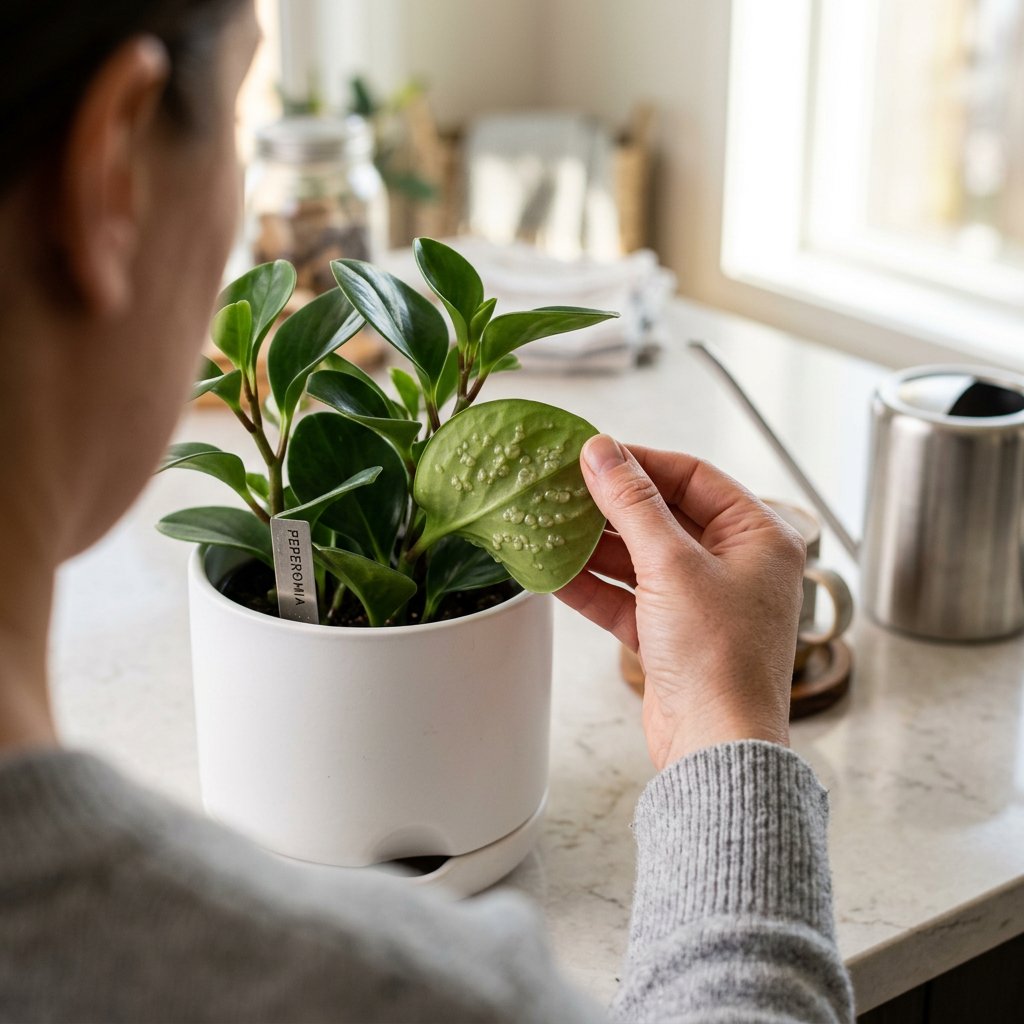
You are admiring your beautiful Peperomia, perhaps gently wiping down its thick, glossy leaves, when suddenly you feel them—weird, hard little bumps on the undersides of the foliage. Panic sets in. Are these microscopic bugs? Is it a rare, incurable disease? Take a deep, relaxing breath! Plant parenthood is a continuous learning journey, and encountering a few hiccups happens to every single plant owner. In fact, noticing these subtle changes just means you are a highly observant and caring plant parent.
More often than not, those mysterious, pimple-like bumps on your Peperomia are simply a physiological condition called edema. If you ever feel uncertain about a strange spot on your houseplant, you can always use the AI-powered plant disease scanner in the Plantiary app to get a diagnosis in seconds. But for now, let's explore exactly what edema is, why it happens, and how to help your Peperomia thrive again.
The Problem: What Does Peperomia Edema Look Like?
Before we fix the issue, we need to understand it. Edema (sometimes spelled oedema) is essentially a moisture-retention issue. It occurs when your plant’s roots absorb water from the soil much faster than the leaves can release it through transpiration (the plant's natural process of "sweating" out excess moisture into the air).
When this internal water traffic jam happens, the plant's cells swell up and eventually rupture. Here is what you will typically notice:
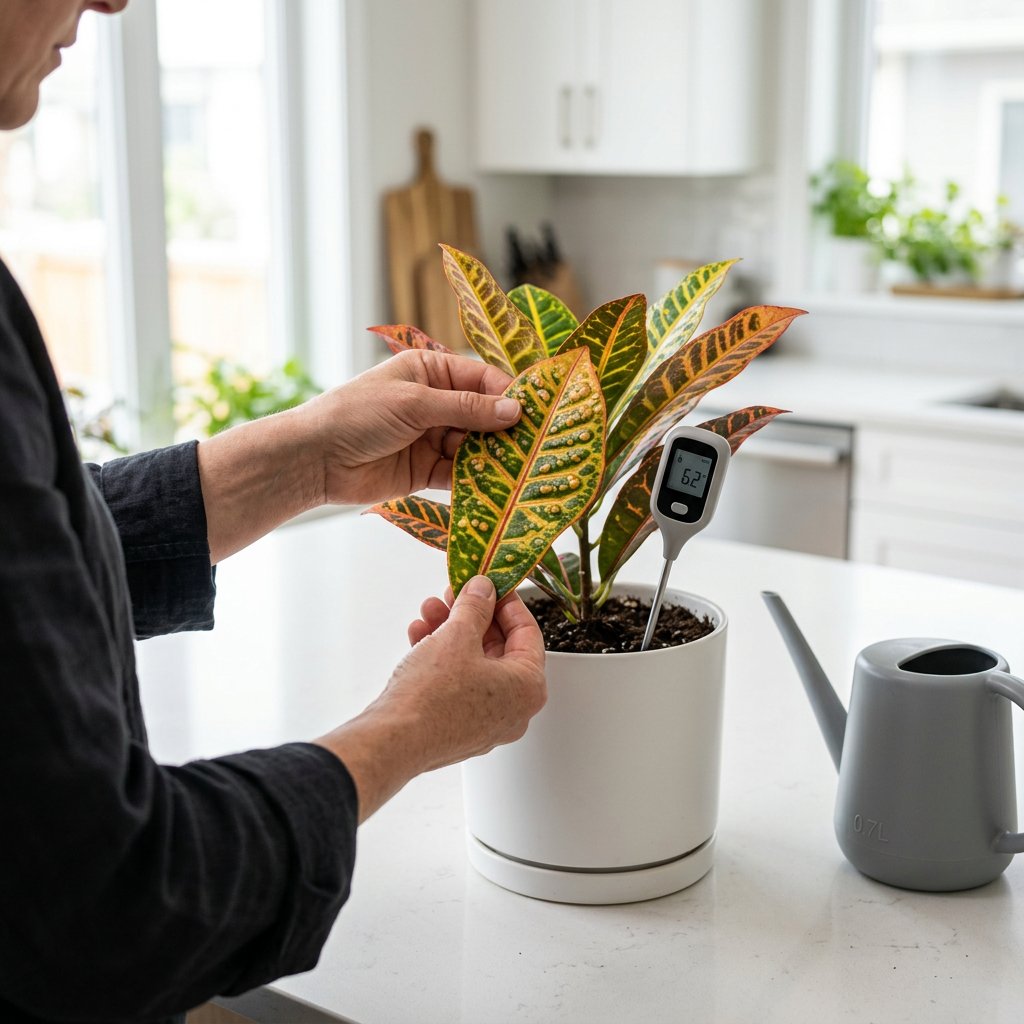
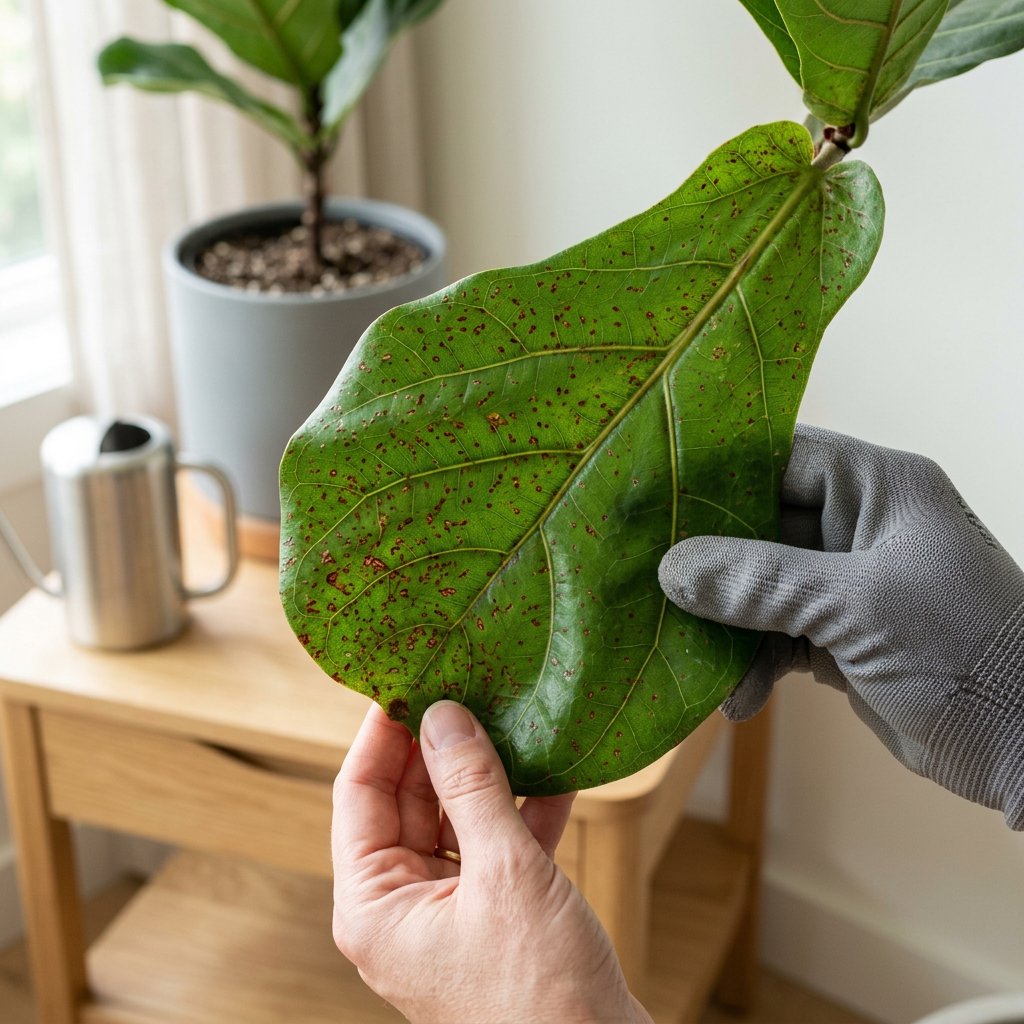
- Blister-like bumps: Small, hard, crystal-like pimples, usually concentrated on the undersides of the leaves.
- Scab-like spots: As the ruptured plant cells dry out and attempt to heal, the bumps turn brown, crusty, or cork-like.
- Yellowing leaves: In severe cases, the affected leaves may yellow and drop off.
The best news? Edema is not a disease, and it is not caused by pests. It is completely non-contagious, meaning your other leafy friends are perfectly safe!
The Causes: Why Is My Plant Bumpy?
Peperomias are semi-succulent, meaning their fleshy leaves are expertly designed by nature to store water for long periods. Because of this, they are highly susceptible to edema when their environment falls out of balance. The most common culprits include:
- Overwatering: Giving your Peperomia too much water too frequently easily overwhelms its system.
- Inconsistent Watering: Allowing the soil to become completely bone-dry and then suddenly flooding it with a massive amount of water shocks the roots.
- Poor Air Circulation: If the air around your plant is stagnant or overly humid, the leaves cannot effectively transpire (sweat) out the excess water.
- Temperature Fluctuations: Watering a plant with cold water, or keeping it in a cold room with warm, wet soil, severely disrupts the plant's natural water flow.
The Solutions: Step-by-Step Treatment for Edema
First, a quick note on expectations: the bumps currently on your plant will not disappear. Those cells have already healed over into scabs. However, by correcting the plant's environment, you will prevent the issue from spreading, and all new growth will emerge smooth and perfectly healthy!
Here is how to get your Peperomia back on track:
Step 1: Pause the watering can Give your plant a break! Allow the top two to three inches of the soil to dry out completely before you even think about watering it again. When you do water, water thoroughly, but always empty the drip tray afterward so your plant never sits in a puddle.
Step 2: Upgrade your drainage If your soil stays wet for more than a week, it is too heavy. Repot your Peperomia in a well-aerated, chunky soil mix. Blending standard potting soil with generous handfuls of perlite and orchid bark works wonders. Additionally, ensure your pot has adequate drainage holes at the bottom.
Step 3: Boost the airflow Move your Peperomia to a location with better air circulation. If your plants are crowded tightly together, give them some breathing room. A gentle, indirect breeze from a ceiling fan or an open window will dramatically help the leaves transpire at a normal rate.
Step 4: Establish a consistent routine Consistency is the secret ingredient to happy houseplants. Avoid the dry-then-flood cycle by keeping a close eye on your plant's watering needs. To make this effortless, set up a custom care schedule in the Plantiary app. The app will send you smart reminders so you know exactly when it is time to check your Peperomia's soil, preventing both overwatering and underwatering.
Seeing bumps on your beloved Peperomia can be startling, but it is one of the easiest plant care puzzles to solve. By making a few simple adjustments to your watering habits and soil, your plant will be pushing out flawless, beautiful new leaves in no time. You've got this!