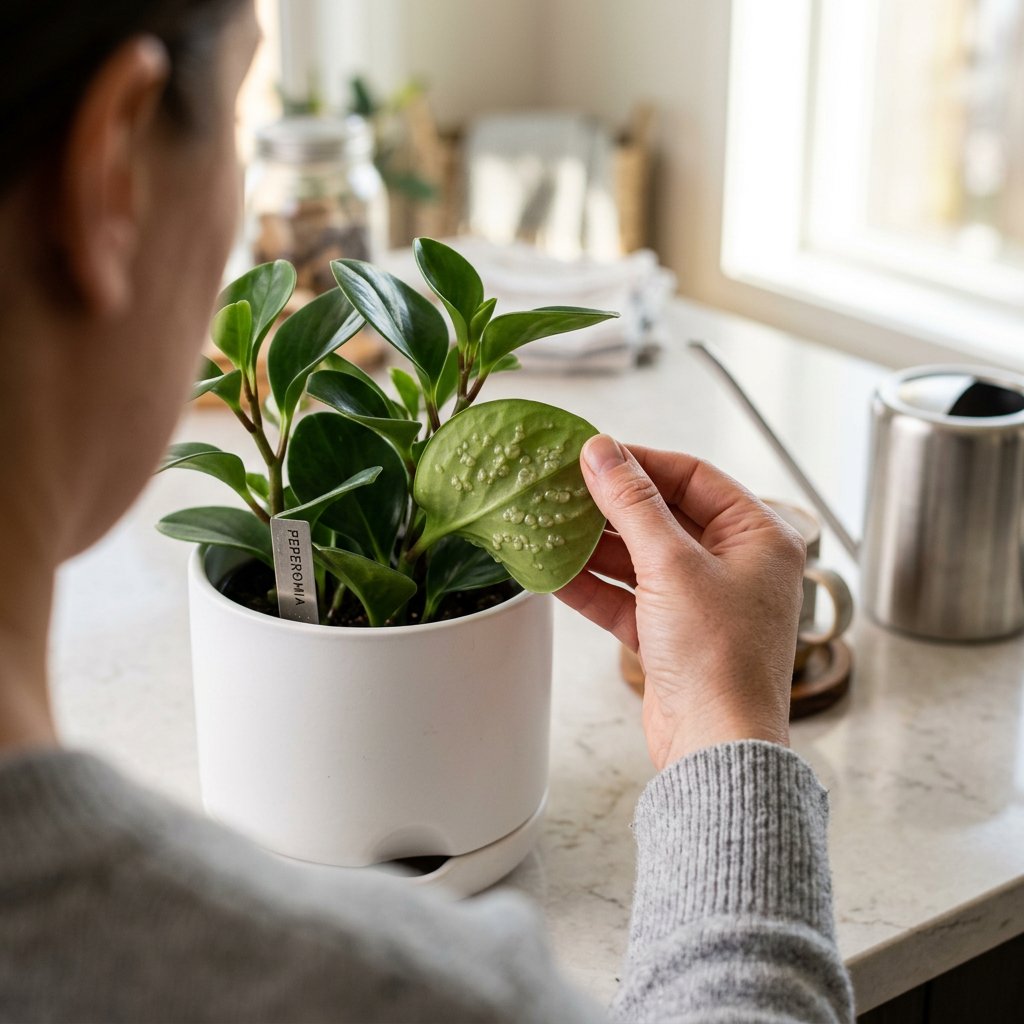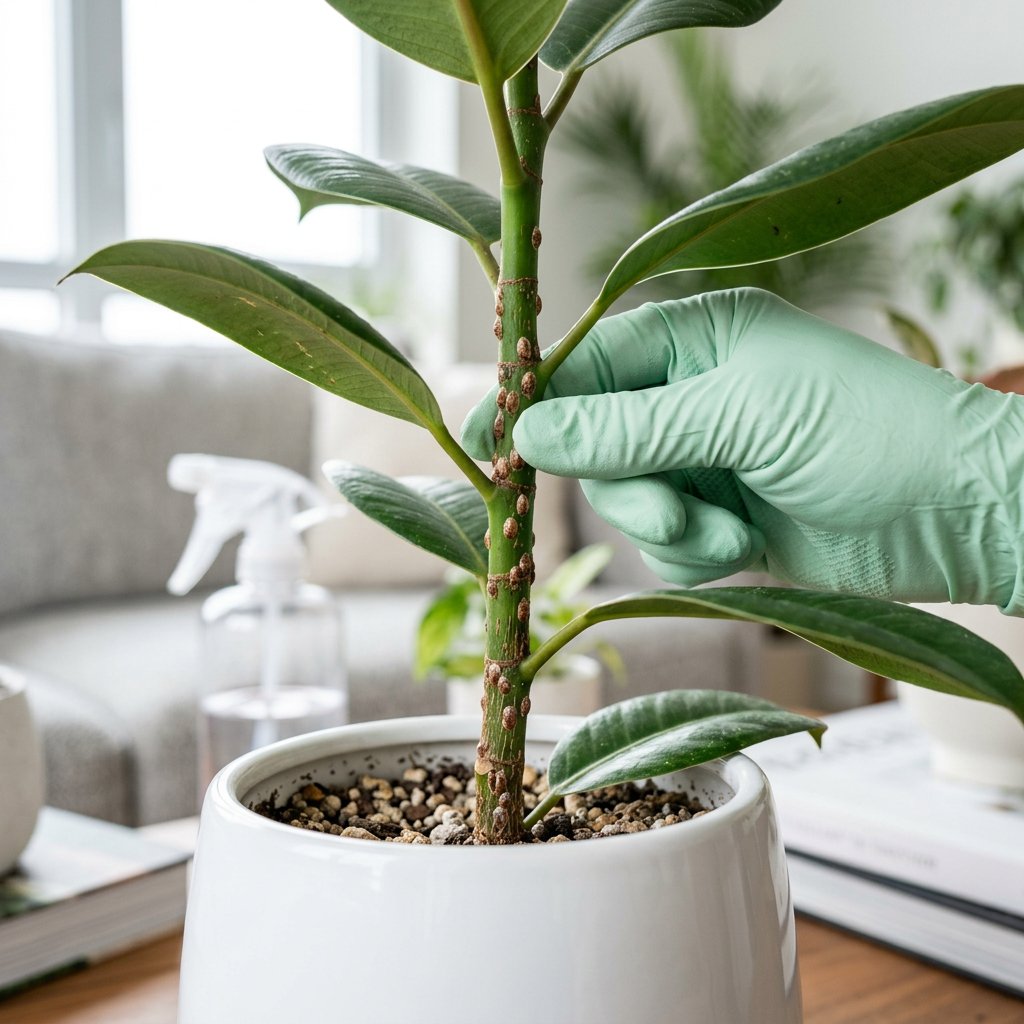
You are watering your favorite houseplant, admiring its new growth, when you spot something strange. There are little brown bumps clinging tightly to the stems or clustered along the central veins of the leaves. At first glance, they might look like a natural part of the plant—perhaps a node, an aerial root, or a bit of rough bark. But if you can easily pick them off with your fingernail, you are likely dealing with a very common houseplant pest: scale insects.
First of all, take a deep breath! Finding pests can be incredibly frustrating, but it happens to literally every plant parent. It absolutely does not mean you are a bad caregiver. If you are ever unsure whether a mysterious bump is a bug or just a natural plant feature, you can always use the AI-powered plant disease scanner in the Plantiary app to get an accurate diagnosis in seconds.
Let’s dive into what these bumps are, why they appeared, and how to gently but effectively send them packing.
The Problem: Identifying a Scale Infestation
Scale insects are tiny, sap-sucking pests that latch onto your plant, create a protective waxy armor over themselves, and feast on the plant's internal juices. Because they are completely stationary once they settle down, they rarely look like living bugs, which makes them easy to miss!
Aside from the visible brown, tan, or dome-shaped bumps, keep an eye out for these telltale symptoms:
- Sticky leaves: Soft scale insects excrete a sticky, clear substance called honeydew as they feed. If your plant feels like it was sprayed with syrup, scale is a likely culprit.
- Black, powdery dust: This is sooty mold, a type of harmless fungus that loves to grow on top of sticky honeydew. It blocks light from reaching the leaves.
- Yellowing leaves (Chlorosis): As the pests drain the plant's nutrients, the leaves lose their green pigment (chlorophyll). This results in a pale, yellowing appearance known scientifically as chlorosis.
- Stunted growth or leaf drop: A heavy infestation drains so much energy that the plant simply cannot support new leaves.
The Causes: Where Did These Hitchhikers Come From?
You might be wondering how a bug that doesn't fly or visibly walk around managed to find your indoor jungle. Here are the usual suspects:
- New plant additions: Bringing a new, unknowingly infested plant home from the nursery is the most common cause.
- Summer vacations outside: If you move your houseplants to the porch or patio for the summer, they can easily pick up outdoor hitchhikers.
- Open windows: In the microscopic juvenile stage, scale insects are highly mobile and can occasionally be blown indoors on a breeze.
- Contaminated tools: Using unsterilized pruning shears can spread microscopic pest eggs from one plant to another.
The Solutions: Step-by-Step Treatment Guide
Because adult scale insects hide under a hard, waterproof shell, standard insecticidal sprays often bounce right off them. We have to use specific, scientifically proven methods to break through their defenses. Do not reach for kitchen condiments like mayonnaise or oil—these will only clog your plant's pores! Instead, follow this safe and effective treatment plan.
Step 1: Quarantine your plant immediately. Move the affected plant to a separate room away from your healthy greenery to prevent the pests from migrating.
Step 2: Prune heavily infested areas. If a single stem or leaf is completely smothered in brown bumps, it is often safer and easier to simply snip it off using sterilized shears. Throw the clippings away in a sealed bag.
Step 3: Physically remove the adults. Dip a cotton swab (Q-tip) in 70% isopropyl rubbing alcohol and dab it directly onto the brown bumps. The alcohol safely dissolves their protective waxy shell and kills them on contact. Once treated, you can gently wipe or scrape them away.
Step 4: Treat the entire plant. Once the visible adults are removed, you need to target the microscopic larvae (called "crawlers" because they move around before building their shells). Spray the plant thoroughly with a high-quality neem oil solution or a commercial insecticidal soap. Make sure to heavily mist the stems, crevices, and the undersides of the leaves.
Step 5: Monitor and repeat. Pests have life cycles that span several weeks, meaning eggs may still hatch after your first treatment. Repeat the neem oil or soap spray every 7 to 10 days for about a month. You can easily set up a custom care reminder in your Plantiary app so you never miss a treatment day!
Dealing with brown bumps on your plant’s stem is practically a rite of passage in the houseplant world. With a little patience, a cotton swab, and the right treatment plan, your green companion will bounce back beautifully. You’ve got this!