Spider plants (Chlorophytum comosum) are often celebrated as the low-maintenance, easy-going best friends of the houseplant world. But when those signature arching, ribbon-like leaves suddenly fold inward along the center crease, it is incredibly easy to panic. Take a deep breath! Plant parenthood comes with a few bumps in the road, and experiencing a sick plant doesn't make you a bad plant parent.
Folded leaves are simply your plant's way of communicating that its environment needs a slight adjustment. With a little detective work—and perhaps a quick check-in using the Plantiary app—you can easily get your leafy companion back to its vibrant, sprawling self. Let's break down exactly what is happening and how to fix it.
The Problem: Understanding Folded Leaves
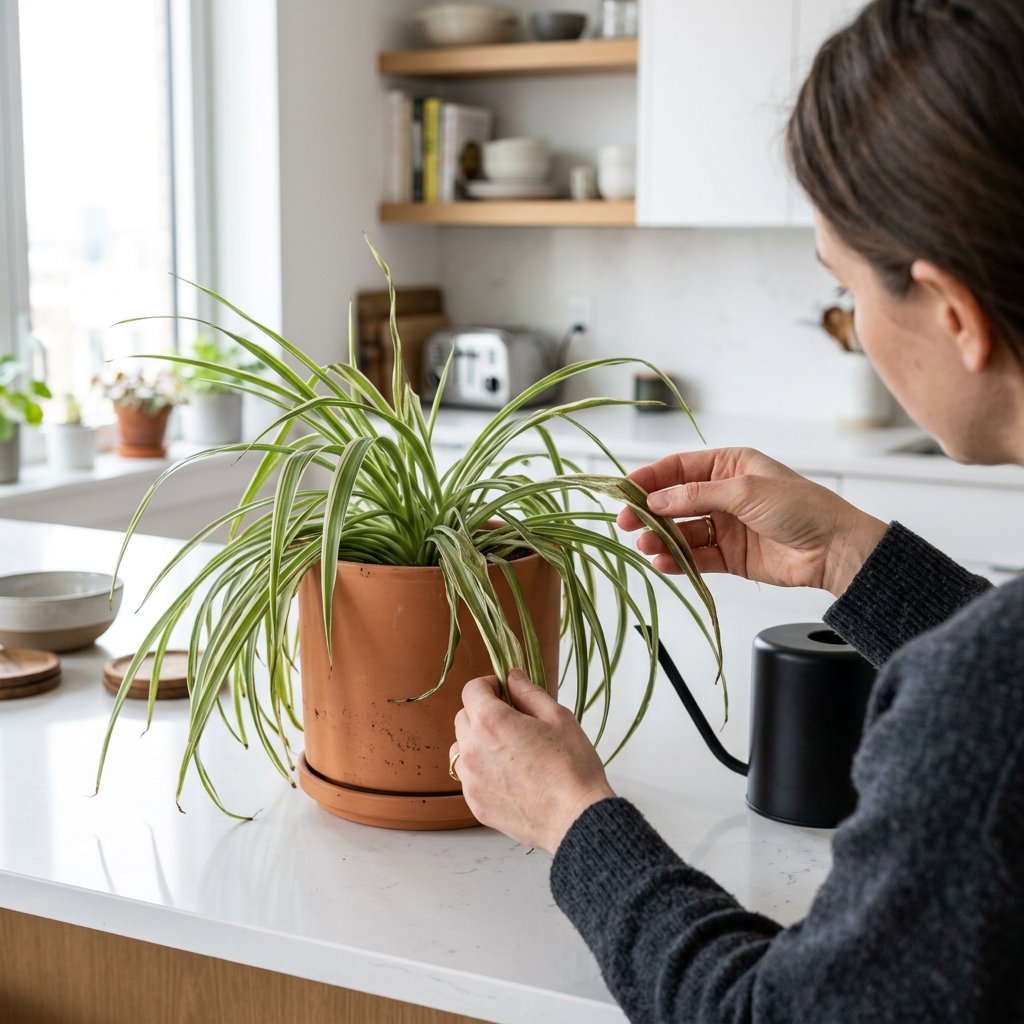
When a spider plant is healthy, its leaves are broad, flat, and gently cascade over the sides of its pot. When stressed, however, you will notice the leaves folding in half lengthwise, almost resembling a taco shell.
Botanically speaking, this is a brilliant survival mechanism. By folding its leaves inward, the spider plant is intentionally reducing its surface area. This slows down transpiration—the natural process where plants release water vapor through tiny pores in their leaves. Essentially, your plant is trying to hold onto whatever moisture it has left.
The Causes: Why Is Your Spider Plant Stressed?
To fix the folding, we first need to understand what is triggering this protective moisture-saving response. Here are the most common culprits:
- Underwatering: The most frequent cause. If the soil is bone dry, the plant physically lacks the water it needs to keep its leaves plump and flat.
- Overwatering and Root Rot: Ironically, giving your plant too much water can cause the exact same folded symptoms. Waterlogged soil suffocates the roots, leading to rot. If the roots are dead and mushy, they cannot transport water to the leaves, leaving the plant dehydrated despite sitting in wet soil.
- Rootbound Conditions: Spider plants have thick, tuberous roots that grow rapidly. If they completely fill the pot, there won't be enough soil left to hold moisture, meaning water just runs straight out of the drainage holes.
- Too Much Direct Sunlight: Intense, direct rays can scorch the foliage and cause rapid moisture loss, prompting the plant to fold up defensively.
The Solutions: Step-by-Step Treatment
Ready to nurse your spider plant back to health? Follow these actionable steps to diagnose and treat the issue safely.
Step 1: Perform the Finger Test Before doing anything, push your index finger about two inches into the potting mix. If the soil feels completely dry and dusty, your plant is thirsty. If the soil feels soggy, heavy, or smells a bit like a swamp, overwatering is the issue.
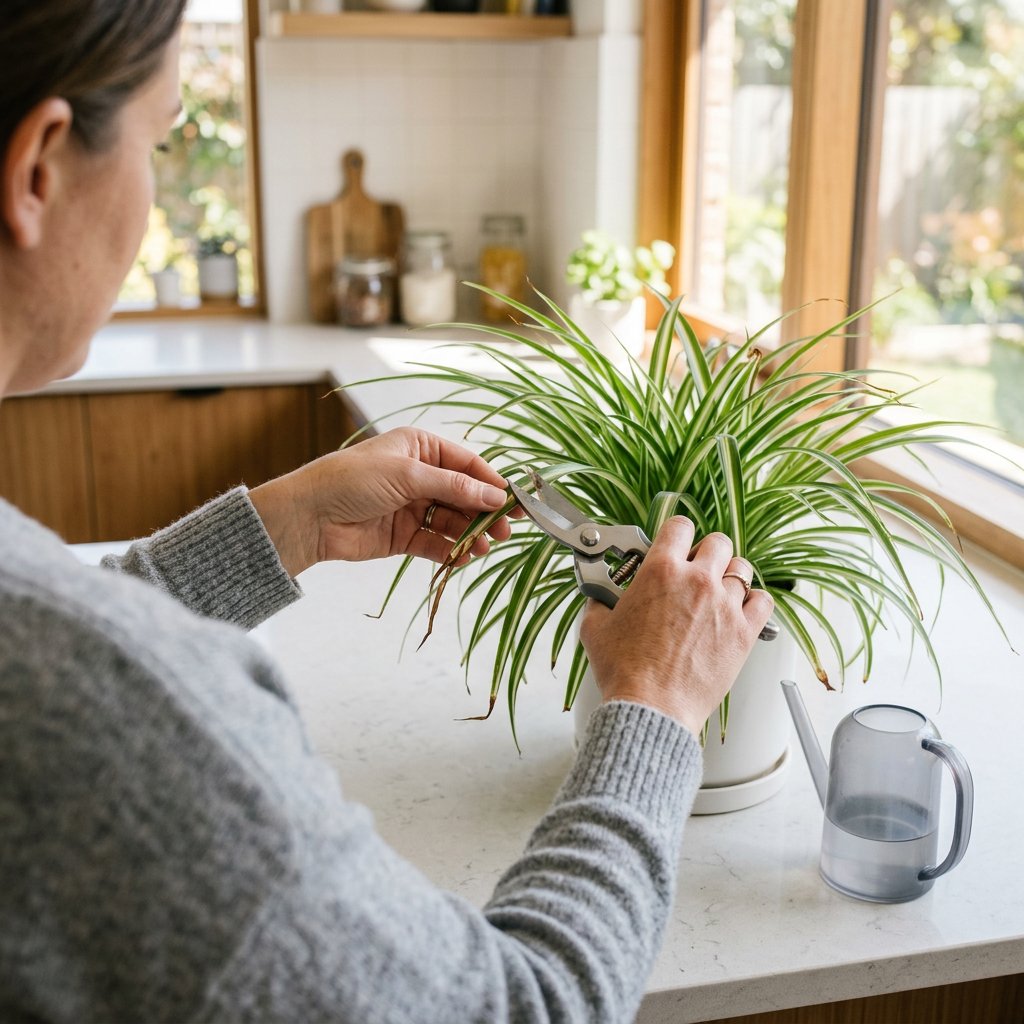
Step 2: Inspect the Roots If you suspect overwatering or a rootbound plant, gently slide the spider plant out of its pot. Healthy spider plant roots look like thick, fleshy, white noodles. If the roots are tightly coiled around themselves in a massive dense clump, your plant is rootbound. If the roots are dark brown, mushy, and easily fall apart, you are dealing with root rot.
Step 3: Adjust Your Watering Routine
- If underwatered: Give your plant a thorough soak in the sink until water flows freely from the drainage holes.
- If overwatered: Trim away any mushy, rotten roots with sterilized scissors. Repot the plant in fresh, dry, well-draining soil.
- Pro Tip: To prevent future watering mishaps, set up a smart care schedule in your Plantiary app to get helpful reminders tailored to your plant's specific needs!
Step 4: Repot if Rootbound If your plant has outgrown its home, move it into a new pot that is just one to two inches wider in diameter than the current one. Use a well-draining indoor potting mix. Giving those thick roots room to breathe and soil to hold onto moisture will quickly resolve leaf folding.
Step 5: Tweak the Lighting Ensure your spider plant is sitting in bright, indirect light. A spot near an east-facing or north-facing window is usually perfect. If it is sitting directly in a hot south-facing window, pull it back a few feet or use a sheer curtain to diffuse the harsh rays.
Seeing your beloved plants struggle can be discouraging, but plants are incredibly resilient. By following these scientifically proven steps, you are giving your spider plant the best possible chance to bounce back. Unfurling those leaves might take a few days to a couple of weeks, so be patient and keep up the great work! If you are ever unsure about your plant's progress, you can always use the AI-powered plant disease scanner in the Plantiary app to get an instant health diagnosis.