There is nothing quite like the aroma of fresh basil in your kitchen. But if your once-fluffy basil plant is suddenly looking tall, thin, and a bit sparse, don't worry—you are definitely not alone! It is incredibly common for basil to lose its lush shape, especially when grown indoors. Please don’t feel guilty; plants are living things that simply react to their environment, and we are just here to learn how to help them thrive. The good news? With a few easy tweaks, you can transform that stretching stalk back into a bushy, vibrant powerhouse.
The Problem: Recognizing the Symptoms of Leggy Basil
What does "leggy" actually mean? In the plant world, we call this etiolation—a botanical term for when a plant grows unusually long, pale, and weak stems in a desperate search for light.
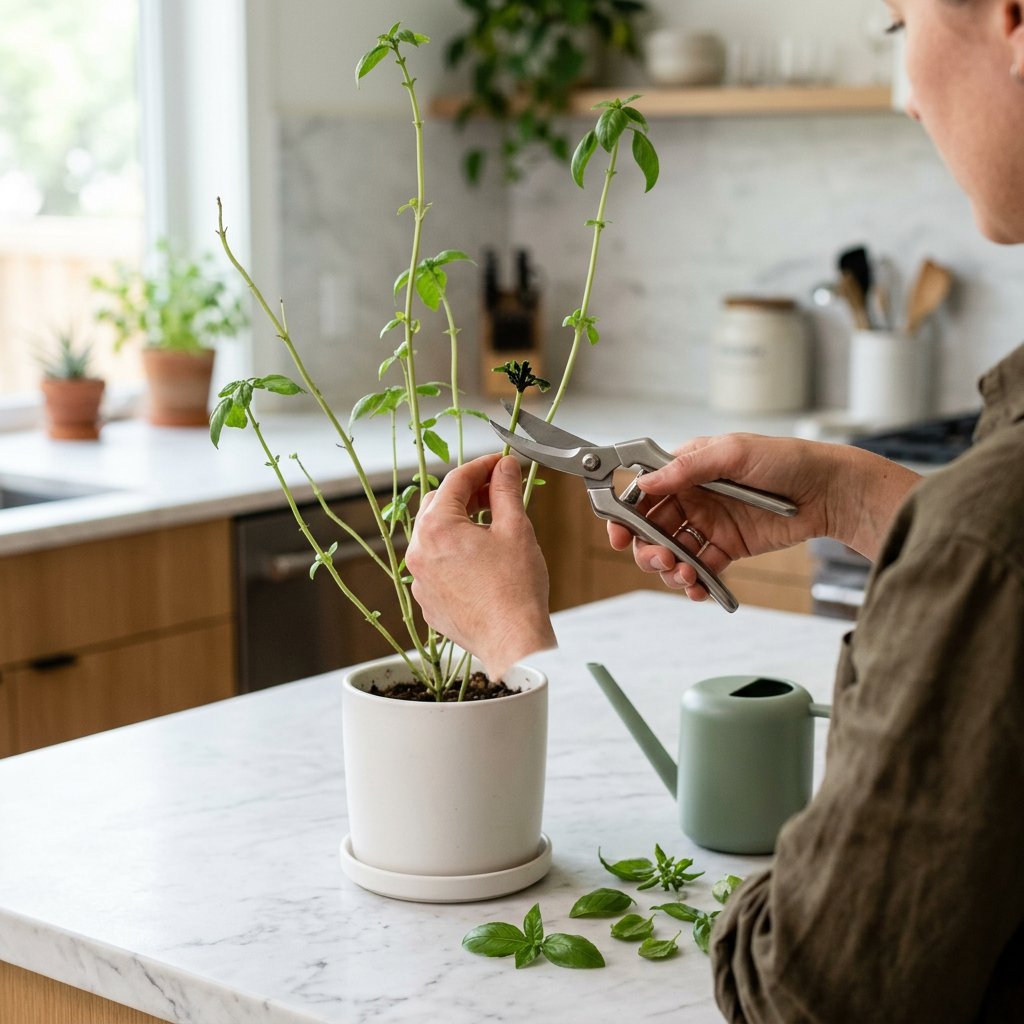
Here is what a leggy basil plant typically looks like:
- Long, bare stems with very large gaps between the leaves.
- Smaller, paler leaves growing only at the very top of the plant.
- Weak structure, where stems flop over easily or look too fragile to support themselves.
- A severe lack of branching, often looking like just one or two tall stalks rather than a rounded bush.
The Causes: Why Did Your Basil Get So Tall?
To fix the issue, we first need to understand why it is happening. Basil plants usually become leggy due to a few common environmental factors or care habits:
- Lack of sunlight: Basil is a sun-worshipper. When it doesn't get enough direct light, it literally stretches upward trying to reach for the sun.
- Incorrect harvesting: If you only pluck the biggest leaves off the sides of the stem and leave the top intact, the plant will just keep growing taller instead of branching out.
- Overcrowding: Seedlings planted too closely together in a small pot will aggressively compete for light, causing them to shoot up fast and thin.
If you are struggling to figure out if your plant's location is the issue, you can use the built-in light meter and care guides in the Plantiary app to ensure your basil is getting exactly what it needs!
The Solutions: Step-by-Step Guide to a Bushy Basil Plant
Ready to give your basil a makeover? Follow these simple, scientifically proven steps to encourage dense, bushy growth.
Step 1: Give it a bold haircut (Pruning) Don't be afraid to cut your plant! Look closely at the stem and locate a set of tiny growing leaves (this joint is called a node) on the lower half of the plant. Snip the main stem about a quarter-inch above this node. By removing the top, you force the plant to send its growth hormones down to those tiny side leaves, creating two new branches instead of one.
Step 2: Relocate to a brighter spot Basil needs a minimum of 6 to 8 hours of direct sunlight every day. Move your plant to a bright, south-facing window, or place it directly outdoors if the weather is consistently warm. If natural light isn't available in your home, investing in a simple LED grow light works wonders to prevent future stretching.
Step 3: Master the "pinch" for future harvests Whenever you need basil for your pizza or pesto, never pull off individual side leaves. Always pinch or snip the top of the stem right above a pair of leaves. This continuous pruning is the ultimate secret to maintaining a beautifully bushy plant.
Step 4: Propagate your cuttings (Bonus!) Don't throw away those long stems you just cut off! Strip the bottom leaves off the cut stems and place them in a small glass of water. In about a week or two, they will grow fresh roots, giving you brand-new basil plants for free.
Growing herbs is a wonderful learning process, and a leggy basil plant is just a gentle nudge from nature asking for a little more light and a quick trim. Be patient with your plant as it recovers and pushes out new leaves. If you are ever unsure what is wrong with your plant, or if you notice any strange spots on your newly pruned basil, you can use the AI-powered plant disease scanner in the Plantiary app to get a diagnosis and treatment plan in seconds. Happy growing, and enjoy your delicious future harvests!