We have all been there. You brought home a lush, gorgeously full Pothos, but over the last few months, it has slowly transformed into a few long, sparse vines with miles of bare stem between each leaf. First of all, please don't feel guilty! Even the most experienced plant parents end up with leggy trailing plants. It is a completely natural response to their indoor environment, and the fantastic news is that it is incredibly easy to reverse.
If you're ever in doubt about why your plant's appearance is changing, the Plantiary app’s AI-powered scanner can help you identify care issues and diagnose your plants in seconds. But for now, let’s focus on giving your stringy vine a major glow-up and turning it back into a spectacular, bushy houseplant.
The Problem: What Does "Leggy" Mean?
Before we fix the issue, let's identify exactly what is happening to your Pothos. A "leggy" plant is characterized by long, stretching stems with very few leaves. The space between the leaves—a botanical area known as the internode—becomes unusually wide. You might also notice that the new leaves growing at the very end of the vine are much smaller than the older leaves near the soil.
In botany, this stretching process is called etiolation. Etiolation simply means that your plant is growing abnormally long and thin because it is desperately reaching out to find a better light source.
The Causes: Why Do Pothos Get Leggy?
Understanding the "why" is the secret to preventing the issue from happening again. Here are the most common reasons your Pothos has lost its fullness:
- Lack of Sunlight (The #1 Culprit): Pothos are famous for tolerating low light, but "tolerating" does not mean "thriving." In dim corners, the plant stops wasting energy on growing big, bushy leaves and redirects all its power into stretching its vines toward the nearest window.
- Missing a Haircut: In nature, Pothos are trailing vines that are constantly broken or grazed upon, which triggers them to branch out. Indoors, if left to grow in a single, unpruned straight line, they naturally become sparse.
- Nutrient Depletion: If your Pothos has been in the same soil for years, it may have exhausted all the available nutrients, leading to weak, sparse growth.
The Solutions: Step-by-Step Treatment for a Bushier Plant
Ready to restore your Pothos to its former glory? Grab a pair of clean, sharp scissors, and let's get to work!
Step 1: Be Brave and Prune
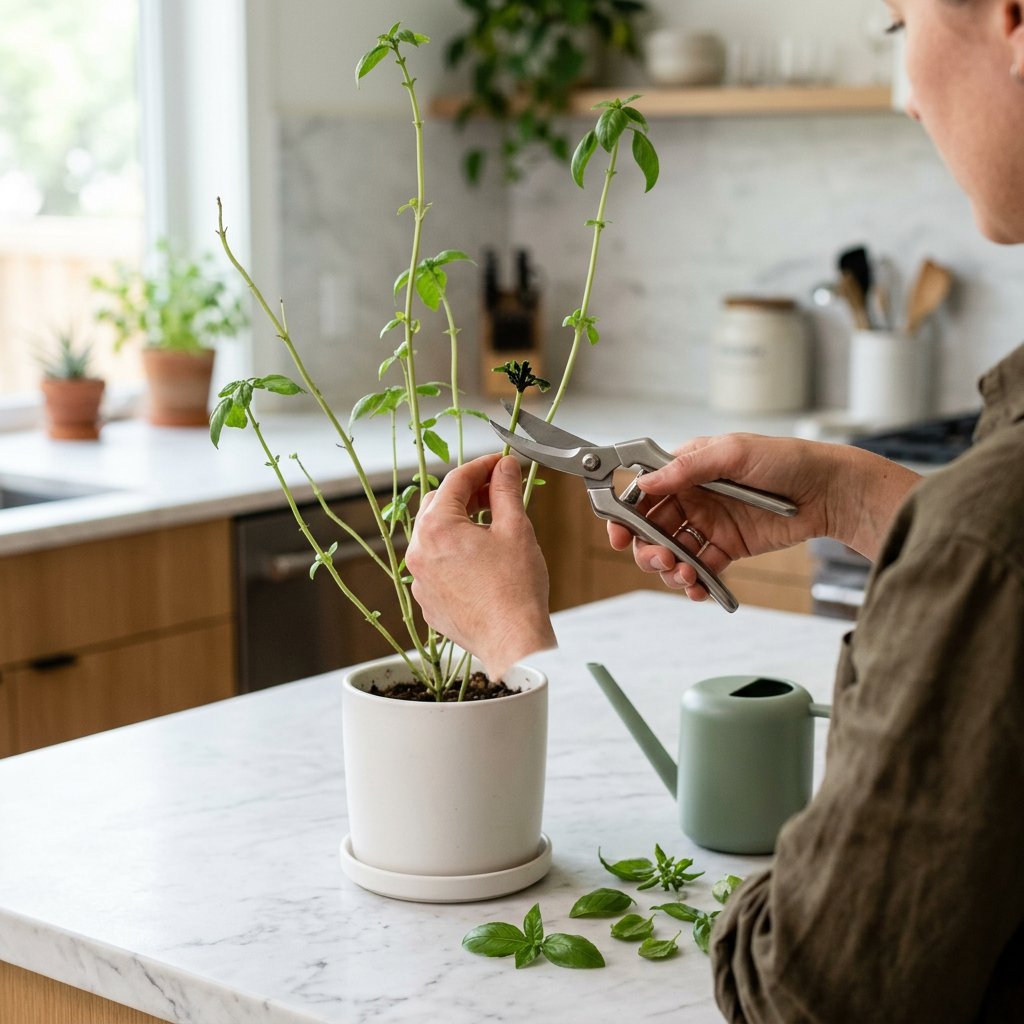
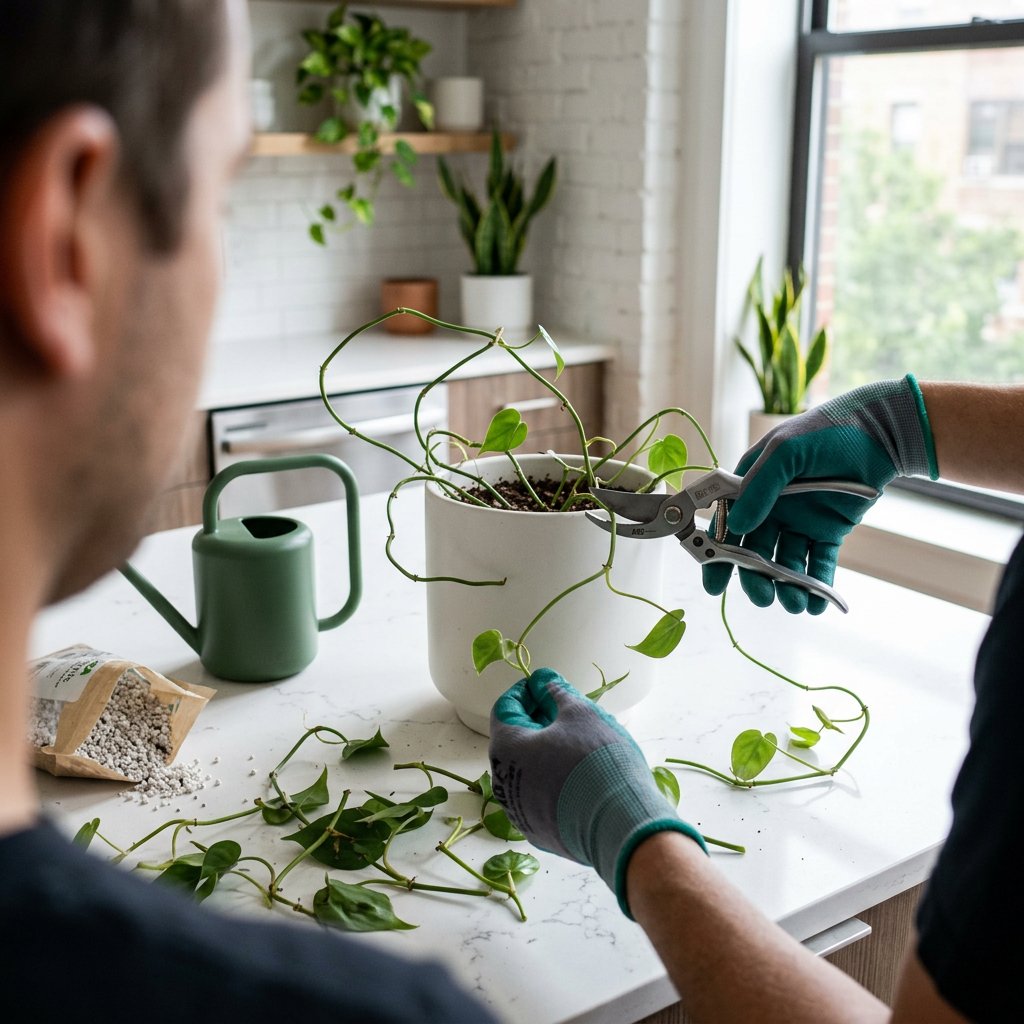
Do not be afraid to chop your plant! Pruning actually stimulates growth hormones that encourage the mother plant to push out new shoots from the top of the soil. Find a node—the little brown bump on the stem where a leaf attaches and where new roots grow from. Snip the bare vine about a quarter-inch below the node. You can cut off as much of the leggy, leafless stem as you'd like.
Step 2: Propagate the Cuttings
Don't throw those cut vines away! You can easily turn them into new plants. Cut the long vine into smaller segments, ensuring each segment has at least one leaf and one node. Place these cuttings into a jar of room-temperature water, making sure the nodes are submerged but the leaves are kept dry. Place the jar in a bright, warm spot and wait a few weeks for a healthy root system to develop.
Step 3: Replant for Instant Fullness
This is the ultimate secret to a bushy Pothos! Once your water cuttings have grown roots that are about two inches long, it is time to plant them. Instead of giving them a new pot, plant these rooted cuttings directly back into the bare topsoil of your original mother plant. This instantly fills out the bald spots at the top of the pot.
Step 4: Optimize the Lighting
To prevent etiolation from happening again, you need to upgrade your plant's real estate. Move your newly pruned Pothos to a location that receives bright, indirect sunlight. A few feet away from an east- or west-facing window is usually the perfect sweet spot.
Step 5: Adjust Your Care Routine
Now that your plant is focusing on pushing out bushy new growth, it needs the right fuel. Feed your Pothos with a balanced, water-soluble liquid houseplant fertilizer once a month during the active growing seasons of spring and summer. Be sure to only water when the top two inches of soil are completely dry to prevent root rot.
If you struggle to remember when it's time to water, feed, or prune, the Plantiary app makes it effortless. You can set up customized care reminders for your Pothos, ensuring it gets exactly what it needs, right when it needs it. With a little bit of chopping, propping, and brighter light, your Pothos will be beautifully bushy again in no time!