If you are a proud plant parent of a Dracaena, you already know how rewarding these stunning, architectural plants can be. From the striking Dracaena marginata to the lush Dracaena fragrans (Corn Plant), they are generally incredibly forgiving and perfect for beginners. However, even the most easygoing plants have an Achilles' heel. If you have noticed the edges of your beloved Dracaena turning crispy and brown, please don't beat yourself up! This is one of the most common issues houseplant enthusiasts face, and it is almost always caused by a condition known as fluoride toxicity.
Let's dive into exactly what this means, why it happens, and how you can gently nurse your plant back to vibrant health.
The Problem: Spotting Fluoride Toxicity
Dracaena plants are particularly sensitive to fluoride, a naturally occurring mineral often added to municipal tap water. When your plant takes up fluoride from the soil, it travels through the water-conducting veins and accumulates at the furthest points: the tips and margins of the leaves. Because the plant cannot process this mineral, it reaches toxic levels, leading to tissue damage.
Here are the classic symptoms to look out for:
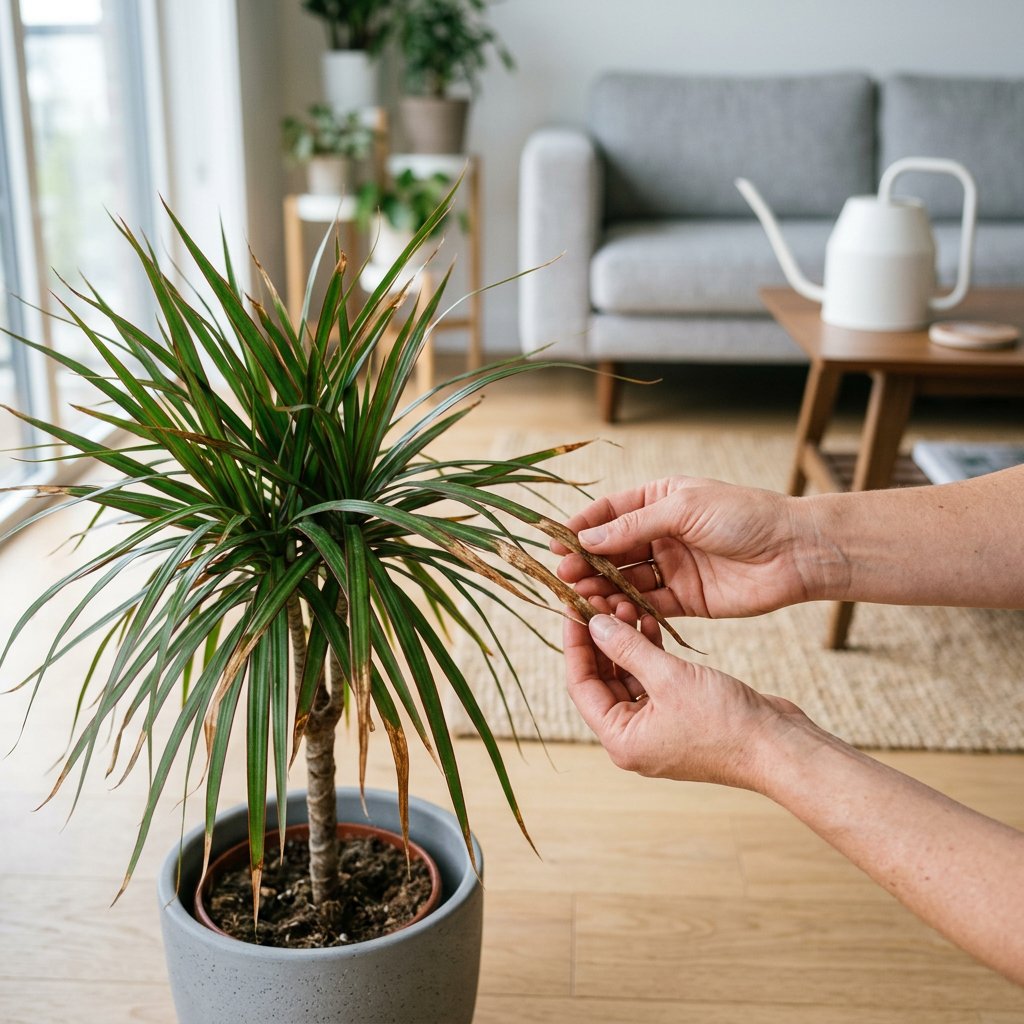
- Crispy, brown leaf tips: The very ends of the leaves look scorched or burnt.
- Brown margins: The dark, crispy edges slowly spread down the sides of the leaves.
- Yellow halos: You may notice a band of yellow separating the healthy green tissue from the dead brown tissue. Botanists call this chlorosis (a yellowing of the leaf caused by a lack of chlorophyll) leading into necrosis (the actual death of the plant cells).
If you are looking at your plant and feeling unsure whether it's fluoride toxicity, a fungal issue, or simply low humidity, don't worry! You can use the AI-powered plant disease scanner in the Plantiary app to snap a quick photo and get an accurate diagnosis in seconds.
The Causes: Where Is the Fluoride Coming From?
Understanding the source of the problem is the best way to prevent it in the future. Fluoride can sneak into your plant's pot through a few everyday sources:
- Tap Water: This is the number one culprit. Most city water treatment facilities add fluoride to drinking water, which is great for our teeth but highly toxic to Dracaena species.
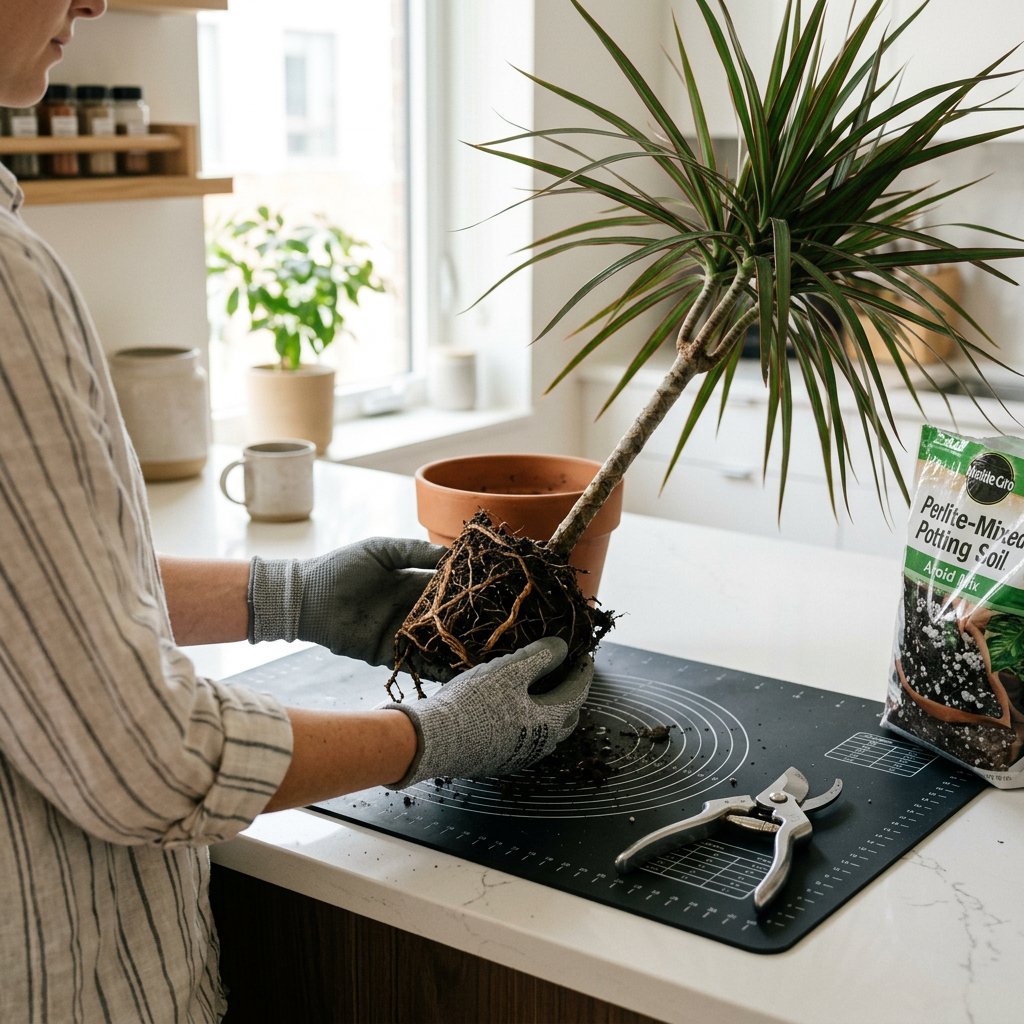
- Perlite: Those little white, popcorn-like pieces in your potting soil are called perlite. While excellent for drainage, some perlite is high in naturally occurring fluorides that leach into the soil over time.
- Certain Fertilizers: Superphosphate fertilizers often contain trace amounts of fluoride. Over-fertilizing can lead to a rapid buildup of these salts in the soil.
The Solutions: Step-by-Step Treatment
Plant issues happen to every plant parent, and the good news is that fluoride toxicity is completely manageable. Here is how you can stop the damage and encourage fresh, healthy growth:
Step 1: Switch Your Water Source The most impactful change you can make is to stop watering your Dracaena with tap water. Switch to distilled water, reverse osmosis (RO) water, or collected rainwater. Note: A common plant myth is that letting tap water sit out overnight makes it safe. While this allows chlorine to evaporate, fluoride does not evaporate and will remain in the water!
Step 2: Flush the Potting Soil To remove the excess fluoride already trapped in your plant's pot, you need to flush (or leach) the soil. Take your Dracaena to the sink or shower and pour a generous amount of distilled or rainwater over the soil, allowing it to drain completely out of the bottom holes. Do this two or three times to wash away trapped minerals.
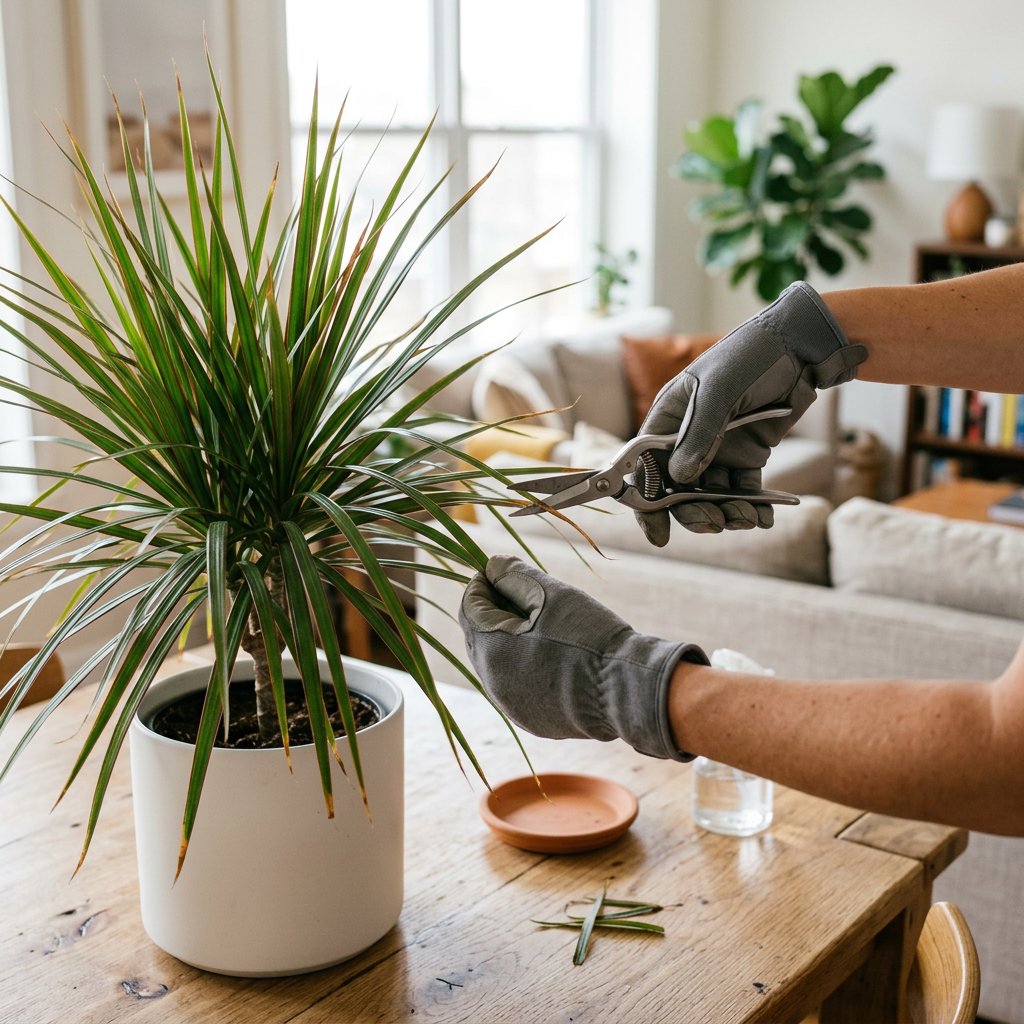
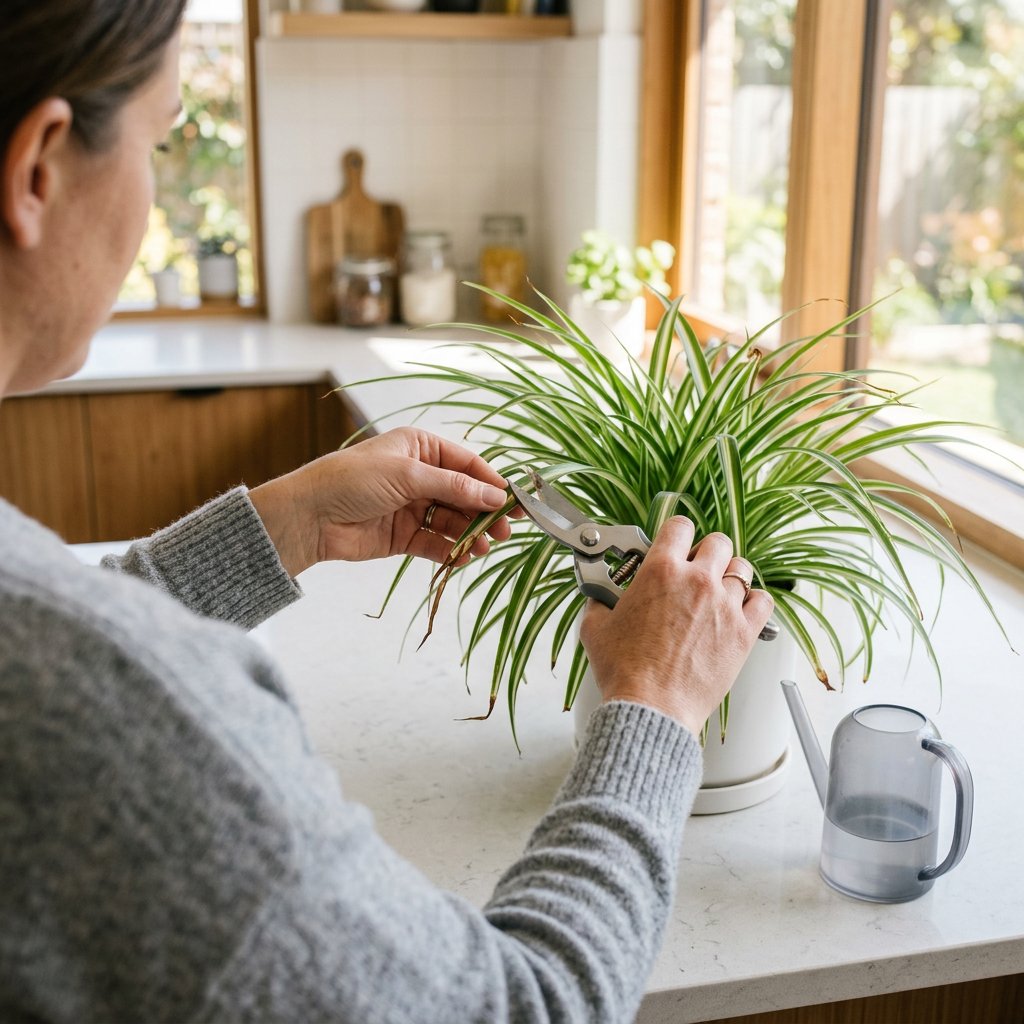
Step 3: Trim the Damaged Leaves Those brown, necrotic tips unfortunately will not turn green again. You can safely prune them to restore your plant’s aesthetic. Take a pair of sharp, sterilized scissors and carefully trim off the dead tips. Pro tip: Try to cut just inside the brown edge, leaving a tiny sliver of the dead tissue. Cutting into the healthy green tissue will create a fresh wound that may turn brown as it heals.
Step 4: Adjust Your Soil and Fertilizer If your plant's soil is heavily amended with perlite, consider repotting it in a fresh, well-draining indoor plant mix that uses pumice or coarse sand instead of perlite. Additionally, pause fertilizing for a few months, and when you resume, choose a high-quality, liquid organic fertilizer that is free of superphosphates.
Caring for plants is a journey of learning and adjusting. By simply changing your watering habits, your Dracaena will reward you with beautiful, blemish-free leaves in no time. To help keep your newly recovered plant on track, try setting up a customized care schedule in the Plantiary app so you always know exactly when it is time to water!