It’s heartbreaking to watch your stunning, architectural Dracaena slowly develop crispy, brown tips on its vibrant leaves. If you’ve been feeling guilty about this, take a deep breath! Plant parenthood is a learning journey, and brown leaf tips are one of the most common issues indoor gardeners face. The good news is that your plant isn't doomed. With a few minor adjustments, you can restore its lush, tropical beauty. And remember, if you ever feel overwhelmed, the Plantiary app is always right in your pocket to help you decode what your green friends are trying to say.
The Problem: Identifying the Symptoms
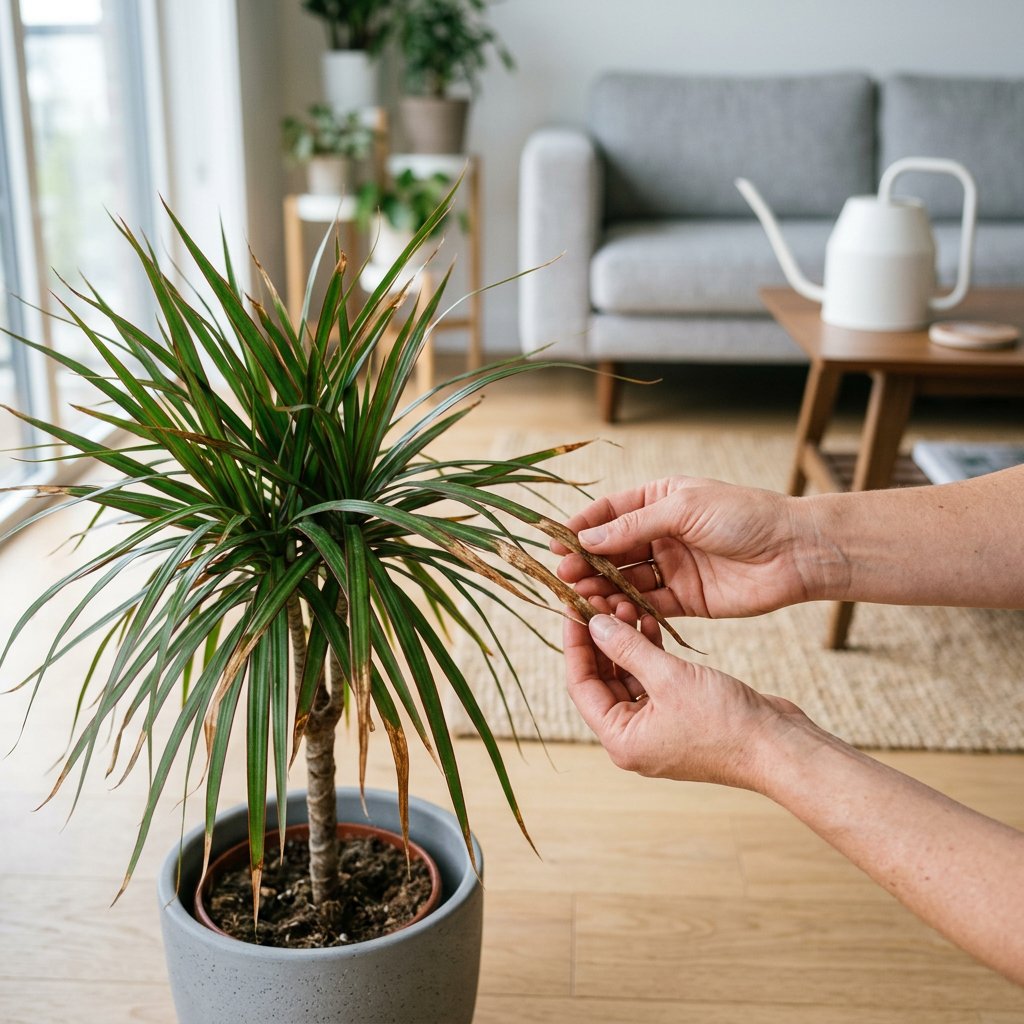
Dracaenas are generally resilient, but they are known for being a bit dramatic when their specific environmental needs aren't met. You might notice your plant exhibiting the following:
- Crispy, dry ends: The very tips of the leaves become brittle and break off easily to the touch.
- Brown margins: The browning doesn't just stay at the tip but creeps along the side edges of the leaves.
- Yellow halos: A slight yellow ring separating the healthy green tissue from the brown, dead tissue. This is often a sign of necrosis, a botanical term that simply means localized cell and tissue death.
The Causes: Why Is Your Dracaena Turning Brown?
To fix the issue, we first need to understand the root of the problem. Here are the top culprits behind crispy Dracaena leaves:
- Chemical Sensitivity (Fluoride and Chlorine): Dracaenas are highly sensitive to fluoride, chlorine, and chloramine, which are frequently found in municipal tap water. Over time, these chemicals accumulate in the leaf tips, causing localized toxicity and chemical burns.
- Watering Woes: Both underwatering and overwatering can lead to browning. If the soil is too dry, the plant can't pump moisture all the way to the ends of its long leaves. If the soil is too wet, the roots can suffocate and rot, entirely preventing water uptake.
- Low Humidity: Dracaenas originate in tropical environments. When indoor air is too dry—especially during winter when heaters are blasting—the leaves lose moisture to the air faster than the roots can replace it.
- Fertilizer Burn: Giving your plant too much food leads to a buildup of soluble salts in the soil. This heavy salt accumulation actually draws moisture away from the roots, leading to a condition known as fertilizer burn that shows up right at the tips of the leaves.
The Solutions: Step-by-Step Treatment
Now that we know why this is happening, let’s get your Dracaena back on track. Follow these actionable steps to halt the browning and encourage healthy new growth:
Step 1: Switch your water source. Stop using water straight from the tap. Instead, switch to distilled water, rainwater, or reverse osmosis water. If you must use tap water, let it sit out overnight in an open container. This allows the chlorine to evaporate, though keep in mind this will not remove fluoride.
Step 2: Flush the soil to remove salts. If you suspect fertilizer burn or chemical buildup, take your plant to the shower or sink. Slowly pour distilled or filtered water through the soil, letting it drain completely out of the bottom. This process "flushes" excess salts away. Moving forward, dilute your liquid fertilizer to half-strength and only feed your plant during the active growing season (spring and summer).
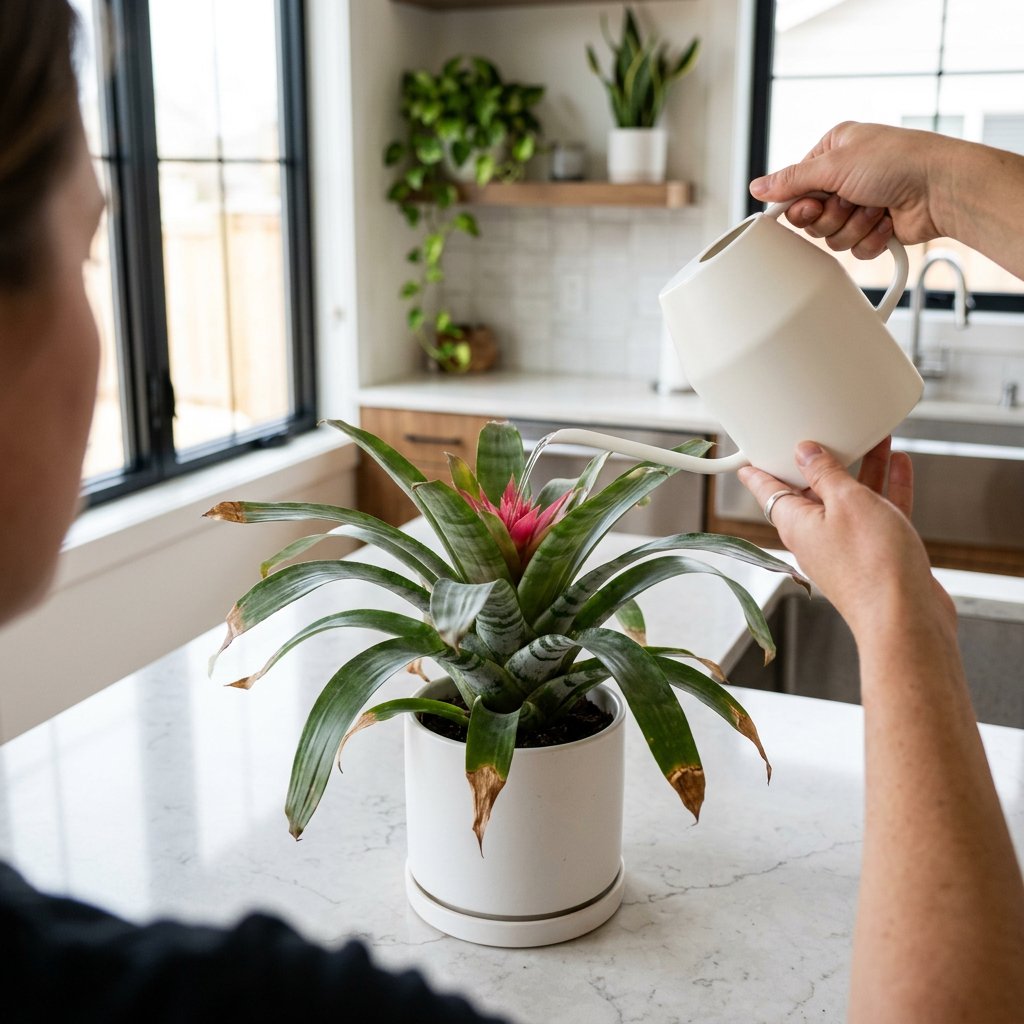
Step 3: Perfect your watering routine. Allow the top two to three inches of soil to dry out completely before watering again. When you do water, water thoroughly until it runs out the drainage holes. Pro tip: Use the watering tracker in the Plantiary app to set customized, weather-adjusted reminders so you never under or overwater again.
Step 4: Boost the ambient humidity. Increase the moisture in the air around your plant. You can group your houseplants together to create a humid microclimate, place a pebble tray filled with water beneath the pot (ensuring the water doesn't actually touch the soil), or invest in a small room humidifier.
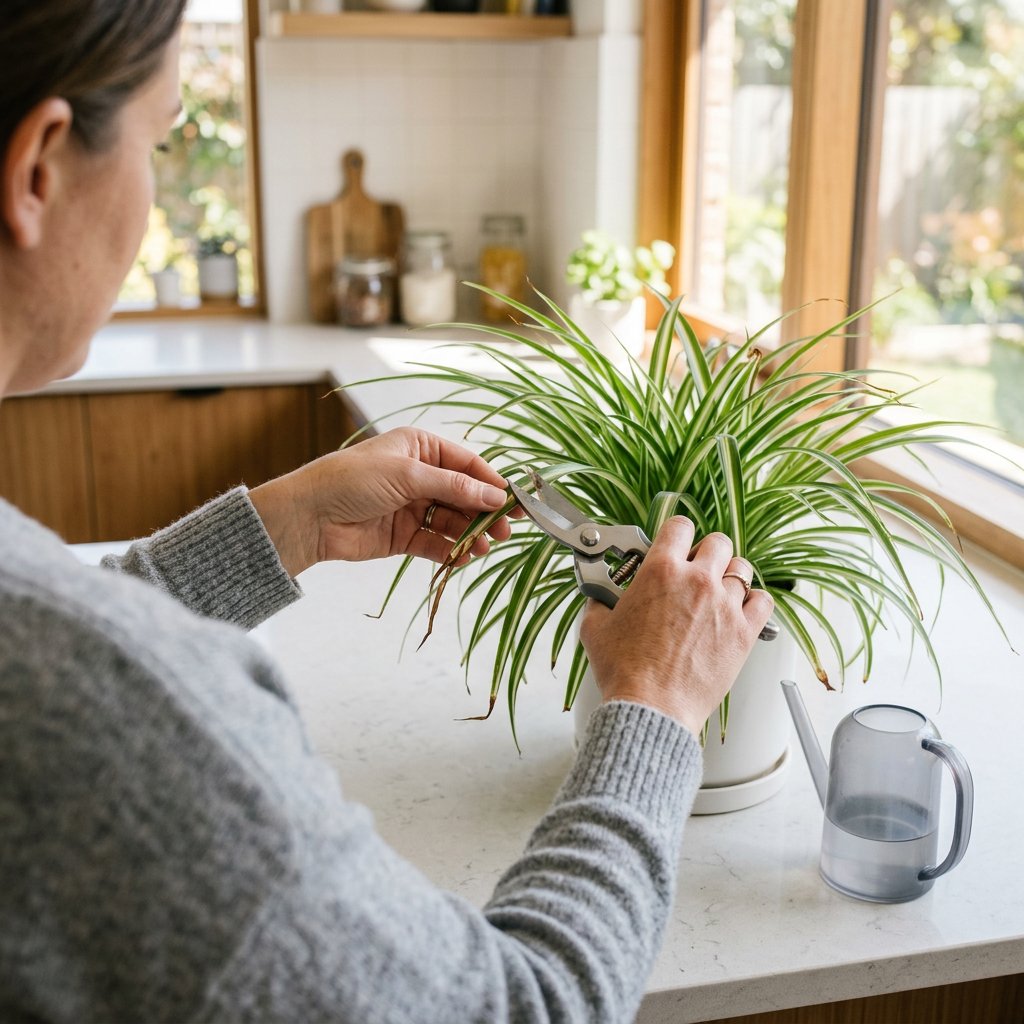
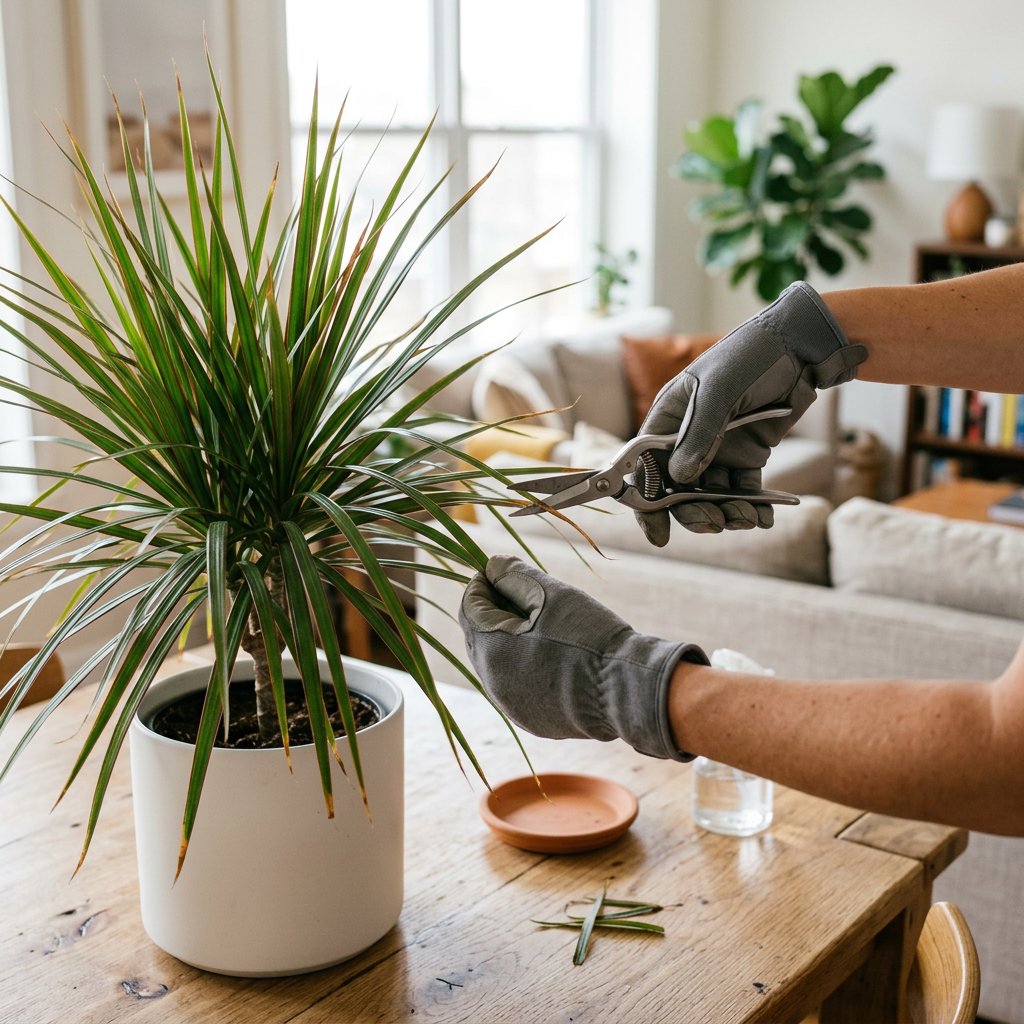
Step 5: Safely trim the damage. Unfortunately, brown leaf tips will never turn green again. To improve the plant's aesthetic, use sterilized, sharp scissors to trim away the brown parts. Follow the natural V-shape of the leaf, and intentionally leave a tiny, millimeter-thin margin of the brown edge. If you cut into the healthy green tissue, the plant will simply create a new brown tip to heal the fresh wound!
Don't let a few brown tips discourage you from enjoying your indoor jungle. Plants are living things, and a few imperfections are completely natural! By adjusting your watering habits and monitoring water quality, your Dracaena will reward you with healthy, vibrant growth. If you are ever unsure about a new spot, pest, or symptom on your plant, you can use the AI-powered plant disease scanner in the Plantiary app to get a professional diagnosis and step-by-step care plan in seconds. Keep growing, you're doing great!