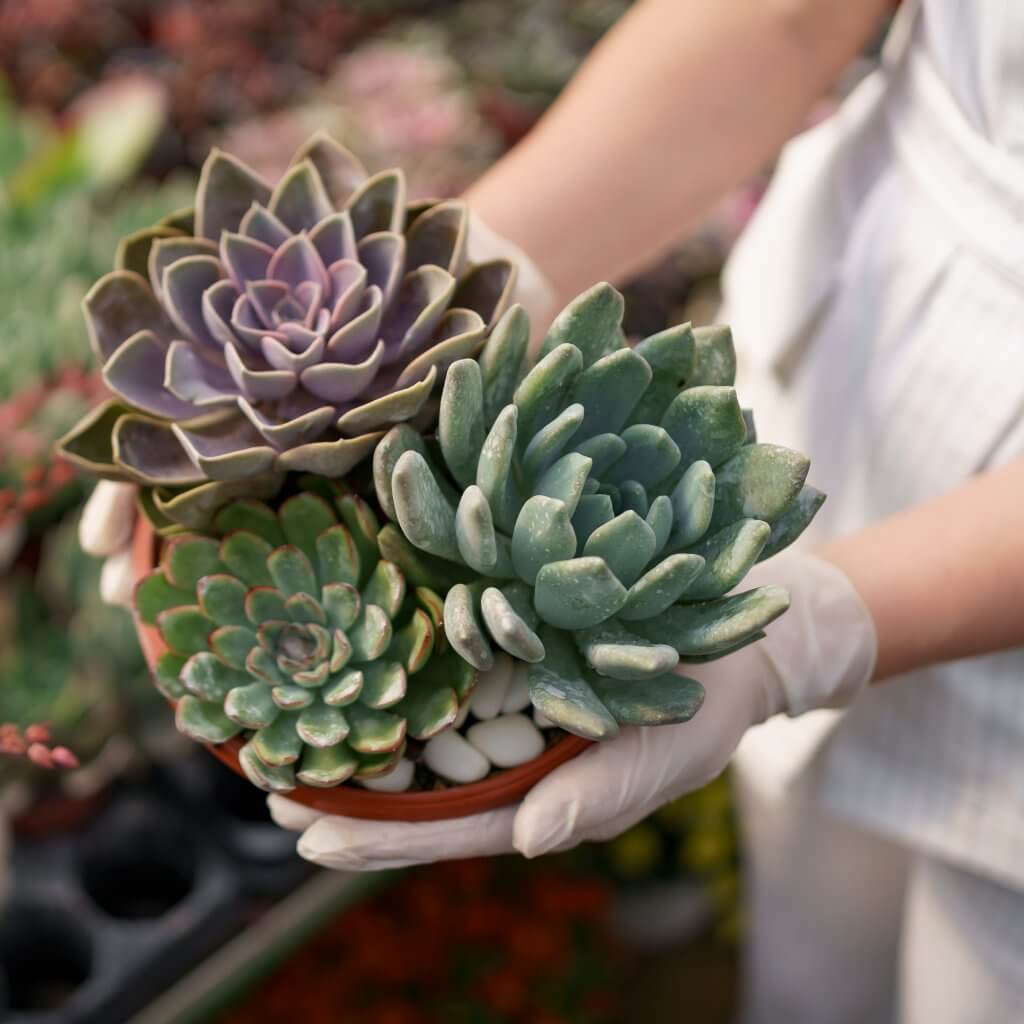
Succulents are often marketed as "unkillable" starter plants, which can lead to a heavy dose of unwarranted guilt when they inevitably drop leaves, stretch out, or turn to mush. If you have ever watched a beautiful, plump rosette slowly wither away, please take a deep breath—it happens to absolutely every plant parent! Caring for these unique plants involves a slight learning curve. Because they originate in dry, arid climates, treating them like your tropical houseplants usually ends in disaster. But do not worry; once you understand their natural rhythm, they are incredibly rewarding to grow. Plus, you never have to do it alone! The Plantiary app is always in your pocket to help you set up perfect watering schedules and identify your newly adopted green friends.
Let's dive into exactly how to decode your succulent's signals and provide the perfect care routine.
The Problem: Signs Your Succulent is Struggling
Because succulents store water in their fleshy leaves and stems, they communicate their stress quite visibly. If your plant isn’t thriving, you might notice one or more of these common symptoms:
- Mushy, translucent, or yellowing leaves: Usually starting at the bottom of the plant, the leaves feel incredibly soft and easily fall off when touched lightly.
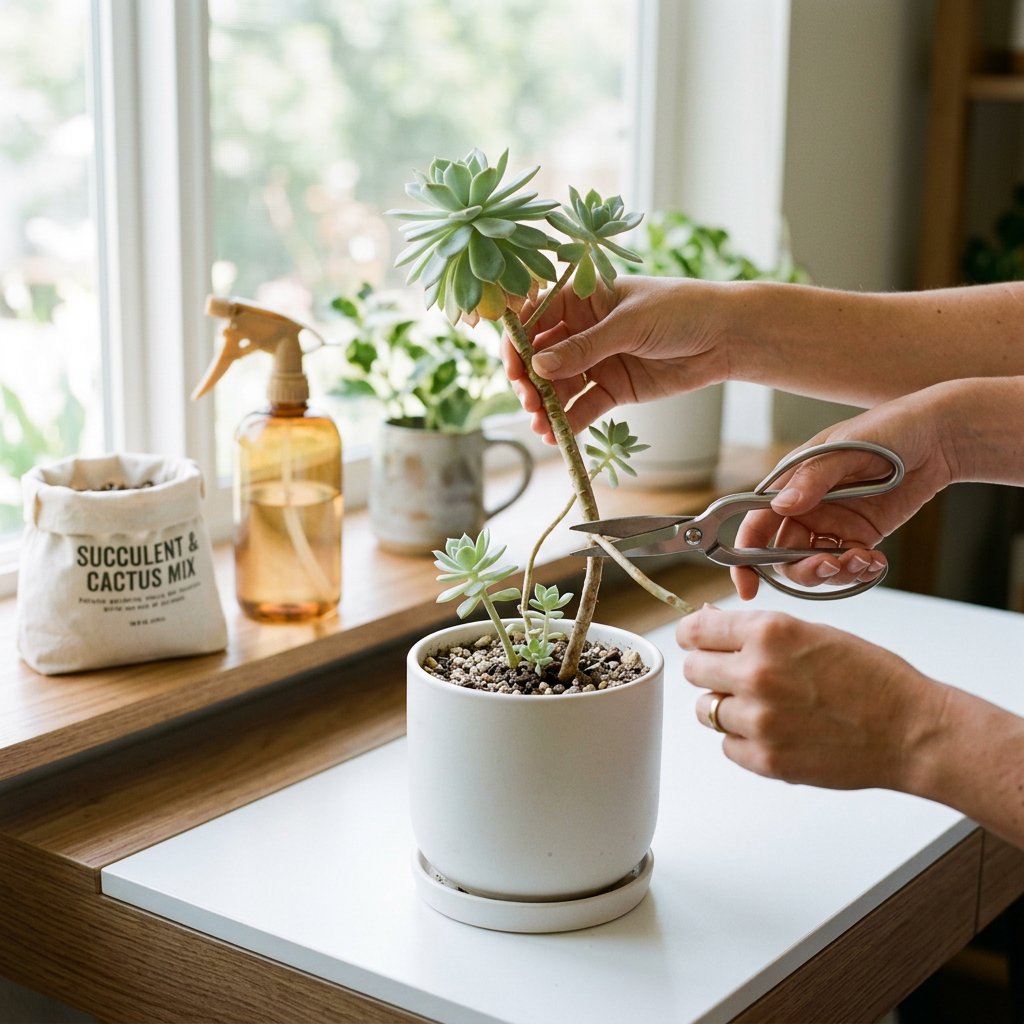
- Tall, stretched-out growth: The plant loses its compact, tight shape and begins growing a tall, spindly stem with wide gaps between the leaves.
- Wrinkled, shriveled, or crispy leaves: The leaves look deflated, rubbery, or have dry, crispy edges.
The Causes: Why Are They Unhappy?
To fix the problem, we first need to understand the root cause. Here is what is likely going on behind the scenes:
- Overwatering (The Silent Killer): Giving your succulent too much water causes edema—a condition where the plant's cells absorb so much water that they literally burst, leading to mushy, rotting leaves.
- Insufficient Light: When succulents do not get enough sunshine, they experience etiolation. This is a botanical term for when a plant stretches out abnormally, growing pale and leggy in a desperate search for a light source.
- Improper Soil and Drainage: Standard potting soil acts like a sponge. If your succulent is sitting in dense, wet soil without a drainage hole, its delicate roots will suffocate and develop fungal root rot.
- Underwatering: While rare, it is possible to underwater a succulent! If the soil has been bone-dry for weeks and the leaves are wrinkling, the plant is using up its stored water reserves to survive.
The Solutions: Step-by-Step Guide to Succulent Success
Ready to turn things around? Follow these scientifically backed, proven steps to get your succulents thriving, vibrant, and perfectly plump.
Step 1: Upgrade Your Soil and Pot
Succulents need their roots to breathe. Repot your plant into a coarse, well-draining soil blend specifically formulated for cacti and succulents. You can also mix standard potting soil with plenty of perlite, pumice, or coarse sand. Crucial tip: Always use a pot with at least one drainage hole. Terracotta pots are fantastic because their porous nature allows excess moisture to evaporate quickly.
Step 2: Master the "Soak and Dry" Watering Method
Forget watering on a strict weekly schedule. Instead, wait until the soil is 100% dry all the way to the bottom of the pot. When it is completely dry, thoroughly drench the soil until water runs out the drainage hole. Let all the excess water drip away, and then leave the plant alone until the soil is completely bone-dry again.
Step 3: Maximize Sunlight Exposure
Succulents are sun-worshippers. Place them in the brightest spot in your home, ideally right on the sill of a south-facing or west-facing window. They need at least 4 to 6 hours of bright, direct or bright-indirect sunlight daily to maintain their compact shape and vibrant colors. If your home lacks natural light, investing in a simple LED grow light works wonders to prevent etiolation.
Step 4: Monitor for Pests and Diseases
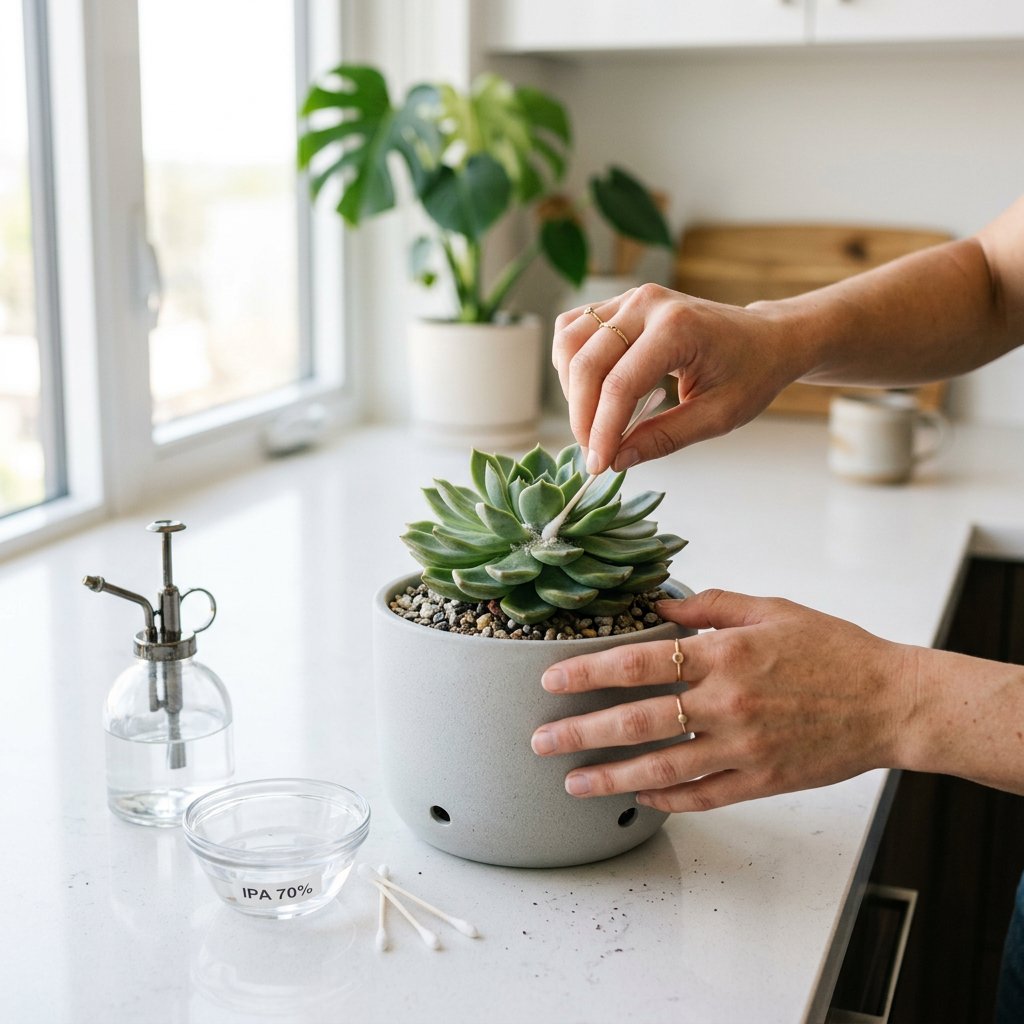
Even indoors, succulents can occasionally fall victim to pests like mealybugs (which look like tiny, fuzzy white cotton balls hidden in the crevices). Avoid unverified DIY remedies like rubbing mayonnaise or dish soap on your plants, as these can strip the protective wax off succulent leaves. Instead, gently dab pests with a Q-tip dipped in 70% isopropyl alcohol, or treat the plant lightly with a commercial neem oil spray.
If you are unsure what is wrong with your plant, you can use the AI-powered plant disease scanner in the Plantiary app to get an accurate diagnosis in seconds.
Remember, plant care is a journey of observation and patience. By mimicking their natural desert environment—giving them plenty of sunshine, fast-draining soil, and infrequent but deep waterings—you will have a thriving indoor desert garden in no time! You've got this, plant parent!