You are admiring your beautiful succulent collection when you suddenly spot it: a strange, cotton-like webbing tucked between the fleshy leaves. Your heart drops, and you might be wondering what went wrong. First, take a deep breath! Discovering white fuzz on your beloved succulents can be alarming, but please know that this is an incredibly common issue that happens to even the most experienced plant parents. Succulents are remarkably resilient, and with a little bit of targeted care, your plant will bounce back in no time.
Let's break down exactly what that white fuzz is, why it appeared, and how you can safely banish it from your indoor garden.
The Problem: Spotting the Symptoms
Before you can treat the issue, it is helpful to know exactly what you are looking at. The symptoms usually manifest as follows:
- Cotton-like masses: Tiny, fluffy white webs that look a bit like miniature cotton candy hiding in the crevices where the leaves meet the stem.
- Sticky residue: A shiny, sticky substance on the leaves or the pot.
- Yellowing leaves: You may notice chlorosis (a botanical term for the yellowing of leaves caused by a loss of chlorophyll).
- Deformed growth: New leaves might grow out looking misshapen or shriveled.
The Causes: What is the White Fuzz?
In the vast majority of cases, that white fuzz is a pest called the mealybug. Mealybugs are tiny, unarmored scale insects that thrive in warm environments. They have a waxy, white coating that makes them look fuzzy. These pests are sap-suckers; they pierce the plant tissue and drink its vital juices, leaving behind a sticky waste product known as "honeydew."
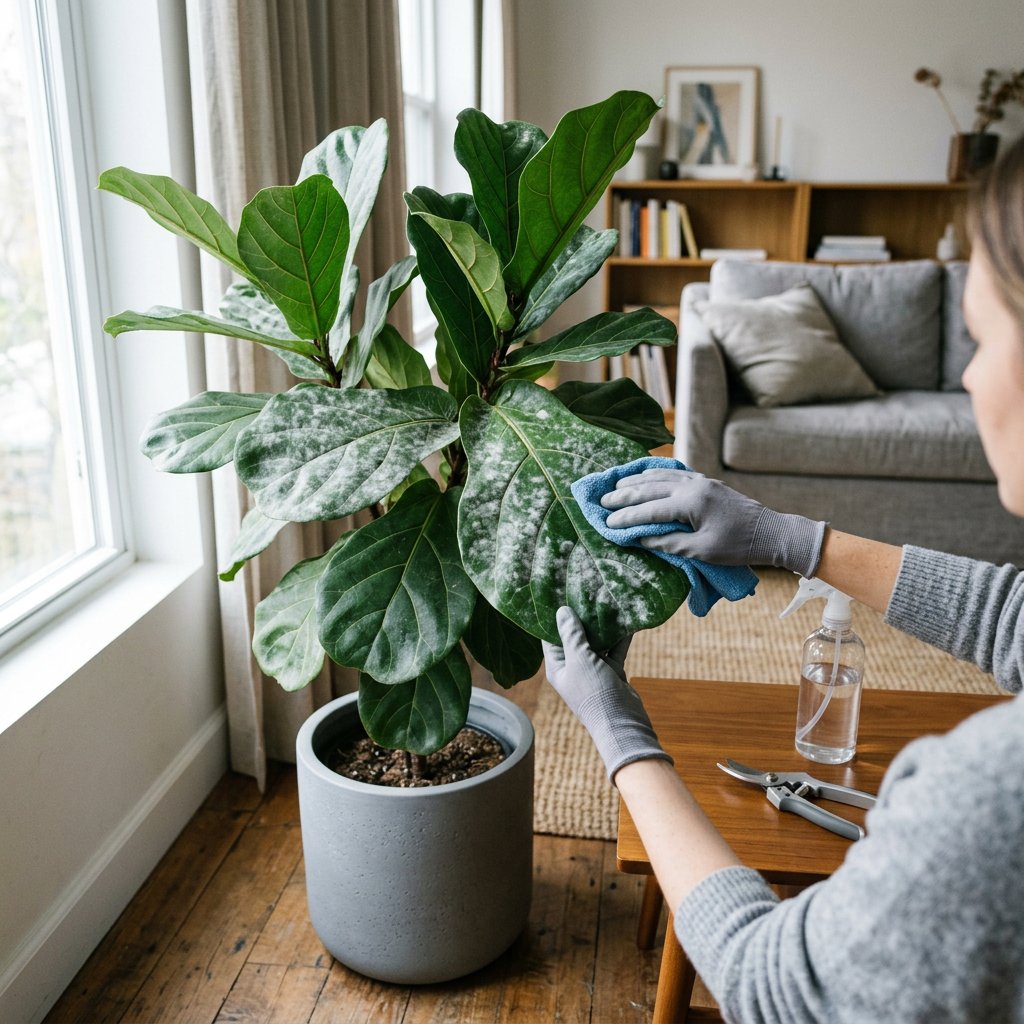
Occasionally, white fuzz can also be a sign of powdery mildew, a fungal disease that looks more like a dusting of white flour across the leaf surface rather than cottony webs.
If you are unsure what is wrong with your plant, you can use the AI-powered plant disease scanner in the Plantiary app to get a diagnosis in seconds. Our app takes the guesswork out of plant care, helping you identify pests and diseases instantly!
The Solutions: Step-by-Step Treatment
Eradicating mealybugs requires a little patience, but the process is highly effective when done correctly. Please avoid using harsh household chemicals or unverified DIY kitchen remedies, as these can permanently burn your succulent's delicate leaves. Instead, follow these scientifically proven steps:
Step 1: Isolate Your Plant
Mealybugs are skilled hitchhikers and will quickly crawl to neighboring pots. As soon as you spot the fuzz, move the affected succulent to a separate room or a quarantine area away from your healthy plants.
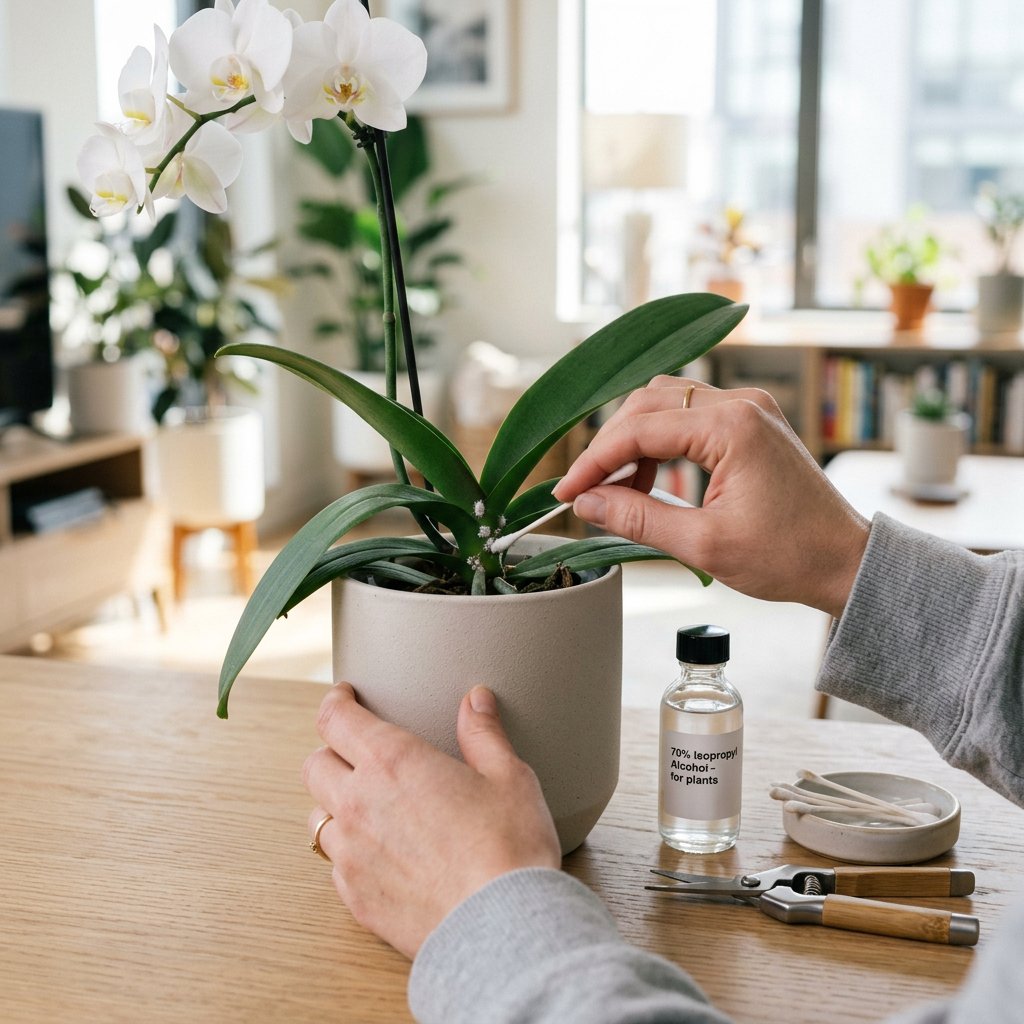
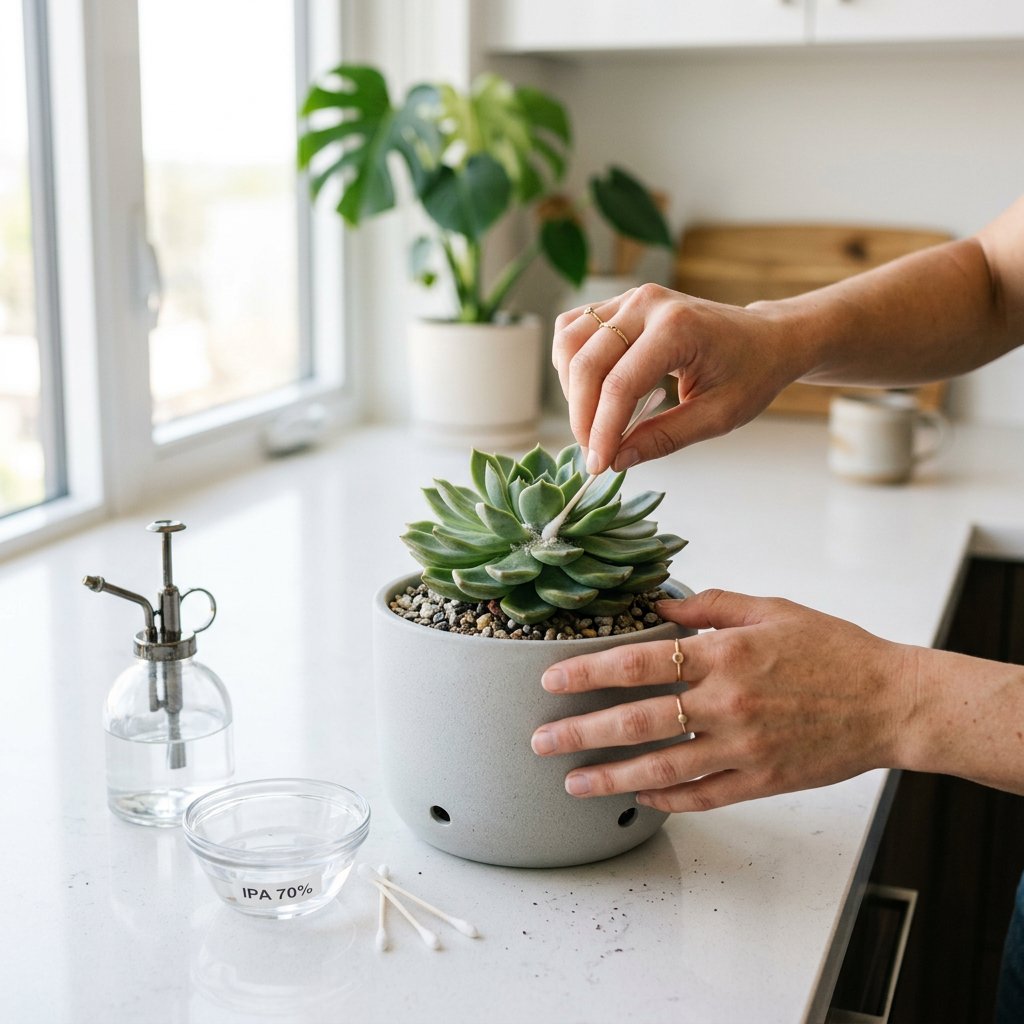
Step 2: Spot-Treat with Rubbing Alcohol
Mealybugs have a protective waxy coating that repels water, which is why simply rinsing them off rarely works.
- Dip a cotton swab (Q-tip) into 70% isopropyl rubbing alcohol.
- Gently dab the alcohol directly onto the white fuzz and visible bugs.
- The alcohol instantly melts their waxy coating and eliminates them on contact.
Step 3: Apply an Eco-Friendly Spray
For heavy infestations, spot-treating might not catch the microscopic juveniles.
- Mix a solution of insecticidal soap or neem oil according to the package directions.
- Spray the entire plant thoroughly, ensuring the liquid drips into the tight crevices of the leaves.
- Crucial tip: Always apply oils or sprays in the evening or keep the plant out of direct sunlight while it dries to prevent severe sunburn on the leaves.
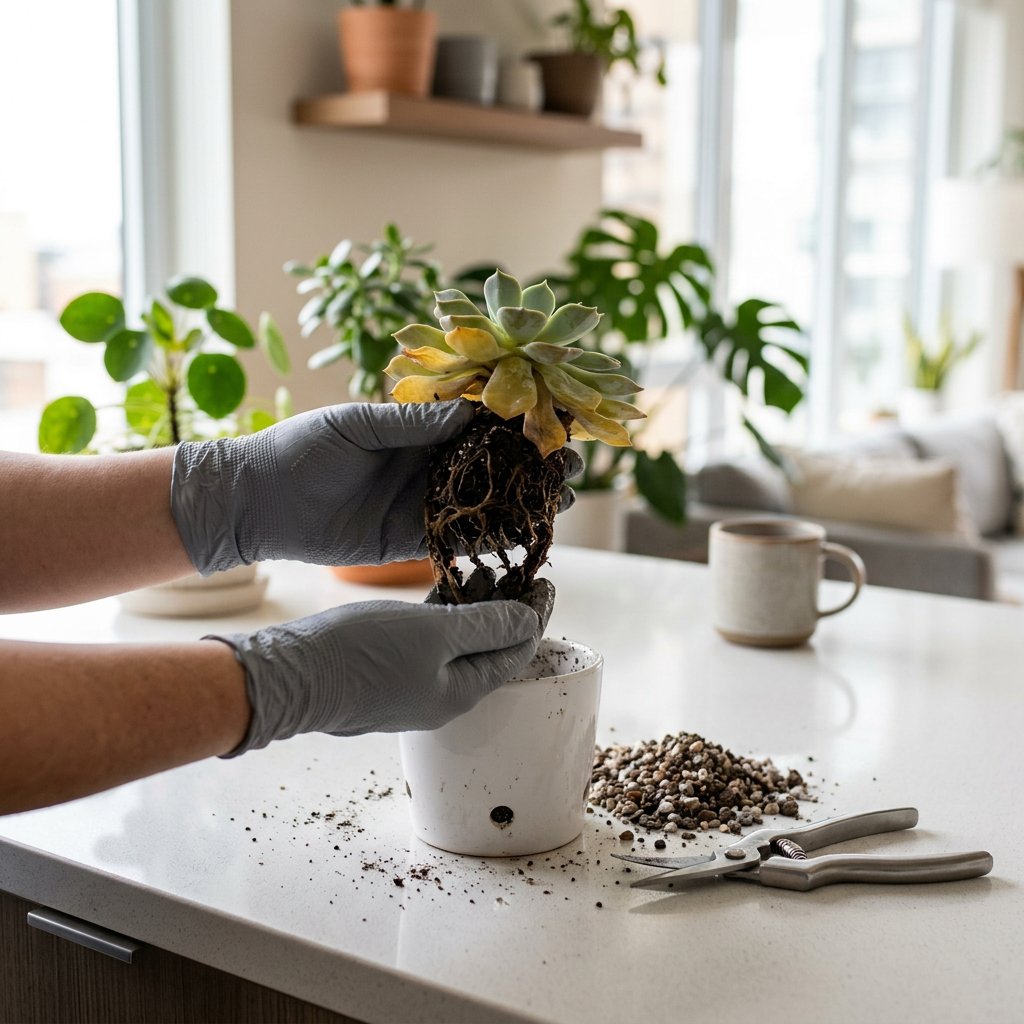
Step 4: Check the Soil and Roots
Sometimes, a species known as root mealybugs will hide beneath the soil line. If your succulent continues to decline after treating the leaves, gently unpot the plant. If you see white fuzz entangled in the roots, rinse the root system thoroughly under lukewarm water, sanitize the pot, and repot the plant in fresh, well-draining succulent soil.
Step 5: Monitor and Repeat
Pests have life cycles, meaning unhatched eggs might still be hiding. Keep your plant in quarantine and inspect it every few days. Repeat the alcohol swab or neem oil spray once a week until you are absolutely certain the fuzz is gone for good.
Dealing with plant pests can feel like a setback, but it is truly just a rite of passage in your plant parenthood journey. Keep a close eye on your green friends, ensure they have plenty of bright light and good airflow, and remember that the Plantiary app is always in your pocket to guide you through any bumps along the way. You've got this!