We’ve all been there. You bring home a perfectly compact, adorable little succulent, place it proudly on your desk or a cute bookshelf, and a few weeks later, it looks completely different. Instead of a tight, beautiful rosette, your plant is growing tall, spindly, and leaning desperately to one side.
If this sounds familiar, take a deep breath! You haven’t failed as a plant parent. Succulents are notorious for changing shape indoors, and it happens to the most experienced gardeners. The good news is that this is an incredibly common issue, and it is entirely fixable. Let’s dive into what’s going on with your plant and exactly how you can restore its original beauty.
The Problem: Recognizing a Stretched Succulent
In the botanical world, this stretching process is called etiolation (pronounced ee-tee-oh-LAY-shun). Simply put, etiolation means a plant is growing abnormally long and thin because it is desperately reaching out to find more sunlight.
Before we fix the issue, let's make sure we are diagnosing it correctly. Symptoms of a stretching succulent include:
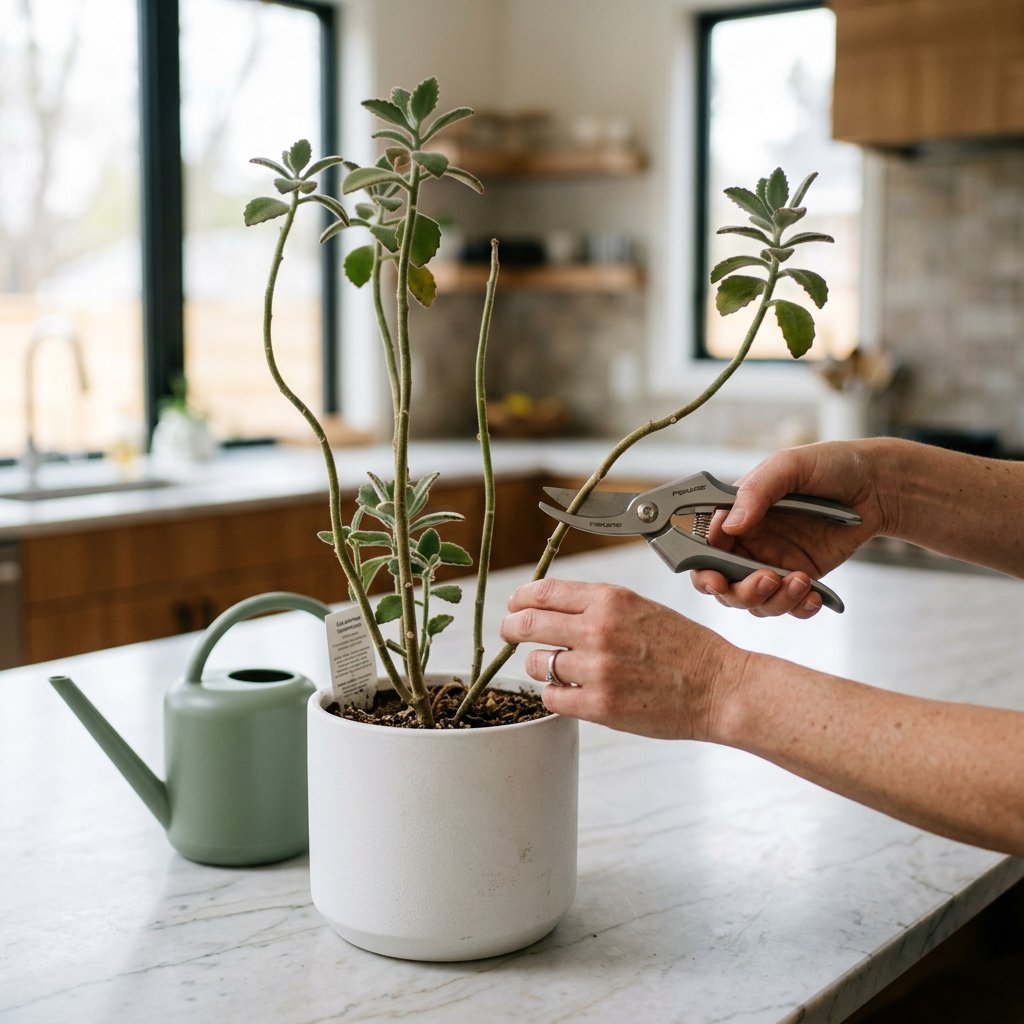
- Tall, leggy stems: You will notice wide, unnatural gaps of bare stem between the leaves.
- Leaning heavily: The plant looks like it is bending or bowing toward the nearest window or light source.
- Faded colors: The vibrant greens, purples, or pinks of your succulent may turn pale or slightly yellow.
- Smaller new growth: The leaves growing at the very top of the plant are noticeably smaller than the older leaves at the bottom.
The Causes: Why is My Succulent Stretching?
The sole cause of etiolation in succulents is a lack of adequate sunlight.
Most succulents are native to harsh, desert environments where they bask in bright, direct sun for hours on end. When we bring them into our homes and place them in the center of a room or in a north-facing window, they simply aren't getting the energy they need to stay compact. In response, their survival instincts kick in, and they stretch their stems to "hunt" for the sun.
If you are ever unsure what is wrong with your plant, or if you want to check if it's getting the right amount of light, you can use the AI-powered plant disease scanner and light meter in the Plantiary app to get a diagnosis and proper care recommendations in seconds.
The Solutions: Step-by-Step Guide to Fixing a Leggy Succulent
Once a succulent stem has stretched out, it cannot shrink back down. However, you can easily "reset" your plant through a fun and rewarding process known as beheading. This scientifically proven propagation method is safe, effective, and gives you multiple plants out of one!
Here is your step-by-step treatment plan to fix a stretching succulent:
Step 1: Prepare Your Tools
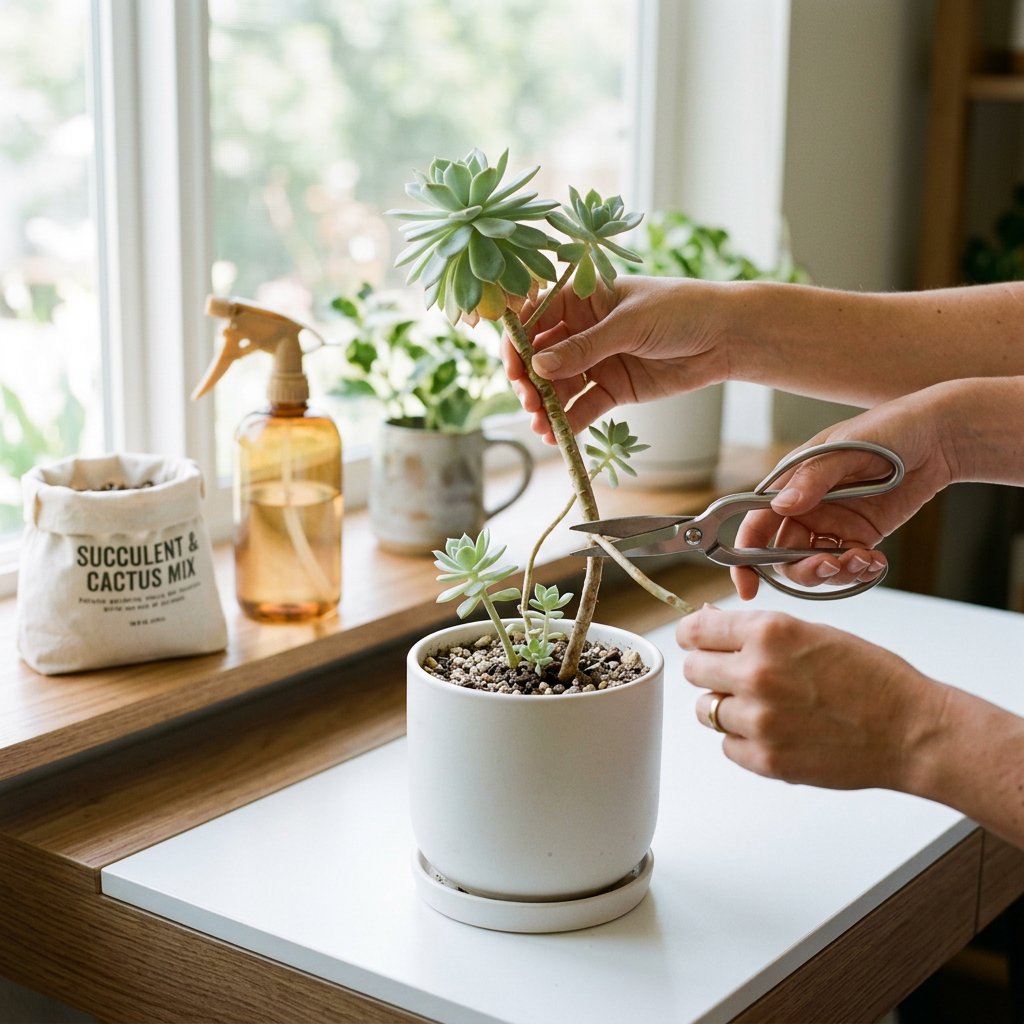
You will need a pair of sharp pruning shears or scissors. Before cutting, wipe the blades with rubbing alcohol to sterilize them. This prevents bacteria from infecting your plant’s fresh wounds.
Step 2: "Behead" the Succulent
Look at your tall succulent and find the top portion where the leaves are still growing tightly together in a rosette shape. Using your clean shears, snip the stem about 1 to 2 inches below that compact top.
Step 3: Let the Cutting Callus
This is a crucial step! Do not plant the top immediately. Instead, lay your freshly cut succulent top in a dry, shady spot for 2 to 3 days. The cut end needs time to callus (form a dry, protective scab). If you plant an uncallused stem into moist soil, it will likely rot.
Step 4: Replant the Top
Once the cut end is completely dry and callused over, plant the stem into a small pot filled with fresh, well-draining cactus or succulent soil. Do not water it right away. Wait about a week for the plant to start growing new roots, then begin watering it lightly.
Step 5: Relocate for Better Light
To prevent your newly potted succulent from stretching again, move it to a brighter location. A south or east-facing window is usually best. If you don't have enough natural light, consider picking up a small LED grow light to keep your plant happy and compact.
A Bonus Tip for Plant Parents: Don't throw away the leftover bottom stem! Leave it in its original pot and continue to water it normally. In a few weeks, you will see tiny new baby succulents sprouting along the sides of the bare stem.
Seeing your favorite succulent stretch out can be discouraging, but it’s really just your plant communicating its needs. By adjusting its lighting and doing a little bit of simple pruning, you'll have a thriving, beautiful plant collection again in no time!