It is incredibly common to bring a vibrant, profusely blooming Kalanchoe home from the store, only to watch its beautiful flowers eventually fade and never return. If your Kalanchoe has turned into a perfectly healthy—but stubbornly bloomless—green houseplant, take a deep breath! You haven’t failed as a plant parent. Getting these cheerful succulents to rebloom is a very common hurdle, but with a little understanding of how their natural cycle works, you can easily coax those brilliant flowers back to life.
The Problem: All Leaves, No Flowers
When a Kalanchoe is struggling to bloom, the symptoms are usually quite straightforward. You will notice:
- Lush, green foliage that appears perfectly healthy.
- A complete absence of new flower buds.
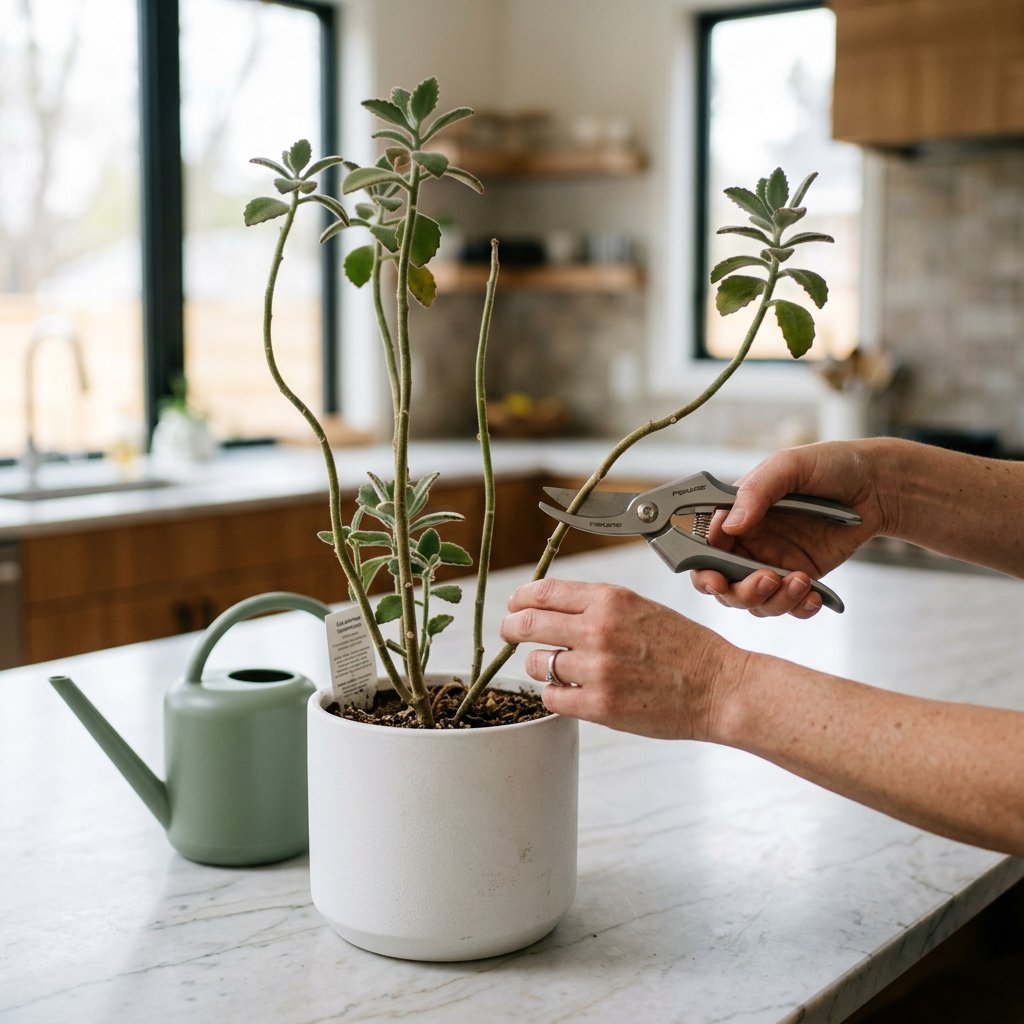
- Occasionally, etiolation (a botanical term that simply means the plant is stretching out and becoming leggy as it searches for optimal light).
If your plant looks like this, it isn't dying; it is simply stuck in a vegetative growth phase and needs a specific environmental trigger to move into its flowering phase.
The Causes: Why Is Your Kalanchoe Refusing to Bloom?
To fix the problem, we first need to understand why it’s happening. In the wild, plants rely on environmental cues to tell them what season it is. For your Kalanchoe, the issue usually boils down to one of the following:
- Lack of "Short-Day" Conditions: Kalanchoes are what botanists call photoperiodic plants. Photoperiodism is a plant's physical response to the lengths of day and night. To trigger bloom production, Kalanchoes need long, uninterrupted periods of darkness to simulate the approaching winter.
- Sneaky Artificial Light: Even if the sun goes down, the lamps in your living room, the glow of a television, or a bright street lamp outside the window can interrupt the plant's required dark period.
- Nutrient Imbalance: Using a fertilizer that is too high in nitrogen encourages the plant to push out lots of green leaves at the expense of flowers.
- Skipping the Resting Phase: Like many flowering houseplants, Kalanchoes need a period of dormancy (rest) with less water and no fertilizer to build up the energy required for a spectacular bloom.
The Solutions: Step-by-Step Treatment for Reblooming
Reblooming a Kalanchoe is a fun and rewarding process. By simulating a winter environment, you can trick your plant into producing those lovely clusters of flowers again.
Step 1: Deadhead and Prune
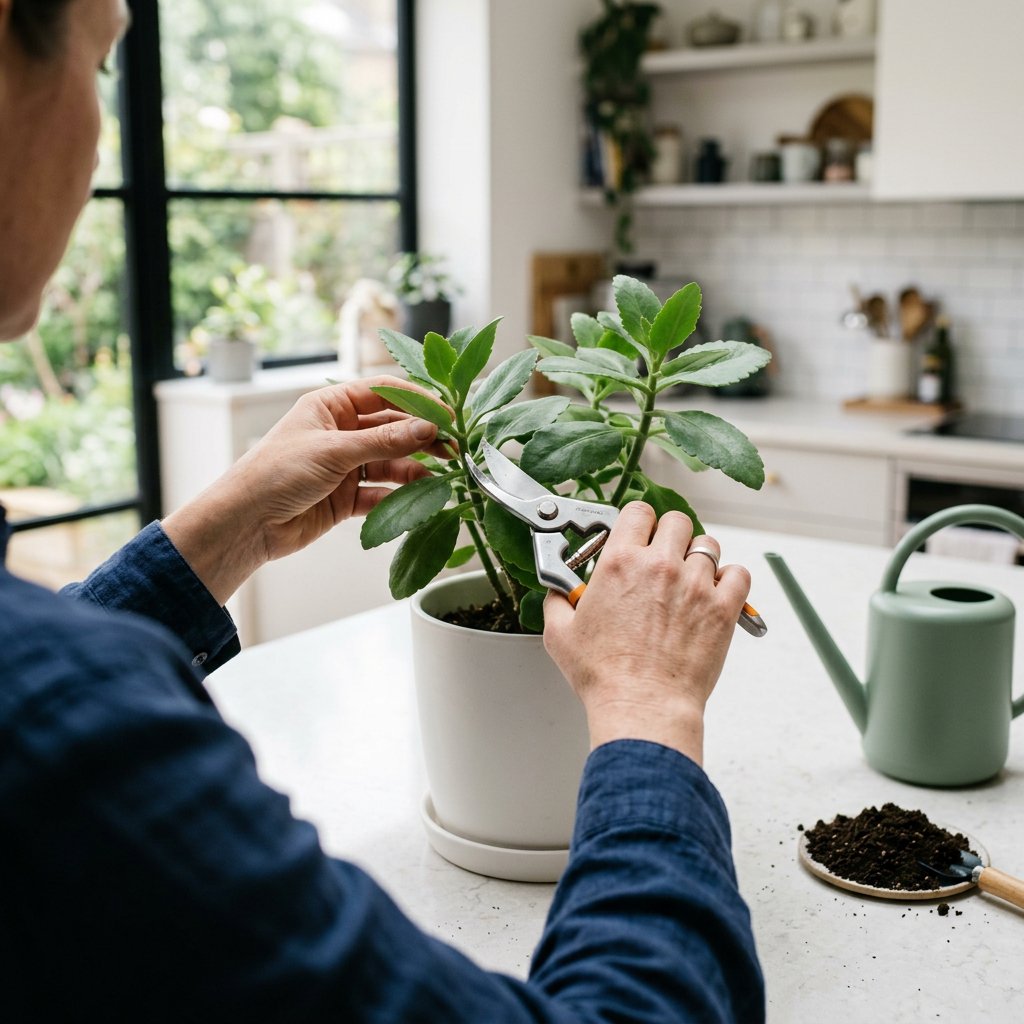
Start by removing any old, crispy, or dead flowers. This process is called deadheading. Snipping off the old blooms stops the plant from wasting energy on seed production and redirects its focus toward creating new growth. Use clean, sharp scissors to trim the stems just above the first set of large, healthy leaves.
Step 2: Start the "Short-Day" Dark Treatment
This is the most critical step. For about 6 weeks, your Kalanchoe needs strict light control:
- 14 Hours of Complete Darkness: Every evening (for example, from 6:00 PM to 8:00 AM), place your Kalanchoe in a pitch-black closet, or cover it completely with a dark, light-proof cardboard box.
- 10 Hours of Bright Light: During the day, bring the plant out and place it in a spot with bright, indirect sunlight.
Keeping track of strict daily light schedules can be tricky. You can use the Plantiary app to set daily care reminders, ensuring you never forget to move your plant! You can also utilize Plantiary's built-in light meter to guarantee your Kalanchoe gets the exact brightness it needs during its 10 hours of daytime light.
Step 3: Adjust Watering and Stop Feeding
While your plant is undergoing its 6-week dark treatment, it needs to rest. Cut back on watering—only water when the top two inches of the soil feel completely dry to the touch. Do not apply any fertilizer during this period, as it will disrupt the dormancy process.
Step 4: Watch for Buds and Return to Normal
After 6 to 8 weeks of this routine, you should start to see tiny, closed flower buds forming at the tips of the stems. Once you spot these buds, you can permanently end the dark treatment! Bring your Kalanchoe back to its normal, bright spot in your home. Resume your regular watering schedule, and you can apply a balanced, diluted houseplant fertilizer to support the incoming blooms.
Houseplant care is all about patience and mimicking nature. Don't feel discouraged if it takes a little time for your Kalanchoe to respond. If you ever feel unsure about your plant's overall health during this process, or if you spot unusual blemishes on the leaves, remember that you can always use the AI-powered plant disease scanner in the Plantiary app to get an instant health diagnosis. Happy growing!