There is nothing quite like the feeling of watching a new, perfectly fenestrated (split) Monstera leaf unfurl. But when those big, beautiful green leaves start developing unsightly black edges, panic can quickly set in. Take a deep breath! Plant parenting is a journey of trial and error, and even the most experienced indoor gardeners face leaf issues. Black edges on your Monstera are simply your plant's way of gently communicating that its watering routine needs a little tweak.
If you are ever unsure what is wrong with your plant, you can use the AI-powered plant disease scanner in the Plantiary app to get a diagnosis in seconds. In the meantime, let's explore why these dark marks appear and how to safely nurse your tropical beauty back to health.
The Problem: Understanding Monstera Black Edges
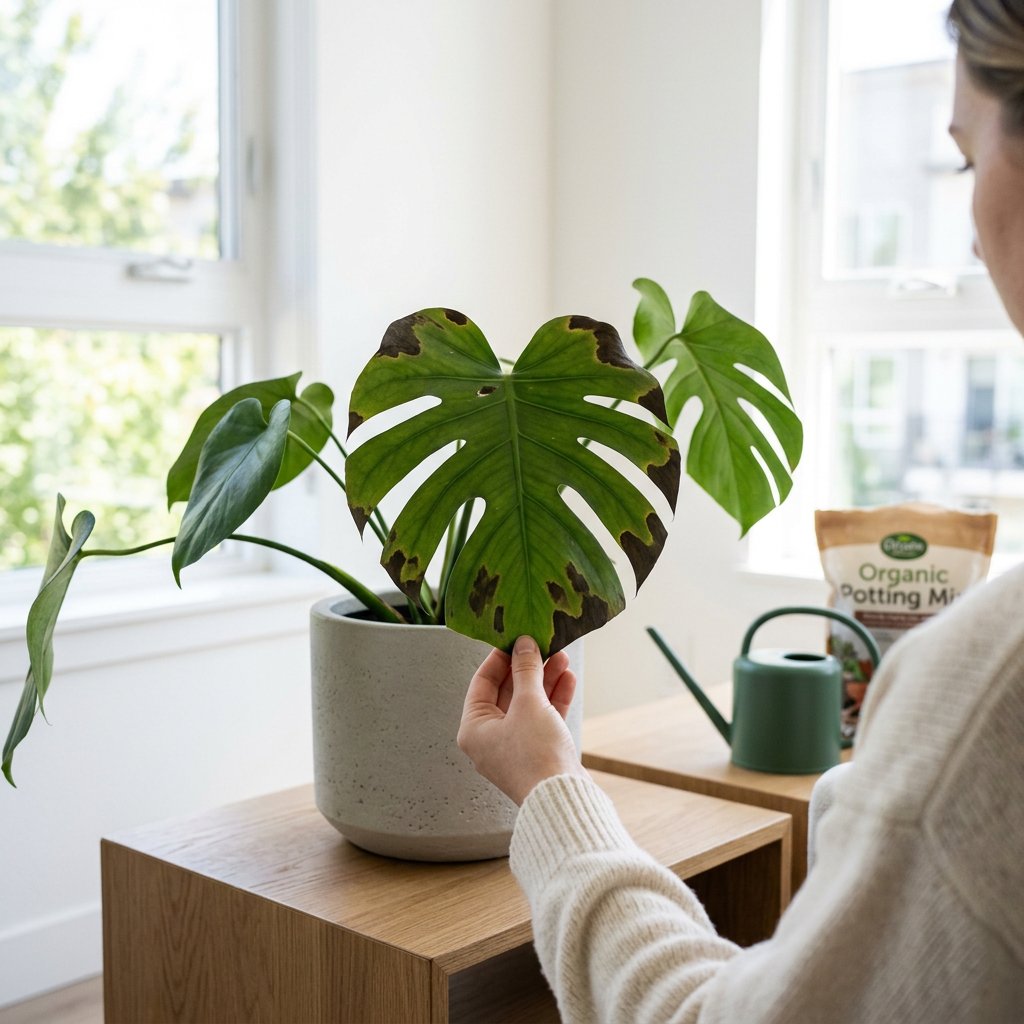
Before we dive into the fixes, it helps to understand what you are looking at. The darkening of the leaf margins is scientifically known as necrosis, which is simply a botanical term for localized plant tissue death. Depending on the exact watering issue, these black edges generally present in one of two distinct ways:
- Crispy and dry: The black or dark brown edges feel papery, brittle, and easily crumble when you touch them.
- Mushy and yellowing: The dark edges feel soft or damp and are often surrounded by a pale, sickly yellow halo.
The Causes: What is Going Wrong Beneath the Soil?
While pests or fungal infections can occasionally cause leaf discoloration, black edges on a Monstera are almost always tied to a moisture imbalance. Here are the primary culprits:
- Overwatering and Root Rot: This is the most common cause of mushy black edges. When a Monstera sits in soggy, poorly draining soil, its roots literally suffocate. This leads to root rot, a condition where the roots decay and can no longer absorb water or nutrients. Ironically, an overwatered plant ends up dying of thirst, causing the leaf edges to turn black.
- Underwatering: If the black edges are crispy and brittle, your plant is likely just thirsty. While Monsteras like their soil to dry out a bit between waterings, leaving them bone-dry for extended periods will cause the most delicate parts of the plant—the leaf edges—to dry out and die.
- Water Quality and Mineral Buildup: Tap water contains minerals, chlorine, and fluoride. Over time, these salts can accumulate in the potting soil. This buildup can draw moisture away from the roots and cause chemical burns along the edges of the leaves.
The Solutions: Step-by-Step Watering Fixes
Don't worry—your Monstera is incredibly resilient! By making a few simple adjustments, you can stop the spread of necrosis and encourage fresh, healthy growth. Follow this step-by-step treatment plan to resolve the issue:
Step 1: Diagnose the Soil Moisture
Poke your finger about 2 to 3 inches deep into the potting soil. If the soil feels soaking wet and heavy, you are dealing with overwatering. If the soil is completely dusty and pulls away from the sides of the pot, underwatering is your culprit.
Step 2: Treat Root Rot (If Overwatered)
If you suspect overwatering, you need to check the root system.
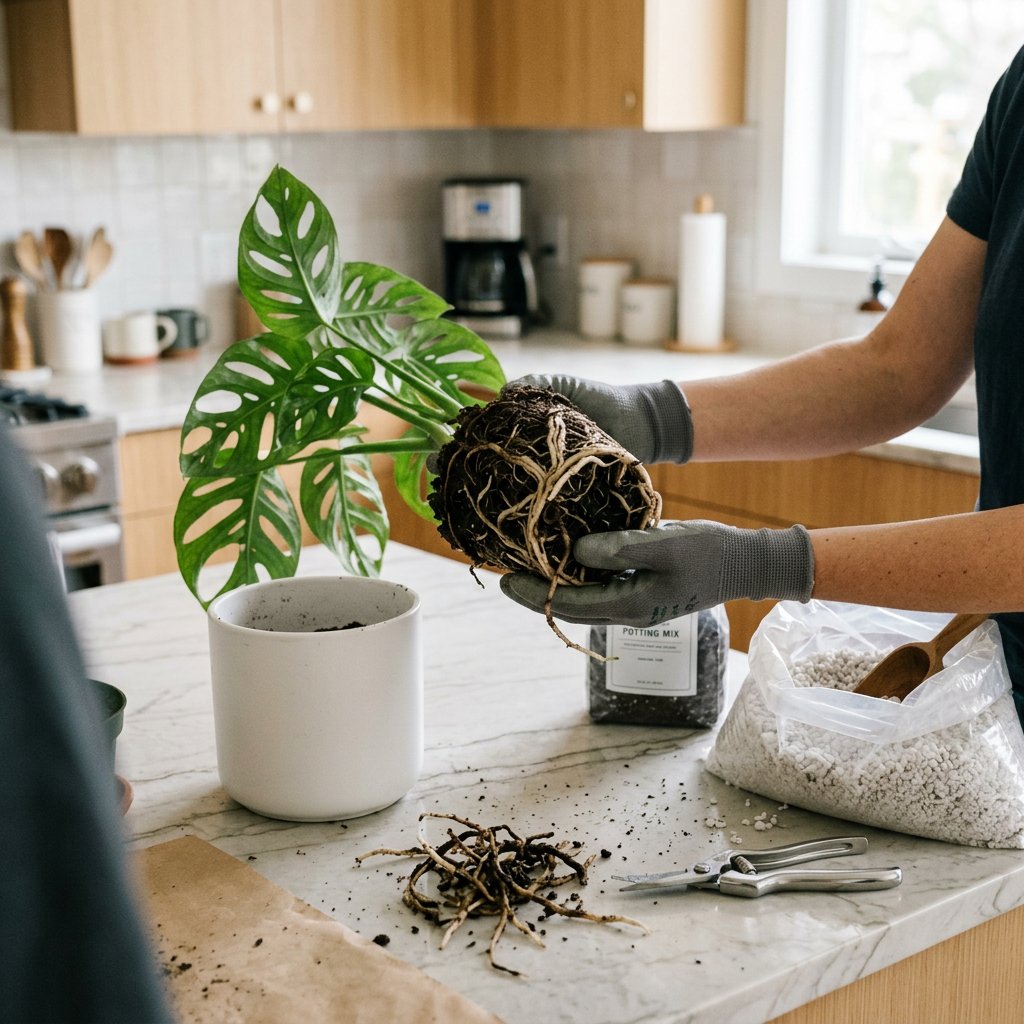
- Gently slide the Monstera out of its pot.
- Inspect the roots: healthy roots are firm and pale, while rotted roots are dark brown, mushy, and often smell a bit sour.
- Using a pair of sterile scissors, carefully trim away any mushy roots.
- Repot your Monstera in a fresh, well-aerated "aroid mix" (a chunky blend of potting soil, orchid bark, and perlite) and ensure the new pot has drainage holes at the bottom.
Step 3: Flush the Soil (If Water Quality is the Issue)
If your watering schedule is perfect but the edges are still getting crispy, mineral buildup is likely the issue. Take your plant to the sink or shower and slowly pour distilled water or rainwater through the soil, letting it drain completely out the bottom. This process, called "flushing," helps wash away accumulated salts.
Step 4: Establish a Better Watering Routine
Monsteras thrive on consistency. Only water your plant when the top 2 to 3 inches of the soil are completely dry. When you do water, water thoroughly until liquid escapes the drainage holes, and never leave the pot sitting in a saucer of standing water. To make this foolproof, you can set up customized watering reminders in your Plantiary app!
Step 5: Prune the Damage
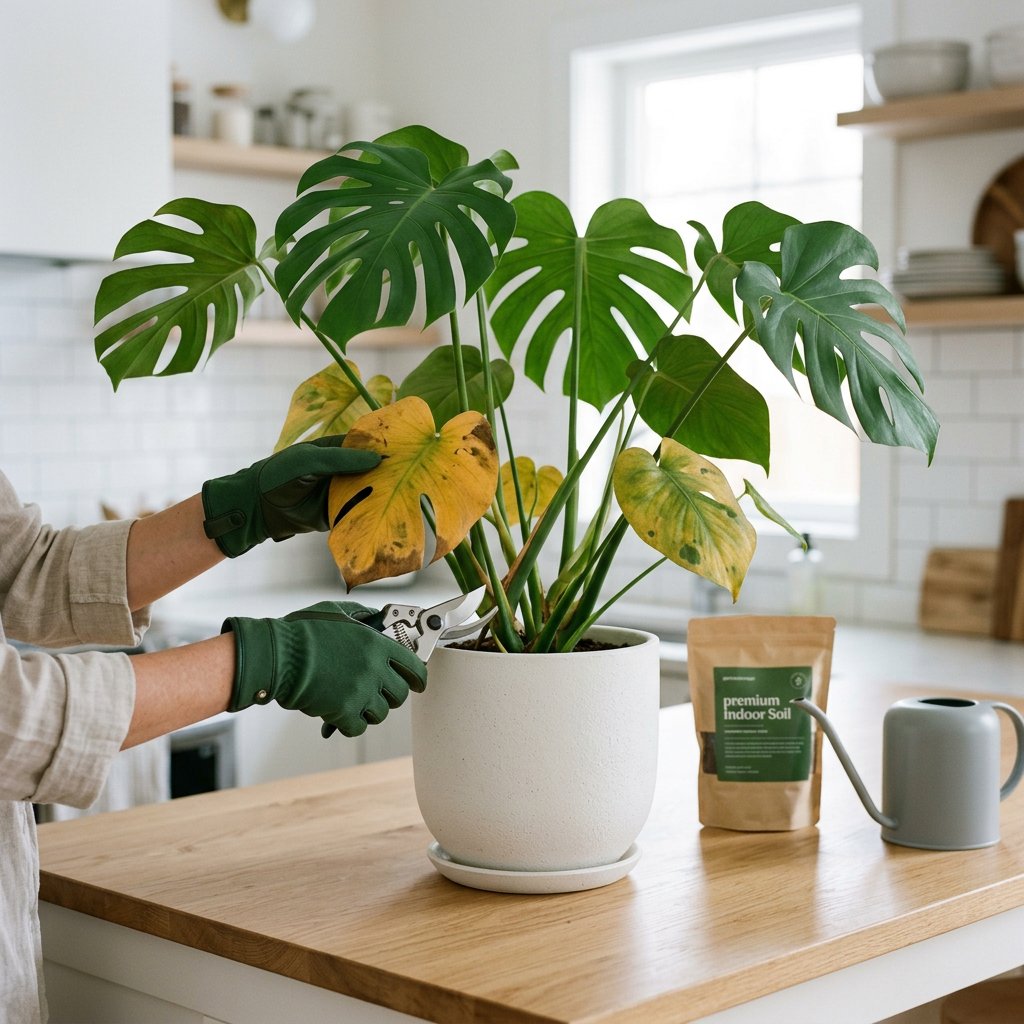
Once plant tissue turns black, it unfortunately will not turn green again. You have two choices: you can leave the leaf as it is, or you can take clean, sterilized scissors and carefully trim away the black edges, following the natural curve of the leaf. If a leaf is more than 50% damaged, it is best to prune the entire leaf off near the base of the stem so the plant can redirect its energy into pushing out healthy new growth.
Seeing black edges on your Monstera can be disheartening, but it is entirely fixable. With a little bit of root inspection, a chunky soil mix, and a mindful watering routine, your plant will be back to growing massive, beautiful leaves in no time. You've got this!