Have you ever reached out to admire the beautiful, braided trunk of your Money Tree, only to find your fingers covered in a mysterious, sticky residue? Don't panic! It is completely normal to feel a bit alarmed when our leafy friends start acting strangely. Plant parenthood is a learning curve, and dealing with a sticky houseplant is simply a rite of passage that happens to almost every plant owner eventually.
Money Trees (Pachira aquatica) are remarkably resilient. With a little bit of investigation and some gentle care, your plant will bounce back in no time. Let’s dive into what this sticky sap is, why it's there, and exactly how you can fix it.
The Problem: What Exactly is That Sticky Sap?
When you notice a shiny, sticky substance on the leaves of your Money Tree, or even dripping onto the floor or table beneath it, you are looking at a substance called honeydew.
Despite its pleasant-sounding name, honeydew is actually a sugary, sticky liquid excreted by certain insects as they feed on the sap of your plant. Because plant sap is high in sugar but low in the nutrients these bugs need, they have to consume a large amount of it, excreting the excess sugar behind as a sticky trail.
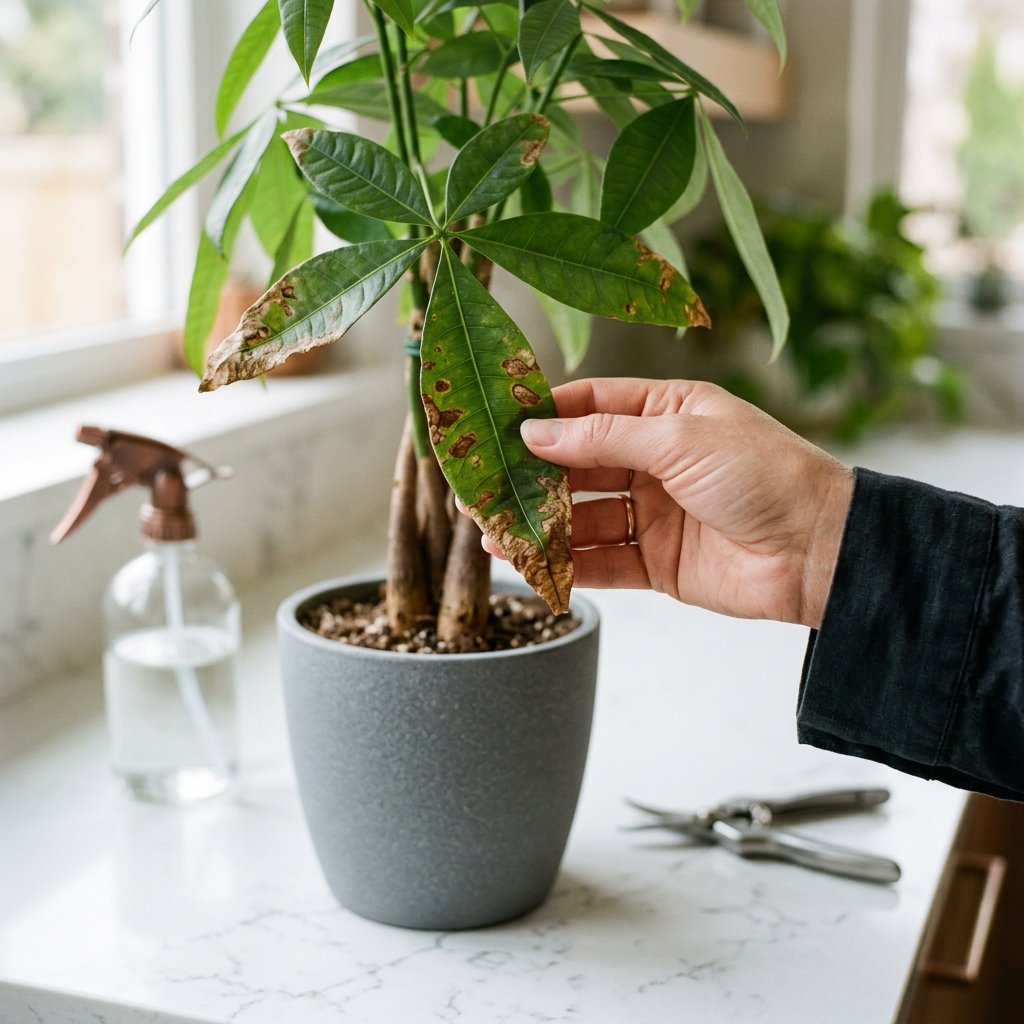
If left untreated, you might also notice a black, powdery substance forming over the sticky spots. This is called sooty mold, a harmless but unsightly fungus that feeds specifically on the honeydew. While the mold itself won't infect your plant, it can block sunlight and make it harder for your Money Tree to photosynthesize.
The Causes: Who is Leaving the Honeydew Behind?
If your Money Tree is covered in honeydew, you are likely hosting some uninvited guests. These tiny hitchhikers often sneak indoors on new plants or drift in through open windows. The three most common sap-sucking culprits are:
- Aphids: These are tiny, pear-shaped insects that usually cluster in large groups on the newest, softest growth of your Money Tree. They come in various colors, most commonly green, yellow, or black.
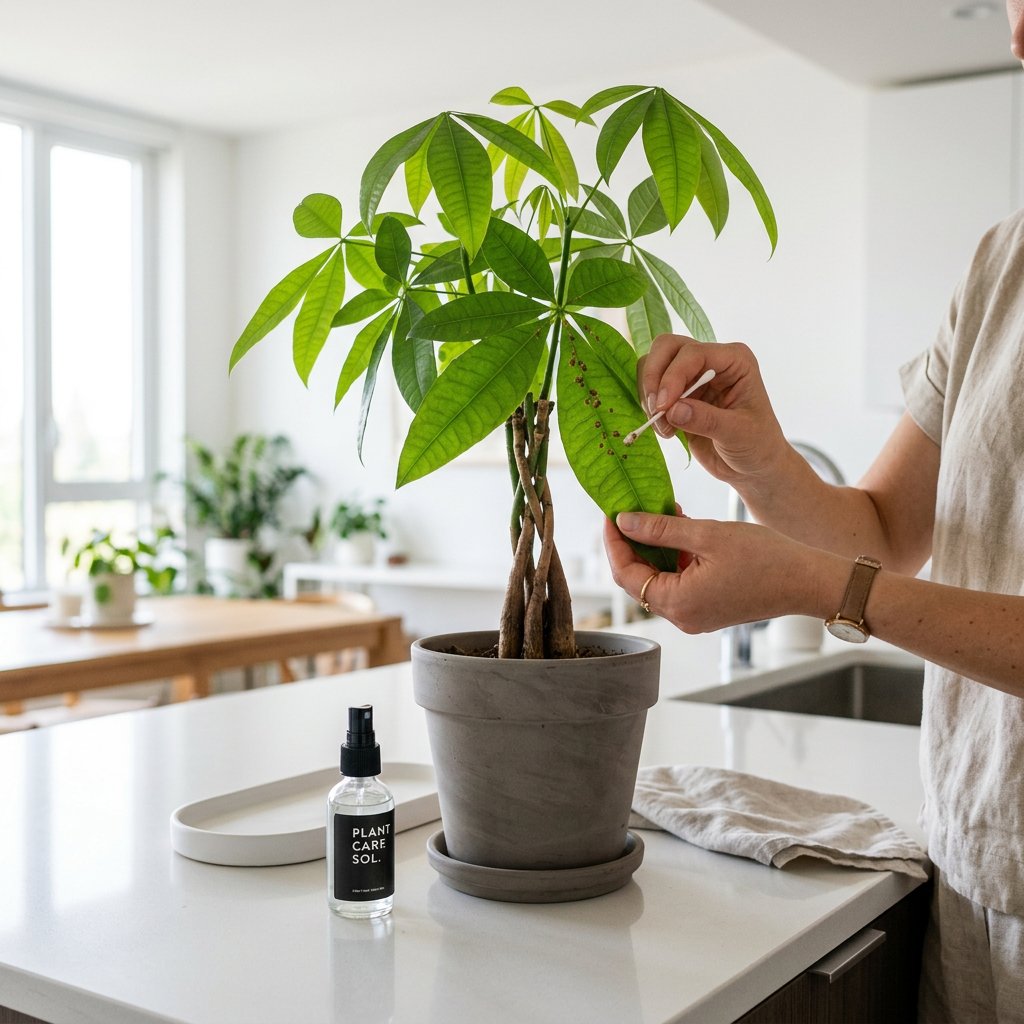
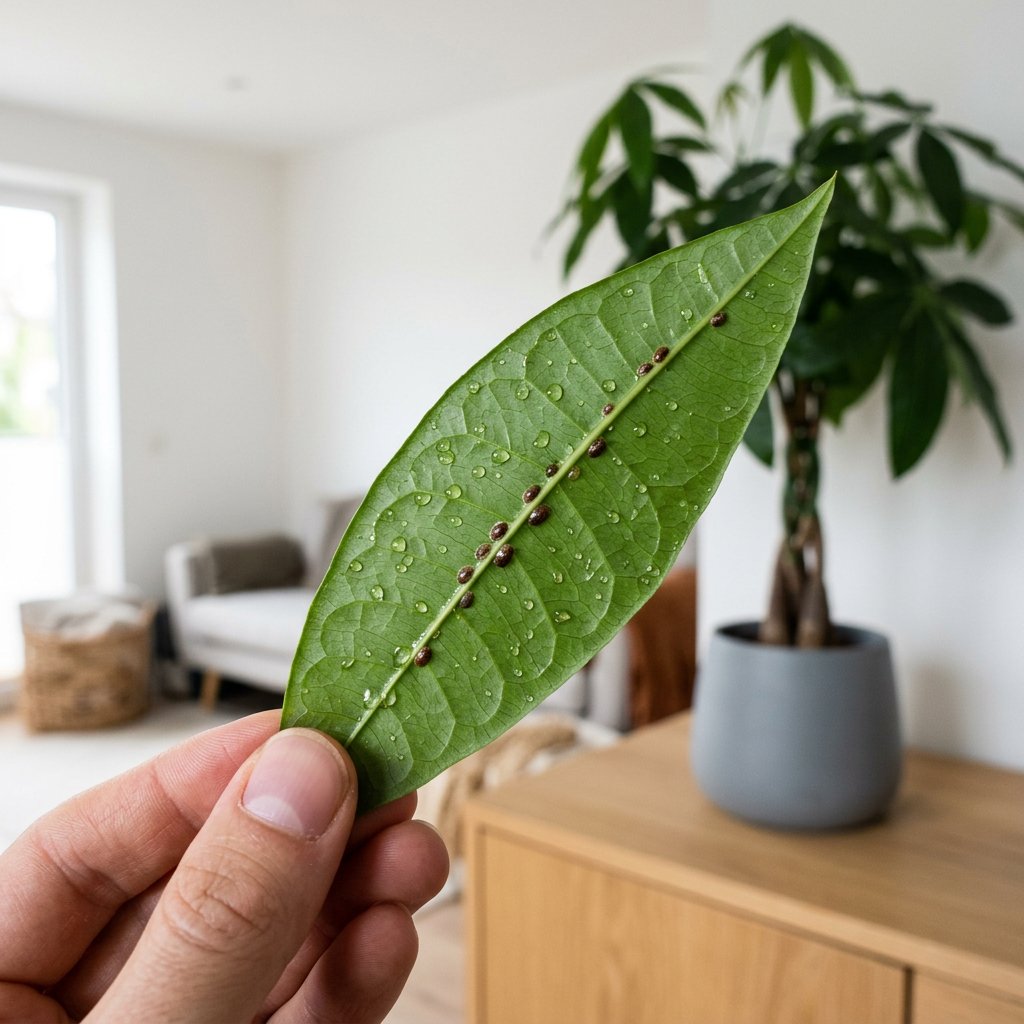
- Scale Insects: These pests are masters of disguise. They look like little, flat brown or tan bumps stuck firmly to the stems and the undersides of leaves. Because they don't move much, they are often mistaken for natural bumps on the plant.
- Mealybugs: If you see what looks like tiny, fuzzy pieces of white cotton wedged into the joints of the stems or under the leaves, you have mealybugs.
If you spot an insect or a suspicious bump but aren't quite sure what it is, don't worry! You can use the AI-powered plant disease scanner in the Plantiary app. Just snap a quick photo, and the app will give you an accurate diagnosis in seconds, saving you the guesswork.
The Solutions: Step-by-Step Treatment
Treating a pest issue is easier than you might think. Put away the harsh chemicals and traditional household kitchen remedies (which can actually damage your plant's leaves), and follow this scientifically proven, plant-safe rescue plan:
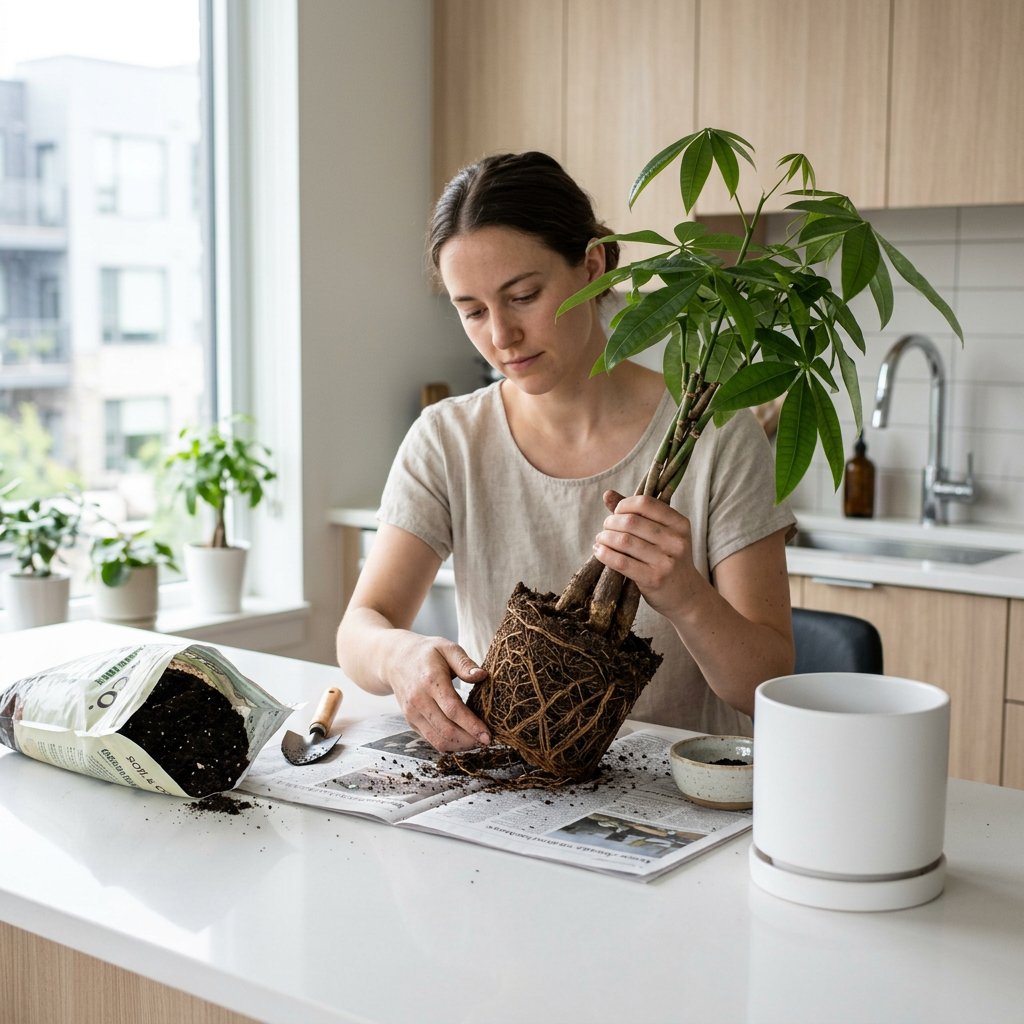
Step 1: Isolate your Money Tree As soon as you notice the sticky sap, move your Money Tree away from your other houseplants. Pests can easily spread from pot to pot, so giving your plant its own temporary "quarantine" space protects your indoor jungle.
Step 2: Give your plant a gentle shower Take your Money Tree to the sink or shower. Using lukewarm water, gently spray down the foliage. This will immediately wash away the sticky honeydew and physically dislodge a large portion of the pests.
Step 3: Treat with Insecticidal Soap or Neem Oil Once the plant is dry, treat it with a horticultural spray. Neem oil (a natural oil extracted from the neem tree that disrupts the pest's lifecycle) or a commercial insecticidal soap are highly effective.
- Tip: Always spray your plant in the evening or keep it out of direct sunlight while the leaves are wet to prevent the foliage from burning.
Step 4: Wipe away the sooty mold If black sooty mold has developed, simply take a soft, damp cloth and gently wipe the affected leaves. Once the honeydew is gone, the mold loses its food source and will not return.
Step 5: Monitor and repeat Pests have a lifecycle that requires persistence to break. You will likely need to reapply your neem oil or insecticidal soap every 7 to 10 days for about a month. To keep yourself organized, you can easily set a custom care reminder in the Plantiary app so you never miss a treatment day!
Finding sticky sap on your Money Tree can feel overwhelming at first, but remember that you are doing a great job. By catching the signs early and taking these simple, gentle steps, your beautiful Money Tree will be pest-free, healthy, and thriving again before you know it.