Money Trees (Pachira aquatica) are beloved worldwide for their beautiful braided trunks and the promise of good fortune they bring to a home. But discovering strange, crusty bumps on your plant's leaves or stems can suddenly make you feel quite unlucky. Take a deep breath! Dealing with pests is a completely normal rite of passage for every plant parent.
If you have noticed these stubborn little bumps, your Money Tree might be hosting a very common houseplant pest known as scale. Please don't panic or feel guilty. With a little patience and the right approach, you can help your leafy friend bounce back to full health.
The Problem: Identifying Scale on Your Money Tree
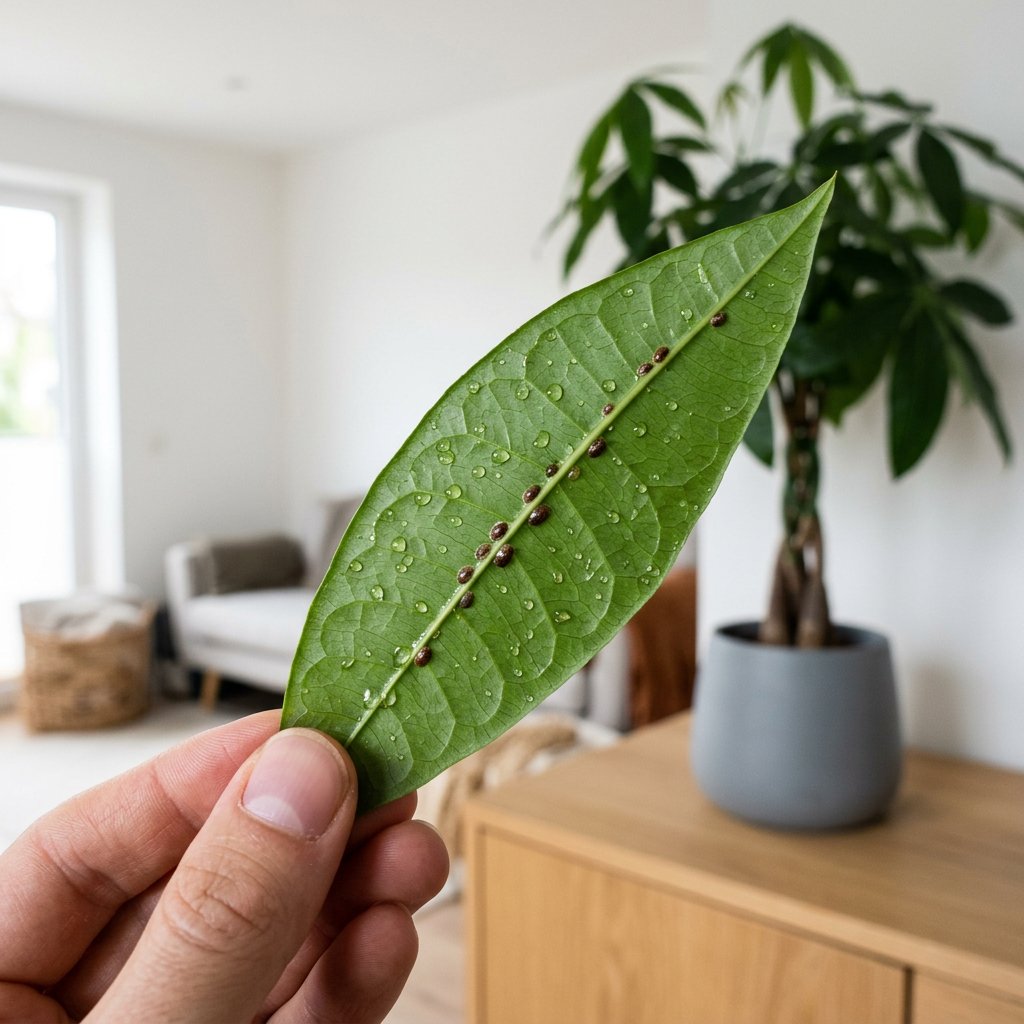
Scale insects are incredibly sneaky. Unlike other pests that scurry around your plant, adult scale bugs lock themselves in place under a protective, waxy shell. Because they don't move, they are often mistaken for a plant disease rather than a bug. Here are the symptoms to look out for:
- Weird Bumps: You will spot small, raised, oval-shaped bumps along the stems, joints, or the main veins of the leaves. They are usually brown, tan, or white, and look like little scabs.
- Sticky Residue: Scale insects feed by piercing the plant and sucking out its sap. As they feed, they excrete a sticky, clear substance called honeydew. If your plant’s leaves feel tacky or the floor beneath it is suddenly sticky, scale is likely the culprit.
- Black Sooty Mold: Sometimes, that sticky honeydew attracts a harmless black, powdery fungus. While it looks scary, it is only growing on the bug's sugary leftovers, not infecting the plant itself.
- Yellowing Leaves: As the bugs drain the sap, your Money Tree may experience chlorosis—a botanical term simply meaning the leaves turn pale or yellow because the plant is losing chlorophyll and vital nutrients.
If you are unsure what is wrong with your plant, you can use the AI-powered plant disease scanner in the Plantiary app to get an accurate diagnosis in seconds!
The Causes: How Did Scale Find Your Plant?
You might be wondering how these stationary, armored little bugs made it into your living room. Scale can be introduced to your indoor jungle in a few common ways:
- New Plant Roommates: The most common way scale enters a home is by hitchhiking on a brand-new houseplant from a nursery or store.
- Outdoor Summer Vacations: If you moved your Money Tree to the patio to enjoy the warm summer months, scale insects might have hopped on board from the outdoor environment.
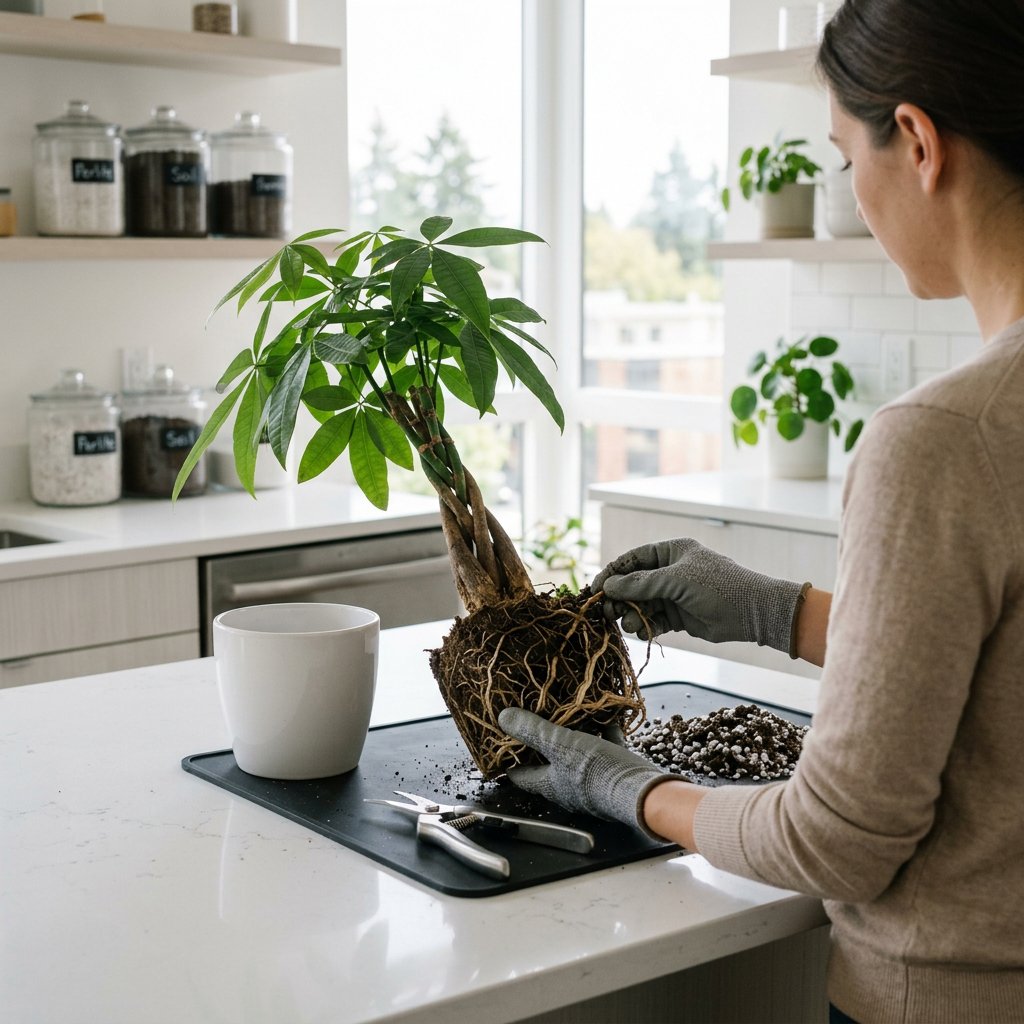
- Contaminated Tools: Using unsterilized pruning shears can accidentally transfer microscopic scale eggs from one plant to another.
- Plant Stress: Plants that are already stressed from overwatering, poor drainage, or inadequate light have weakened immune systems, making them highly vulnerable to pest infestations.
The Solutions: Step-by-Step Treatment for Scale
Because scale insects wear a waterproof, waxy "armor," traditional bug sprays often just bounce right off them. To save your Money Tree, you need a targeted, hands-on approach. Follow these scientifically proven and safe steps:
- Step 1: Isolate Your Plant. Immediately move your Money Tree to a separate room, away from your other houseplants. This prevents the "crawlers" (the microscopic, mobile baby scale insects) from spreading to your healthy plants.
- Step 2: Prune Heavily Infested Areas. If there is a particular leaf or small branch that is completely encrusted in scale, use sterile scissors to simply cut it off and discard it. This instantly and safely reduces the pest population.
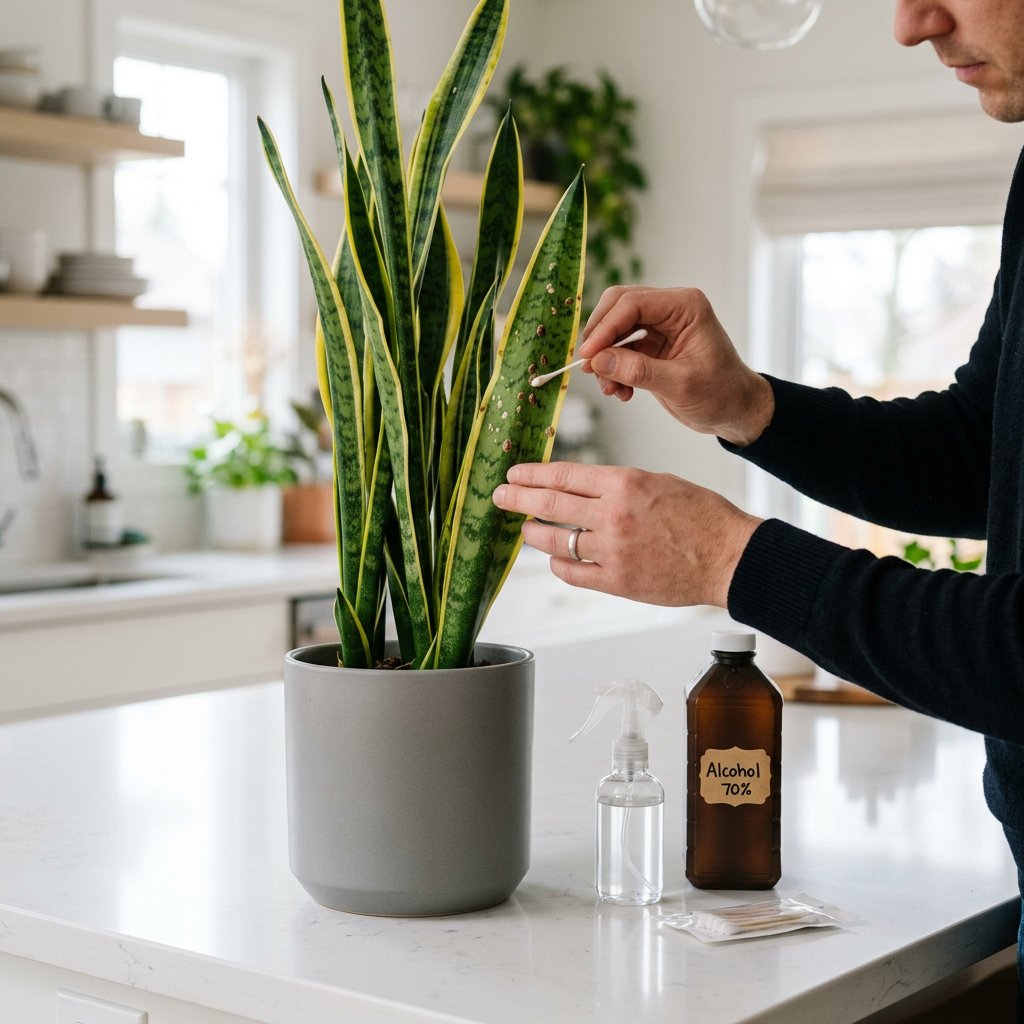
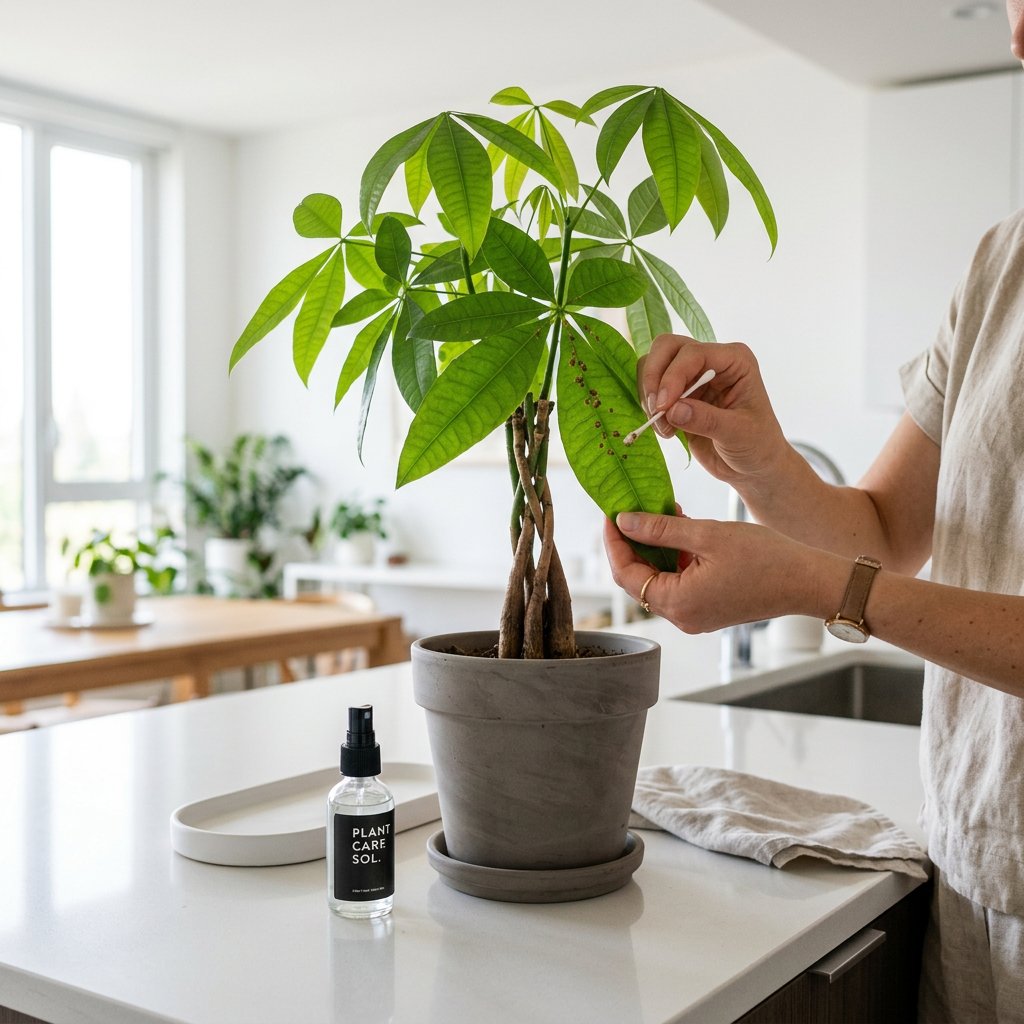
- Step 3: Manually Remove the Bugs. Dip a cotton swab (Q-tip) or a soft-bristled toothbrush in 70% isopropyl (rubbing) alcohol. Gently dab and wipe the scale bumps. The alcohol dissolves their waxy armor and kills them on contact, allowing you to easily wipe them away.
- Step 4: Treat with Neem Oil or Insecticidal Soap. Once you have manually removed the visible adults, spray the entire plant thoroughly with a horticultural oil (like neem oil) or a gentle insecticidal soap. These natural treatments coat the leaves and smother any remaining microscopic crawlers. Tip: Always apply oils in the evening, as applying them in direct sunlight can burn your plant's leaves.
- Step 5: Monitor and Repeat. Scale is stubborn, and their eggs can hide in tiny, invisible crevices. Repeat the alcohol wiping and neem oil spray every 5 to 7 days for about three to four weeks until you no longer see any new bumps.
Treat your Money Tree to some extra love while it recovers. Ensure it receives plenty of bright, indirect light and that its pot is draining well. Remember, finding pests doesn't mean you are a bad plant parent—it just means your plant needs a little nursing! Keep tracking your Money Tree's watering and treatment schedule right in your Plantiary app so you never miss a beat on its road to recovery.