Nerve plants (Fittonia) are famous for their stunning, intricately patterned leaves, but they also have a well-earned reputation for being the ultimate drama queens of the houseplant world. If you have walked over to your beloved plant only to find its once-perfect leaves sporting dry, crispy, brown edges, take a deep breath. You have not failed as a plant parent! Leaf crisping is an incredibly common issue that happens to the best of us.
These beautiful tropical plants have specific environmental preferences, and when those are slightly off, they are quick to let you know. Fortunately, with a few easy tweaks to your care routine, you can stop this crisping in its tracks. And remember, if you are ever unsure about a new symptom, you can use the AI-powered plant disease scanner in the Plantiary app to get a fast, accurate diagnosis in seconds.
Let's dive into exactly what is going on with your Nerve Plant and how to fix it.
The Problem: Spotting the Symptoms
Before we can fix the issue, we need to understand the symptoms. You might notice:
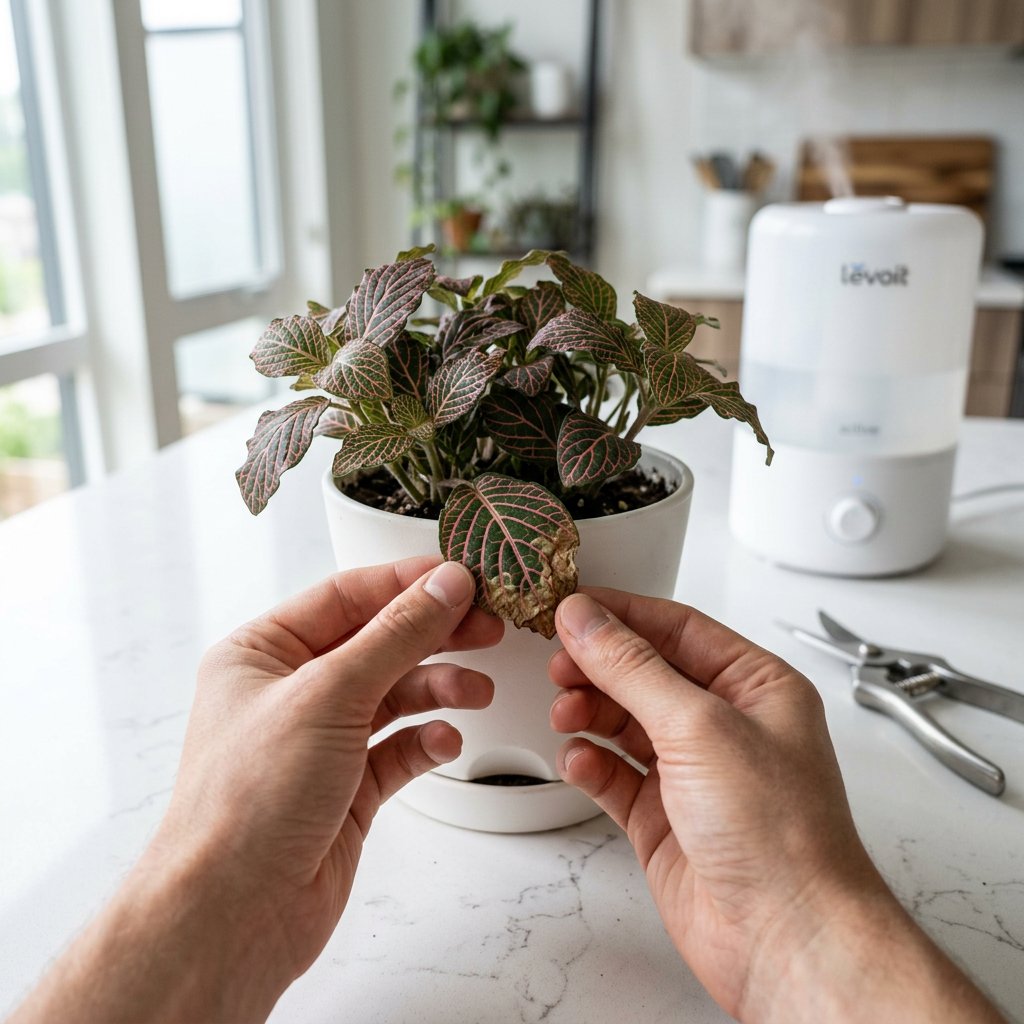
- The very edges or tips of the leaves turning a papery brown.
- Leaves curling inward slightly as they dry out.
- A general dullness to the vibrant pink, white, or red veins.
Botanically, this browning is known as necrosis, which simply means localized tissue death. Once the leaf tissue dries out and turns brown, it cannot turn green again. However, by identifying the root cause, you can protect all the new, healthy growth from suffering the same fate.
The Causes: Why is Your Fittonia Drying Out?
Nerve plants are native to the floors of South American rainforests. When we bring them into our modern, climate-controlled homes, they often miss their natural habitat. Crispy edges usually boil down to one (or a combination) of these four factors:
- Low Humidity: Central heating and air conditioning strip moisture from the air. When the air is too dry, the plant loses water through its leaves faster than its roots can absorb it.
- Inconsistent Watering: Nerve plants despise completely drying out. If the soil becomes bone dry, the delicate root system cannot transport hydration to the furthest edges of the leaves.
- Chemicals in Tap Water: Fittonia can be sensitive to fluoride, chlorine, and heavy minerals found in city tap water. These minerals build up in the soil and burn the edges of the leaves.
- Direct Sunlight: In the wild, these plants live under the dense canopy of taller trees. Direct, harsh sunlight can scorch their delicate foliage, leading to rapid crispy edges.
The Solutions: How to Stop and Prevent Crispy Edges
Ready to banish the brown edges for good? Follow these step-by-step solutions to create the perfect environment for your Nerve Plant.
Step 1: Master Your Watering Routine Never let your Fittonia’s soil dry out completely. Check the moisture level every few days by sticking your finger about an inch into the soil. If the top inch feels slightly dry to the touch, it is time to water. Ensure your pot has drainage holes so excess water can escape, preventing soggy roots.
Step 2: Boost the Ambient Humidity Since your home is likely drier than a rainforest, you need to artificially raise the humidity around the plant. You can do this by placing a small humidifier nearby or setting the plant pot on a pebble tray (a shallow dish filled with pebbles and a little water). As the water evaporates, it creates a humid microclimate right around the leaves.
Step 3: Filter Your Light Move your plant away from harsh, direct sun rays. Your Nerve Plant thrives in bright, indirect light. Think of the dappled light you might see through a sheer curtain. If it is sitting right on a south-facing windowsill, pull it back a few feet to protect the foliage from sunburn.
Step 4: Switch Your Water Source If you suspect your tap water is the culprit, try switching your water source. Let your tap water sit out overnight in an open container to allow the chlorine to evaporate, or better yet, switch to distilled water or collected rainwater for your sensitive tropicals.
Step 5: Prune the Damaged Leaves As mentioned earlier, necrotic (dead) tissue will not heal. Grab a pair of clean, sharp scissors and gently trim away the crispy brown edges, or simply snip off the entirely brown leaves at the base of the stem. This instantly improves the look of your plant and redirects its energy into pushing out beautiful, healthy new growth!
Houseplant care is a constant learning journey, so do not be too hard on yourself if your plants occasionally throw a tantrum. Keep observing, keep adjusting, and log your watering schedule in the Plantiary app to help you stay on track. You've got this!