It happens to the best of us! You moved your beautiful orchid to a sunny windowsill, hoping to give it a little extra love, only to find strange, crispy patches on its leaves a few days later. Please don't panic, and definitely don't feel guilty. Orchids can be sensitive to sudden environmental changes, and sunburn is an incredibly common bump in the road for plant parents everywhere.
With a few quick adjustments, your botanical buddy can easily bounce back. If you are ever in doubt about a strange spot on your plant, remember you can use the AI-powered plant disease scanner in the Plantiary app to get a fast, accurate diagnosis in seconds.
Here is everything you need to know to identify, understand, and fix sunburn on your orchid.
The Problem: Recognizing the Symptoms
Orchids communicate through their leaves. When they have had a bit too much sun, they will quickly let you know. Sunburn usually appears on the highest leaves or those positioned directly toward the light source. Keep an eye out for these telltale signs:
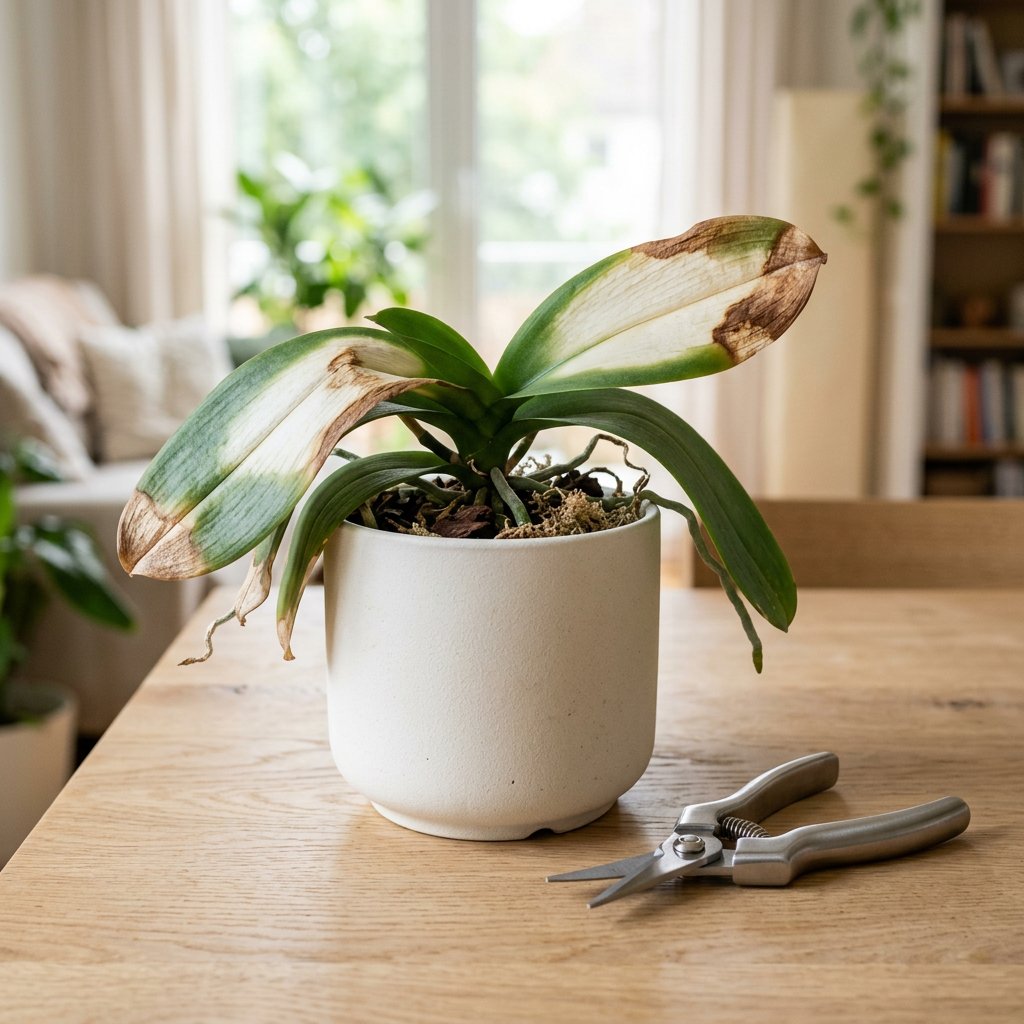
- White or bleached patches: This is often the very first sign, resulting from chlorosis (a botanical term for when a plant loses its green chlorophyll pigment due to stress).
- Yellow rings: You might notice a pale yellow halo forming around the bleached center of the burn.
- Brown, crispy spots: As the sun damage progresses, the affected plant tissue dries out completely, feeling papery to the touch.
- Blackened areas: In cases of severe, rapid sunburn, the leaf tissue can literally scorch and turn black.
The Causes: Why Did My Orchid Burn?
To understand how to fix the issue, it helps to understand how orchids live in the wild. In their natural tropical habitats, popular orchids (like the Phalaenopsis or Moth Orchid) grow clinging to the trunks of trees, deeply sheltered beneath a thick canopy of leaves. They are biologically built for dappled, indirect sunlight.
Sunburn typically happens in our homes due to:
- Direct sunlight exposure: Placing the orchid in a harsh south-facing or west-facing window without a sheer curtain to filter the rays.
- Sudden relocation: Moving a plant from a dim corner straight into a bright, sunny spot without giving it time to acclimate.
- Water droplet magnification: Watering your plant from above and leaving droplets on the leaves. Under intense sunlight, these droplets act like tiny magnifying glasses, causing focused, pinpoint burns.
The Solutions: Step-by-Step Quick Fixes
While you cannot reverse a sunburn (the scarred, bleached tissue will not turn green again), you can absolutely stop the damage from spreading and help your orchid thrive moving forward. Follow this simple recovery plan:
Step 1: Relocate your plant immediately. Move your orchid out of the direct sun right away. Find a spot with bright, indirect light. An east-facing window that gets gentle morning sun, or a spot sitting a few feet back from a brighter window, is usually perfect.
Step 2: Leave the damaged leaf alone. It is highly tempting to chop off the ugly, scarred bits, but resist the urge! As long as the rest of the leaf is green, it is still photosynthesizing and providing vital energy to the plant. Only cut the leaf off (using sterilized scissors) if it turns completely black, mushy, or begins to decay.
Step 3: Adjust hydration. Sun-stressed plants lose moisture rapidly. Feel your orchid's potting medium (usually bark or sphagnum moss). If it feels completely dry and the roots look silvery-gray, give your plant a thorough, gentle watering. Be careful to only water the roots and keep the leaves dry.
Step 4: Monitor for secondary infections. Sunburned, dead tissue is an opportunistic entry point for fungal or bacterial pathogens. Keep a close eye on the burned spot. If you notice a yellow halo spreading rapidly, or if the spot gets slimy and mushy, it may have developed an infection. Tip: You can set up a custom care schedule in the Plantiary app to remind yourself to check on your orchid's recovery every few days!
Moving Forward with Confidence
Plant care is a constant learning journey, and a little sunburn is just a minor hiccup along the way. Your orchid is incredibly resilient and will eventually grow beautiful, healthy new leaves to replace the damaged ones. Keep up the great work, provide that gentle indirect light, and trust the process!
If you want to take the guesswork out of finding the perfect lighting for your indoor jungle, use the light meter feature in the Plantiary app to ensure your orchids are always resting in their happy place.