There is nothing quite like the joy of snipping fresh basil, mint, or cilantro from your indoor herb garden to elevate a home-cooked meal. But if you’ve recently gone to harvest your herbs only to find tiny, pear-shaped bugs clustered heavily on the stems, take a deep breath. You are experiencing an aphid infestation, and it is a completely normal rite of passage for every plant parent!
Please do not feel discouraged or guilty. Indoor herbs are particularly tender and sweet, making them a favorite snack for these common pests. If you are ever unsure what is wrong with your plant or what type of bug has moved in, you can use the AI-powered plant disease scanner in the Plantiary app to get a diagnosis in seconds.
Here is exactly how to identify, understand, and safely eliminate aphids from your indoor edibles.
The Problem: Recognizing the Symptoms
Aphids are tiny, soft-bodied insects that are usually green, though they can also be black, brown, or pink. They love to cluster at the very tips of your plants where the newest, softest growth emerges. If you haven't spotted the bugs themselves yet, your plant will usually show you something is wrong through these symptoms:
- Curling or yellowing leaves: Aphids pierce the delicate plant tissue and suck out the nutrient-rich sap. This causes chlorosis (a lack of chlorophyll that makes leaves turn pale or yellow) and leads to stunted, deformed growth.
- Sticky residue: You might notice a shiny, sticky substance on the leaves or on the windowsill beneath your plant. This is called honeydew—a sugary liquid naturally excreted by aphids after they feed.
- Sooty mold: If honeydew is left sitting on the leaves, it can attract a harmless but unsightly black, powdery fungus known as sooty mold, which blocks sunlight from reaching the leaves.
The Causes: Where Did These Aphids Come From?
It can feel incredibly frustrating when indoor plants suddenly get pests. Since they are inside, how does it even happen?
- Hitchhikers from the nursery: The most common cause is bringing a beautiful new plant home that already had a few microscopic aphid eggs hidden deep in its foliage.
- Open windows and doors: Aphids are incredibly small and light. A gentle breeze through an open window or screen is all it takes to blow them right onto your indoor garden.
- A lack of natural predators: Outdoors, helpful bugs like ladybugs and lacewings act as natural pest control, keeping aphid populations low. Inside the safety of your home, aphids can multiply rapidly without any natural enemies to stop them.
The Solutions: Step-by-Step Aphid Treatment for Edible Herbs
Because we are dealing with culinary herbs that you plan to eat, we must skip harsh chemical pesticides. Instead, we will rely on food-safe, scientifically proven methods to clear up your plants.
Step 1: Isolate the affected plants. As soon as you spot aphids, gently move the infested herb to a separate room, away from your other houseplants. Aphids can spread easily, so a quick quarantine is your best first line of defense.
Step 2: Give them a water bath. Bring your potted herb to the kitchen sink or your shower. Using a gentle but firm spray of room-temperature water, physically wash the aphids off the stems and leaves. This mechanical removal is highly effective for instantly knocking down the pest population without using any products at all.
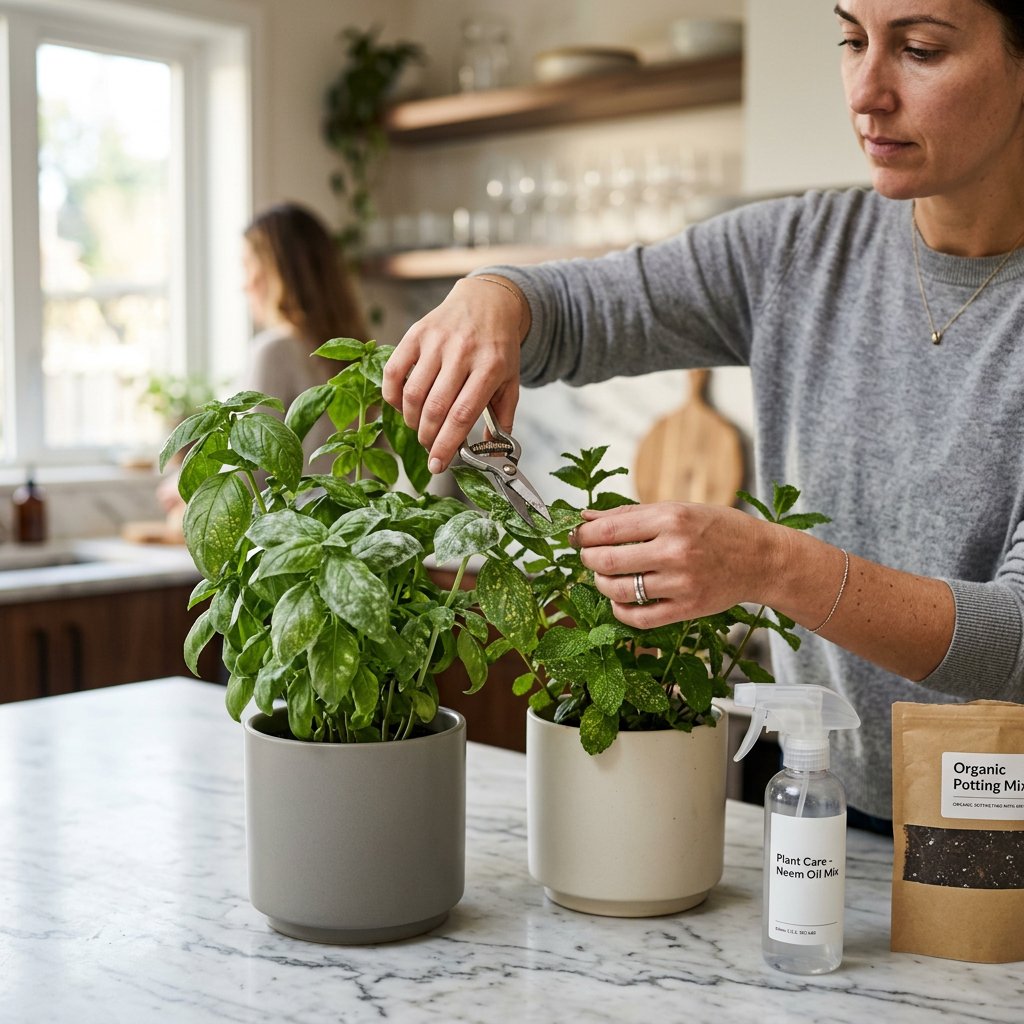
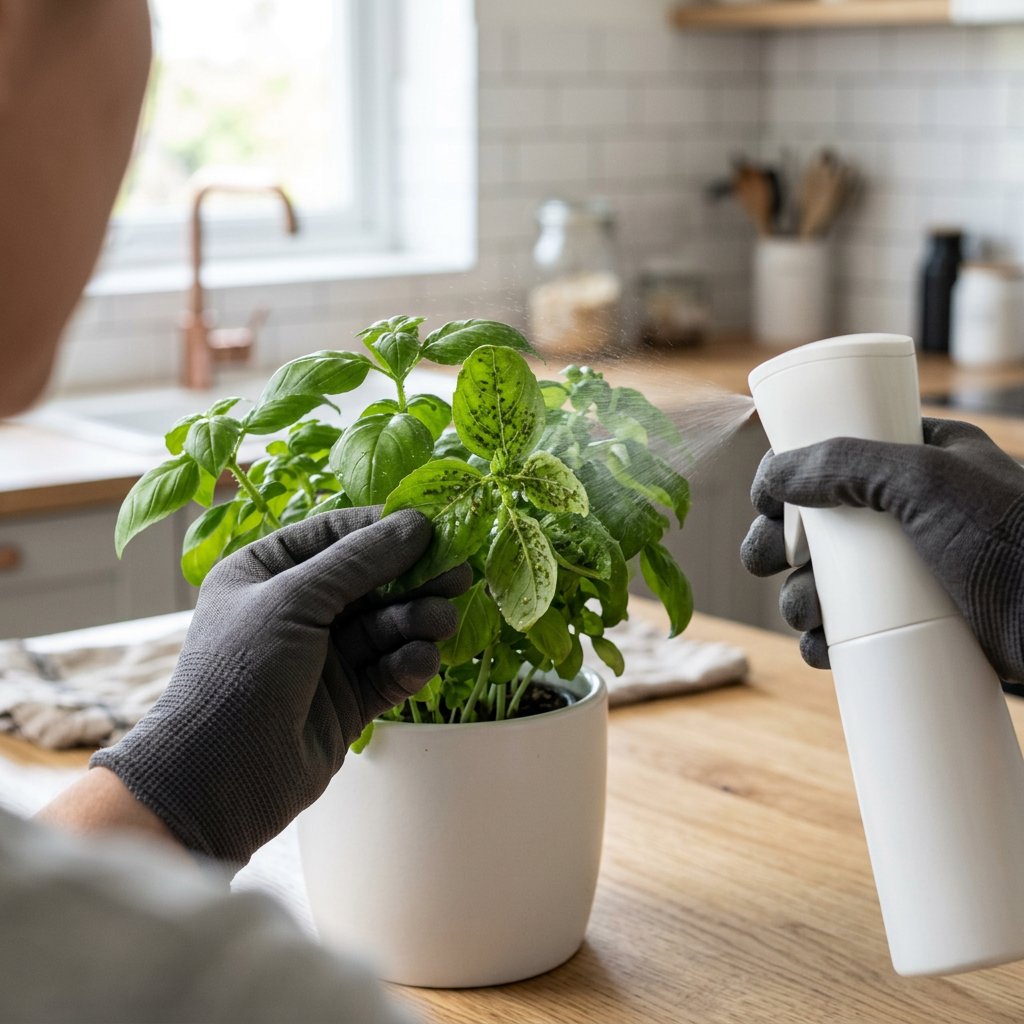
Step 3: Apply a natural insecticidal soap or Neem oil. For the stubborn bugs that hold on, treat the plant with a commercially prepared insecticidal soap or cold-pressed neem oil spray. Neem oil is a natural, plant-based extract that disrupts the feeding and life cycle of pests. Spray the foliage thoroughly, paying special attention to the undersides of the leaves where aphids love to hide. Safety Tip: Even when using natural, organic treatments, always wash your herbs thoroughly with plain running water before cooking or eating them!
Step 4: Prune away heavy damage. If a particular stem is completely covered in pests or the leaves are severely yellowed and curled, simply snip it off with clean scissors and discard it in the trash. Herbs are incredibly resilient and respond beautifully to pruning. Cutting back the damage will actually encourage a burst of healthy new growth.
Keeping Your Herb Garden Pest-Free
The secret to a thriving indoor garden is regular observation. Make a habit of glancing under the leaves of your herbs every time you water them. To make this effortless, you can use the care reminder feature in the Plantiary app to schedule weekly "pest checks" alongside your regular watering and fertilizing routines.
Remember, encountering pests is just a stepping stone on your journey to becoming a seasoned plant parent. With a little patience and a gentle wash, your indoor herb garden will bounce back, providing you with fresh, delicious harvests in no time!