Imagine walking up to your indoor basil or mint plant, ready to pluck a few fresh leaves for your dinner, only to find a strange white powder or tiny, delicate webs covering the foliage. It is incredibly frustrating, but take a deep, calming breath! Finding fungal issues or pests on your indoor garden doesn't mean you are a bad plant parent. In fact, it happens to almost everyone who grows plants indoors.
Indoor environments can sometimes create the perfect storm for opportunistic invaders like powdery mildew and spider mites to thrive. Because we plan to eat these plants, treating them requires a gentle, food-safe approach. Let's break down exactly what is happening to your indoor herbs and how to safely nurse them back to health.
The Problem: Spotting Mildew and Mites
Before you can treat your plant, you need to know exactly what is attacking it. Powdery mildew and spider mites are two very different issues with distinct symptoms. If you are ever unsure what is wrong with your plant, you can use the AI-powered plant disease scanner in the Plantiary app to get an accurate diagnosis in seconds!
Symptoms of Powdery Mildew
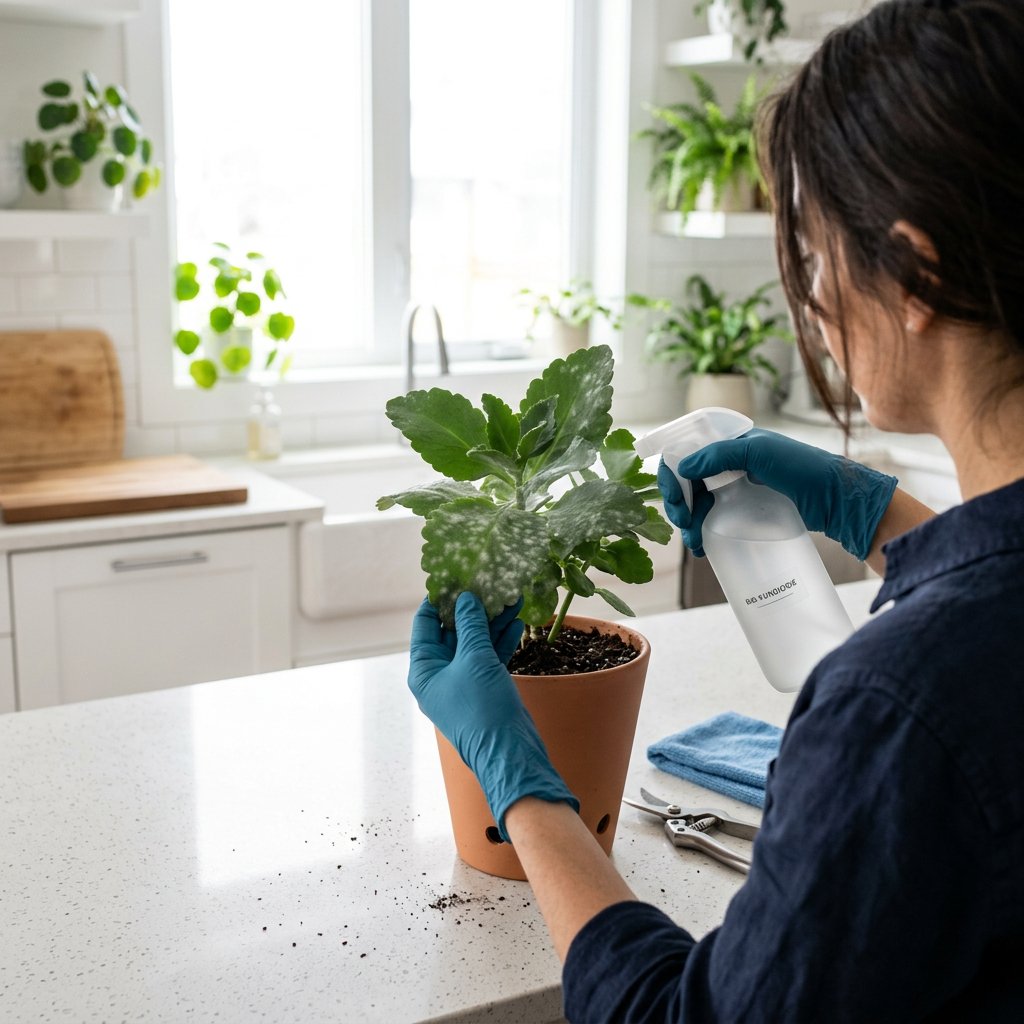
Powdery mildew is a fungal disease that is very common on indoor herbs like rosemary, sage, and peppermint.
- The Look: It appears as fuzzy, white or light gray circular patches on the tops of the leaves. It often looks exactly like someone dusted your plant with flour.
- The Damage: As the fungus spreads, the leaves may begin to curl, turn yellow, and eventually drop off.
Symptoms of Spider Mites
Spider mites are not actually insects; they are tiny arachnids (relatives of spiders) that suck the sap out of your plant's foliage.
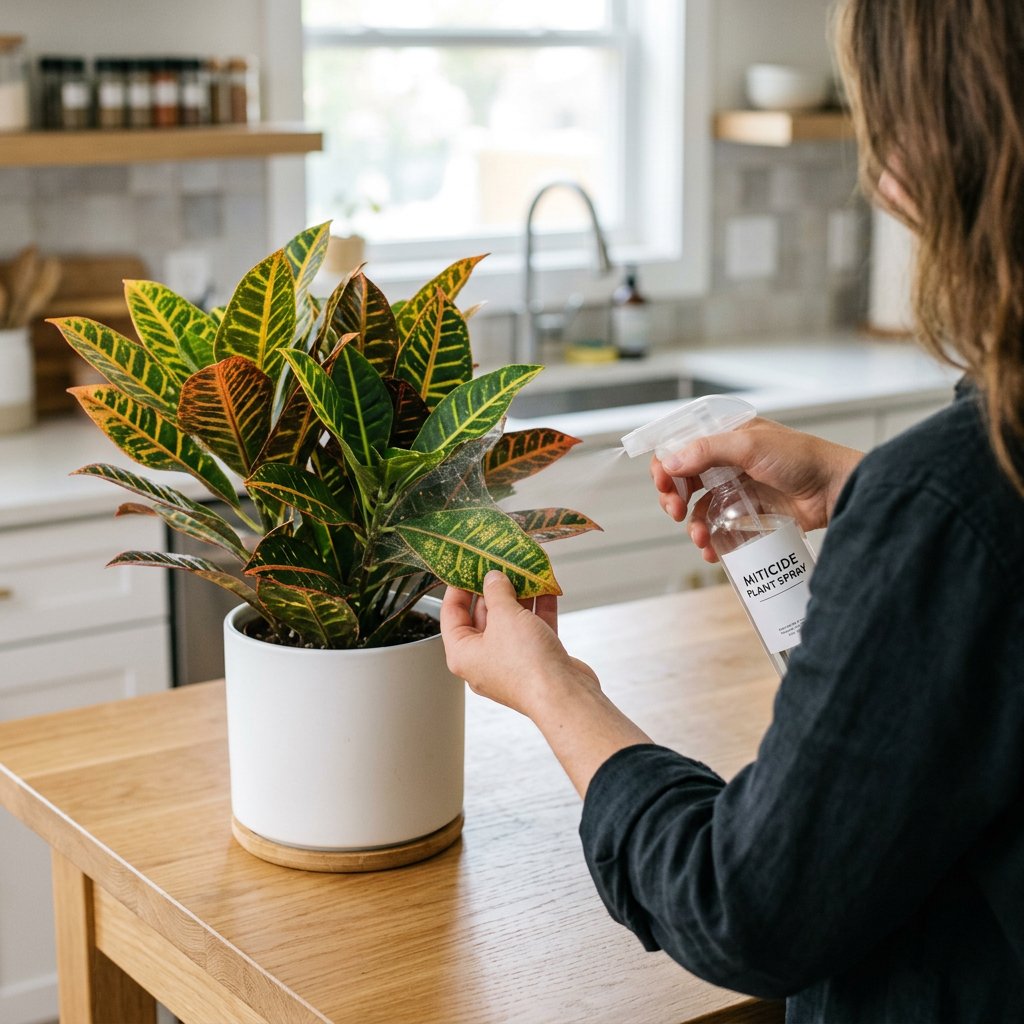
- The Look: You might notice fine, silky webbing stretched between the stems or under the leaves.
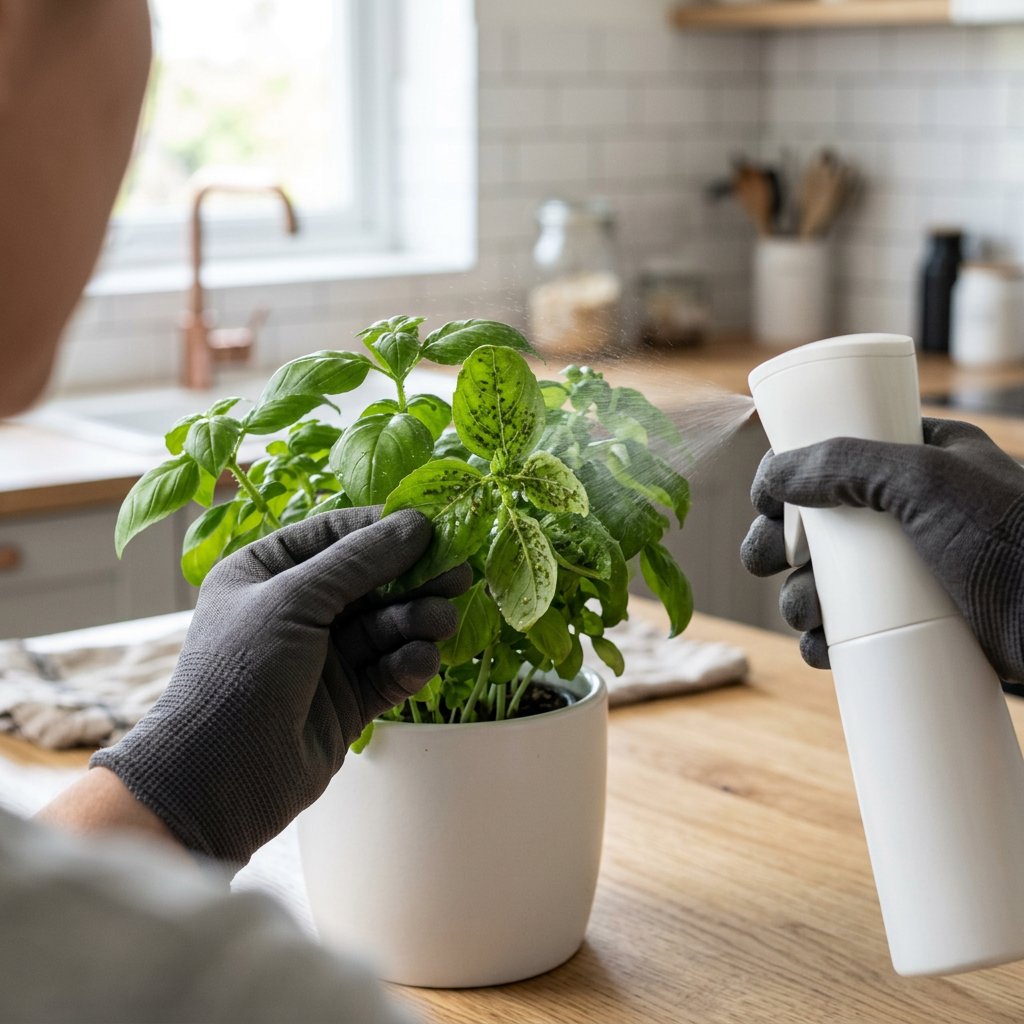
- The Damage: Look closely for stippling—which is a pattern of tiny, pin-prick yellow or white dots on the leaves where the mites have pierced the plant cells to feed. Over time, the leaves will look dull, dehydrated, and bronze in color.
The Causes: Why Are They Here?
Interestingly, these two invaders prefer completely opposite living conditions, which means your home's unique microclimate is likely favoring one over the other.
- What causes Powdery Mildew? This fungus thrives in stagnant, poor-circulating air combined with high humidity and moderate temperatures. If your herbs are crowded together tightly on a windowsill without any breeze, mildew spores can easily settle and multiply.
- What causes Spider Mites? Mites are drawn to hot, dry air. Winter heating systems or indoor air conditioning often strip moisture from the air, creating the exact low-humidity, dry-soil environment that allows spider mites to breed rapidly.
The Solutions: Step-by-Step Safe Treatments
Because you are growing culinary herbs, we want to completely avoid harsh, synthetic chemicals. Here is a highly effective, food-safe routine to eradicate both mildew and mites.
Step 1: Isolate the affected plant. As soon as you spot webs or white powder, move the sick plant away from your other healthy houseplants to prevent the issue from spreading.
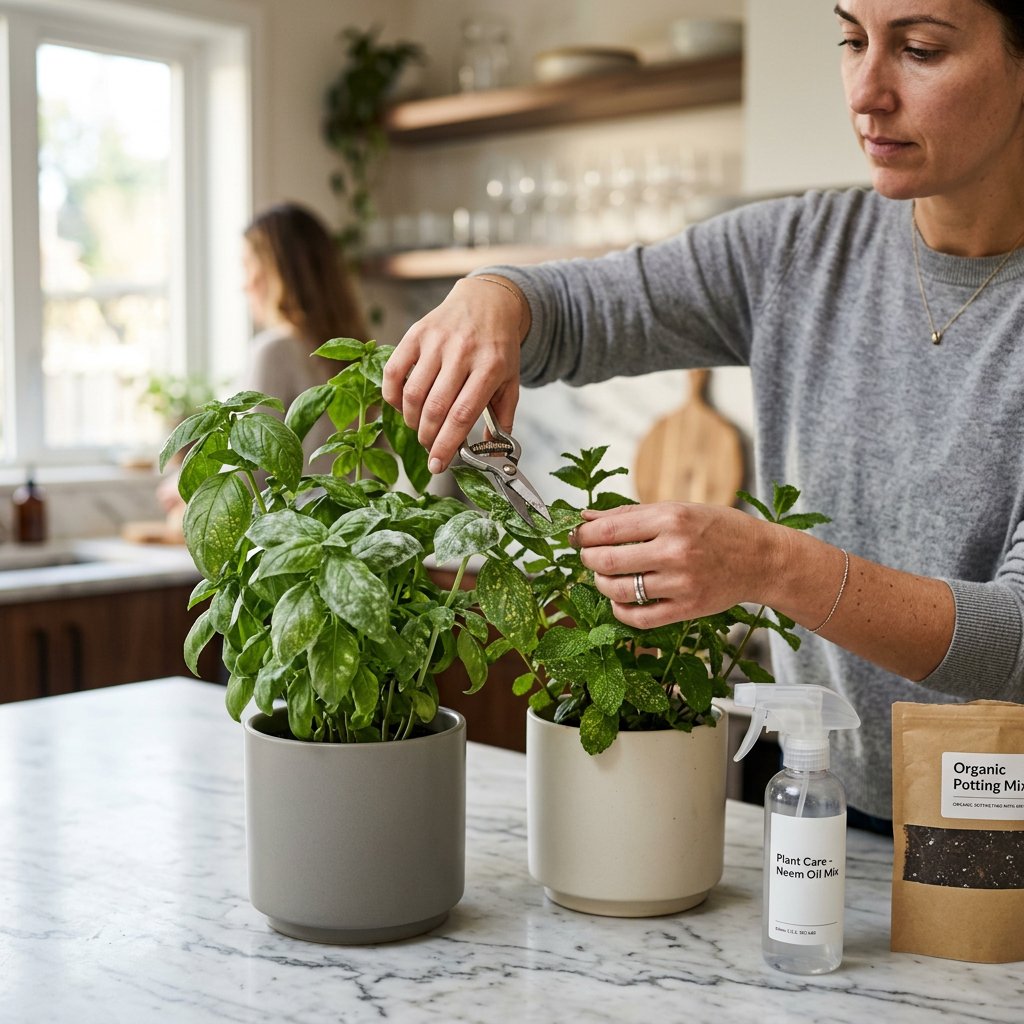
Step 2: Prune the worst parts. Using clean, sharp scissors, carefully snip off the heavily infested or damaged leaves and stems. Do not put these clippings in your compost; throw them directly into the trash to eliminate the spores or bugs.
Step 3: Wash the foliage (For Spider Mites). Spider mites have a very weak grip. Take your herb plant to the sink or shower and gently spray the foliage with lukewarm water. A good blast of water will physically knock the majority of the mites and their webs right down the drain.
Step 4: Apply a natural treatment.
- For Powdery Mildew: Create a gentle, safe fungicidal spray. Mix 1 teaspoon of baking soda and a few drops of mild, natural liquid dish soap into one quart of water. Lightly spray the affected leaves. The baking soda alters the pH of the leaf surface, making it impossible for the fungus to survive.
- For Spider Mites: Spray the leaves (especially the undersides) with neem oil. Neem oil is a natural, plant-based horticultural oil pressed from the seeds of the neem tree. It is completely safe for edible plants and works by naturally disrupting the pests' feeding and breeding cycles.
Step 5: Adjust your environment. To stop these issues from returning, change the microclimate. For mildew, give your herbs more breathing room and consider pointing a small fan nearby to keep the air gently circulating. For spider mites, increase the ambient humidity by grouping plants together (once healthy!), using a pebble tray with water, or running a small humidifier.
Your indoor herbs are remarkably resilient. By acting quickly, using safe treatments, and relying on your Plantiary app for guidance, your plants will be pushing out fresh, healthy, and delicious new growth in no time!