You brought home a stunning Anthurium bursting with glossy red, pink, or white blooms, but lately, you have noticed a mysterious transformation. Those vibrant pops of color are slowly fading, turning into a pale or solid green. If you are staring at your plant and wondering what went wrong, take a deep breath! Plant parenthood is full of surprises, and an Anthurium turning green is a very common experience. It certainly does not mean you are failing as a plant parent.
Whether it is a natural part of the plant’s lifecycle or a gentle plea for a different spot in your living room, figuring out the root cause is easier than you might think. Let’s dive into why your Anthurium is changing colors and exactly how you can help it thrive.
The Problem: Understanding Your Anthurium's "Flowers"
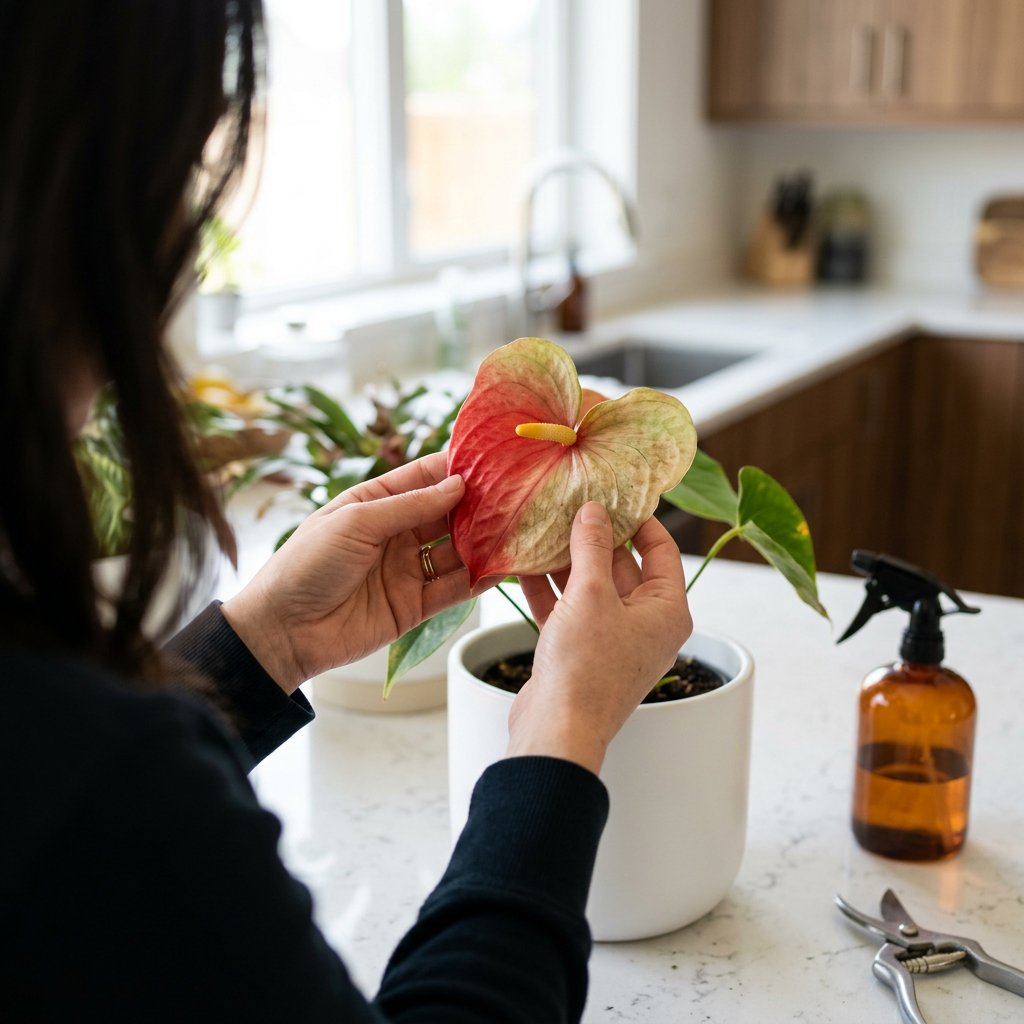
Before we look at the causes, it is incredibly helpful to understand plant anatomy. The large, waxy, colorful heart-shaped part of your Anthurium is not actually a flower petal. Botanically speaking, it is a spathe—a modified leaf designed to protect the true flowers. The actual flowers are the tiny, bumpy textures located on the spadix, which is the fleshy spike protruding from the center of the spathe.
Because the colorful spathe is technically a leaf, it naturally contains chlorophyll, the green pigment plants use to absorb light and create food (photosynthesis). When the conditions change, the plant simply unmasks this green pigment.
The Causes: Why the Color Shift Happens
If your plant’s spathes are losing their brilliant hues, it usually comes down to one of the following reasons:
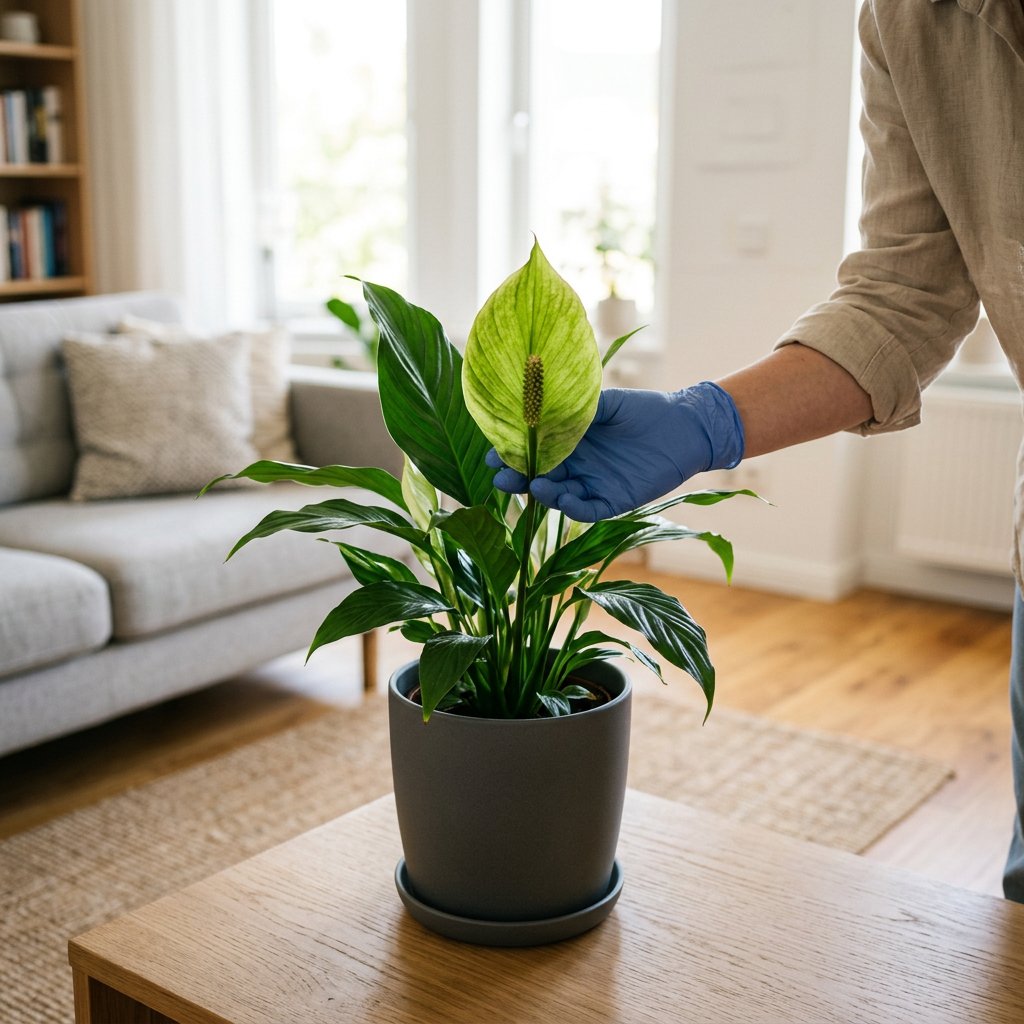
- The Natural Aging Process: Just like us, plant blooms get older. As an Anthurium spathe ages, its vibrant color begins to fade to green. Once the true flowers on the spadix have finished their blooming cycle, the plant repurposes the spathe. By turning it green, the plant fills the spathe with chlorophyll so it can act like a regular leaf, absorbing sunlight to give the plant extra energy.
- Improper Lighting: Lighting is the most common environmental trigger. If your Anthurium is placed in a very low-light area, it feels starved for energy. To survive, it produces more green chlorophyll in its spathes to maximize its ability to photosynthesize. Conversely, too much harsh, direct sunlight can bleach the colors out of the spathe, leaving a pale, greenish-white hue.
- The Greenhouse Transition: When you buy an Anthurium, it has usually been raised in a high-tech commercial greenhouse with perfect humidity, controlled lighting, and a strict fertilizer regimen. Transitioning to an average home environment can cause minor stress, leading newer blooms to emerge green rather than vividly colored.
If you are ever unsure whether your plant is just aging naturally or dealing with an underlying issue, you can use the AI-powered plant disease scanner in the Plantiary app to get an accurate diagnosis in seconds!
The Solutions: How to Bring the Color Back
Now that we know why your Anthurium is going green, here are the best actionable steps to encourage those bright, beautiful colors to return.
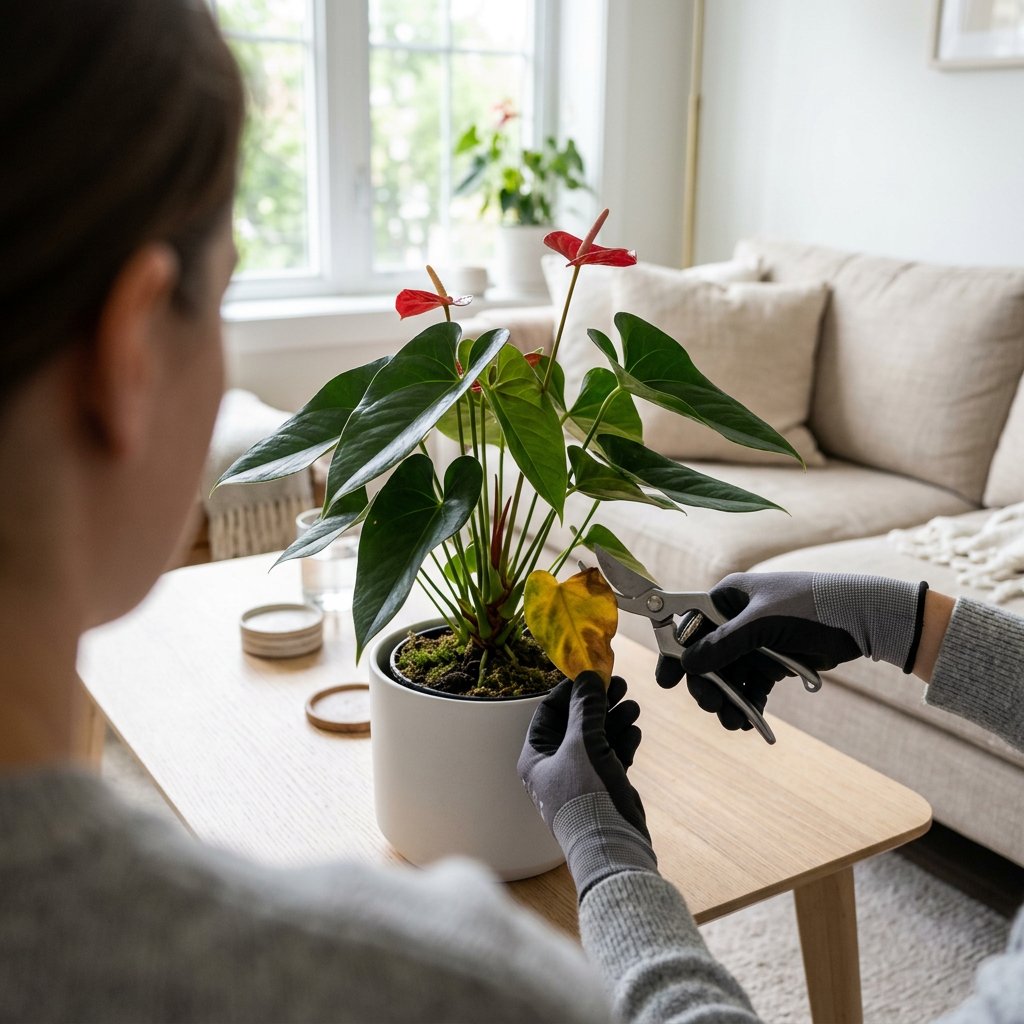
Step 1: Prune away the old, aging blooms If the greening is only happening on older spathes while the rest of the plant looks lush and healthy, your plant is just aging naturally! Simply use a pair of clean, sterilized pruning shears to snip off the old green blooms at the base of the stem. This redirects the plant's energy away from maintaining the old spathe and pushes it toward pushing out fresh, colorful new growth.
Step 2: Optimize your plant's lighting Anthuriums are tropical understory plants, meaning they naturally grow beneath the canopy of larger trees. They crave bright, indirect light. Move your plant near an east-facing or north-facing window where it can receive plenty of gentle daylight without the harsh, burning rays of the afternoon sun. If your only option is a bright south-facing window, use a sheer curtain to filter the light. Tip: You can use the light meter feature in the Plantiary app to find the absolute perfect spot in your home!
Step 3: Establish a proper feeding routine Sometimes, new blooms emerge green because the plant lacks the nutrients required to produce vibrant pigments. Feed your Anthurium with a balanced, water-soluble houseplant fertilizer diluted to half-strength once a month during the active growing season (spring and summer). Look for a fertilizer with a slightly higher phosphorus number, as phosphorus is the key nutrient that encourages blooming.
Step 4: Keep temperatures consistent Anthuriums hate cold drafts and sudden temperature drops. Keep your plant away from air conditioning vents, drafty windows, and heaters. Aim for a stable room temperature between 65°F to 85°F (18°C to 29°C) to keep it stress-free and eager to bloom.
Remember, plants operate on their own timeline. Once you adjust the light and trim away the old blooms, give your Anthurium a few weeks to bounce back. With a little patience, consistent care, and the helpful reminders from your Plantiary app, your Anthurium will reward you with those spectacular, glossy colors you fell in love with!