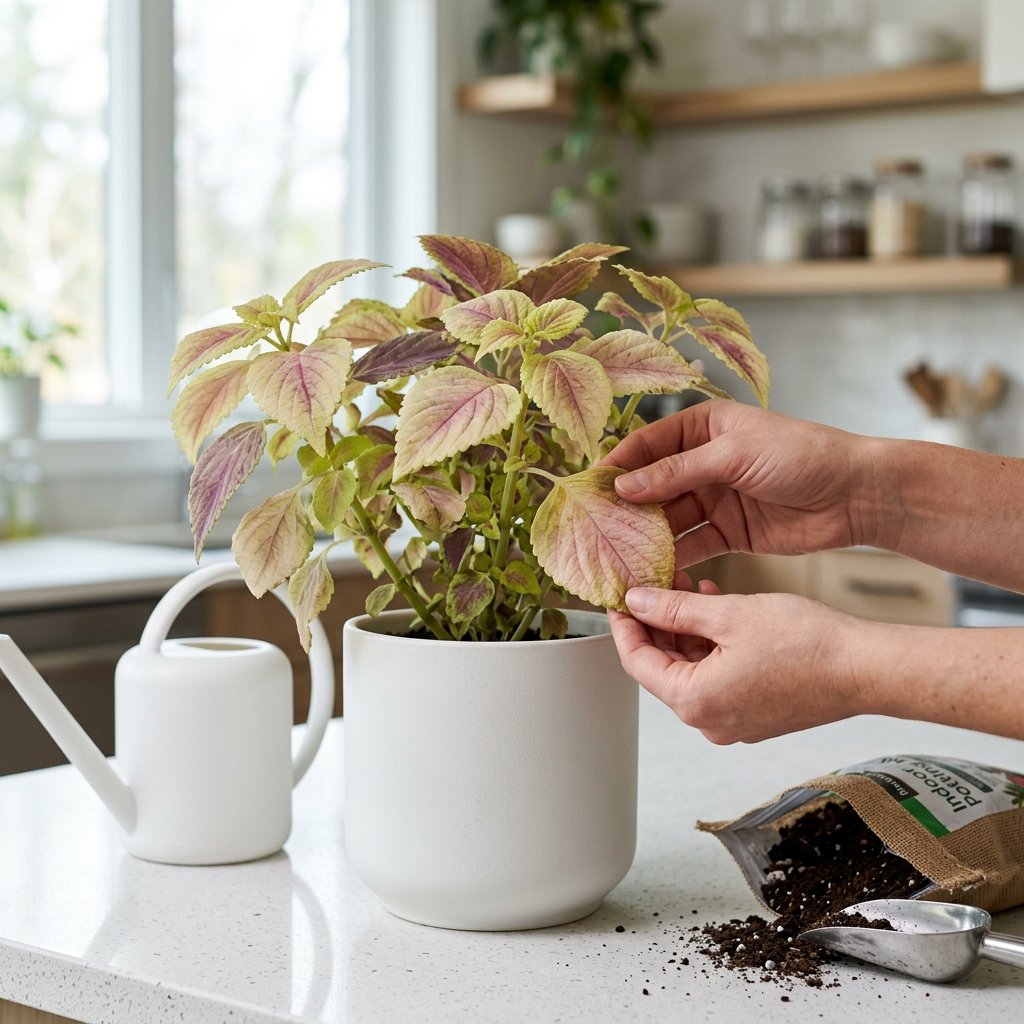
Coleus plants are prized by indoor gardeners and landscape enthusiasts alike for their kaleidoscope of foliage, boasting striking neon pinks, deep velvety purples, and fiery oranges. But what happens when those vibrant, show-stopping leaves suddenly start looking dull, washed out, or unexpectedly revert to a plain green? If your coleus is losing its trademark color, take a deep breath! Fading foliage is a very common hurdle for plant parents, and it certainly doesn't mean you've failed. Plants are highly responsive to their environments, and with a few simple tweaks, you can easily coax those brilliant hues right back.
The Problem: Recognizing the Symptoms
Before we can fix the issue, it is helpful to identify exactly how your plant is losing its color. Keep an eye out for these common visual cues:
- Reversion to green: The bright pinks, reds, or yellows are disappearing, and the new leaves are growing in completely green.
- Washed-out or bleached foliage: The leaves look pale, dusty, or faded, almost as if they have been left out in the sun too long.
- Loss of contrast: The crisp, defined patterns and colorful edges on variegated (multi-colored) leaves are blurring together or fading away completely.
The Causes: Why is Your Coleus Fading?
To understand why your coleus is losing its vibrancy, we need to look at how plants create color. The dazzling reds and purples in coleus come from pigments called anthocyanins (a type of pigment that often acts like a natural sunscreen for the plant). Meanwhile, the green color comes from chlorophyll (the pigment responsible for photosynthesis, or making food). When the environment shifts, the balance of these pigments shifts, too.
Here are the primary culprits behind a fading coleus:
- Improper Lighting: This is the number one cause of color loss. If a coleus doesn't get enough light, it will produce more green chlorophyll to maximize its ability to photosynthesize and survive, masking the bright colors. Conversely, if a shade-loving coleus variety gets blasted with too much direct sunlight, its leaves can become bleached or scorched.
- Energy Shifted to Blooming: Coleus plants produce small spikes of flowers. While pretty, blooming requires a massive amount of energy. When the plant focuses on reproducing and creating flowers, it often neglects its foliage, leading to smaller, duller leaves.
- Nutrient Imbalance: Feeding your plant is great, but a fertilizer too high in nitrogen encourages rapid, lush green growth at the expense of colorful pigmentation.
- Temperature Stress: Coleus are tropical plants that love warmth. If they are exposed to cold drafts or sudden temperature drops, their metabolic processes slow down, often resulting in lackluster leaves.
If you are unsure what is wrong with your plant, or if you suspect a pest issue is compounding the problem, you can use the AI-powered plant disease scanner in the Plantiary app to get a diagnosis in seconds!
The Solutions: Step-by-Step Treatment
Restoring your plant's vibrancy is all about recreating its ideal tropical environment. Follow these actionable steps to bring your coleus back to life:
Step 1: Evaluate and Adjust the Lighting Take a look at where your plant is currently sitting. If the leaves are turning solid green, it needs more light! Gradually move your coleus closer to a bright, indirect light source, like an east-facing window. If the leaves look bleached, crispy, or pale, it might be getting sunburned. Pull it a few feet back from the window or diffuse the harsh light with a sheer curtain.
Step 2: Pinch Off the Flowers As soon as you see a flower spike forming at the tip of a stem, simply pinch it off using your thumb and index finger. This is called "deadheading." Removing the blooms forces the plant to redirect its energy back into producing bold, colorful, and bushy foliage.
Step 3: Dial Back the Nitrogen If you have been fertilizing frequently, pause your feeding routine. When you resume, switch to a balanced, water-soluble fertilizer (like a 10-10-10 ratio) and dilute it to half-strength. This ensures the plant gets the nutrients it needs without triggering an overproduction of green chlorophyll.
Step 4: Keep Things Cozy Ensure your coleus is living in temperatures between 65°F and 80°F (18°C - 27°C). Move the plant away from drafty windows, air conditioning vents, or exterior doors that might be giving it an unwelcome chill.
Step 5: Be Patient with New Growth Remember that leaves that have already faded or turned green may not regain their bright colors. Instead, focus on the new growth! By optimizing the light, pinching the blooms, and adjusting your care routine, the fresh leaves emerging from the top of the stems will reward you with the brilliant, saturated colors you fell in love with.