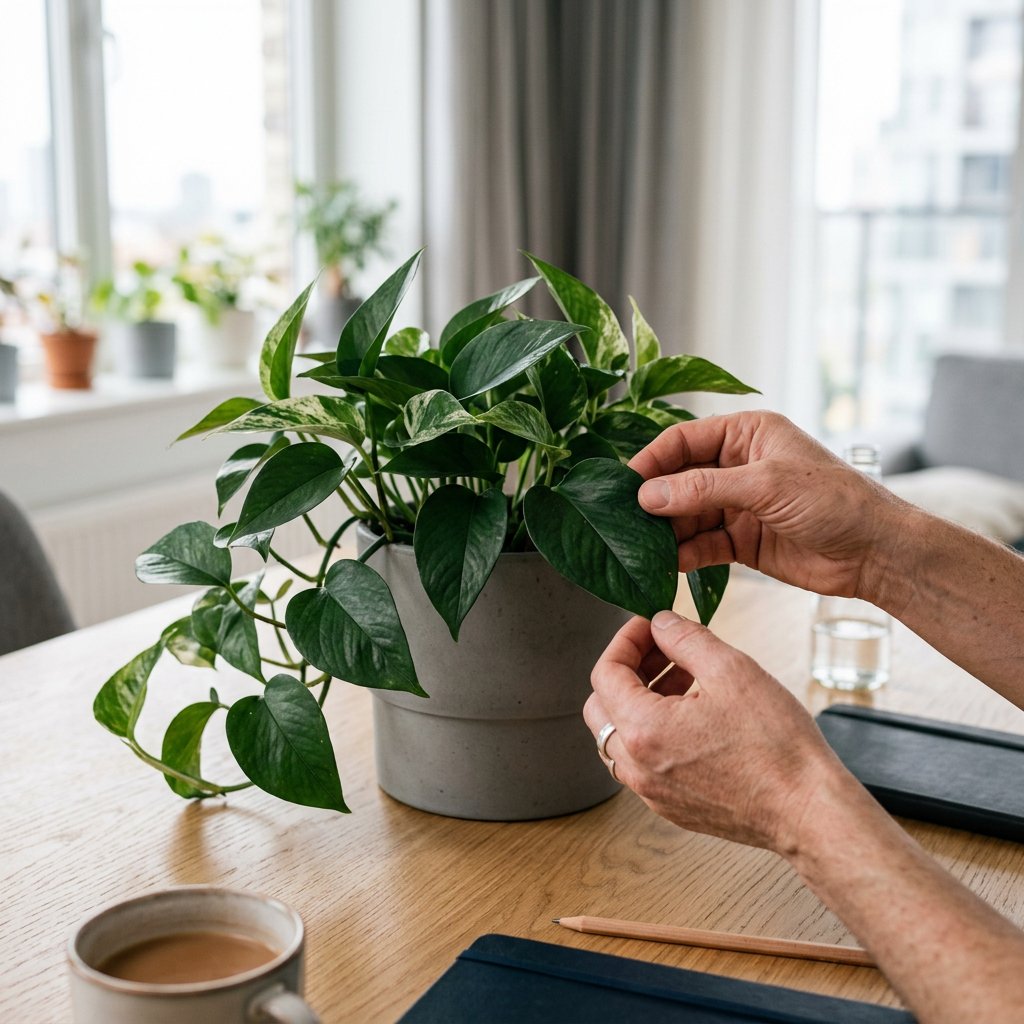
Have you ever brought home a stunning Golden, Snow Queen, or Marble Queen Pothos, only to watch those beautiful creamy white and golden streaks slowly disappear over time? Don’t panic, and please don't blame yourself! Plant parenting is a continuous learning journey, and noticing changes in your plant's appearance just means you are being highly observant.
First, let's briefly understand what is happening. Those beautiful splashes of color are called variegation, which simply means the presence of differently colored zones on a plant's leaves. When a plant starts to lose these patterns and turns solid green, it is trying to communicate something about its environment. If you are ever unsure what your plant is trying to tell you, you can use the AI-powered plant disease scanner in the Plantiary app to get a diagnosis in seconds.
Let’s dive into why your Pothos might be losing its unique colors and exactly how you can gently coax those beautiful patterns back.
The Problem: What Does Losing Variegation Look Like?
When your Pothos loses its variegation, you will notice that the new leaves unfurling are completely solid green, lacking the white, cream, or yellow marbling of the older leaves. Sometimes, even the older leaves may slowly fade into a solid green hue.
In the botanical world, this process is known as reversion—the plant is literally reverting back to its natural, solid green state. While it can be a bit disappointing to lose those stunning patterns, it is important to remember that a reverting Pothos is rarely a dying Pothos. It is simply adapting to survive!
The Causes: Why is My Pothos Turning Solid Green?
Plants are incredibly smart. They adapt their biology based on the resources available to them. Here is a look at the most common reasons your Pothos is reverting:
- Insufficient Light: This is the number one culprit. The green parts of a leaf contain chlorophyll, the pigment responsible for capturing sunlight and turning it into energy (photosynthesis). The white or yellow variegated parts have no chlorophyll and produce zero energy. If your plant isn't getting enough light, it will panic and produce more green tissue to soak up as much light as possible just to survive.
- Excessive Heat or Cold: Sudden temperature fluctuations or extreme heat can stress your Pothos. When stressed, plants often prioritize basic survival over maintaining their fancy, energy-draining variegated colors.
- Too Much Nitrogen: While fertilizing is great for growth, using a fertilizer with a very high nitrogen content encourages rapid, lush green foliage. Too much nitrogen can occasionally cause the plant to overproduce chlorophyll, masking the variegation.
The Solutions: How to Bring the Variegation Back
The good news is that you can completely manage this issue with a few simple environmental tweaks. Here is exactly how to help your Pothos regain its colorful personality:
Step 1: Upgrade Your Plant’s Lighting
Your plant needs a brighter spot! Move your Pothos to a location with bright, indirect sunlight. East-facing or west-facing windows are usually perfect. Avoid placing it in harsh, direct afternoon sun, as the delicate white parts of the leaves are highly prone to sunburn. If you don't have enough natural light in your home, consider adding a full-spectrum LED grow light.
Step 2: Prune the Solid Green Vines
Once a leaf has fully reverted to solid green, it will unfortunately never turn white or yellow again. To encourage new, variegated growth, you need to prune!
- Sanitize a pair of sharp scissors or pruning shears.
- Trace the solid green vine back to the last leaf that has good variegation.
- Snip the vine about a quarter-inch above that variegated leaf's node (the little bump on the stem where roots and leaves grow). By doing this, you are forcing the plant to push out new growth from a point where the genetics for variegation are still highly active.
Step 3: Adjust Your Feeding Routine
If you suspect over-fertilizing is the issue, pause your feeding schedule for a month or two. When you resume, use a balanced, water-soluble houseplant fertilizer diluted to half-strength. You can easily track your watering and fertilizing schedules using the care reminders in the Plantiary app to ensure you never over-feed again.
Step 4: Maintain Consistent Temperatures
Keep your Pothos in a comfortable room temperature ranging between 65°F and 85°F (18°C - 29°C). Keep it away from drafty windows, air conditioning vents, and direct heat sources like radiators.
Remember, seeing a solid green leaf on your favorite Pothos is not a failure; it is just your plant asking for a little more sunshine. By making these small, easy adjustments, you will be rewarded with gorgeous, uniquely patterned leaves in no time. Happy growing!