There is nothing quite like brushing your hand against a potted rosemary plant and taking in that fresh, piney, Mediterranean scent right in your own kitchen. But bringing this sun-loving herb indoors can sometimes feel like a tricky balancing act. If you’ve recently noticed your beautiful, aromatic plant turning brittle and brown, take a deep breath! You are definitely not alone. Indoor rosemary is notorious for drying out, and it happens to even the most seasoned plant parents.
Let's figure out what is going on so you can help your leafy companion bounce back. And remember, if you ever feel overwhelmed by your indoor garden, the Plantiary app is always right in your pocket to help you track watering schedules and set up the perfect care routine.
The Problem: Spotting a Thirsty Rosemary
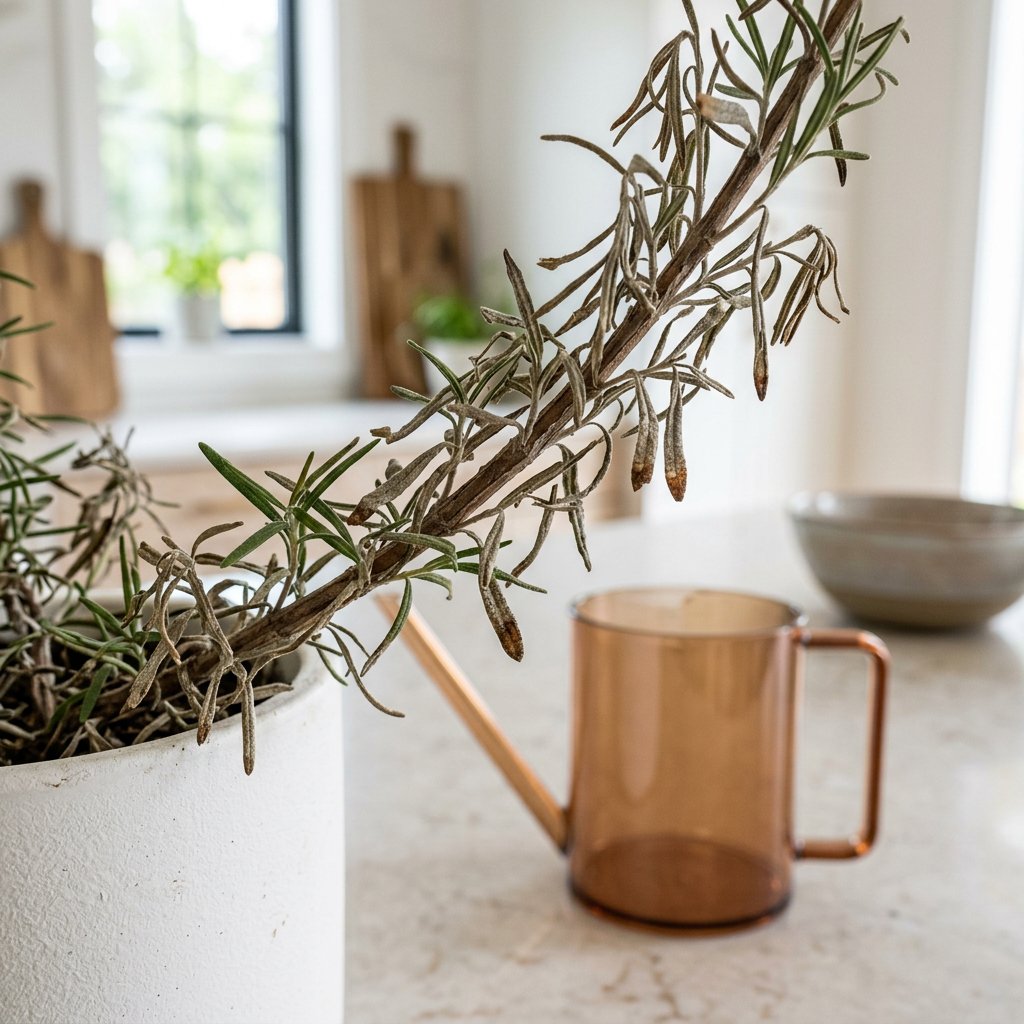
Before we dive into the "why," let’s look at the "what." When an indoor rosemary plant begins to decline, the symptoms usually look like this:
- Crispy, brittle needles that snap off easily when touched.
- Browning starting at the tips of the leaves and moving inward.
- Excessive leaf drop, where the needle-like leaves shower the counter below.
- Dull, grayish foliage instead of a vibrant, healthy green.
The Causes: Why is Your Indoor Rosemary Drying Out?
Rosemary is native to the rocky, sunny coasts of the Mediterranean. When we move them into our climate-controlled homes, they often experience a bit of culture shock. Here are the most common reasons your plant is crisping up:
1. The Watering Dilemma (Over-watering vs. Under-watering)
It sounds confusing, but giving your rosemary too much water causes the exact same crispy symptoms as giving it too little. When soil stays constantly wet, rosemary develops root rot—a condition where waterlogged roots suffocate, decay, and die. Once the roots are damaged, they can no longer absorb moisture, leaving the top of the plant completely parched.
On the flip side, if the soil is allowed to turn bone-dry for weeks, the plant simply lacks the moisture it needs to survive.
2. Insufficient Sunlight
Rosemary craves sunshine! Indoors, even a bright room might not provide the direct rays this herb needs. Without enough light, your plant cannot photosynthesize efficiently, leading to a weakened state. You might even notice etiolation—a botanical term for when a plant stretches out, growing pale and leggy as it desperately reaches for a light source.
3. Poor Air Circulation and Wrong Temperatures
Indoor air is completely stagnant compared to a coastal breeze. Rosemary relies on good airflow to keep its foliage dry and healthy. Without it, they become highly susceptible to fungal issues. Additionally, placing your herb too close to a heating vent or radiator will rapidly strip moisture from its leaves, baking it alive.
The Solutions: Step-by-Step Treatment
Don't throw in the trowel just yet! Here is exactly how to nurse your indoor rosemary back to health.
Step 1: Check the roots and soil. Carefully slide the plant out of its pot. If the roots are dark brown, mushy, and smell swampy, you are dealing with root rot. Snip away the rotted bits with sterile scissors and repot in fresh soil. If the roots are white and firm, but the soil is a dusty brick, your plant is simply under-watered.
Step 2: Upgrade your soil and drainage. Rosemary hates "wet feet" (sitting in excess water). Ensure your pot has plenty of drainage holes. Repot the plant using a well-draining soil mix; blending standard potting soil with generous handfuls of perlite, coarse sand, or pumice works beautifully.
Step 3: Master the "Soak and Dry" method. Never water your rosemary on a strict calendar schedule. Instead, wait until the top two to three inches of the soil feel completely dry to the touch. When it's time, water the plant deeply until moisture runs out the drainage holes, and then empty the saucer beneath it.
Step 4: Chase the sun. Move your rosemary to the brightest spot in your home—ideally a south-facing or west-facing window that receives at least 6 to 8 hours of direct sunlight. If your home lacks natural light, a small, inexpensive LED grow light will do wonders.
Step 5: Improve the airflow. Keep your plant away from harsh heating vents or drafty, freezing windows. To simulate a gentle outdoor breeze, occasionally run a small oscillating fan in the room. This prevents fungal issues and keeps the plant's environment fresh.
Caring for indoor plants is a learning process, so don't be hard on yourself if your rosemary takes a little time to recover. Simply snip away the completely dead, brown branches to redirect the plant's energy into pushing out fresh, green growth. If you are ever unsure what is wrong with your plant, you can use the AI-powered plant disease scanner in the Plantiary app to get an accurate diagnosis and treatment plan in seconds. Happy planting!