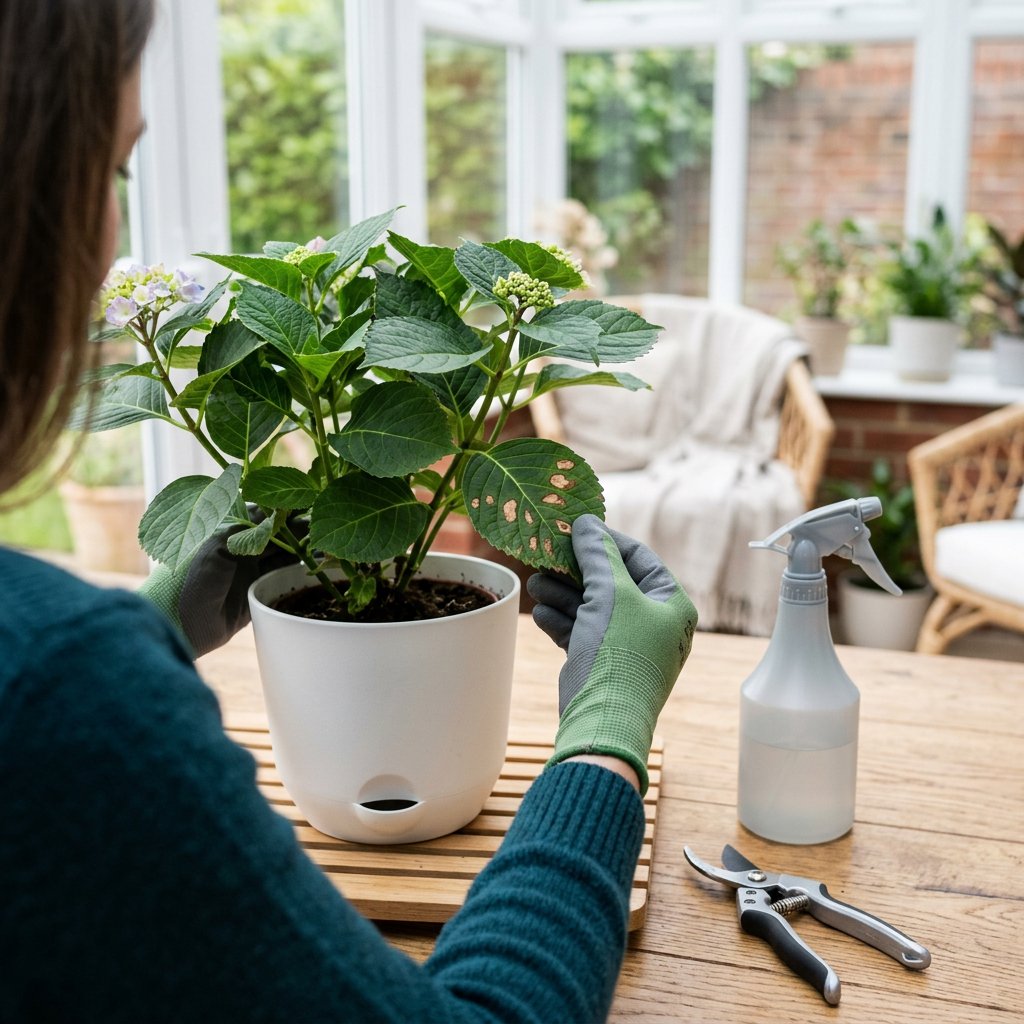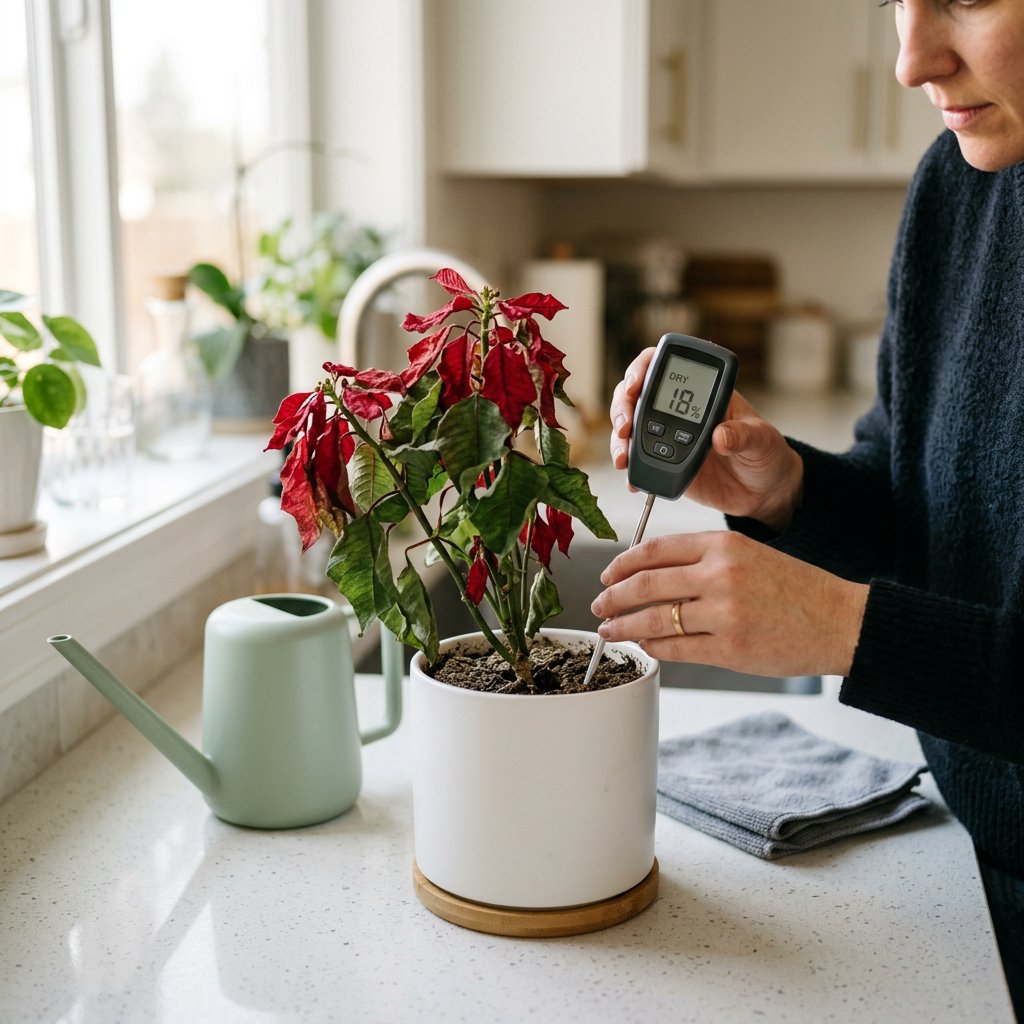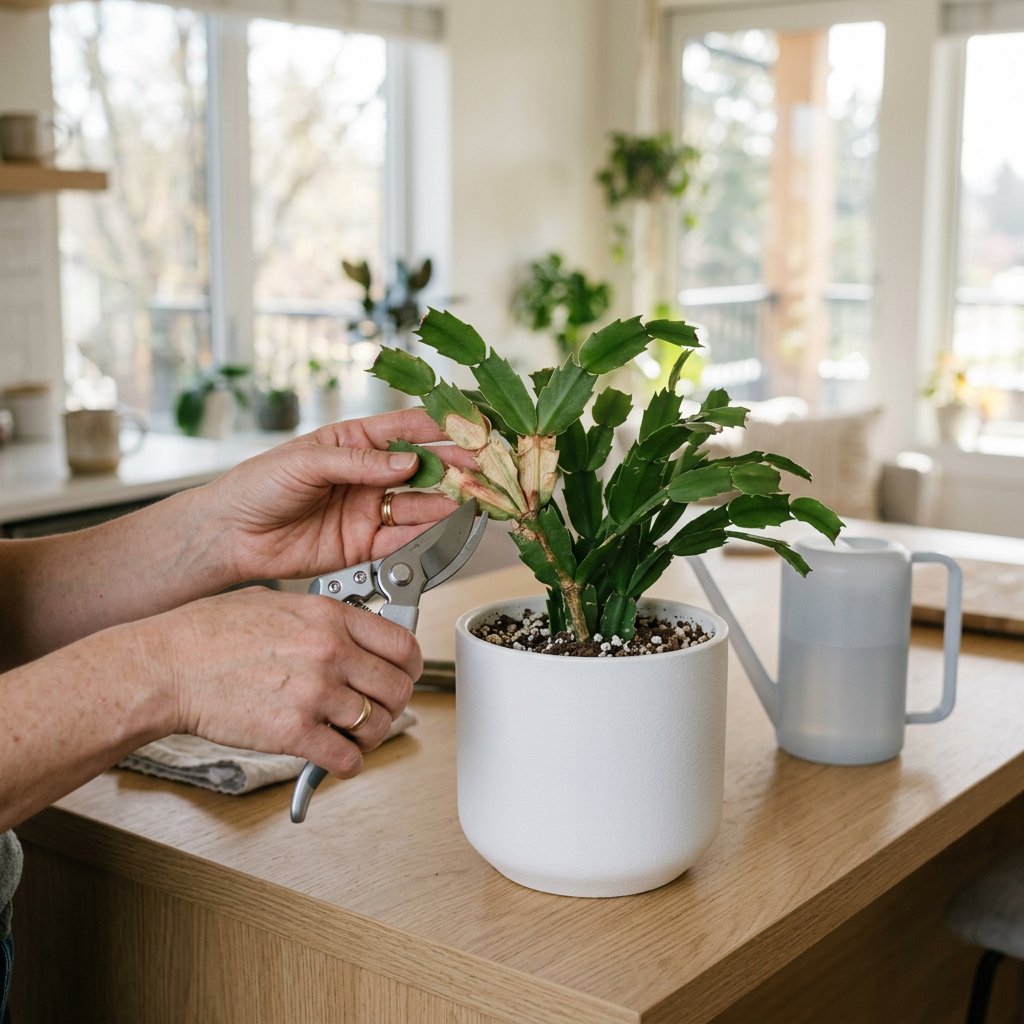
There is nothing quite as disheartening as stepping into your garden or checking on your patio planters, only to find your once-gorgeous, voluminous hydrangeas looking completely lifeless and droopy. It is enough to make any plant parent’s heart sink! But please, take a deep breath and do not panic or feel guilty. Wilting hydrangeas are incredibly common, especially during the warmer months, and it happens to even the most experienced gardeners.
In fact, the botanical name Hydrangea comes from the Greek words "hydor" (water) and "angos" (vessel). Simply put, these beauties are literal water vessels, and they are notoriously thirsty! If you are ever unsure whether your plant is just thirsty or dealing with a deeper issue, you can always use the AI-powered plant disease scanner in the Plantiary app to get a quick, accurate diagnosis in seconds.
If dehydration is the culprit, your plant is highly likely to bounce back. Let’s break down exactly what is happening and how to fix it.
The Problem: Spotting a Dehydrated Hydrangea
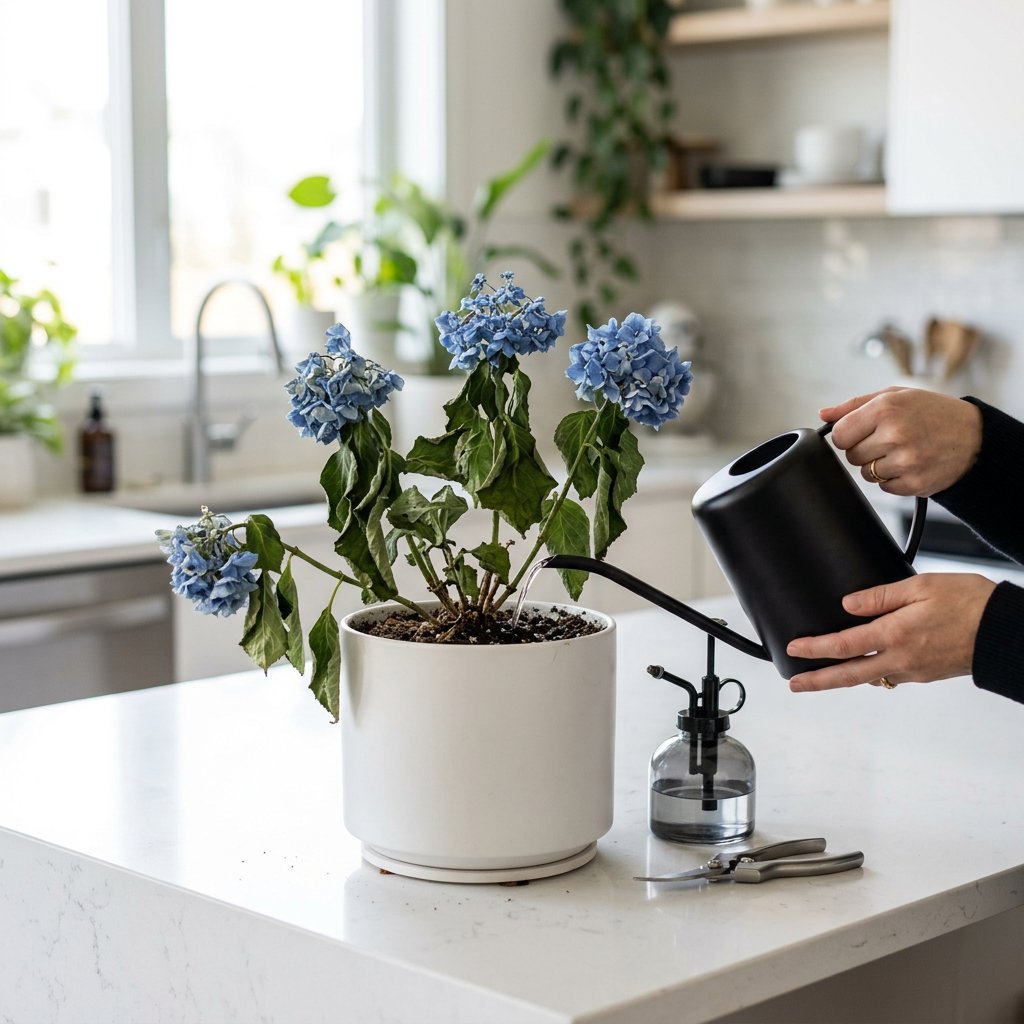
Before jumping into treatment, it is helpful to confirm that lack of water is actually the issue. A dehydrated hydrangea is not shy about showing its discomfort. Look out for these tell-tale symptoms:
- Dramatic drooping: The leaves and heavy flower heads will hang straight down, looking limp and tired.
- Crispy, brown edges: If the dehydration has been ongoing, the tips and margins of the leaves may become dry, brittle, and brown.
- Dull or fading blooms: The vibrant pinks, blues, or snowy whites will lose their luster and begin to look papery or faded.
- Dry soil: The soil will feel bone-dry to the touch, and in potted plants, the soil might even pull away from the sides of the container.
The Causes: Why Are My Hydrangeas Wilting?
Hydrangeas wilt when they are losing water faster than their roots can absorb it. This happens due to a process called transpiration—which is essentially plant sweating. Moisture is pulled from the roots, travels up the stems, and evaporates out of tiny pores on the leaves. When transpiration is too high, the plant wilts to protect itself.
Here is what triggers this severe moisture loss:
- Intense Afternoon Sun: Hydrangeas love gentle morning light, but harsh, direct afternoon sun bakes their broad leaves, causing rapid moisture loss.
- Shallow Watering: Giving the plant a quick splash of water only wets the surface. The deep roots remain dry, leaving the plant unhydrated.
- Hydrophobic Soil: Sometimes, potting soil gets so completely dry that it actually repels water. When you water it, the liquid just runs down the sides of the pot and out the bottom without soaking into the root ball.
- Root-bound Pots: If your potted hydrangea has outgrown its container, the pot is completely filled with roots and has no soil left to hold onto water.
The Solutions: Your Step-by-Step Dehydration Fix
The great news is that hydrangeas are incredibly resilient. With prompt and proper care, a wilted hydrangea can perk back up within just a few hours. Follow these actionable steps to revive your thirsty plant:
Step 1: Administer a deep, slow soak For garden hydrangeas, place a hose at the base of the plant and turn it on to a slow, steady trickle. Let it run for 20-30 minutes so the water can penetrate deeply into the root zone. For potted hydrangeas, the best method is bottom-watering. Fill a basin or large bucket with a few inches of water and set the pot inside. Let it sit for 30-45 minutes so the soil can slowly wick the moisture up to the roots, completely bypassing the issue of hydrophobic soil.
Step 2: Provide emergency shade If your hydrangea is wilting under the midday sun, give it immediate relief. Move potted plants to a shaded area. For in-ground plants, temporarily set up a patio umbrella or drape a piece of shade cloth over a couple of tall stakes to protect the foliage from the baking sun until it recovers.
Step 3: Apply a thick layer of mulch Once the plant is fully hydrated, you need to lock that moisture in. Apply a 2 to 3-inch layer of organic mulch (like shredded bark, compost, or pine needles) around the base of the plant. Keep the mulch an inch or two away from the actual stems to prevent rot. Mulch acts like a protective blanket, keeping the soil cool and drastically slowing down evaporation.
Step 4: Trim the unrecoverable damage After 24 hours, your hydrangea should be standing tall again! However, any leaves or petals that became completely crispy and brown will not turn green again. Use clean, sharp pruning shears to gently snip away the dead foliage. This improves the plant's appearance and directs its energy toward healthy new growth.
Keep Your Hydrangeas Happy and Hydrated
Seeing your beautiful plants wilt can be stressful, but it is also a fantastic learning opportunity to understand their unique needs. Hydrangeas will always be thirsty, but by providing deep waterings, proper mulch, and shielding them from the harsh afternoon sun, you can easily prevent the dreaded droop.
To take the guesswork out of your plant care routine, log your hydrangeas into the Plantiary app! You can set up customized watering reminders based on your specific plant's needs, ensuring your garden and houseplants stay vibrant, hydrated, and thriving all season long. You've got this, plant parent!