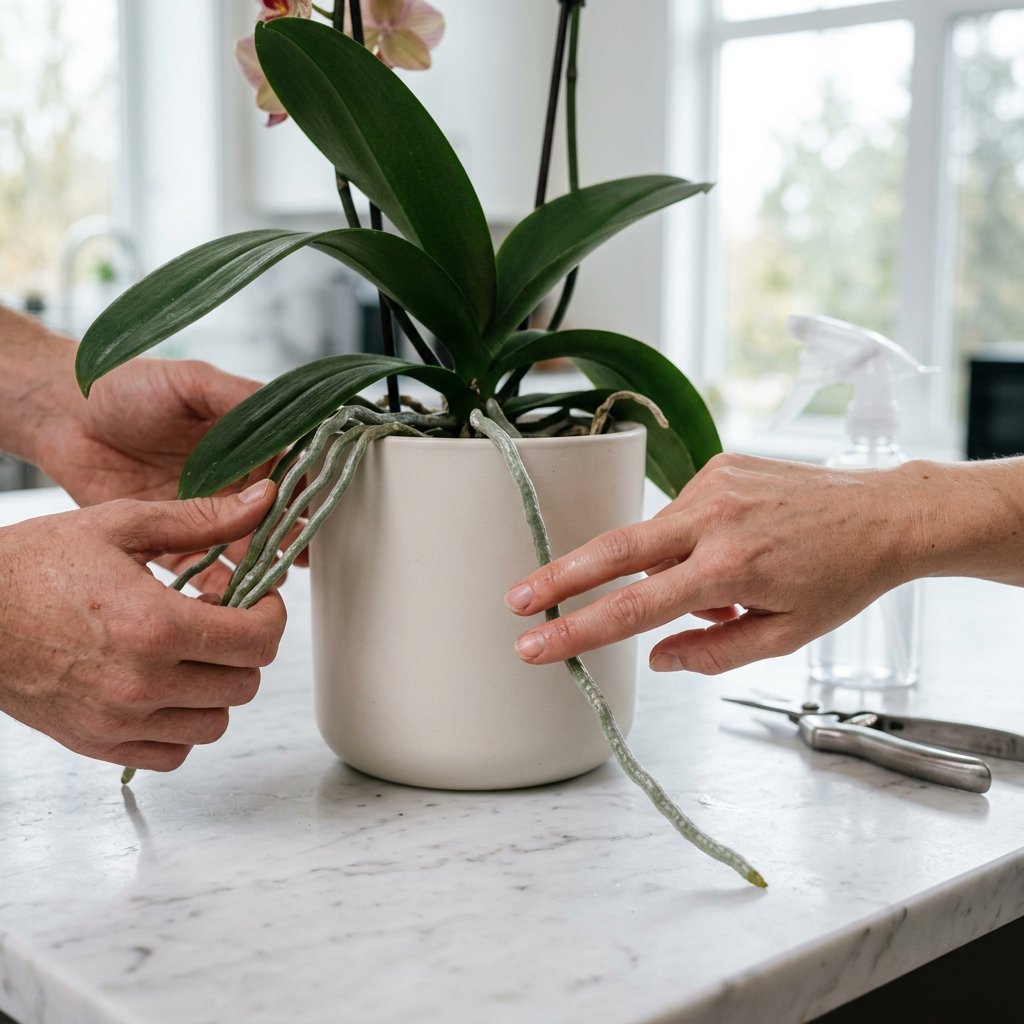
Have you ever looked at your beloved orchid and noticed thick, silvery, alien-like tentacles escaping the pot? It is incredibly easy to panic and wonder if your plant is trying to crawl away or if you’ve done something terribly wrong. Take a deep breath! You are doing a wonderful job, and those wandering roots are entirely natural. In fact, they are a sign of a fascinating botanical trait.
Let’s dive into what aerial roots are, why your orchid grows them, and exactly how to care for them. And remember, if you ever second-guess an odd spot or a wilting leaf, the Plantiary app is always in your pocket to help you decode what your plant is feeling.
What Exactly Are Aerial Roots?
Orchids are epiphytes—a botanical term meaning they grow in the wild by clinging to the bark of trees rather than being rooted in soil. In their natural tropical habitats, these roots hang freely in the warm, humid air.
Aerial roots act like giant sponges to absorb moisture and nutrients from rain and fog. The silvery-white coating on them is called velamen, a spongy outer layer of dead cells that helps the root trap water rapidly while protecting the sensitive inner core from sunburn and moisture loss.
Why Do Orchids Grow Aerial Roots?
If your orchid is kept indoors in a plastic or terracotta pot, you might wonder why it feels the need to send roots into the air. Here are the primary reasons:
- It is in their DNA: Your indoor orchid is simply doing what it was born to do—reaching out to grab moisture and stabilize itself in its environment.
- Seeking higher humidity: If the air in your home is a bit dry, the plant will push out aerial roots to search the surrounding air for extra water vapor.
- A crowded pot: While orchids actually prefer to be slightly root-bound (snug in their pots), a massive explosion of aerial roots might indicate that the plant has completely run out of space in its potting medium.
How to Care for Orchid Aerial Roots
Tending to an orchid with aerial roots is much easier than it looks. Follow these simple steps to keep your plant thriving:
- Step 1: Do not cut them off! The golden rule of orchid care is to never snip off healthy aerial roots. Cutting them deprives your plant of a vital way to drink and breathe.
- Step 2: Inspect for health. Healthy aerial roots are firm to the touch and appear silvery-grey when dry, turning vibrant green when wet. Dead roots, on the other hand, will feel hollow, brittle, and papery.
- Step 3: Mist the roots safely. Because they rely on ambient moisture, aerial roots love a little extra humidity. Lightly mist just the wandering roots in the morning with room-temperature water. Avoid spraying the flowers or letting water pool in the center of the leaves, as this can cause rot.
- Step 4: Use the soaking method. When watering your orchid, submerge the pot in a bowl of room-temperature water for 10-15 minutes. This allows both the potted roots and the base of the aerial roots to soak up moisture. Always let the pot drain completely before putting it back in its decorative cover.
Troubleshooting Problematic Roots
Even the most attentive plant parents run into hiccups. If your orchid's roots look a bit under the weather, here is how to identify and solve the issue:
The Problem: The aerial roots look shriveled, brittle, and papery.
- The Cause: Underwatered or very low household humidity.
- The Solution: Carefully snip away completely dried, hollow roots using sterilized shears. Increase humidity around the plant using a pebble tray filled with water or placing a humidifier nearby.
The Problem: The roots are dark brown, mushy, or slimy.
- The Cause: Overwatering, poor drainage, or a fungal infection (root rot).
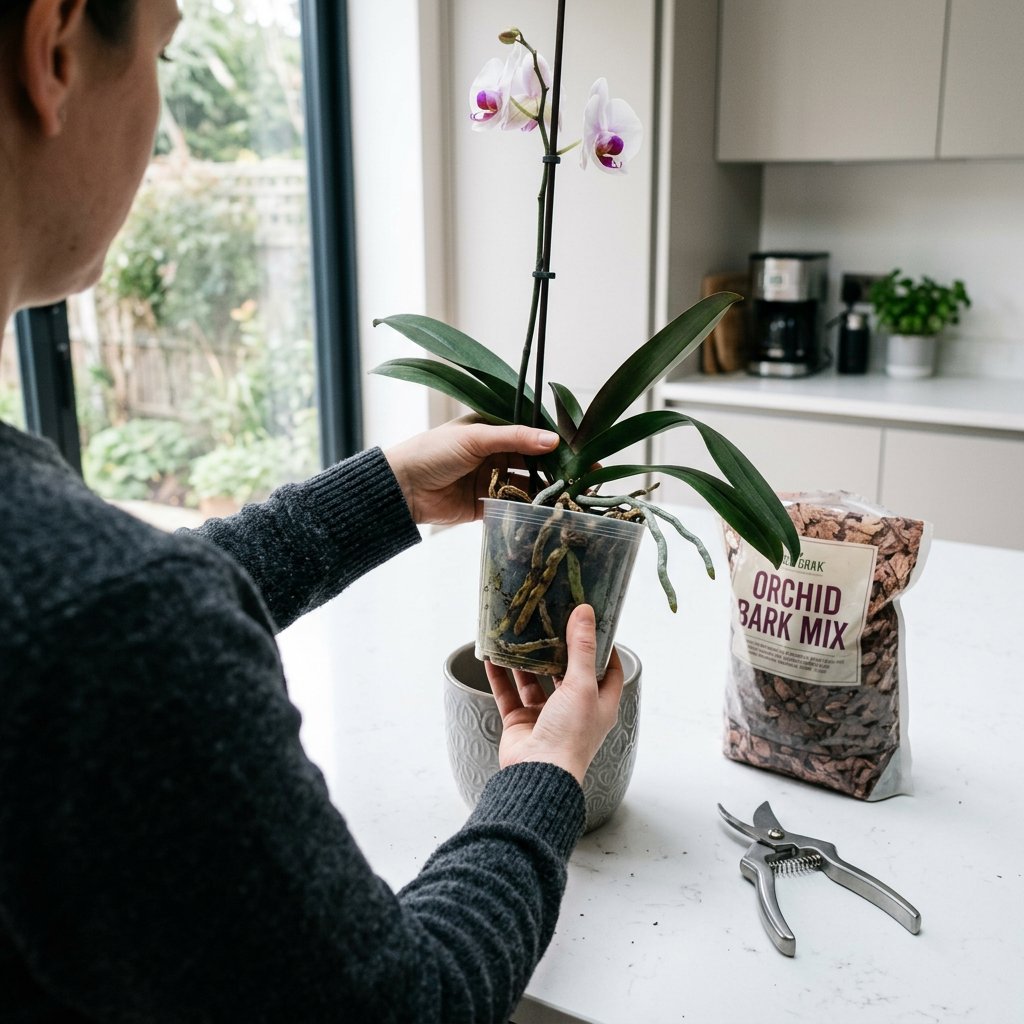
- The Solution: Stop watering immediately and check the roots inside the pot. Use sterilized pruning shears to gently trim away only the mushy sections. If you are unsure whether your plant has developed a fungal infection, you can use the AI-powered plant disease scanner in the Plantiary app to get a diagnosis in seconds and a targeted treatment plan.
Don't let those quirky, wandering roots intimidate you. They give your orchid character and provide a beautiful glimpse into how these tropical plants survive in the wild. Keep up the great work, embrace the wildness of your indoor garden, and lean on Plantiary whenever you need a little extra botanical guidance!