There is nothing quite as deeply satisfying as watching your homegrown tomatoes ripen on the vine. But let’s be honest—tomato plants can be incredibly dramatic! If you have recently walked out to your garden only to find your tomato leaves curling into tight little tubes, or worse, discovered a dark, rotting spot on the bottom of an almost-ripe fruit, take a deep breath. You are absolutely not alone, and this does not mean you are a failing gardener.
These are two of the most common hurdles plant parents face: tomato leaf curl and blossom end rot. Both issues usually stem from environmental stress, meaning your plant is just asking for a little routine adjustment. The good news? They are highly treatable. Let's dig into what is happening and how to get your summer harvest back on track.
Demystifying Tomato Leaf Curl
Curling leaves can look alarming, but your plant is actually trying to protect itself.
The Problem (Symptoms)
- The edges of the leaves roll upward and inward, often starting at the bottom of the plant.
- The affected leaves may feel unexpectedly thick, stiff, or leathery to the touch.
- The leaves generally remain green, without spots or yellowing.
The Causes
When tomato leaves curl upward but remain green, it is usually a condition called physiological leaf roll. This is simply a natural defense mechanism against environmental stress. When the weather is excessively hot or dry, the plant rolls its leaves to reduce its surface area. This limits the amount of water it loses to the sun through evaporation. Leaf curl can also be triggered by severe over-pruning or inconsistent watering.
If your leaves are curling but also turning yellow or showing weird mosaic patterns, it might be a pest or viral issue. If you are unsure what is wrong with your plant, you can use the AI-powered plant disease scanner in the Plantiary app to get a highly accurate diagnosis in seconds!
The Solutions (Step-by-Step Treatment)
Step 1: Check your soil moisture. Stick your finger about two inches into the soil. If it is bone dry, your plant is thirsty. Water deeply at the base of the plant to encourage deep root growth. If the soil is muddy and soggy, hold off on watering and ensure your pot or garden bed has proper drainage. Step 2: Provide afternoon shade. If you are going through a severe heatwave, drape a piece of shade cloth (or even an old, lightweight bedsheet) over your plants during the hottest part of the afternoon. Step 3: Ease up on the pruning. While snapping off a few "suckers" (small shoots between the main stem and branches) is great, removing too much foliage at once shocks the plant. Let your tomato recover and keep its remaining leaves to shade the growing fruit.
Beating Blossom End Rot
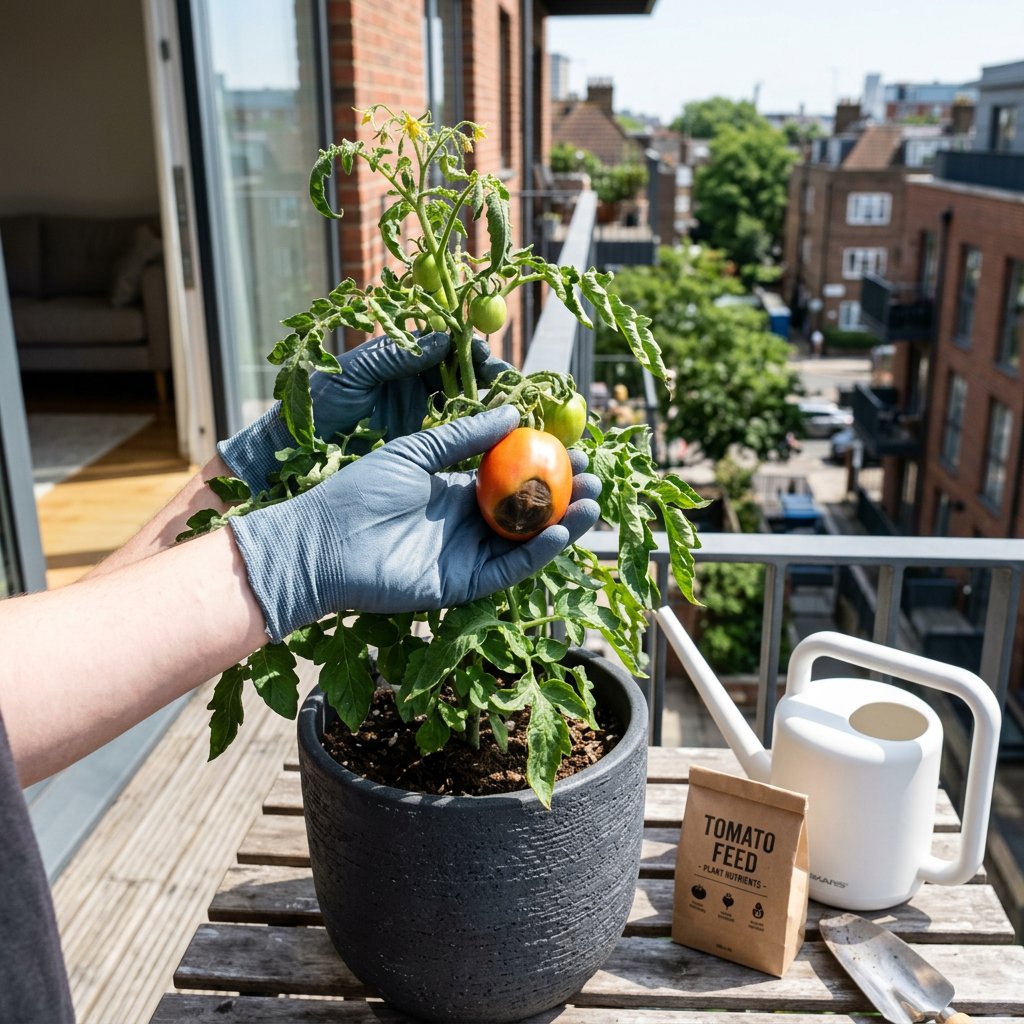
Few things are as disappointing as picking a perfectly red tomato, only to turn it over and find a mushy, black bottom.
The Problem (Symptoms)
- A water-soaked, sunken spot appears on the bottom (the blossom end) of the green or ripening fruit.
- Over time, this spot turns dark brown or black and takes on a leathery, scab-like texture.
- The rotting area may eventually grow mold.
The Causes
Blossom end rot is caused by a calcium deficiency in the developing fruit. However, this rarely means your soil lacks calcium! Instead, it is almost always a watering issue. Calcium is carried up from the roots to the fruit via water. If the soil goes through extreme wet and dry spells, the water supply is interrupted, and the calcium simply cannot travel to the ends of the fruit fast enough.
The Solutions (Step-by-Step Treatment)
Step 1: Establish a consistent watering routine. This is the absolute best defense against blossom end rot. Keep the soil evenly moist, but not waterlogged. Water your plants early in the morning so they have moisture to draw from throughout the hot day. Step 2: Apply a thick layer of mulch. Spread 2-3 inches of organic mulch (like straw, untreated wood chips, or shredded leaves) around the base of your tomato plants. Mulch acts like a protective blanket, locking in moisture and preventing the sun from baking the soil dry. Step 3: Remove the affected fruit. Sadly, a tomato with blossom end rot cannot be cured. Pick off the damaged fruit and toss them in the compost. This redirects the plant's energy into producing new, healthy tomatoes. Step 4: Use a fast-acting liquid calcium. If you have corrected your watering and the issue persists, your soil might actually need a calcium boost. Avoid the common DIY myth of dropping whole eggshells in the soil—they take years to break down! Instead, use a scientifically formulated liquid calcium spray or soil drench designed specifically for tomatoes.
Growing tomatoes is a learning experience, and every season brings a new lesson. Do not get discouraged by a few curled leaves or a couple of ruined fruits. Make these simple adjustments, track your watering schedule in the Plantiary app, and you will be enjoying delicious, homegrown tomatoes in no time!