Let’s be honest: Peace lilies (Spathiphyllum) are famous for their theatrical flair. They will dramatically faint over the edge of their pot when thirsty, only to bounce back entirely a few hours after a good drink. But when those lush, pristine green leaves start developing crispy, brown tips, it can feel a little disheartening.
First, take a deep breath! You are not a bad plant parent. Brown tips are incredibly common, even for seasoned botanists, and they are simply your plant's way of communicating that its environment needs a little tweaking. Let’s decode what your peace lily is trying to tell you and get it back to its vibrant, blooming self.
The Problem: Decoding the Brown Tips
Before we fix the issue, let's look at the symptoms. You might notice:
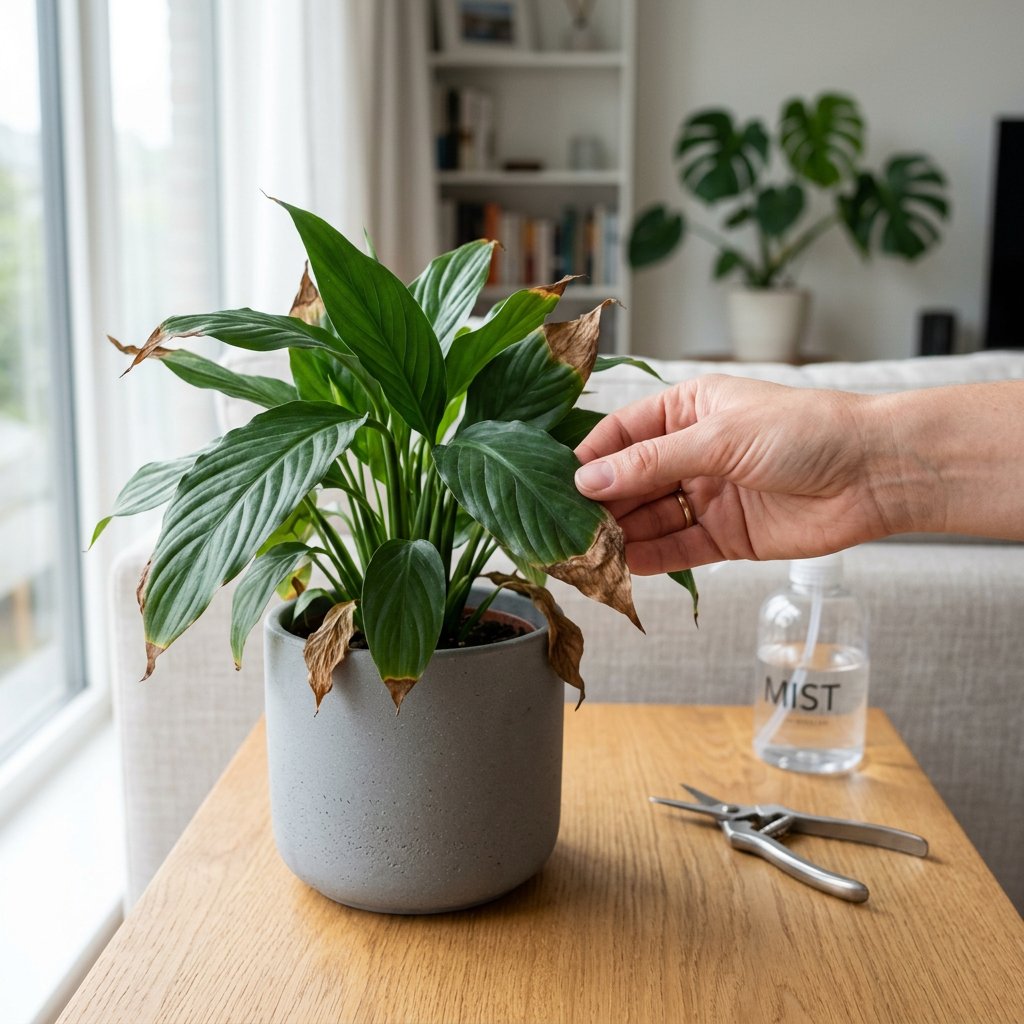
- Crispy, dark brown tips solely at the very end of the leaves.
- Brown margins creeping up the sides of the foliage.
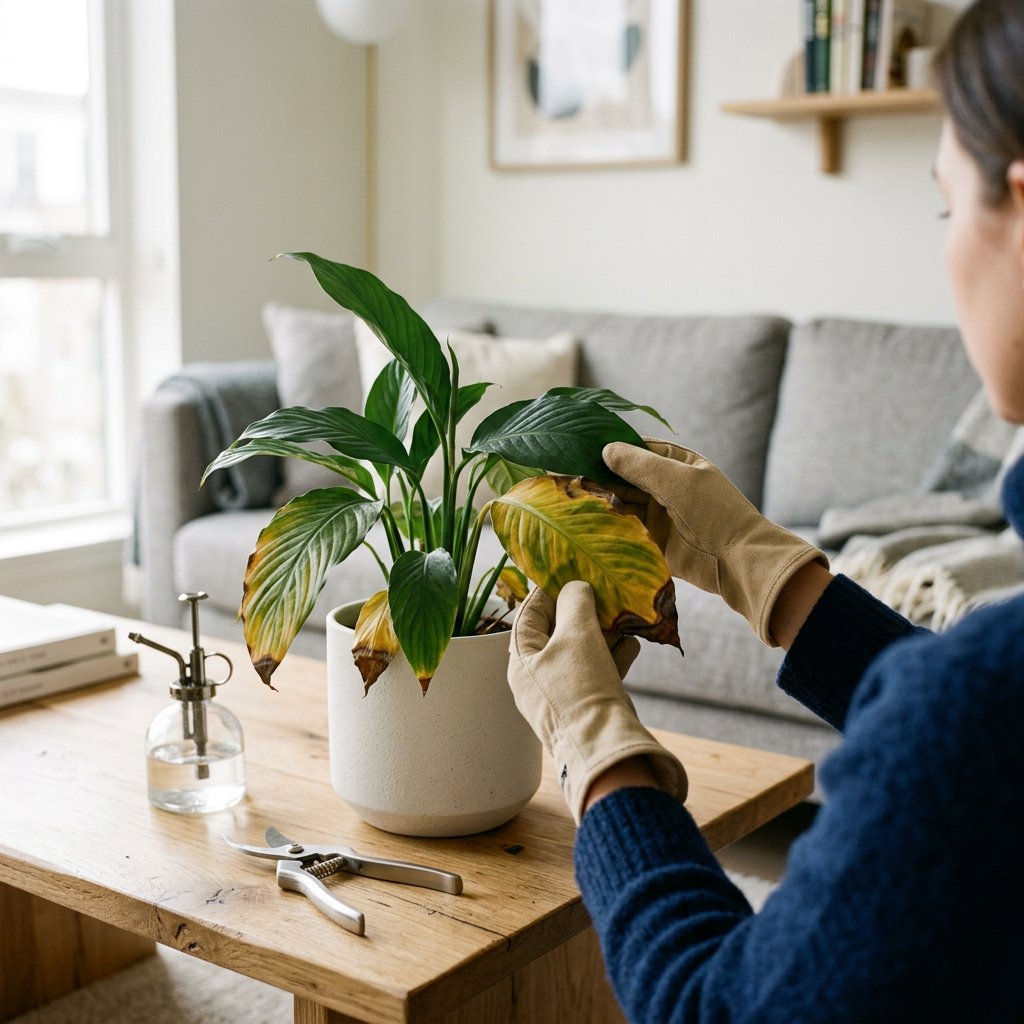
- A faint yellow halo separating the healthy green tissue from the dead brown tip. This yellowing is called chlorosis (a botanical term for when a plant loses its green chlorophyll pigment due to stress or nutrient issues).
While the brown, dead tissue won't turn green again, identifying the root cause will stop it from spreading to new growth.
The Causes: Why is Your Peace Lily Crispy?
Peace lilies are tropical understory plants, meaning they are used to highly specific jungle conditions. When our homes don't match that environment, the leaf tips are the first to show it. Here are the most common culprits behind the crispiness:
- Tap Water Sensitivity: Peace lilies are highly sensitive to the chemicals found in municipal tap water, specifically fluoride, chlorine, and excess dissolved minerals. These chemicals travel through the plant and accumulate at the leaf tips, burning the tissue.
- Inconsistent Watering: Both underwatering and overwatering cause stress. Underwatering literally dries the leaf tips out. Overwatering suffocates the roots, preventing them from absorbing the water the leaves desperately need.
- Low Humidity: In their native rainforest habitats, peace lilies bask in humid air. The dry air in our modern, climate-controlled homes can cause moisture to evaporate from the leaves faster than the roots can replace it.
- Fertilizer Burn: Feeding your plant too often leads to a buildup of fertilizer salts in the potting soil. Just like fluoride, these salts travel to the leaf extremities and cause chemical burns.
If you are unsure whether your plant has a simple watering issue or a more serious fungal infection, you can use the AI-powered plant disease scanner in the Plantiary app to get an accurate diagnosis in seconds!
The Solutions: Step-by-Step Treatment
Ready to banish the brown tips? Follow these scientifically backed steps to restore your peace lily's health.
Step 1: Upgrade Your Water Source
Stop using water straight from the tap. Instead, switch to distilled water, reverse-osmosis water, or collected rainwater. If you must use tap water, let it sit out overnight so the chlorine can evaporate (though note that this will not remove fluoride or heavy minerals).
Step 2: Master Your Watering Routine
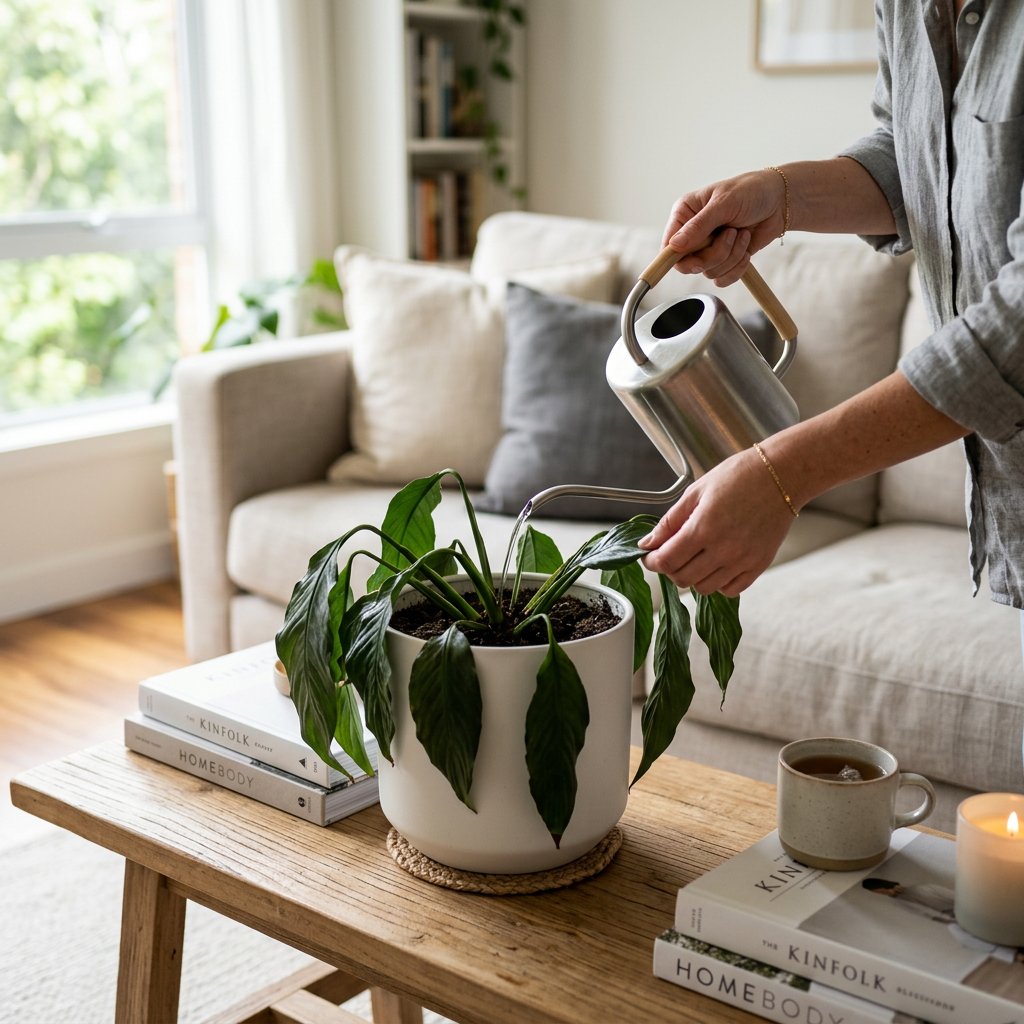
Peace lilies like their soil to be consistently lightly moist, but never soggy. Wait until the top one to two inches of soil feels dry to the touch before watering thoroughly. Ensure your pot has drainage holes so excess water can escape. To take the guesswork out of your routine, use the Plantiary app to set up smart watering reminders tailored to your specific plant's needs.
Step 3: Flush the Soil
If you suspect fertilizer burn or mineral buildup, it’s time to leach (flush) the soil. Take your plant to the sink or shower and slowly pour a large amount of room-temperature distilled water through the soil. Let it drain out completely. Hold off on fertilizing for at least a month, and always dilute your liquid houseplant fertilizer to half-strength when you resume.
Step 4: Boost the Humidity
Keep your plant away from drafty windows, air conditioning vents, and heating radiators. To safely raise ambient moisture, place a humidifier nearby or set your plant's pot on a pebble tray filled with water (making sure the bottom of the pot sits on the pebbles, not directly in the water).
Step 5: Prune the Brown Tips
Now for the cosmetic fix! You can safely trim the crispy edges off to instantly improve the look of your plant.
- Sterilize a pair of sharp scissors with rubbing alcohol.
- Carefully cut away the dead brown tissue.
- Pro tip: Try to follow the natural shape of the leaf, and leave a tiny, hair-thin margin of brown tissue behind. If you cut into the healthy green tissue, the plant will simply create a new brown scab to heal the fresh wound!
Plant care is a journey of trial and error, and a few brown tips are completely normal. By making these small environmental shifts, your peace lily will reward you with continuous, beautiful green growth and those iconic white blooms!