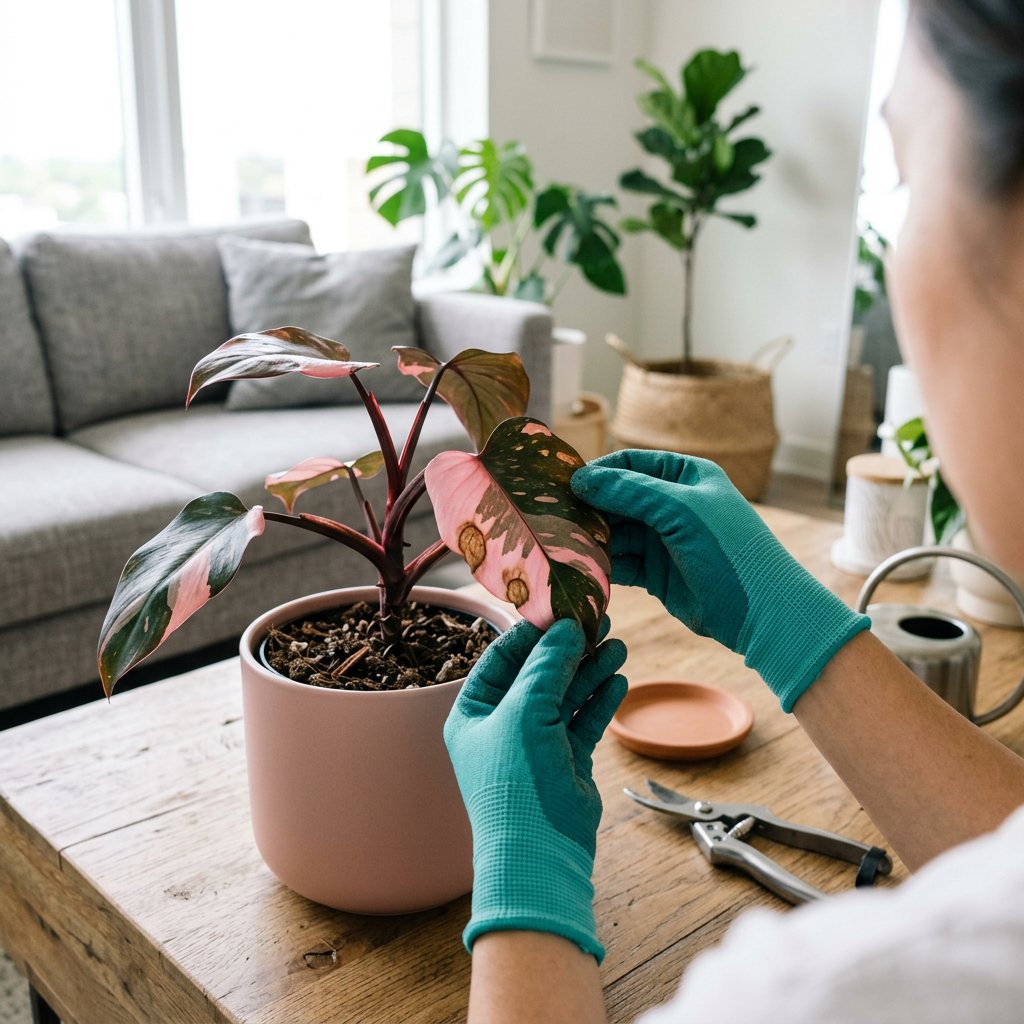
There is nothing quite like the thrill of watching a new, vibrant pink leaf unfurl on your Philodendron Pink Princess. With its stunning dark foliage and striking bubblegum-pink variegation, it is undoubtedly the crown jewel of many houseplant collections. But that excitement can quickly turn into heartbreak when you suddenly notice ugly brown spots creeping across those precious leaves.
First of all, take a deep breath! Plant parenthood is a continuous learning journey, and encountering a few bumps along the road happens to absolutely every plant parent. You have not failed your plant. By understanding what your Pink Princess is trying to communicate, you can easily get her back to looking her best.
The Problem: Decoding the Symptoms
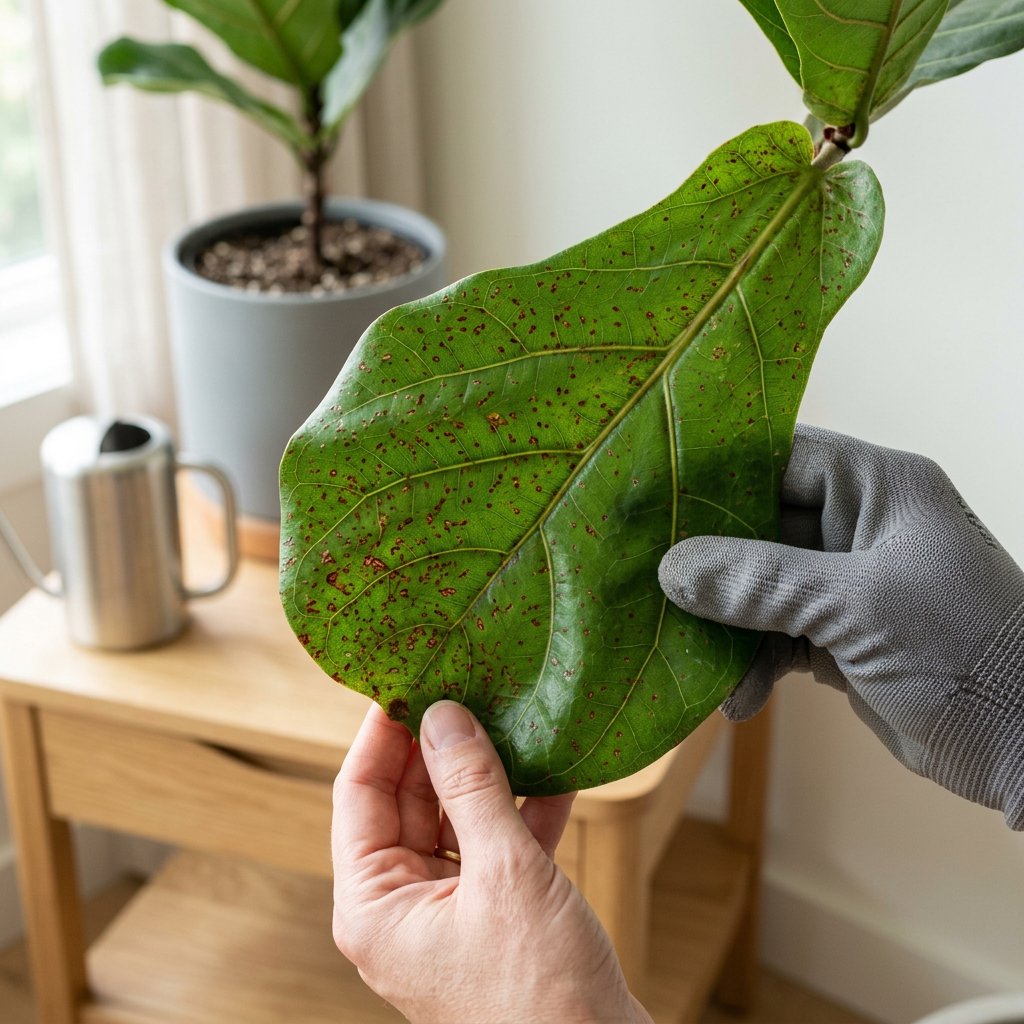
When a plant develops brown spots, it is experiencing a condition called necrosis—a botanical term that simply means the localized death of plant tissue. However, not all brown spots are created equal. Taking a closer look at the type of browning can give you a massive clue about what is going wrong:
- Crispy, dry brown spots or edges: Usually point to environmental stress, like a lack of moisture or too much harsh sunlight.
- Soft, mushy brown spots: Often accompanied by a yellow halo, these are classic signs of an infection or severe watering issues.
- Browning strictly on the pink parts: The pink variegation is beautiful, but it is highly sensitive and prone to damage.
The Causes: Why is Your Pink Princess Browning?
To fix the issue, we first need to identify the root cause. Here are the most common reasons your plant is developing brown leaf spots:
1. Overwatering and Root Rot
This is the number one culprit for mushy brown spots. When a plant sits in soggy soil, it suffers from hypoxia (a lack of oxygen at the roots). Without oxygen, the roots suffocate, begin to rot, and can no longer transport water and nutrients to the leaves.
2. Fungal or Bacterial Infections
Fungal leaf spot diseases thrive in warm, damp, and poorly ventilated environments. If water accidentally sits on the leaves for too long, fungal spores can multiply rapidly, causing dark brown or blackish spots that quickly spread across the foliage.
3. Sunburn
The pink patches on your Philodendron lack chlorophyll (the green pigment that helps plants photosynthesize and protects them from sunlight). Because of this, the pink variegation is extremely delicate. If placed in direct, harsh sunlight, these pink sections will scorch and turn dry and brown.
4. Low Humidity
As tropical plants, Philodendrons love moisture in the air. If the air in your home is too dry—especially during winter when indoor heaters are running—the tips and edges of the leaves will become brown and crispy.
The Solutions: Step-by-Step Treatment
Ready to play plant doctor? Follow these actionable steps to halt the browning and encourage healthy new growth.
Step 1: Isolate and Diagnose If you suspect a fungal or bacterial infection, immediately move your Pink Princess away from your other houseplants to prevent the disease from spreading. If you are unsure what is wrong with your plant, you can use the AI-powered plant disease scanner in the Plantiary app to get an accurate diagnosis in seconds!
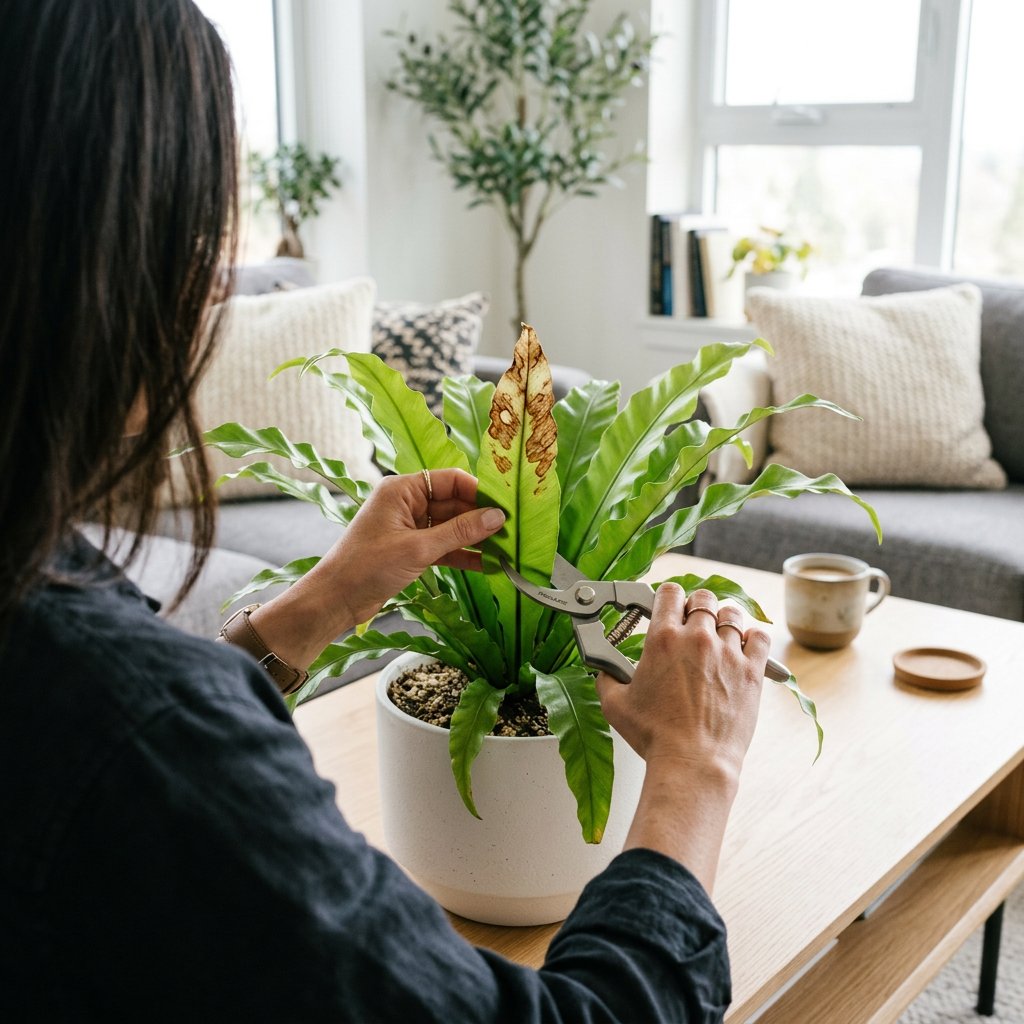
Step 2: Prune the Damaged Leaves Necrotic (dead) tissue cannot heal or turn green again. Using a pair of scissors or pruning shears wiped with rubbing alcohol, gently snip off the heavily spotted leaves. This stops any potential infection from spreading and redirects the plant's energy into pushing out healthy new growth.
Step 3: Check the Roots and Adjust Watering Gently slip the plant out of its pot and inspect the roots. If they are mushy, brown, and smell foul, you have root rot. Trim away the rotted roots and repot the plant in a fresh, chunky, well-draining soil mix (often called an "aroid mix," which includes potting soil, orchid bark, and perlite). Moving forward, only water your Pink Princess when the top two to three inches of the soil feel completely dry to the touch.
Step 4: Optimize Lighting and Humidity Move your plant to a spot where it receives bright, indirect sunlight. A few feet away from an east-facing or west-facing window is usually perfect. To tackle dry air, place a humidifier near the plant to keep the ambient humidity around 50-60%.
Step 5: Treat with a Fungicide (If Necessary) If your Plantiary app diagnosis points to a fungal leaf spot, treat the remaining foliage with a copper-based liquid fungicide or an organic neem oil spray. Apply the treatment in the evening (to avoid sunburn) and follow the manufacturer's instructions carefully. Ensure your plant has good airflow going forward.
You've Got This!
Seeing brown spots on your Philodendron Pink Princess can be alarming, but it is highly treatable. Plants are incredibly resilient living things. By adjusting your watering habits, tweaking the lighting, and providing a little extra TLC, your plant will bounce back and reward you with those spectacular, flawless pink leaves once again. Happy growing!