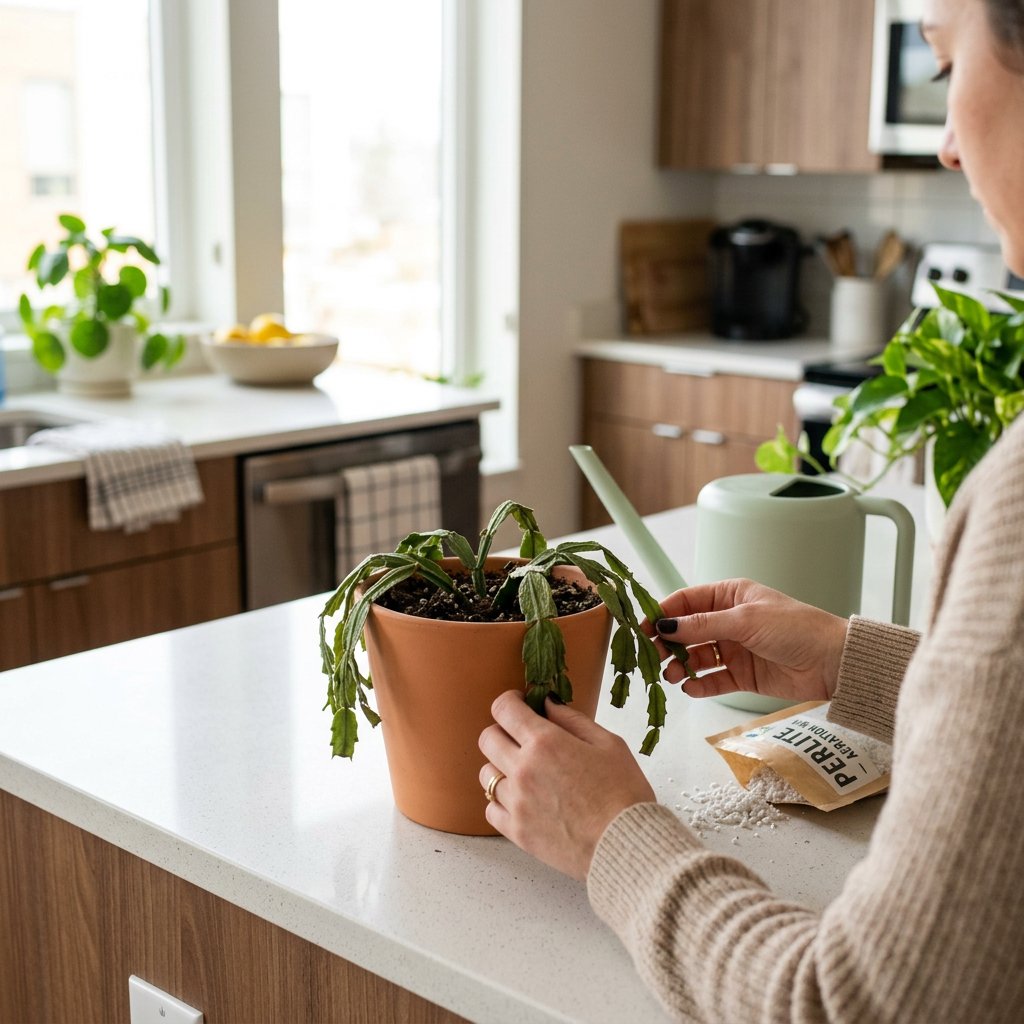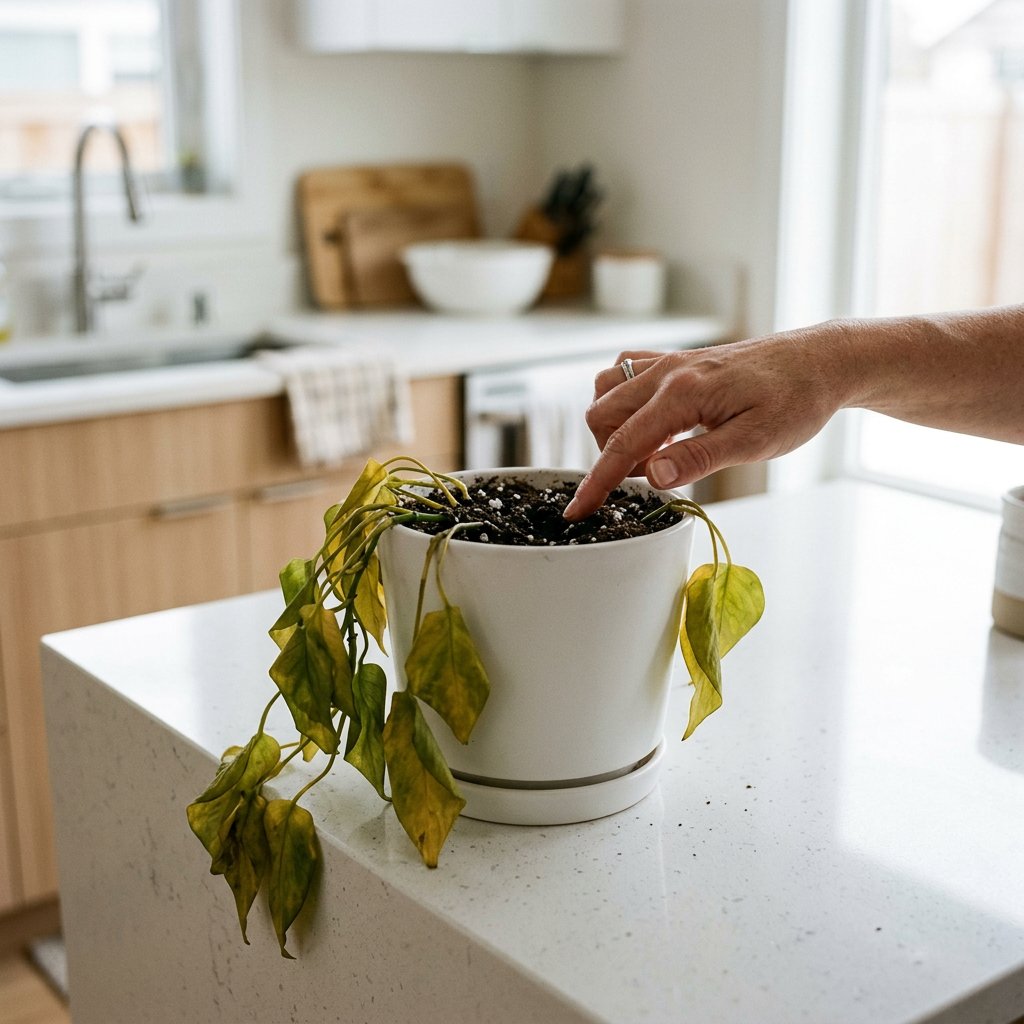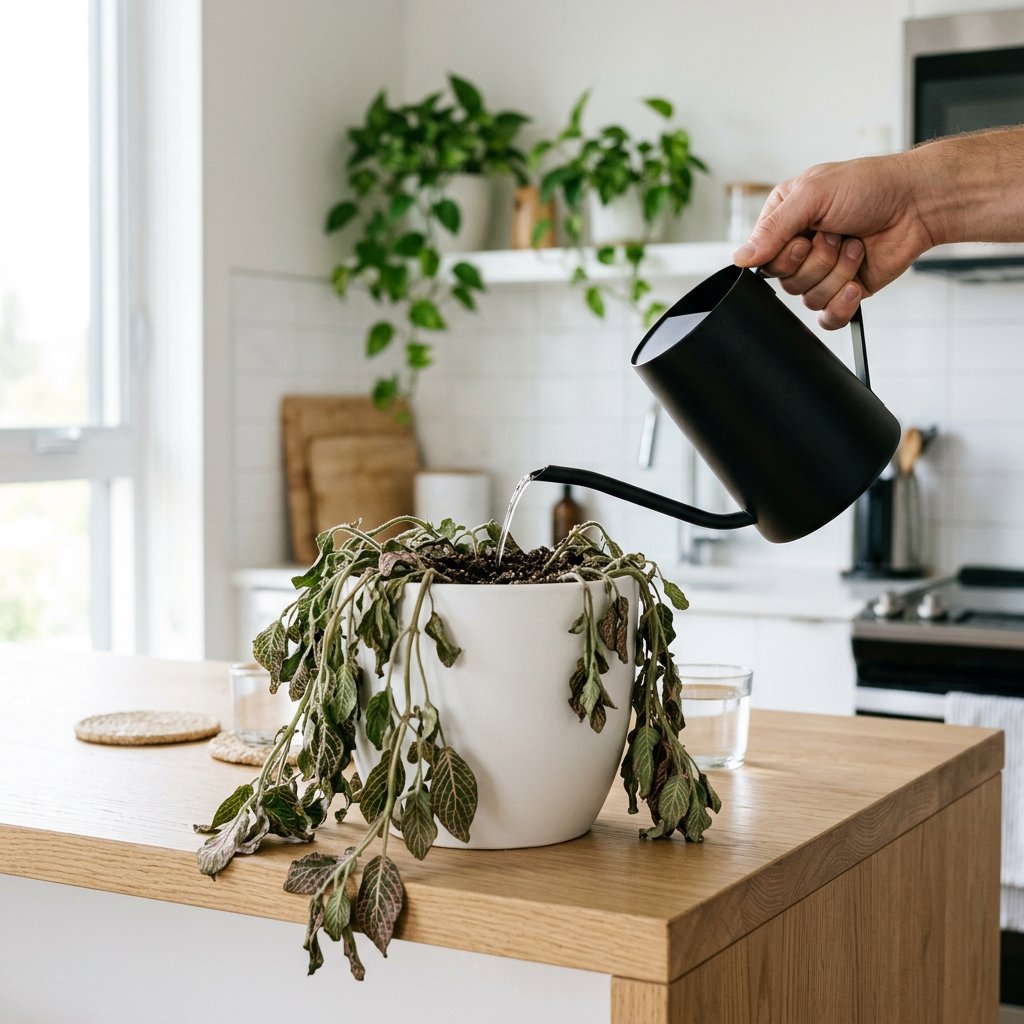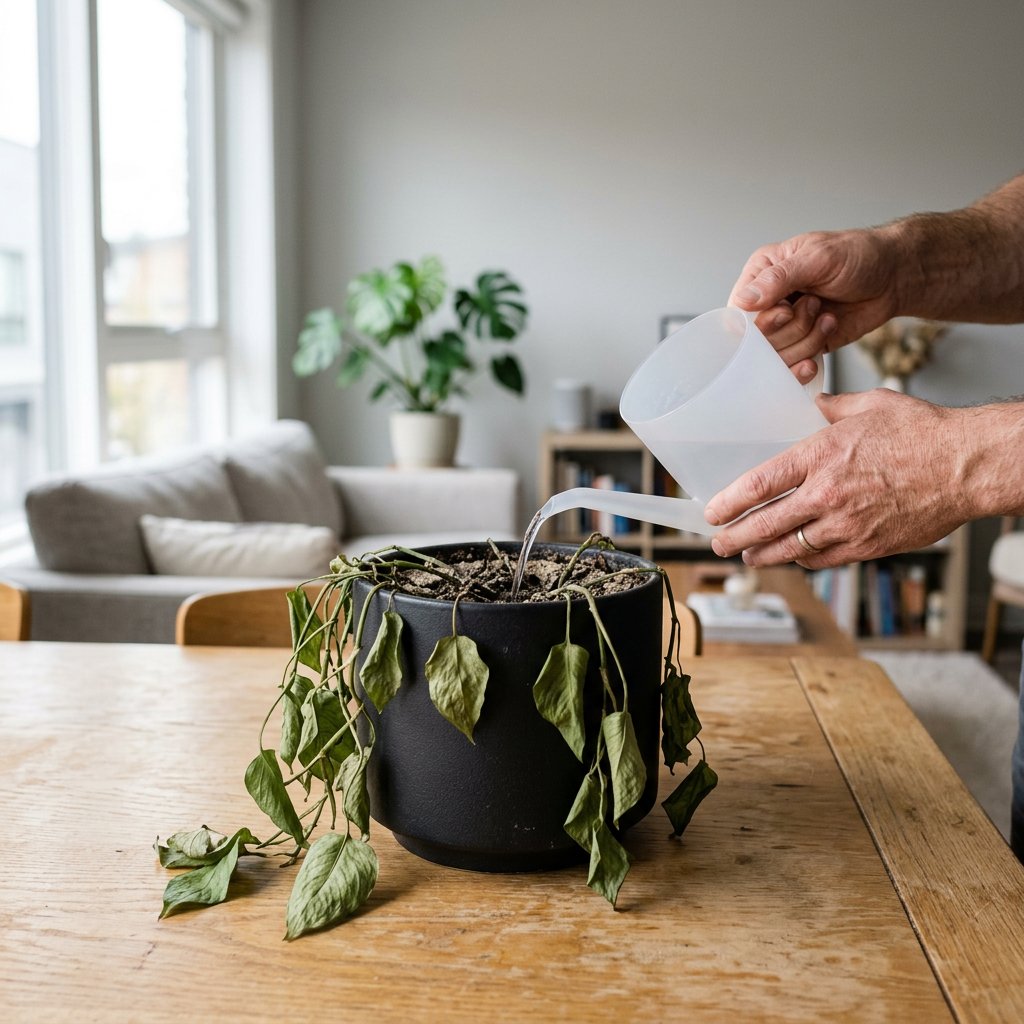
We've all been there—you walk past your normally lush, trailing Pothos (Epipremnum aureum), only to find it looking completely deflated, limp, and lifeless. It’s easy to panic and feel like you've failed as a plant parent, but take a deep breath! Pothos are famously resilient, earning their nickname "Devil's Ivy" because they are incredibly tough and eager to survive.
If your green friend is looking severely parched, don’t toss it in the compost bin just yet. Whether you've been away on a long vacation or just completely forgot your watering schedule, plant slip-ups happen to the very best of us. If you ever feel overwhelmed, remember that the Plantiary app is always in your pocket to help track watering routines and identify care issues. Let’s get your plant bouncing back to its gorgeous self!
The Problem: Recognizing a Thirsty Pothos
When a plant doesn't get enough water, it suffers from a loss of turgor pressure—this is the internal water pressure that keeps plant stems and leaves stiff, plump, and upright. Without it, the plant literally deflates. Here is what a severely dehydrated Pothos usually looks like:
- Extreme drooping: The stems and leaves look incredibly limp, flat, and sad.
- Curling leaves: The foliage curls inward in a desperate attempt to conserve whatever moisture is left inside the leaf tissue.
- Crispy, brown edges: The tips and margins of the leaves may become dry, brown, and brittle to the touch.
- Bone-dry, shrunken soil: The potting mix feels completely dry and might even be pulled away from the inner edges of the pot, leaving a visible gap.
The Causes: How Did We Get Here?
Dehydration isn't always just about forgetting to pick up the watering can. Sometimes, you might be watering your plant regularly, but it still isn't getting a drink.
- Underwatering: The most common and obvious culprit. Life gets busy, and watering days easily get skipped.
- Hydrophobic Soil: When standard, peat-based potting mix dries out completely, it can become hydrophobic, meaning it actually repels water. If you water from the top, the liquid just rushes down the sides of the shrunken soil and out the drainage holes without actually soaking into the root ball.
- Being Rootbound: If your Pothos has outgrown its pot, there are likely far more roots than soil. Because soil acts as a sponge to hold moisture, a lack of soil means the water drains away immediately before the roots have time to absorb it.
If you are unsure whether your plant is just severely dehydrated or suffering from a more complex issue like root rot or pests, you can use the AI-powered plant disease scanner in the Plantiary app to get a diagnosis in seconds.
The Solutions: Step-by-Step Pothos Revival
Now for the rewarding part—bringing your plant back to life! Put away the complicated DIY home remedies. All you need are these safe, scientifically sound steps to safely rehydrate your Pothos.
Step 1: The Bottom-Watering Soak Because severely dry soil is likely hydrophobic, top-watering won't work. Instead, fill a bowl, basin, or sink with room-temperature water. Place your Pothos (it must be in a nursery pot with drainage holes) directly into the water. Let it sit for 30 to 45 minutes. The soil will soak up moisture from the bottom up via capillary action, slowly rehydrating the peat and reaching the deepest roots.
Step 2: Aerate the Soil While the plant is soaking, gently poke a few holes deep into the soil using a wooden chopstick or a skewer. This process, called aeration, breaks up compacted, hardened dirt. It allows water and oxygen to penetrate the soil structure and reach the roots much more effectively.
Step 3: Trim the Unsalvageable Foliage Once the top of the soil feels moist, remove the plant from the water and let it drain completely. Over the next 12 to 24 hours, you will see the healthy leaves dramatically perk back up! However, any leaves that remain crispy, entirely yellow, or brown are dead and will not recover. Snip them off near the stem with clean, sterilized scissors. This stops the plant from wasting energy on dead foliage and redirects it toward new growth.
Step 4: Re-evaluate the Pot Once your plant has fully recovered (give it a couple of weeks to rest), check the bottom drainage holes. If thick roots are circling the bottom or poking out, it’s time to repot your Pothos into a container one size larger (about 2 inches wider) using fresh, well-draining indoor plant soil.
Moving Forward with Confidence
Watching a severely dehydrated Pothos spring back to life within a day is one of the most rewarding experiences in indoor gardening. Don't beat yourself up over a wilted plant; every mistake is just a stepping stone to becoming a more confident plant parent! To make sure your revived Pothos stays lush, happy, and perfectly hydrated, download the Plantiary app to set up smart watering reminders tailored specifically to your plant's needs. You've got this!