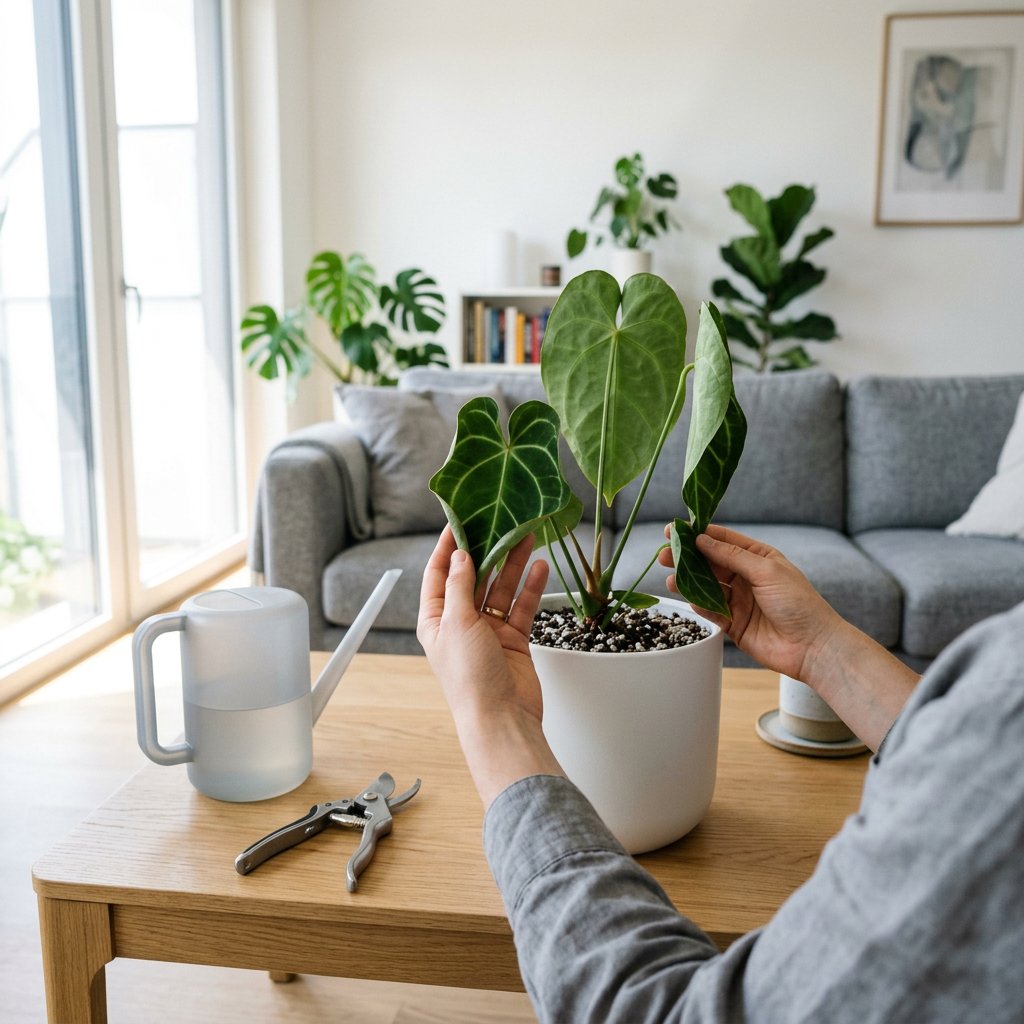
There is nothing quite like the glossy, heart-shaped leaves and vibrant, waxy blooms of an Anthurium to make your indoor jungle feel like a tropical paradise. But when those beautiful leaves start curling inward or wrinkling at the edges, it is completely normal to feel a little panicked. First things first: take a deep breath and don’t beat yourself up! Plant hiccups happen to absolutely every plant parent, from beginners to seasoned botanists. Leaves curling is simply your Anthurium’s way of asking for a little extra attention. With a few minor adjustments to your care routine—and a little help from your pocket botanist, the Plantiary app—you can get your plant looking fresh and fabulous again.
The Problem: Decoding the Curl
When an Anthurium is perfectly content, its foliage lies flat and smooth, absorbing the ambient light. When it experiences environmental stress, it changes its physical shape to protect itself. You might notice:
- Inward curling or cupping: The leaves curl tightly toward the center vein.
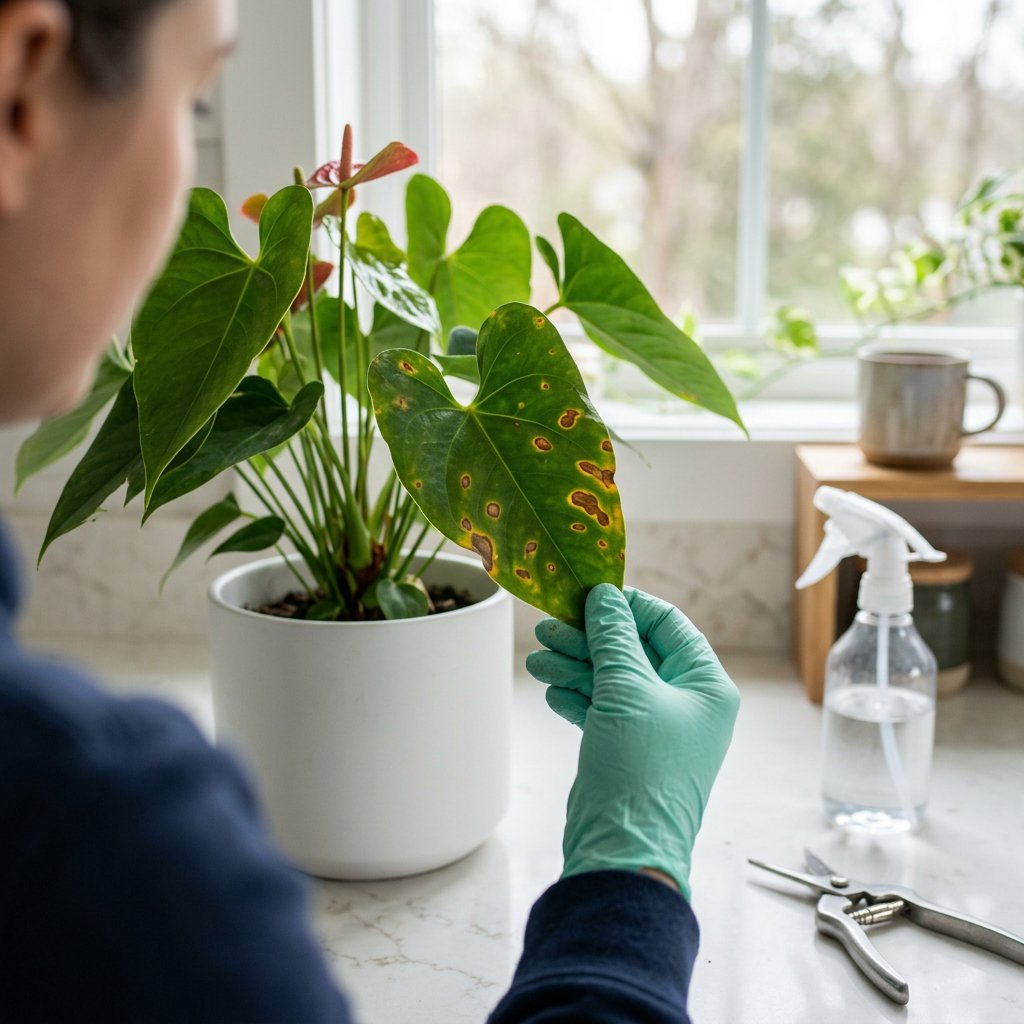
- Crispy, brown edges: Accompanied by a dry, wrinkled texture.
- Chlorosis: This is the scientific term for the yellowing of leaves, which happens when the plant lacks chlorophyll due to stress or nutrient issues.
If your Anthurium is showing any of these symptoms, it is actively trying to conserve its resources.
The Causes: Why is My Anthurium Curling?
To fix the issue, we first need to play plant detective. Here are the most common culprits behind curling Anthurium leaves:
1. Moisture Mishaps (Overwatering or Underwatering)
Anthuriums are epiphytes in the wild, meaning they grow on other plants or trees, not directly in heavy soil. If they sit in soggy soil, their roots suffocate, leading to root rot. Conversely, if you let them completely dry out for too long, they will curl their leaves inward to prevent moisture loss.
2. A Lack of Humidity
Remember, these beauties originate in the lush, humid rainforests of Central and South America. When the air in our homes is too dry—especially during the winter when indoor heating is blasting—the leaves lose water faster than the roots can absorb it, resulting in a tight curl and crispy edges.
3. Temperature Shock and Drafts
Anthuriums are incredibly sensitive to cold drafts from leaky windows, air conditioning vents, or sudden spikes in heat from radiators. Temperature stress triggers an immediate defensive curl.
4. Pests
Tiny sap-sucking insects like spider mites, thrips, or aphids love to hide on the undersides of leaves. As they feed on the plant's juices, the leaves become deformed, stippled, and curled.
The Solutions: Step-by-Step Treatment
Now that we know what might be bothering your tropical friend, let's look at how to reverse the damage. Follow these simple, scientifically sound steps to uncurl those leaves:
Step 1: Perfect Your Watering Routine Never water your Anthurium on a strict calendar schedule. Instead, check the soil by pushing your finger about two inches deep into the pot. If it feels completely dry, it’s time to water. If it still feels moist, wait a few days. Ensure your pot has drainage holes so excess water can escape.
Step 2: Turn Up the Humidity Aim for at least 50-60% humidity around your plant. You can achieve this by placing a humidifier nearby or resting the plant pot on a pebble tray filled with water (making sure the bottom of the pot isn't touching the water directly). Avoid misting the leaves directly, as standing water on foliage can invite fungal infections.
Step 3: Relocate for Ideal Light and Temperature Move your plant to a spot that receives bright, indirect light. Direct, harsh sunlight will scorch the leaves, while deep shade will stunt its growth. Keep it away from AC units, drafty doors, and heating vents to maintain a stable, cozy temperature between 65°F and 85°F (18°C - 29°C).
Step 4: Inspect and Treat for Pests Gently wipe the undersides of the leaves with a damp cloth to check for tiny webbing or bugs. If you spot unwanted guests, treat the foliage with a targeted spray of neem oil or a gentle insecticidal soap until the infestation is gone.
Not quite sure if those tiny specks are pests or just dust? If you are ever unsure what is wrong with your plant, you can use the AI-powered plant disease scanner in the Plantiary app to get an accurate diagnosis in seconds!
You've Got This!
Houseplants are incredibly resilient, and your Anthurium is no exception. By adjusting your watering, boosting the humidity, and keeping an eye out for pests, you are setting your plant up for long-term success. Be patient, as already-curled leaves may not perfectly flatten out, but all the new growth will emerge beautifully smooth and healthy. Happy planting!